- Proposed
- 2Under Assessment
- 3Preliminary Assessed
- 4Assessed
- 5Published
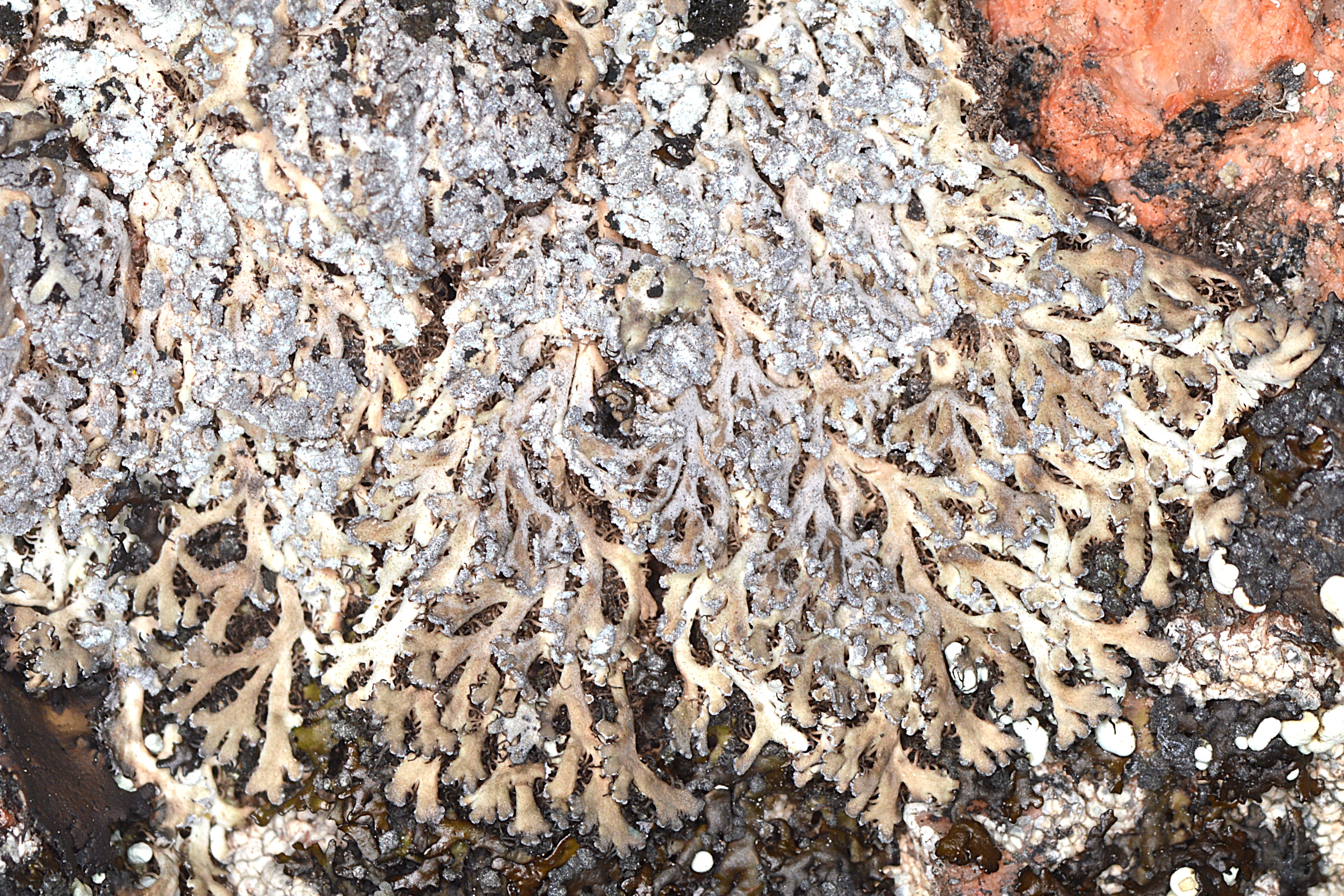
Heterodermia caesiosora J.L. Watts, E.A. Tripp & Raynor
- Scientific name
- Heterodermia caesiosora
- Author
- J.L. Watts, E.A. Tripp & Raynor
- Common names
- IUCN Specialist Group
 Lichens
- Kingdom
- Fungi
- Phylum
- Ascomycota
- Class
- Lecanoromycetes
- Order
- Caliciales
- Family
- Physciaceae
- Assessment status
- Proposed
- Proposed by
- Jacob Watts
- Assessors
- Jacob Watts
- Editors
- Jacob Watts
Assessment Notes
Taxonomic notes
Heterodermia caesiosora is a recently described taxon separated from Heterodermia speciosa by a lack of a lower cortex. Herbarium records of “H. speciosa” from the American Southwest may corroborate with H. caesiosora. See the protologue for detailed discussion (Watts et al. 2025).
Why suggested for a Global Red List Assessment?
Heterodermia caesiosora is rare and (so far as is known) endemic to intact, mesic upper montane and lower subalpine forests of Colorado, USA (with one known disjunction from Alaska).
Geographic range
Heterodermia caesiosora is endemic to western North America, likely occurring at least throughout the southern Rocky Mountains of Colorado, Arizona, and New Mexico, but perhaps more widely distributed throughout the Rocky Mountains.
Population and Trends
So far as is known, this is a rare species of mesic upper montane and lower subalpine forests of the southern Rocky Mountains (with one known disjunction in Alaska). The population size and trends in the population size of Heterodermia caesiosora are uncertain, but an estimated range can be reached with extrapolation. Currently, it is known from 7 historical collections and 3X modern collections.
Population Trend: Uncertain
Habitat and Ecology
On rocks and moss over rocks in mesic upper montane / lower subalpine forest of the southern Rocky Mountains, with one known disjunction in Alaska.
Threats
The biggest threats to Heterodermia caesiosora are: commercial logging on United States Forest Service (USFS) land, reduction of suitable habitat area due to climate change, and increasing frequency and intensity of catastrophic wildfires.
Conservation Actions
Many of the known populations are on USFS land, which is managed for “multi-use,” including logging, resource extraction, recreation, and habitat conservation. Some populations are within federally designated wilderness, which is only open to moderate foot travel. Therefore, the species is moderately conserved, but some populations are likely to be destroyed for logging or resource extraction.
Research needed
Herbarium records of “Heterodermia speciosa” and “H. japonica” from western North America should be revisited, to arrive at a more complete understanding of the true range of H. caesiosora.
Use and Trade
None.