- Proposed
- Under Assessment
- 3Preliminary Assessed
- 4Assessed
- 5Published
Cyphelloporia bialoviesensis Karasiński, Holec & D. Dvořák
- Scientific name
- Cyphelloporia bialoviesensis
- Author
- Karasiński, Holec & D. Dvořák
- Common names
- IUCN Specialist Group
 Mushroom, Bracket and Puffball
- Kingdom
- Fungi
- Phylum
- Basidiomycota
- Class
- Agaricomycetes
- Order
- Agaricales
- Family
- Phyllotopsidaceae
- Assessment status
- Under Assessment
- Proposed by
- Daniel Dvořák
- Assessors
- Daniel Dvořák, Monika Kolényová
- Comments etc.
- Anders Dahlberg
Assessment Notes
Taxonomic notes
Species described in 2023, however several old collections from 1960’s are known. Well-defined and easy-tell species in newly erected genus of its own.
Why suggested for a Global Red List Assessment?
Probably extremely rare, recently described, but very striking boreonemoral species occurring on fallen Picea logs in Europe. Endangered at its main locality by climate shift and decrease of its host.
Geographic range
Type locality is Bialowieza National Park in eastern Poland, presumably also in Belorussian part of the area; otherwise only one locality known so far in European part of Russia. The species might be more distributed in (southern) boreal zone of Eurasia, however there is no data even from otherwise deeply mycologically explored regions such as Fennoscandia and parts of European Russia. There are no corresponding DNA data in GenBank, UNITE and Global Fungi databases except those from type locality.
Population and Trends
Trends largely unknown. At the type locality in Bialowieza forest, the species was collected (as Henningsomyces sp.) by S. Domański in 1960’s and later discovered repeatedly on many sites from 2009 on by several mycologists. The species is widely distributed in Bialowieza National Park, which is documented by the high number of records and forest sections where it was found. All records of originate from the strictly protected zone of the Białowieża National Park, mostly from its southern part near the village of Białowieża. However, it is expected to occur also in well-preserved forest stands outside the strictly protected zone. There is a single collection from Nizhny Novgorod region in Russia.
Population Trend: Uncertain
Habitat and Ecology
Cyphelloporia bialoviesensis occurs in mixed lowland forests of primeval origin, most often in forest association Tilio-Carpinetum with admixed Picea abies (based on data from Poland). Basidiomata are mostly found on moderately to strongly decayed fallen trunks of Picea abies covered by mosses and less frequently on wood of barkless trunks in early stage of decay. Type of rot is unknown, but the species is presumably not primary decayer.
Threats
As a species growing on dead wood of Picea abies, C. bialoviesensis is threatened by apparent retreat of this tree species in Białowieża forest caused by global warming, and also by associated bark-beetle outbreak and subsequent forestry measures like salvage logging and wood removal (not performed in strictly protected zone of the national park, but around it). Thus, the future decrease of a potential substrate - naturally fallen and slowly rotting trees - is very likely.
Conservation Actions
Strict protection of known sites of occurrence.
Research needed
Knowledge gaps in Eurasian distribution - potentially more localities exist in Russia (or elsewhere). On the other hand, the species is very distinct and hard to miss during mycological studies of dead wood communities. Only at the first sight, it can be confused with a wide array of resupinate polypores.
Use and Trade
Irrelevant.
Bibliography

Mature fruitbody of Cyphelloporia bialoviesensis in Bialovieza forest. Photo D. Dvořák

Mature fruitbody of Cyphelloporia bialoviesensis in Bialovieza forest. Photo D. Dvořák

Old fruitbody of Cyphelloporia bialoviesensis in Bialovieza forest. Photo D. Dvořák
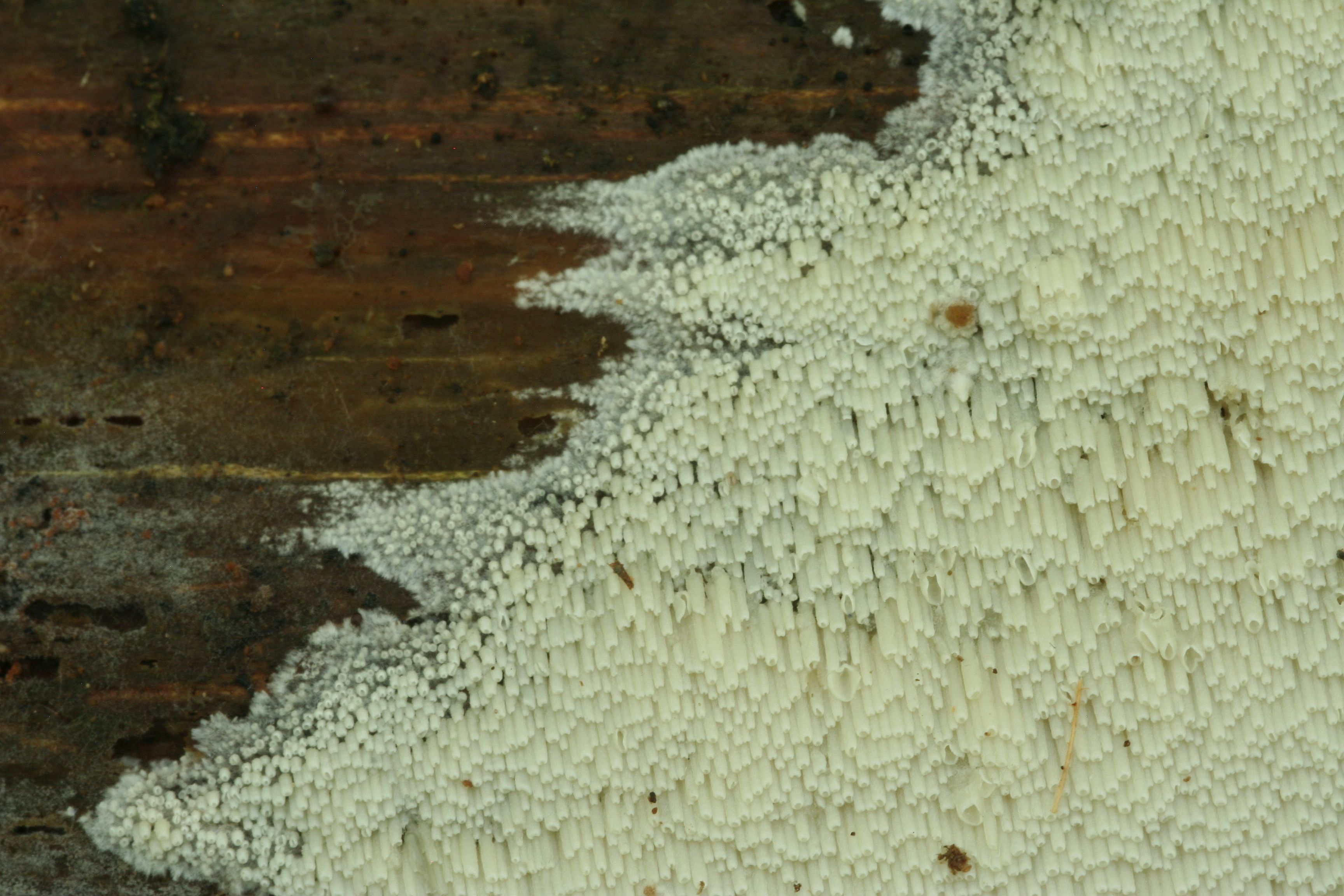
Margin of younger fruitbody of Cyphelloporia bialoviesensis in Bialovieza forest. Photo D. Dvořák
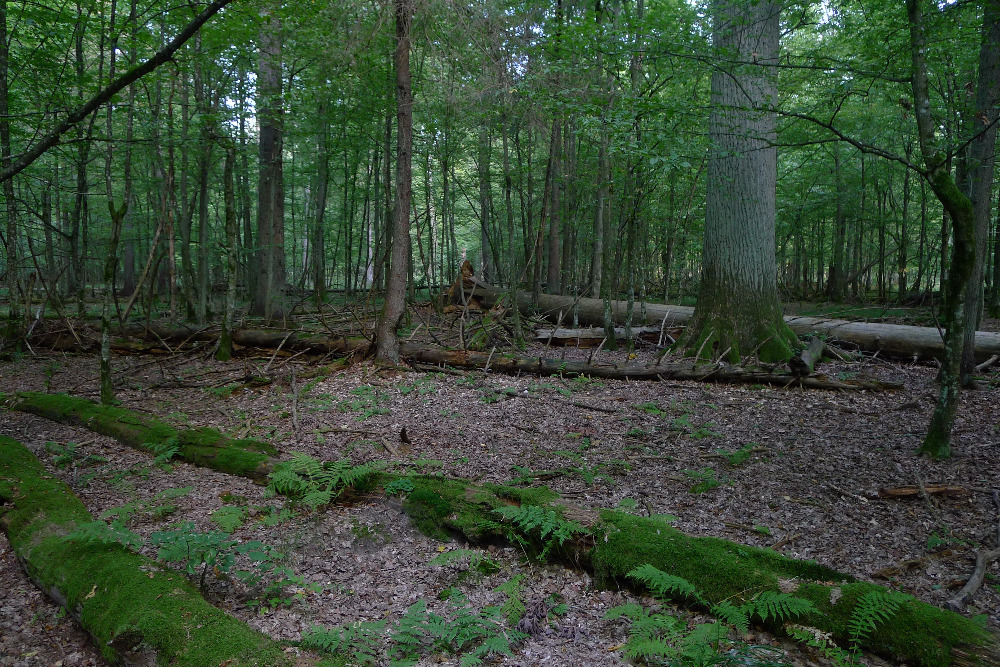
Forest in Bialowieza National Park. Photo M. Kříž
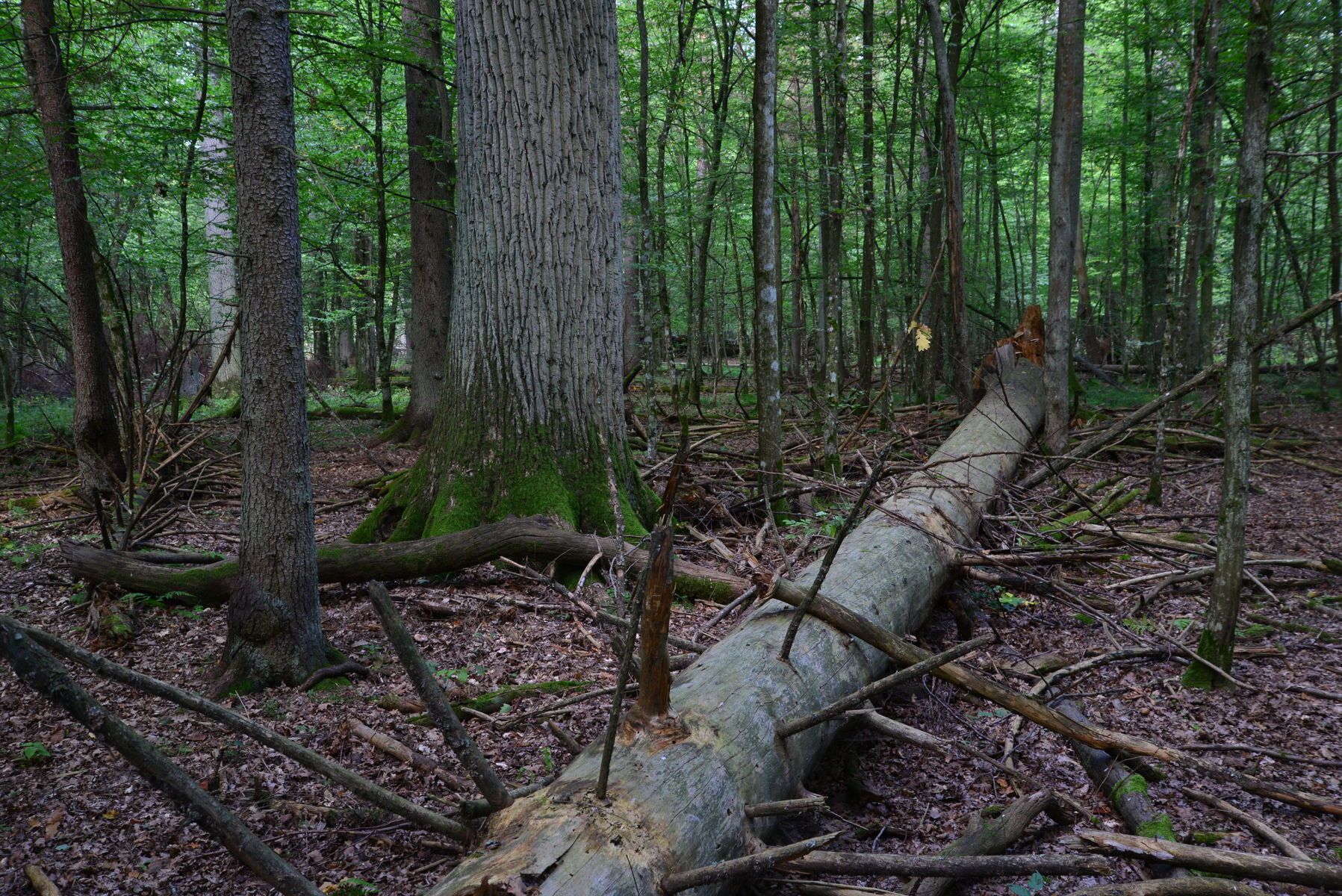
Forest in Bialowieza National Park. Photo J. Holec
Country occurrence
Regional Population and Trends
| Country | Trend | Redlisted |
|---|