- Proposed
- 2Under Assessment
- 3Preliminary Assessed
- 4Assessed
- 5Published
Pannaria oregonensis McCune & M. Schultz
- Scientific name
- Pannaria oregonensis
- Author
- McCune & M. Schultz
- Common names
 Shingle Lichen
- Matted Lichen
- IUCN Specialist Group
 Lichens
- Kingdom
- Fungi
- Phylum
- Ascomycota
- Class
- Lecanoromycetes
- Order
- Peltigerales
- Family
- Pannariaceae
- Assessment status
- Proposed
- Proposed by
- Isabel Dean
- Assessors
- Isabel Dean, Lalita Calabria
Assessment Notes
Taxonomic notes
Pannaria oregonensis (current, 2022, (Ach.) McCune & Shultz)
Pannaria rubiginella (2004, P.M. Jørg. & Sipman)
Pannaria rubiginosa (1828, (Ach.) Delise)
Lichen rubiginosus (1799) Ach.Kingdom: Fungi, Phylum: Ascomycota, Class: Lecanoromycetes, Order: Peltigerales, Family: Pannariaceae
Based on a recent phylogenetic revision (McCune et al., 2022), observations in the Pacific Northwest of Pannaria rubiginosa and P. rubiginella are now considered to be P. oregonensis. Has been misapplied as P. rubiginella, P. rubiginosa (McCune & Yang, 2024).
Why suggested for a Global Red List Assessment?
Pannaria oregonensis is a newly recognized species endemic to the Pacific Northwest of the United States of America and British Columbia, Canada.
Geographic range
Known from coastal Southeast Alaska to British Columbia and Oregon. Can be seen in coastal North California but rarely seen inland to the foothills West Cascades (McCune & Geiser, 2023).
In terms of managed areas, it is known to be in the Olympic National Park (Miller, J., Fertig, W., et al., p. 8). From previous NW Lichenologist field trips, it has been seen in the Heceta Dunes, Oregon, United States of America.
Population and Trends
37% of occurrence records were more than 40 years old (cut-off being 1985); 2.9% were more than 100 years old. Due to these findings, the population size of this species is suspected to have decreased by XX% in the last approximately XX years due to habitat loss caused by rising sea levels, property development and air pollution. The generation length of Pannaria oregonensis is assumed to be ~15-20 years due to this species being a slow reproducer, but does not need more stable substrata such as old growth trees (Yahr et al., 2024).
On iNaturalist (2024), there have been no records of this lichen. After a NW Lichenologist field trip, there are now 8 observations on iNaturalist (2025) at Heceta Beach, Oregon, USA. Labelled under P. rubiginella, there have been 3 observations total- all being in California. The places these observations were made were Mount Tamalpais Watershed, Rancho Corral de Tierra, and near Del Rey Oaks (iNaturalist, 2025). Under P. rubiginosa, there are many observations across the planet. However, when shrunk down to P. oregonensis’ range, the highest populations are in the San Francisco area and Point Reyes National Seashore, CA in the United States. There was a single observation in Sunset Beach, OR, USA. The second largest populations within the range are in British Columbia (iNaturalist, 2025).
Population Trend:
Habitat and Ecology
It grows mainly on the bark and wood of conifers and hardwoods. Its habitat being moist lowlands, with the largest populations in Oregon and Washington in dense coastal growth of old shrubs on wet deflation plains (McCune & Geiser, 2023). It has also been documented occasionally in riparian forests of the lower West slope of the Cascade Range (Villella et al., 2023).
Known to grow corticoulous on twigs and small branches. Substrates include conifers: Picea sitchensis and Pseudotsuga menziesii, as well as deciduous shrubs and trees: Salix hookeriana, Fraxinus latifolia, old woody Cytisus scoparius, Rubus spectabilis, Lonicera involucrata, and Physocarpus species (Villella et al., 2023, Lesher et al., 2013, McCune & Geiser, 2023).
As a seperate P. rubiginosa Conservation Assessment, information suggests this lichen is restricted to a few kilometers of the ocean or at sea level. It also appears to grow in a variety of habitats but needs to have a microhabitat requirement of high humidity in the form of open water at all times (Lesher et al, 2019).
An important note is how Pannaria oregonensis has been previously thought to only occur within a few kilometers of the ocean (Lesher et al, 2019). However, in the Oregon’s Opal Creek Wilderness and Adjacent Areas project, this species has been found on Fraxinus latifolia (Oregon Ash) in a riparian swamp inland (Villella et al., 2023).
Threats
The main threats to this lichen are habitat loss due to property development along the coast, air pollution, changes in seasonal weather patterns and sea levels rising due to climate change (Lalita, p. 3).
Air pollution such as acid rain and sulfur dioxide can kill pollution intolerant lichen species; potentially increasing the likelihood of pollution tolerant species of lichen to colonize substrata and displace other lichen species, like Pannaria oregonensis (Lesher et al, 2013, Stone et al, 2018).
Other threats include invasive species, such as Genista monspessulana (French Broom), who compete with important native shrub species that provide habitat and substrate, and using herbicide and/or mechanical means to remove invasive species has the potential to disturb Pannaria oregonensis habitats through accidental removal of or damage to native trees and shrubs (Lesher et al., 2019).
Conservation Actions
Monitoring of Pannaria oregonensis is vital in ensuring stable populations and native habitat protection. With the threat of climate change, their habitat will be erased due to rising sea levels. Property development and having more recreational visitors to the area will create more pollution- harming not only the lichens but also the other flora and fauna. To prevent this, the known locations need to be labeled as National Conservation Reserves with detailed conservation and restoration plans for the lichen and habitats. In addition, an implemented monitoring program to determine population trends. As well as restricting collections of specimens where the species is rare or of limited abundance.
Research needed
Whether or not this lichen has an economic importance, cross checking listed herbariums for correct species, revisiting historical sites, the logistics of environmental restoration, and surveys of potential sites across the species range.
Referring to older assessments, research is needed to determine the degree of association of P. oregonensis with late-successional and old growth forests and determining the distribution and ecology (Lesher et al., 2019).
Use and Trade
No known use and/or trade.
Bibliography
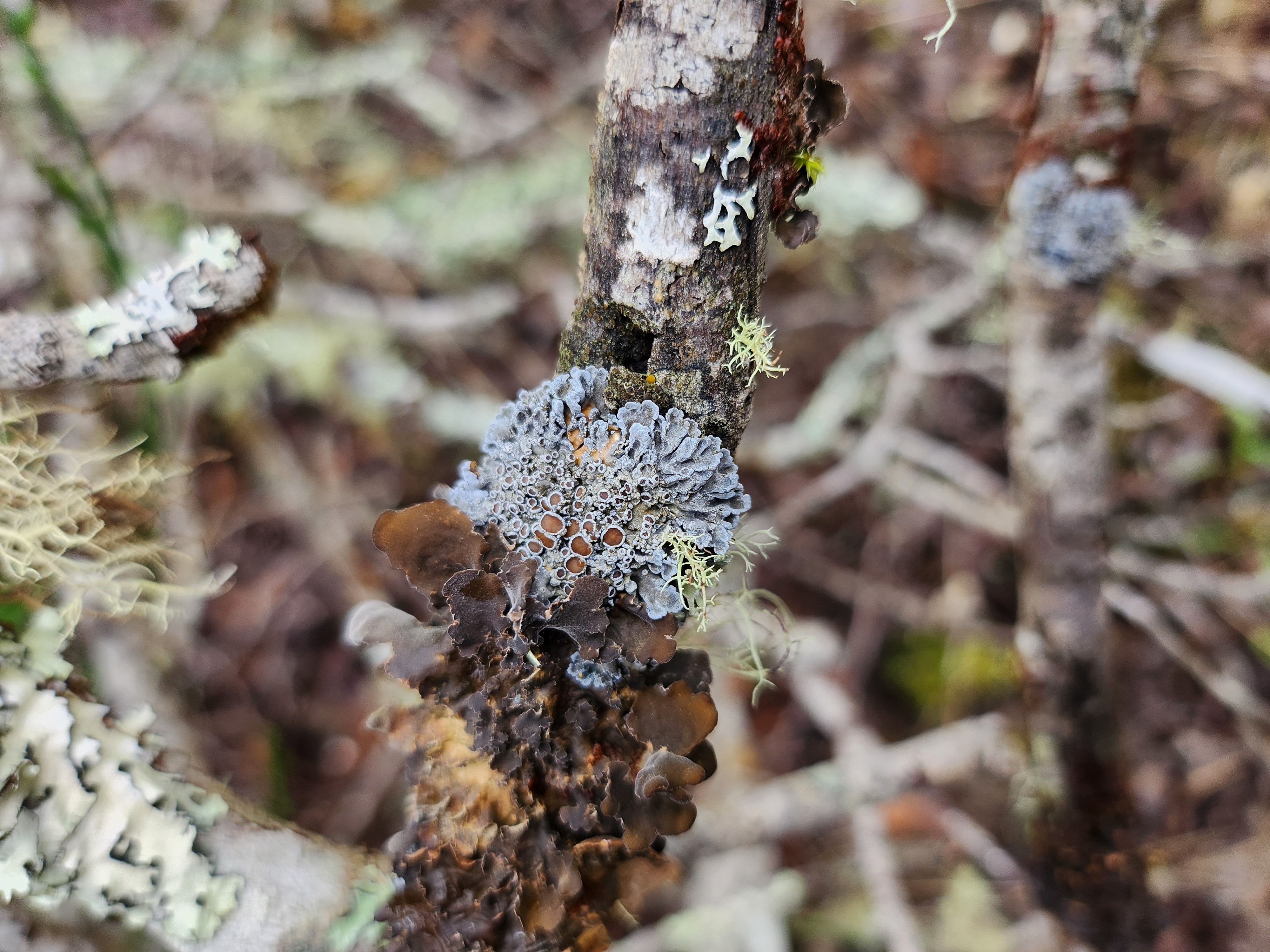
Pannaria oregonensis (grey lichen) on Salix bark, taken on March 20th, 2025 by Isabel Dean.
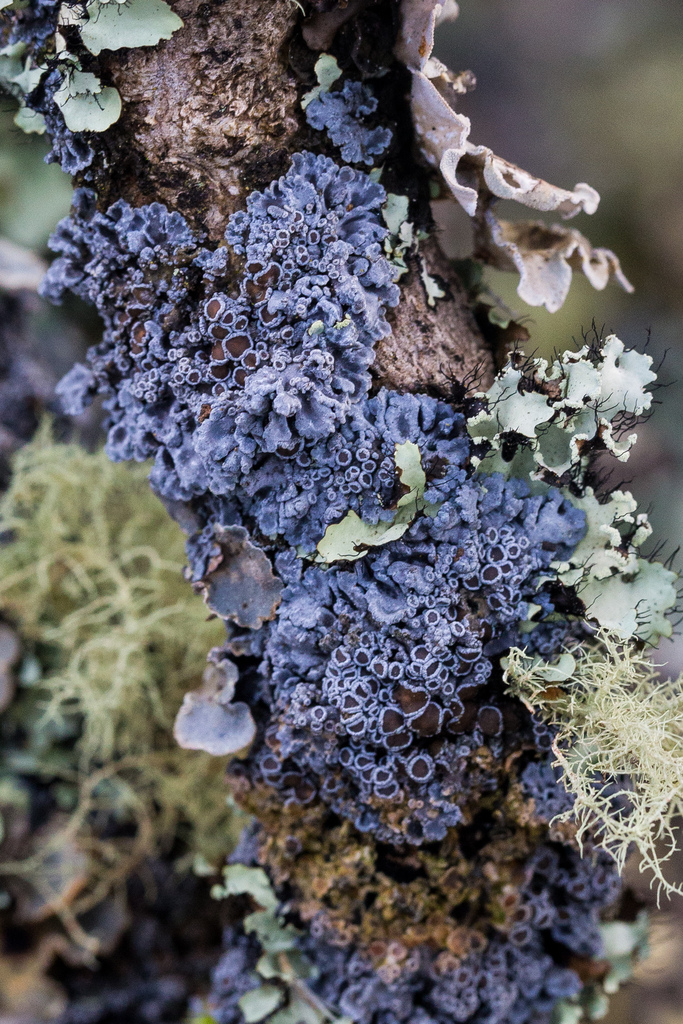
P. oregonensis (grey/blue lichen) growing on shrub stems. Taken by Ken-ichi Ueda in San Bruno Mountain County Park, San Mateo, California, United States on Nov. 29th, 2014.
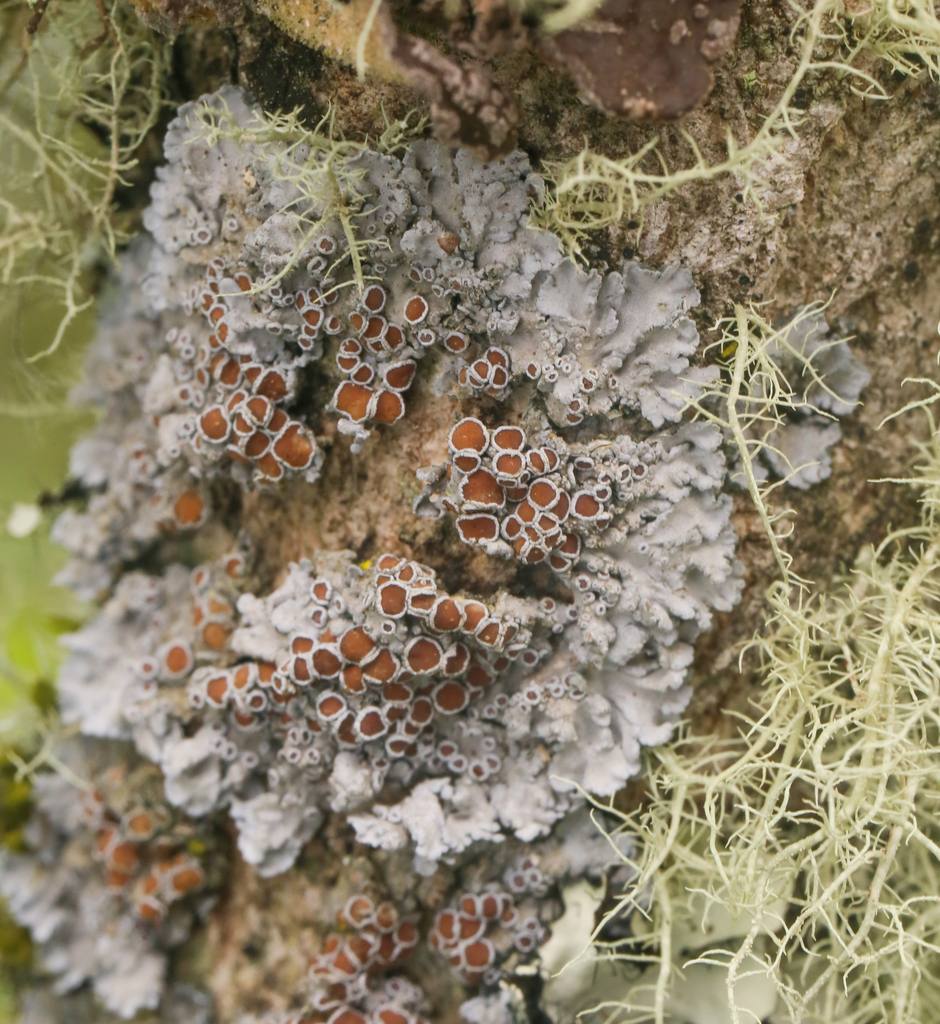
P. oregonensis growing on Baccharis vanessae (Coyote Bush) in Sharp Park, Pacifica, CA, USA. Taken by J.J. Johnson on May 20th, 2018.
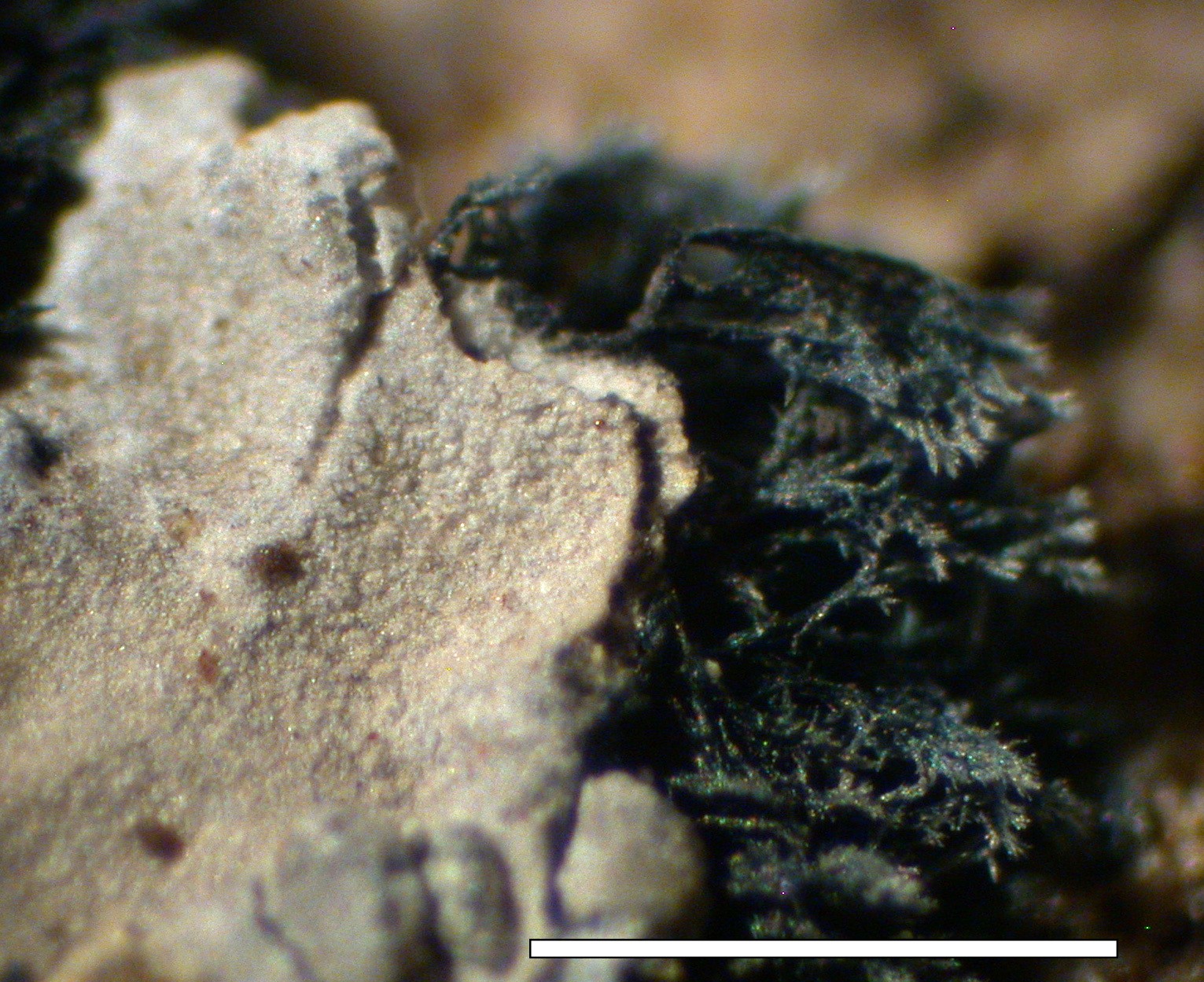
Rhizines of P. oregonensis taken by Dr. Bruce McCune.
Country occurrence
Regional Population and Trends
| Country | Trend | Redlisted |
|---|