- Proposed
- Under Assessment
- Preliminary Assessed
- VUAssessed
- 5Published
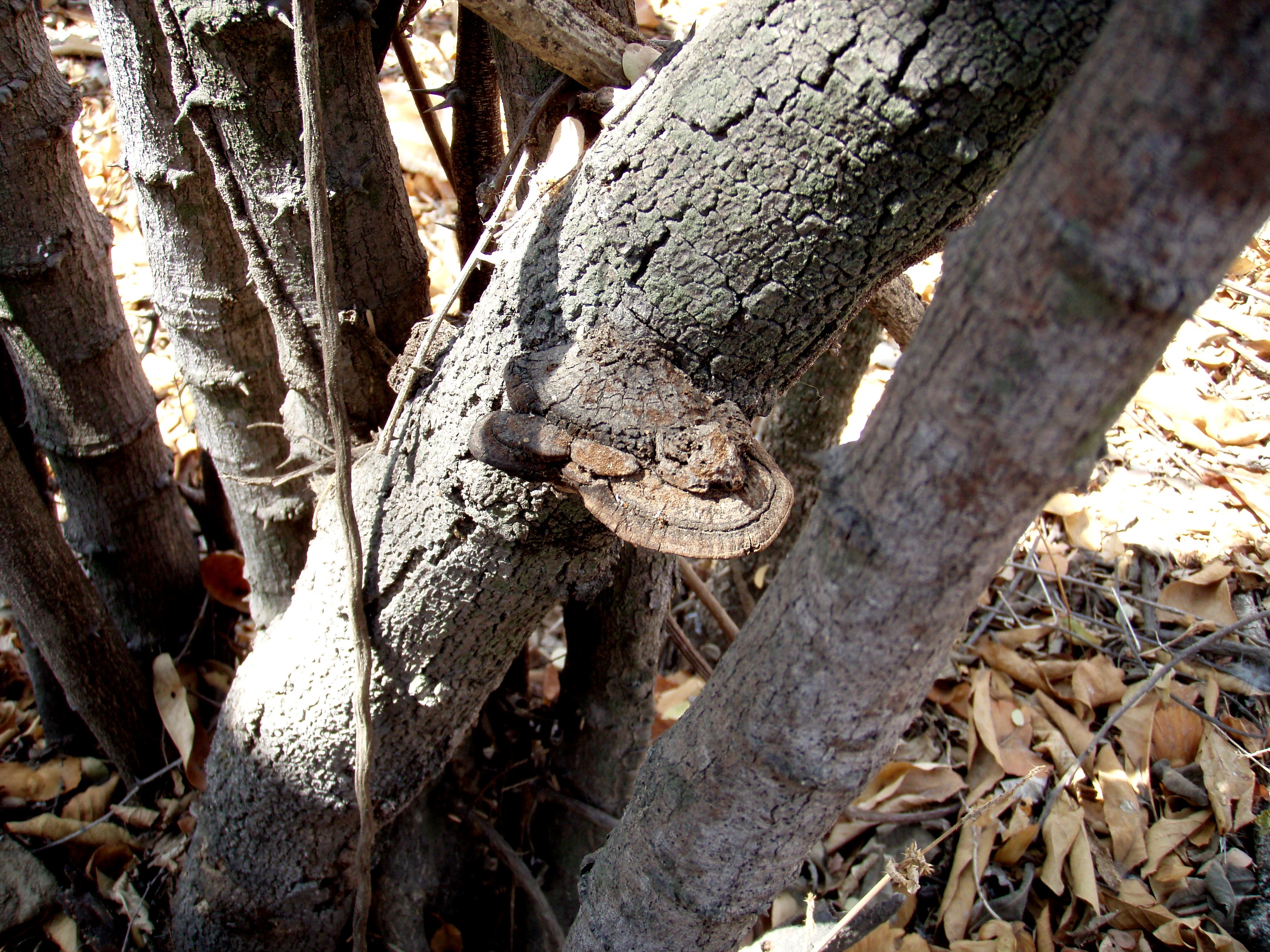
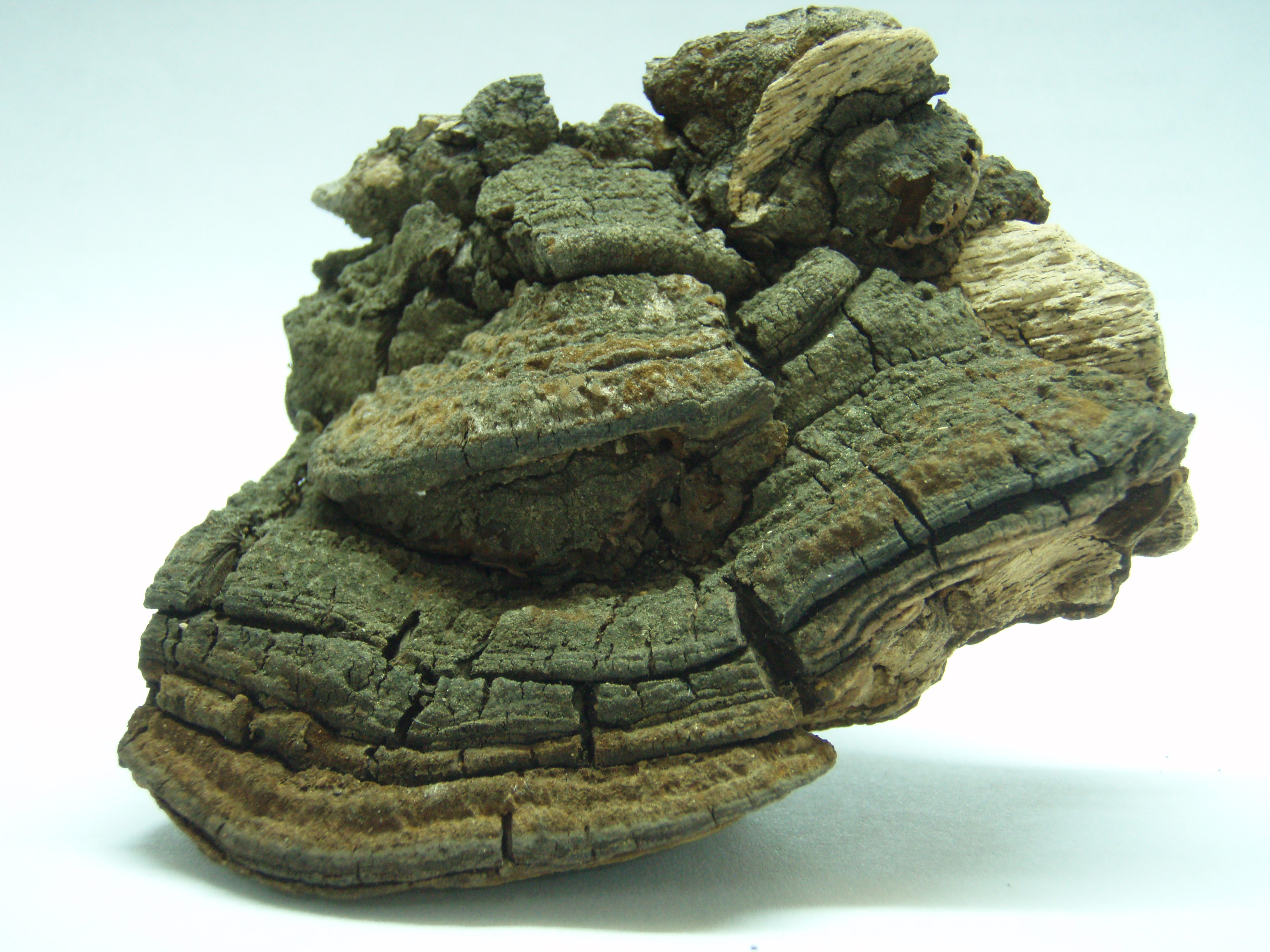
Phellinotus teixeirae Salvador-Mont., Elias & Drechsler-Santos
- Scientific name
- Phellinotus teixeirae
- Author
- Salvador-Mont., Elias & Drechsler-Santos
- Common names
- IUCN Specialist Group
 Mushroom, Bracket and Puffball
- Kingdom
- Fungi
- Phylum
- Basidiomycota
- Class
- Agaricomycetes
- Order
- Hymenochaetales
- Family
- Hymenochaetaceae
- Assessment status
- Assessed
- Preliminary Category
- VU A3c
- Proposed by
- Carlos A. Salvador Montoya
- Assessors
- Carlos A. Salvador Montoya, Matías Sebastián Tincani
- Reviewers
- E. Ricardo Drechsler-Santos, Kelmer Martins da Cunha
Assessment Notes
Justification
Phellinotus teixeirae is a parasitic polypore fungus that primarily targets Fabaceae species and is endemic to South America’s seasonal dry tropical forests (SDTFs). Its distribution spans five distinct floristic groups (FGs) within the SDTFs, including the Caatinga in Brazil, Misiones in northeastern Argentina, Piedmont in northwestern Argentina, Central Andes Coast in Peru, and Northern Inter-Andean Valleys in Colombia. The SDTFs are classified as one of the most endangered biomes globally (Janzen 1988), with over half of their original extent having been converted into other land uses, such as agriculture and urban development (Portillo & Sánchez 2010). The threats to SDTFs are multifaceted, encompassing both natural disturbances and human-driven activities. Deforestation, driven by the timber industry and the expansion of agricultural systems and livestock farming, has led to severe fragmentation of this biome, further exacerbating its vulnerability (Fajardo et al. 2005, Särkinen et al. 2011). Moreover, projections from climate change models predict a significant reduction in rainfall across several tropical regions, which will have a negative effect on these forests (Miles et al. 2006). The compounded threats of frequent wildfires, the spread of invasive species, and the ongoing degradation of habitat continue to pose grave risks to the SDTFs, directly endangering species like P. teixeirae that are strictly dependent on these ecosystems for survival. The decline in suitable habitat poses a significant threat to P. teixeirae, a species that is currently known to exist at only seven locations, with fewer than 20 recorded collections. Despite the conspicuous nature of its basidiomata, P. teixeirae is rarely encountered in the wild. This rarity persists even though extensive studies of polypores in the South American SDTFs have been conducted since 2011. The distribution of P. teixeirae is likely closely tied to the distribution of its host plants, making it endemic to fragmented patches of these threatened forests. The current status of forest cover in South America, as monitored by platforms like Global Forest Watch, shows alarming trends. Between 2001 and 2023, SDTFs have experienced a near 40% loss in tree cover, reflecting the ongoing degradation of critical habitats for species like P. teixeirae. It is expected that the species could be present in up to 2,000 sites, with each site potentially supporting around 20 mature individuals. This would imply a total population of no more than 40,000 mature individuals across its range. However, with continued habitat loss, the species is expected to experience a nearly 50% decline in population over the next 30 years, equivalent to three generations. This population decrease is primarily driven by habitat destruction and the compounded effects of climate change. Given these challenges, P. teixeirae is classified as Vulnerable (VU) due to the anticipated future reduction in its population (A3c).
Taxonomic notes
Salvador-Montoya et al. (2022) mention that P. teixeirae and P. pipitadeniae have similar morphology and ecological and molecular data are necessary to delimit both taxa.
Why suggested for a Global Red List Assessment?
Geographic range
Phellinotus teixeirae has a restricted distribution to the Seasonally Dry Tropical Forests (SDTFs) of South America. According to the proposal of DRYFLOR (2016), this species is found in five floristic groups (FGs) of the SDTFs, which are Caatinga (Brazil), Misiones (northeastern Argentina), Pedemontano (northwestern Argentina), Central Andes Coast (Peru) and Northern inter-Andean Valleys (Colombia) (Salvador-Montoya et al. 2022, Bolaños-Rojas et al. 2024). It is also expected in the FGs such as Central Brazil, Tarapoto-Quillabamba, Apurimac-Mantaro, Central Inter-Andean Valleys, Central America-Northern South America and Mexico sensu DRYFLOR (2016).
Population and Trends
The species is currently known from SDTFs of South America and has less than 20 collections on seven sites. Phellinotus teixeirae is a perennial polypore growing on the trunks of living trees of Pithecellobium excelsum (Kunth) Mart. and Libidibia glabrata (Kunth) C. Cast & G.P. Lewis in the Central Andes Coast FG in Peru, of Pithecellobium dulce (Roxb.) Benth. in the Northern inter-Andean Valleys FG in Colombia, of Pityrocarpa moniliformes (Benth) Luckow & R.W. Jobson and Piptadenia species Benth in the Caatinga FG in Brazil, and on Acacia Mill. species in the Piedmont FG in northwestern Argentina (Salvador-Montoya et al. 2022, Bolaños-Rojas et al. 2024). Despite the extensive studies performed frequently since 2011 on polypores from dry tropical forests of South America and the conspicuous appearance of the species, it is rarely found. The species is expected to be found from 1.000 to 2000 sites, with each site potentially hosting approx. 20 mature individuals on average, resulting in a total estimated population size of no more than 40,000 mature individuals, all within one subpopulation.
In South America, the distribution of SDTFs is highly fragmented and severely affected by human disturbances with approximately half of the forest area degraded mainly by agriculture (Särkinen et. al. 2011). Furthermore, both natural fires and the use of fire as a tool to clear pastures and crop fields represent a serious threat to these forests, which are prone to catching fire and suppressing woody regeneration due to fire (Janzen 1988). Also, Portillo-Quintero & Sánchez-Azofeifa (2010) mention that more than half of the tropical dry forest (TDF) were converted to other land uses. In turn, current climate change models reflect a large decrease in rainfall expected for several areas of tropical America severely impacting these forests (Miles et. al. 2006), as well as the invasion of grasses and exotic species (Janzen 1988). Data from the current status of TDF coverage in South America shows a loss of 60% from 2001 up to 2010 (Portillo-Quintero & Sánchez-Azofeifa 2010). Based on this information, the tree cover loss data of different fragments of SDTFs from South America are estimated in the Global Forest Watch platform (GFW, https://www.globalforestwatch.org/) using satellite data. The average percent of tree cover loss in these forests, considering the declining habitat quality, was almost 40% from 2001 to 2023. Thus, the population decline of P. teixeirae could be estimated in light of the extension loss of suitable habitat and the putative influence that habitat degradation has on species occupation in a given environment. The loss of required habitat directly impacts the population of this species, and it is suspected that P. teixeirae will suffer an additional reduction of almost 50% of its population size over the next 30 years (equivalent to three generations) starting in 2023.
Population Trend: Decreasing
Habitat and Ecology
Phellinotus teixeirae is a perennial polypore growing on the trunks of living trees of Pithecellobium excelsum (Kunth) Mart. and Libidibia glabrata (Kunth) C. Cast & G.P. Lewis in the FG of Central Andes Coast in Peru, on Pithecellobium dulce (Roxb.) Benth. in the FG of Northern inter-Andean Valleys in Colombia, on Pityrocarpa moniliformes (Benth) Luckow & R.W. Jobson and Piptadenia species Benth in the FG of Caatinga in Brazil, and on Acacia Mill. species in the FG of Piedmont in northwestern Argentina (Salvador-Montoya et al. 2022, Bolaños-Rojas et al. 2024). Regarding the specimen from the FG of Misiones in northeastern Argentina, its substrate is unknown (Salvador-Montoya et al. 2022). The ecological patterns of tree communities in the SDTFs are broadly related to climatic seasonality (DRYFLOR 2016, Pennington et al. 2018, Maia et al. 2020). These forests have an average annual rainfall of less than 1800 mm, of which three or more months receive only 100 mm (DRYFLOR 2016, Pennington et al. 2018). The SDTFs are divided into 12 FGs in the Americas (DRYFLOR 2016). In South America, the FGs of northern South America (which includes those of Colombia and Venezuela) present some singularities of the FGs distributed in southern South America due to the influence of the rainforests of the Amazon and Chocó as a barrier to the migration of species from north to south and the other way round (DRYFLOR 2016). Regarding the FGs of southern South America, the FGs of the Andean regions (including the Piedmont forest of northwestern Argentina) present a high floristic heterogeneity concerning the rest. Despite this heterogeneity, there is a high floristic affinity between the FGs of the Caatinga, Central Brazil, Piedmont, and Misiones (DRYFLOR 2016). Therefore, despite the differences in the vegetation of the SDTFs in the Americas, P. teixeirae is an endemic species of this biome that does not present an exclusivity to a FG because it grows on different Fabaceae tree species in more than one FG in South America.
Threats
The natural habitat of P. teixeirae is located in the South American SDTFs, an ecosystem that is experiencing significant fragmentation. This forest area is heavily impacted by human activities, with about half of the land degraded due to agricultural expansion (Särkinen et al. 2011). The SDTFs, once expansive, are now becoming increasingly isolated and reduced in size, with the remaining patches under considerable stress from various anthropogenic pressures. Furthermore, projections from climate change models indicate a substantial reduction in rainfall in many tropical regions of America, which will severely affect these forests’ ecological balance and biodiversity (Miles et al. 2006). The alteration in precipitation patterns is expected to exacerbate the already precarious situation, further diminishing suitable habitats for species like P. teixeirae. In addition, Portillo-Quintero & Sánchez-Azofeifa (2010) highlight that over 66% of TDFs in the Americas have been converted into other land uses, such as agricultural fields, further compounding the loss of habitat for native species. According to Miles et al. (2006), a mere 3.3% of SDTFs are considered safe from high levels of degradation, underscoring the dire state of these ecosystems.
The ongoing threats to P. teixeirae populations are intrinsically tied to the degradation of SDTFs. These threats range from direct destruction of habitat to more subtle indirect effects on the forest structure. Fire poses a particularly significant risk, both naturally occurring and those set intentionally by humans, such as farmers clearing land for pasture or crops. The dry nature of SDTFs makes them highly vulnerable to wildfires, which can suppress the regeneration of woody vegetation, disrupting the forest’s natural recovery processes (Janzen 1988). In addition, widespread deforestation driven by the timber industry, the conversion of forests to agricultural lands, and the expansion of livestock farming further exacerbate the vulnerability of these forests. The introduction and spread of invasive species, which outcompete native flora, also represent a critical threat to the ecological integrity of the SDTFs (Janzen 1988, Fajardo et al. 2005, Särkinen et al. 2011). These combined threats present a serious and ongoing challenge for the conservation of P. teixeirae and the overall health of the SDTFs.
Conservation Actions
The protection of P. teixierae habitat is a crucial step in preventing the decline of its population, through the management and implementation of public conservation policies aimed at recovering and safeguarding the SDTFs. Additionally, raising awareness about the conservation status of P. teixierae and its habitat, through media outreach, educating the public about the threats facing this species, and organizing scientific dissemination events, academic publications, and citizen science activities such as guided visits that include observations of fauna, flora, and funga in the SDTFs, would significantly contribute to mitigating the decline of P. teixierae and other endangered species in these ecosystems. Another important action is the ex-situ conservation of genetic diversity of P. teixierae (via in vitro cultures), which would ensure the possibility of future reintroductions of the species into the SDTFs. Finally, clarifying the distribution of the species within the FGs of the SDTFs across its range in South America (including FGs where it has not yet been recorded but may have potential) and identifying its precise habitat requirements are essential for effectively contributing to its conservation.
Research needed
Conduct research focused on conservation, ethnomycology, and phytopathology, while continuing molecular systematic studies supporting the ongoing revision and documentation of P. teixeirae records throughout the Neotropical region.
Use and Trade
There are no known uses for this species.
Bibliography
Bolaños-Rojas, A.C., Londoño-Caicedo, J.M., Cortés, A.J. and Motato-Vásquez, V. 2024. Phylogenetic Diversity, Host Specificity, and Distribution of the Wood-Decaying Fungus Phellinotus teixeirae in Western Colombia’s Seasonally Dry Tropical Forest. Forests 15(6): 1008.
Drechsler-Santos, E.R., Santos, P.J.P., Gibertoni, T.B. and Cavalcanti, M.A.Q. 2010. Ecological aspects of Hymenochaetaceae in an area of Caatinga (semi-arid) in Northeast Brazil. Fungal Diversity 42: 71-78.
DRYFLOR. 2016. Plant diversity patterns in neotropical dry forests and their conservation implications. Science 353(6306): 1383-1387.
Elias, S.G., Salvador-Montoya, C.A., Costa-Rezende, D.H., Guterres, D.C., Fernandes, M., Olkoski, D., Klabunde, G.H.F. and Drechsler-Santos, E.R. 2020. Studies on the biogeography of Phellinotus piptadeniae (Hymenochaetales, Basidiomycota): Expanding the knowledge on its distribution and clarifying hosts relationships. Fungal Ecology 45: 100912.
Fajardo, L., Gonzalez, V., Nassar, J.M., Lacabana, P., Portillo-Quintero, .C.A., Carrasquel, F. and Rodriguez, J.P. 2005. Tropical dry forests of venezuela: characterization and current conservation status 1. Biotropica: The Journal of Biology and Conservation 37(4): 531-546.
Janzen, D.H. 1988. Tropical dry forests. Biodiversity 15: 130-137.
Maia, V.A., Souza, C.R., Aguiar-Campos, N., Fagundes, N.C.A., Santos, A.B.M., Paula, G.G.P., Santos, P.F., Silva, W.B., Menino, G.C.O. and Santos, R.M. 2020. Interactions between climate and soil shape tree community assembly and above-ground woody biomass of tropical dry forests. Forest Ecology and Management 474: 118348.
Miles, L., Newton, A.C., DeFries, R.S., Ravilious, C., May, I., Blyth, S., Kapos, V. and Gordon, J.E. 2006. A global overview of the conservation status of tropical dry forests. Journal of biogeography 33(3): 491-505.
Pennington, R.T., Lehmann, C.E.R. and Rowland, L.M. 2018. Tropical savannas and dry forests. Current Biology 28(9): R541-R545.
Portillo-Quintero, C.A. and Sánchez-Azofeifa, G.A. 2010. Extent and conservation of tropical dry forests in the Americas. Biological conservation 143(1): 144-155.
Salvador-Montoya, C.A., Elias, S.G., Popoff, O.F., Robledo, G.L., Urcelay, C., Góes-Neto, A., ... & Drechsler-Santos, E.R. 2022. Neotropical studies on Hymenochaetaceae: unveiling the diversity and endemicity of Phellinotus. Journal of Fungi 8(3): 216.
Salvador-Montoya, C.A., Robledo, G.L., Cardoso, D., Borba-Silva, M.A., Fernandes, M. and Drechsler-Santos, E.R. 2015. Phellinus piptadeniae (Hymenochaetales: Hymenochaetaceae): taxonomy and host range of a species with disjunct distribution in South American seasonally dry forests. Plant Systematics and Evolution 301: 1887-1896.
Särkinen, T., Iganci, J.R., Linares-Palomino, R., Simon, M.F. and Prado, D.E. 2011. Forgotten forests-issues and prospects in biome mapping using Seasonally Dry Tropical Forests as a case study. BMC ecology 11: 1-16.