- Proposed
- Under Assessment
- Preliminary Assessed
- Assessed
- ENPublished
Hydnellum nemorosum A.M. Ainsw. & E. Larss.
- Scientific name
- Hydnellum nemorosum
- Author
- A.M. Ainsw. & E. Larss.
- Common names
 lövtaggsvamp
- IUCN Specialist Group
 Mushroom, Bracket and Puffball
- Kingdom
- Fungi
- Phylum
- Basidiomycota
- Class
- Agaricomycetes
- Order
- Thelephorales
- Family
- Bankeraceae
- Assessment status
- Published
- Assessment date
- 2021-04-28
- IUCN Red List Category
- EN
- IUCN Red List Criteria
- D
- Assessors
- Tea von Bonsdorff (Finnish Museum of Natural History); Martyn Ainsworth (Royal Botanic Gardens, Kew, UK; IUCN SSC Mushroom, Bracket and Puffball Specialist Group)
- Reviewers
- Anders Dahlberg (Swedish Species Information Centre, Uppsala / IUCN SSC Cup-fungus, Truffle and Ally Specialist Group)
Assessment Notes
Justification
Hydnellum nemorosum is an apparently rare ectomycorrhizal European tooth fungus which lives in symbiosis with several genera of broadleaved trees including members of Fagaceae. It was described as new to science in 2021 in a morphological and molecular study involving of 136 DNA barcode sequences from Hydnellum species of European origin, of which only four sequences were shown to represent this species. These four sequences were derived from sporocarps in four different northwestern European countries and each was likely to have had an association with four different tree species. It is currently not possible to base any conservation assessments on criteria involving declining populations or habitats. The species does, however, satisfy criterion D in having a very small estimated global population. There are four known mycelial patches, which is assumed to represent 40 mature individuals. It is to be expected that further discoveries of this species will be made, but current evidence suggests that it will remain a relatively rare to extremely rare tooth fungus. It is estimated that the global population might be up to 5 times more, e.g. about 200 mature individuals, thus conforming to an assessment of EN according to criterion D.Taxonomic notes
Hydnellum nemorosum was descried as new to science in 2021 (Nitare et al. 2021). It is a morphologically distinct member of the former Sarcodon section Scabrosi (Maas Geesteranus 1975), but further preserved specimens of H. nemorosum might be found filed in fungaria under the names of other rare European relatives classified within sections Scabrosi or Violacei, for example H. fuligineoviolaceum, H. ioeides or H. lepidum (=S. regalis).Geographic range
This species is only known from Europe. A batch of 136 European Sarcodon/Hydnellum specimens collected over a period of ca. 20 years was sequenced and analysed in a study by Nitare et al. (2021). The study revealed that the new species H. nemorosum was extant in four northwestern European countries and, based on this preliminary evidence, it seemed to be a genuinely rare species.Population and Trends
Hydnellum nemorosum is presently known in northwest Europe as a single known reproductive mycelial patch in each of four countries, UK, Denmark, Norway and Sweden (Nitare et al. 2021). It is to be expected that further discoveries of this species will be made, but current evidence suggests that it will remain a relatively rare to extremely rare tooth fungus. It is estimated that the global population might be up to 20 localities. Using the guidelines for assessing terrestrial patch-forming ectomycorrhizal fungi this equates to about 200 mature individuals (Dahlberg and Mueller 2011). It is currently not possible to base any conservation assessments on criteria involving declining populations or habitats. The species does, however, satisfy criterion D in having a very small estimated global population.
Population Trend: Unknown
Habitat and Ecology
Nitare et al. (2021) concluded that this species is an ectomycorrhizal partner of various broadleaved trees although, as yet, there are no known published molecular root tip analyses to confirm this. Although most related fungi (stipitate hydnoid or tooth fungi) that are found in broadleaved woodland are mycorrhizal with Fagaceae, and this was presumed to be the case with three of the four studied collections (found near Castanea, Fagus and Quercus), the remaining (Swedish) collection was recorded at a boreal site lacking nearby Fagaceae. In common with other tooth fungi, Hydnellum nemorosum is found in sparsely vegetated, nutrient-poor, often sandy or gravelly soils and usually associated with sloping terrain (wooded hillsides, banks and ditches).Threats
In common with other ectomycorrhizal tooth fungi, Hydnellum nemorosum is sensitive to atmospheric nitrogen deposition. Due to its apparent rarity, it is particularly vulnerable to adverse stochastic events which might disrupt its relationship with its photosynthetic tree partners. Tree-felling, e.g. of Castanea where this tree is not native, storm-induced windthrow of trees or habitat loss caused by invasive plants, e.g. Rhododendron and Pteridium, would constitute some of the major threats at a local scale. Routine site management operations, e.g. targeted to benefit other elements of biodiversity, to improve site infrastructure or to accommodate higher visitor numbers could all inadvertently damage or destroy H. nemorosum mycelia.Conservation Actions
There is a need for reductions in the levels of atmospheric nitrogen deposition. At a local scale, perhaps the single most important conservation action would be to ensure that land owners/managers and their relevant subcontractors are made aware of the georeferences of all sites where Hydnellum nemorosum is recorded so they can take account of the presence of this species when planning management activities on site. Invasive species should be controlled where they are a problem. Thought should be given to ensuring that there is a supply of suitable ectomycorrhizal partner trees to sustain mycelia of this species at its known sites (ecological continuity).Molecular analysis of ectomycorrhizal root tips is needed to confirm that this species is ectomycorrhizal and to investigate which tree species are symbionts of H. nemorosum. Further molecular research and fieldwork is also required to fully elucidate the distribution and ecology of this species.
Use and Trade
There is no use and trade known.Source and Citation
Ainsworth, A.M. & von Bonsdorff, T. 2025. Hydnellum nemorosum. The IUCN Red List of Threatened Species 2025: e.T272564579A272617999. Accessed on 22 November 2025.
Hydnellum nemorosum at its type locality in Berkshire, England Photo; © A. Martyn Ainsworth

Hydnellum nemorosum at its type locality in Berkshire, England Photo; © A. Martyn Ainsworth
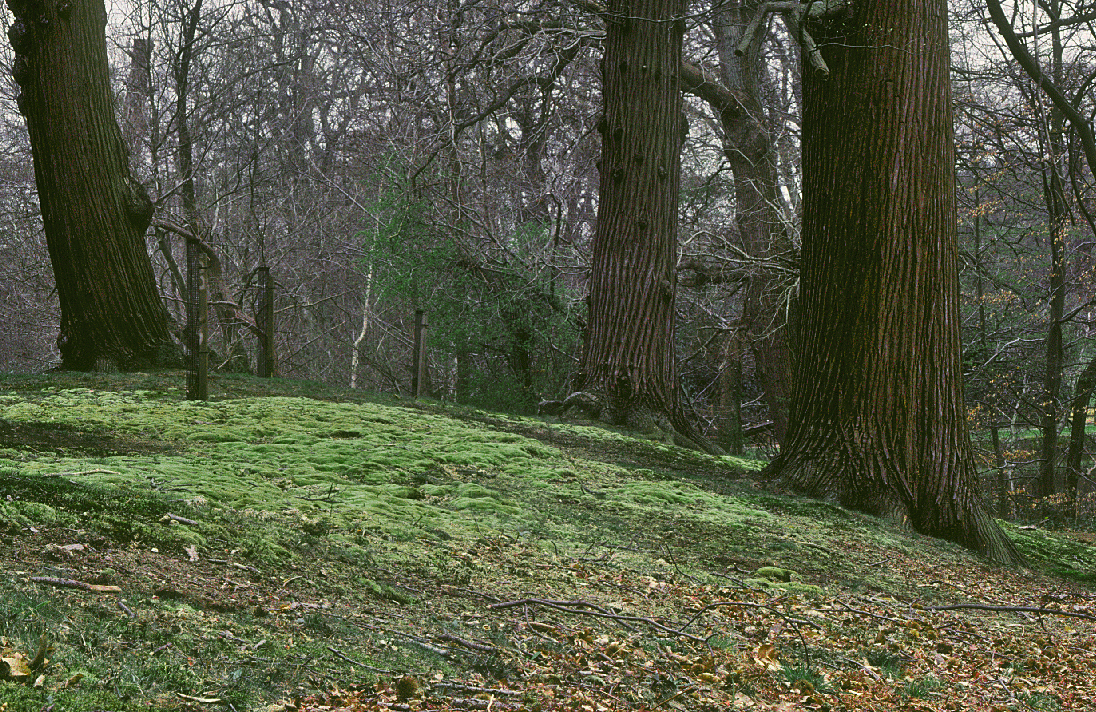
The type locality of Hydnellum nemorosum showing mossy mound with Castanea sativa in Berkshire, England Photo and scanned image; © A. Martyn Ainsworth
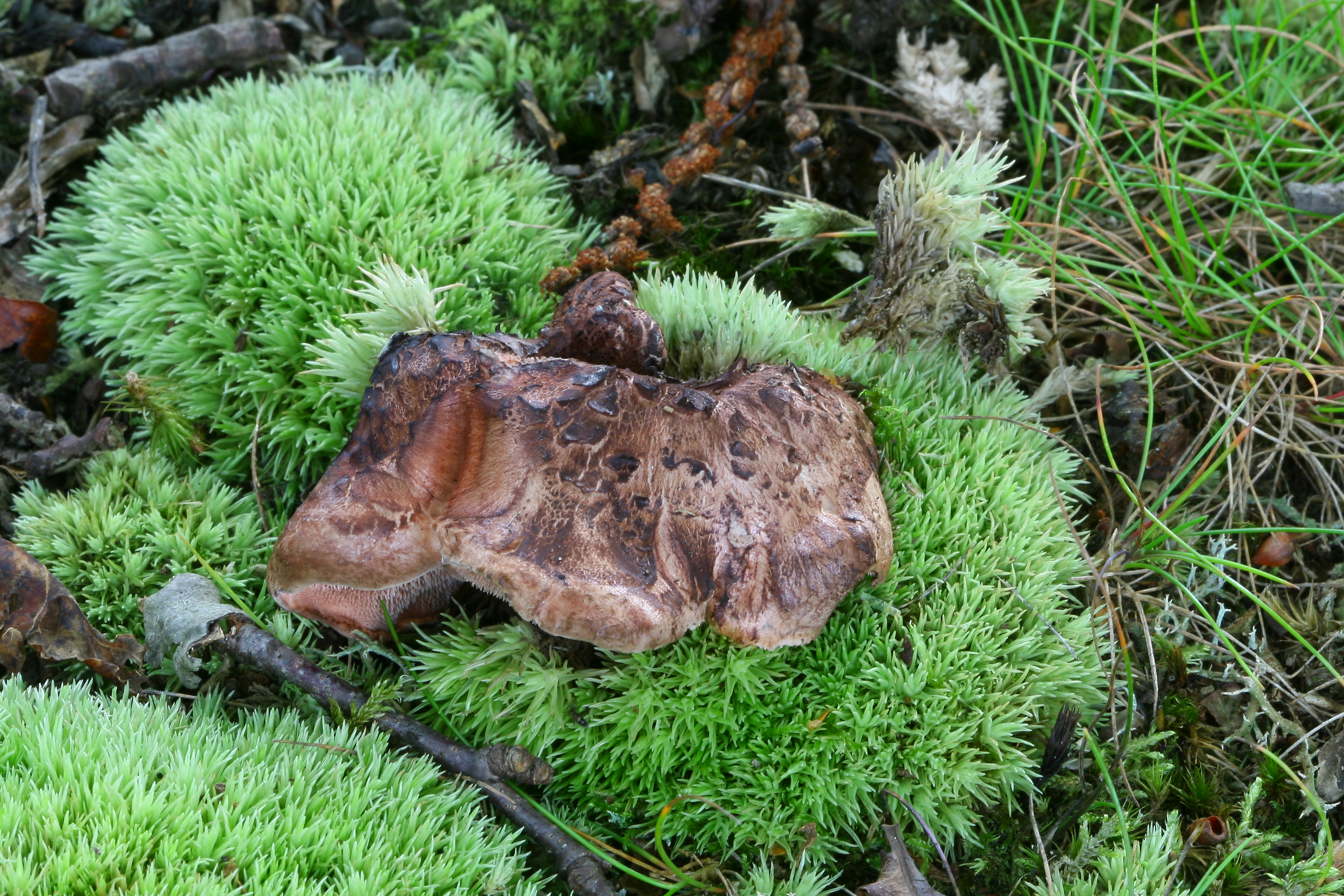
Hydnellum nemorosum at its type locality in Berkshire, England Photo; © A. Martyn Ainsworth