- Proposed
- 2Under Assessment
- 3Preliminary Assessed
- 4Assessed
- 5Published
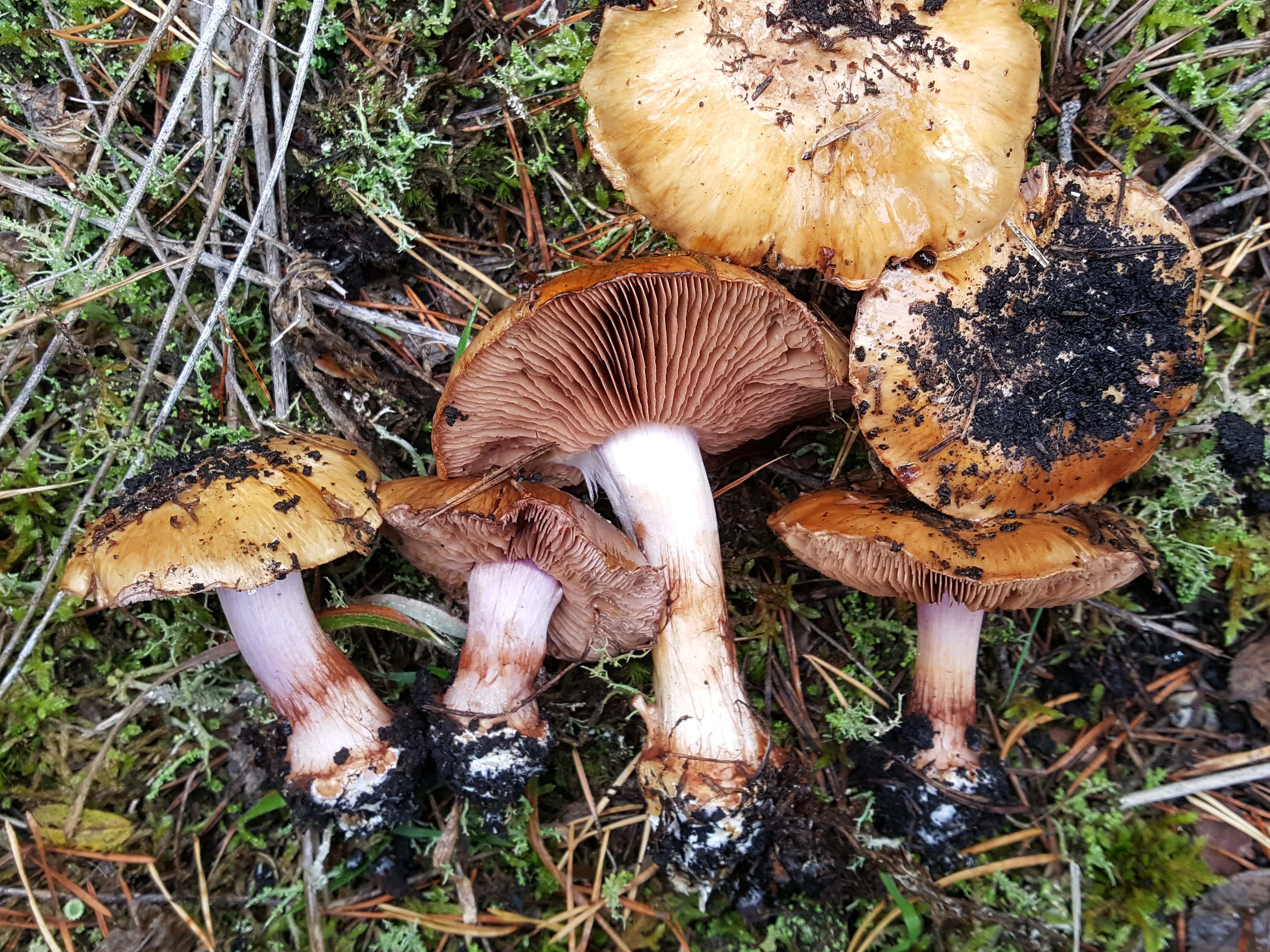
Cortinarius glaucoelotus Brandrud, Dima, Krisai, Ballarà & Peintner
- Scientific name
- Cortinarius glaucoelotus
- Author
- Brandrud, Dima, Krisai, Ballarà & Peintner
- Common names
- IUCN Specialist Group
 Mushroom, Bracket and Puffball
- Kingdom
- Fungi
- Phylum
- Basidiomycota
- Class
- Agaricomycetes
- Order
- Agaricales
- Family
- Cortinariaceae
- Assessment status
- Proposed
- Proposed by
- Michael Krikorev
- Comments etc.
- Michael Krikorev
Assessment Notes
Taxonomic notes
Why suggested for a Global Red List Assessment?
Many calcareous conifer forest fungi are habitat specialists linked to mature silver fir forests, and occasionally to pine- or beech-dominated stands on calcareous soils. These species are characteristic elements of the fragmented calcareous montane fir forests of Central and Southern Europe and are declining as these narrow, scattered habitats continue to contract.
Geographic range
Cortinarius glaucoelotus is known from a very scattered and disjunct European range, with confirmed records from Austria, Spain, and Russia, and a newly documented occurrence in Sweden (Gotland). The species appears to have a highly fragmented distribution restricted to specialized calcareous conifer forest habitats.
Population and Trends
The decline is primarily driven by long-term loss and degradation of mature Abies forests due to modern forestry practices, including replacement of fir stands with spruce plantations and increased logging pressure. Additional factors such as tourism development, road building, ski infrastructure, quarry expansion, loss of traditional grazing, and climate-related stressors further reduce suitable habitat in many regions.
Population Trend: Decreasing
Habitat and Ecology
A mycorrhizal fungus associated with calcareous conifer forests. It occurs in long-continuity, calcareous pine or fir forests, including ancient, grazed pine forests on Gotland and comparable calcareous conifer systems elsewhere in Europe. These habitats are globally rare and support a distinct assemblage of specialized mycorrhizal fungi.
Threats
The species is threatened by the decline and fragmentation of calcareous conifer forests across Europe. Major pressures include intensified forestry, replacement of native fir or pine stands with spruce plantations, loss of long-continuity forest structure, expansion of tourism infrastructure, road construction, quarrying, and abandonment of traditional grazing in some regions. Climate-related stressors may further affect the narrow ecological niche of these habitats.
Conservation Actions
Protection of remaining calcareous conifer forests and maintenance of long-term forest continuity are essential. Conservation should aim to limit habitat conversion, restrict clear-cutting and spruce planting in key areas, and preserve traditional grazing where it contributes to habitat structure. Monitoring of known sites and inclusion of these forest types in national habitat red lists are recommended.
Research needed
Further surveys are required to clarify the species’ true distribution, ecological requirements, and population size. Molecular confirmation of similar Cortinarius taxa across Europe would help determine whether additional, overlooked populations exist. Long-term habitat monitoring is needed to assess population trends and the impacts of forestry and climate change.
Use and Trade
Not used in trade or human consumption.