- Proposed
- Under Assessment
- Preliminary Assessed
- Assessed
- CRPublished
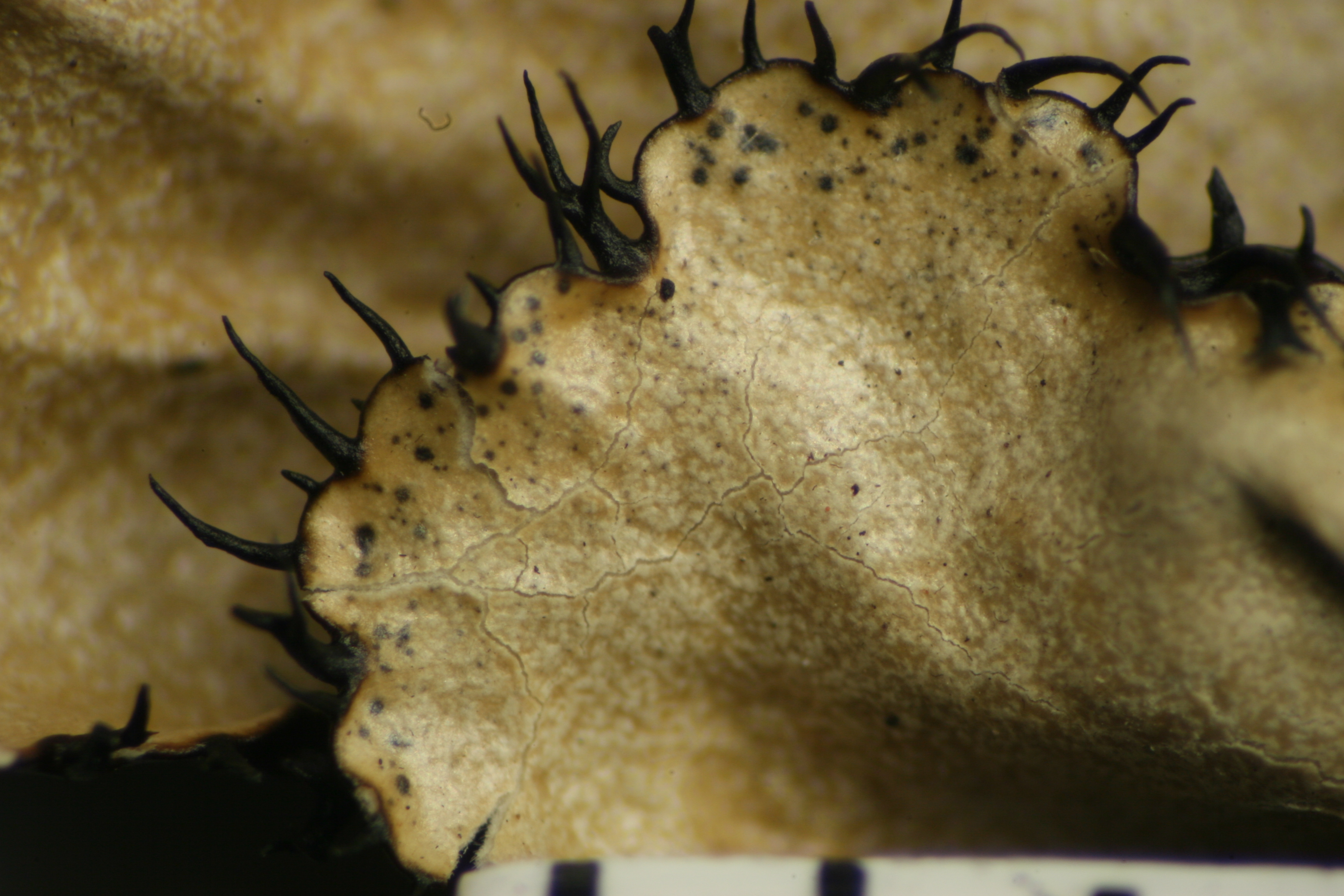
Parmotrema bifidum A.A. Spielm. & Marcelli
Search for another species...
- Scientific name
- Parmotrema bifidum
- Author
- A.A. Spielm. & Marcelli
- Common names
- IUCN Specialist Group
 Lichens
- Kingdom
- Fungi
- Phylum
- Ascomycota
- Class
- Lecanoromycetes
- Order
- Lecanorales
- Family
- Parmeliaceae
- Assessment status
- Published
- Assessment date
- 2021-11-15
- IUCN Red List Category
- CR
- IUCN Red List Criteria
- B1ab(iii)+2ab(iii); D
- Assessors
- Emerson Gumboski; Thiago Kossmann; Diogo Henrique Costa-Rezende; Adriano Spielmann; E. Ricardo Drechsler-Santos
- Reviewers
- Jessica Allen (IUCN SSC Lichen Specialist Group)
Assessment Notes
The content on this page is fetched from The IUCN Red List of Threatened Species: https://www.iucnredlist.org/species/209742938/210566572
Justification
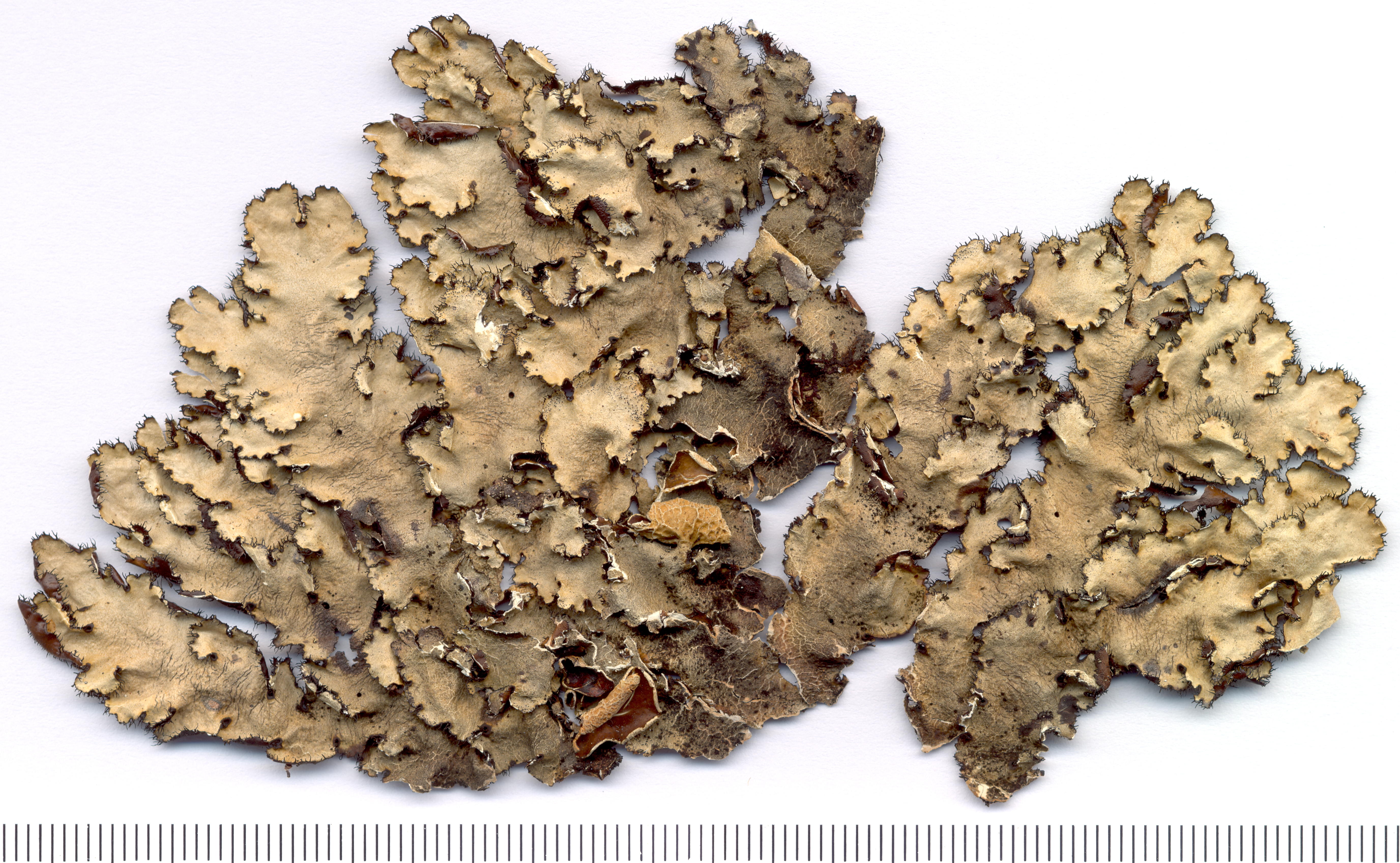
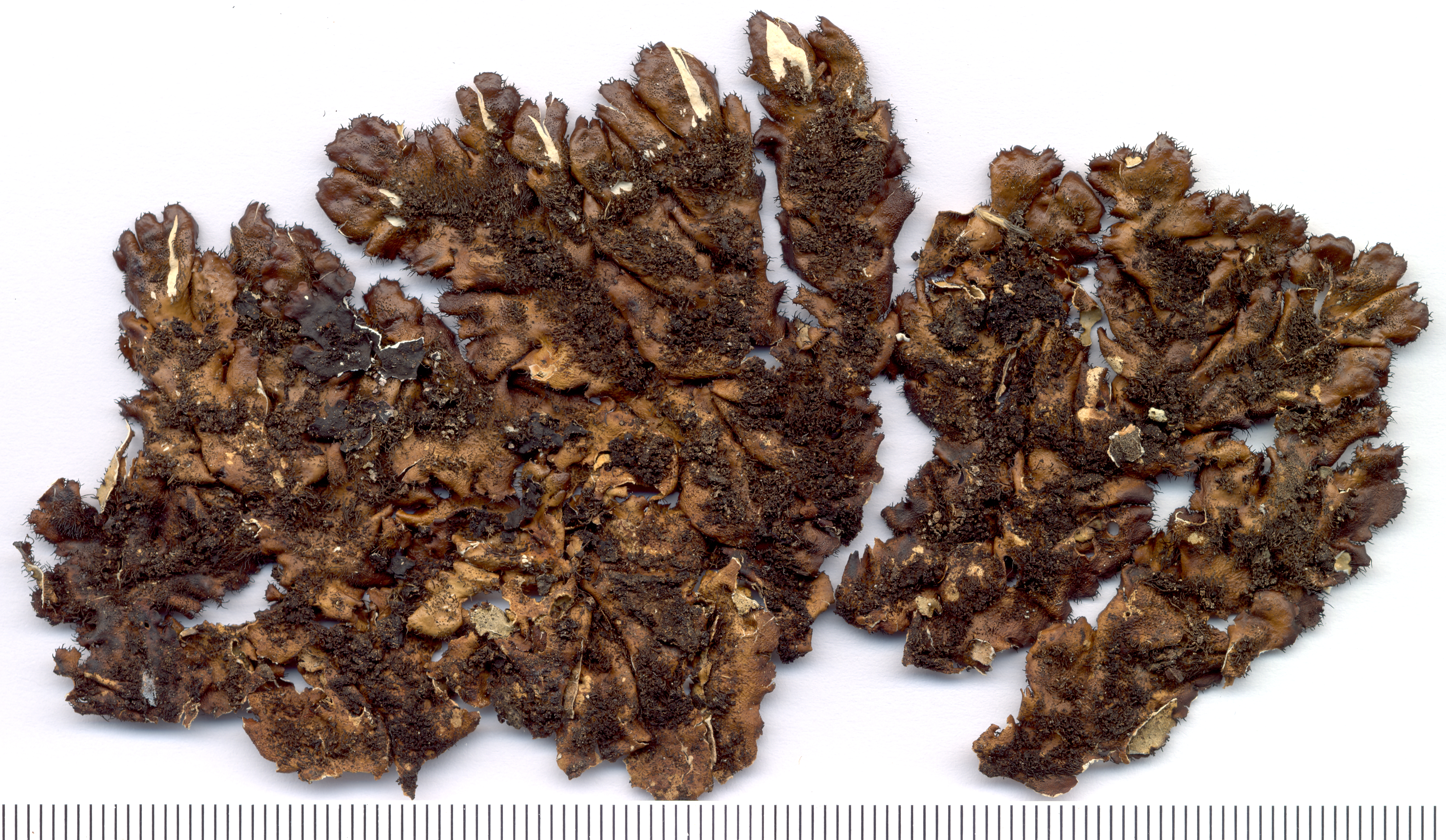
The lichen species Parmotrema bifidum is known only from the type locality, where it was collected in Chapada dos Guimarães National Park, Mato Grosso, Brazil in 1894. The species was formally described only in 2020, and has not been found elsewhere (one location). Despite an extensive herbaria review and further surveys in the type area, this species has never been found again. It seems that Parmotrema bifidum has/had a very narrow distribution, possibly being endemic to the Mato Grosso highlands. The species was found growing on rocks in shady areas, and despite occurring within an area protected by national park restrictions, fires that originate from nearby agriculture plantations often become wild and result in habitat loss in the highlands. Therefore, there is a relatively high probability that this species may be already Extinct. Further surveys are required to confirm this, but if it is found to still be extant its persistence depends on the creation of more protected areas and better management of wildfires and forest conservation. Overall, P. bifidum is assessed as Critically Endangered (Possibly Extinct).Geographic range
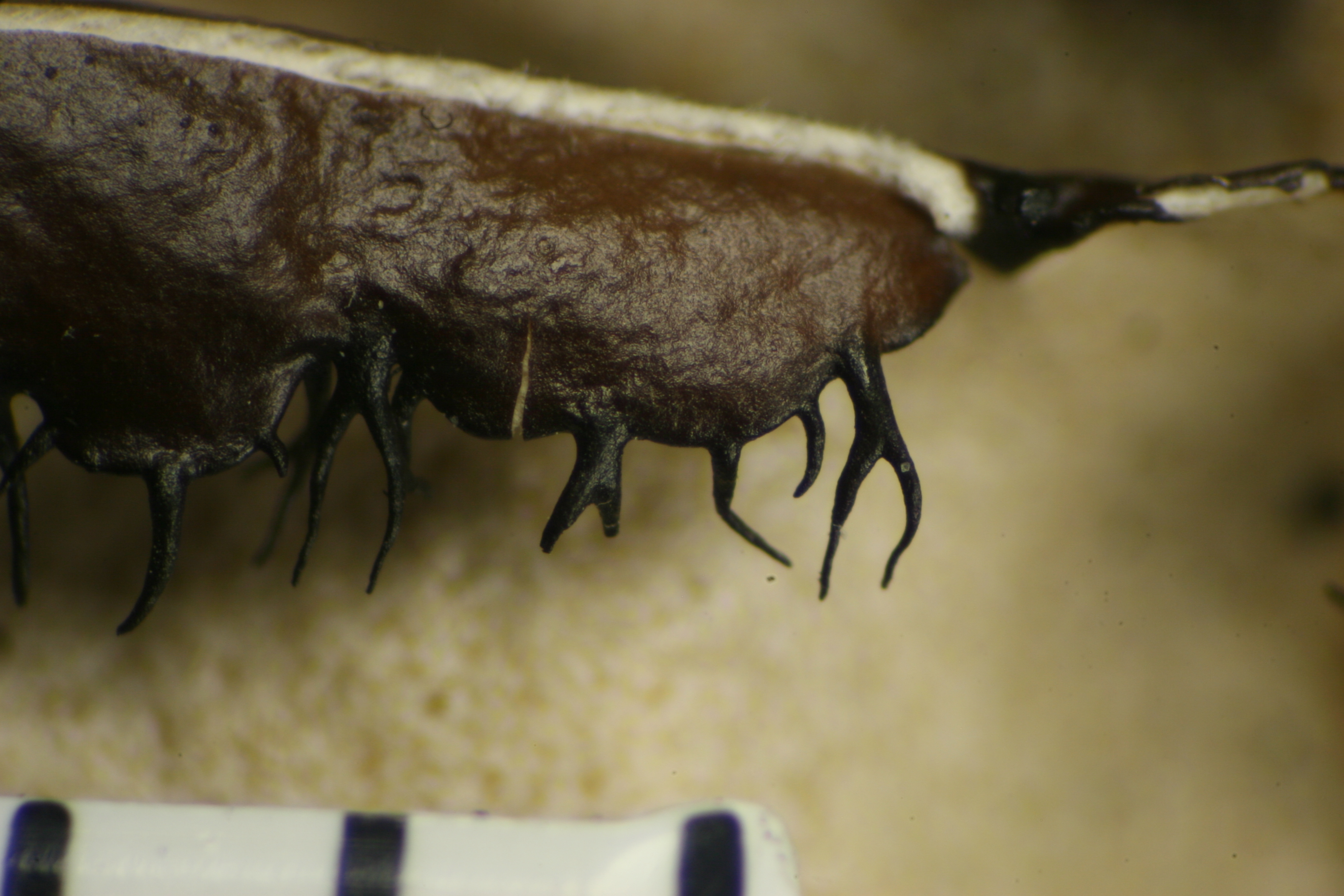
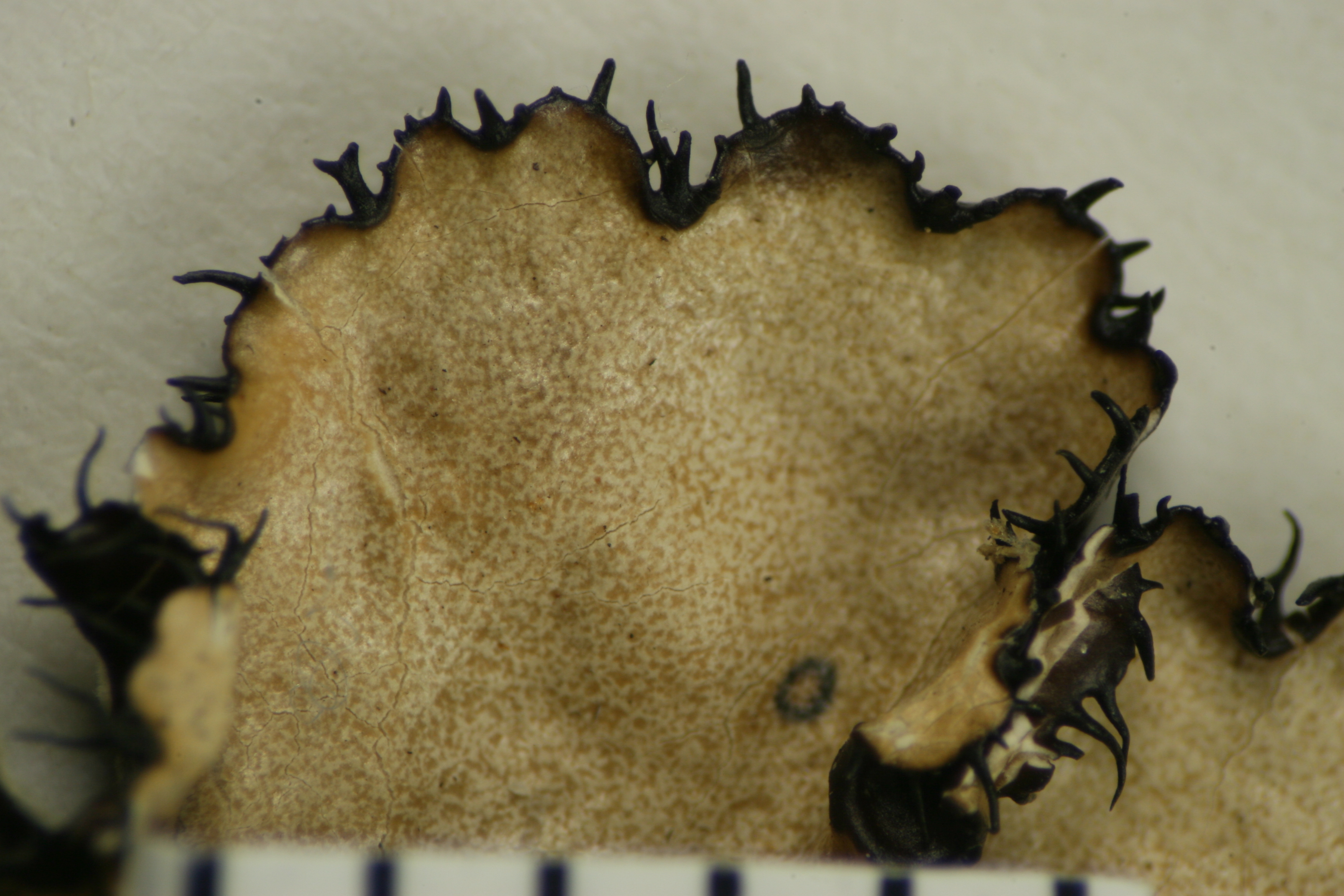
Parmotrema bifidum is known only from the type locality (Chapada dos Guimarães, MT). It was collected in central Brazil in 1894 by the famous lichenologist G.O. Malme, and formally described only in 2020. It is thought that Parmotrema bifidum has/had a very narrow distribution, being possibly endemic to the Mato Grosso highlands. Several famous lichen collectors, including Klaus Kalb, Marcelo Pinto Marcelli and André Aptroot, visited the type locality and did not collect this species again (see for example Aptroot and Souza 2021). Despite an extensive herbaria review, this species was never found again, despite being a very characteristic species of the genus Parmotrema.Population and Trends
The entire population is presumed to be completely extirpated. No individuals have been observed since 1984, and if it persists it is likely to occur in tiny numbers.
Population Trend: Unknown
Habitat and Ecology
This is a saxicolous lichen that grows over rocks in shadow habitats at the mountain area in the Chapada dos Guimarães region. It is thought that Parmotrema bifidum has a very narrow distribution, being possibly endemic to the Mato Grosso highlands.Threats
Central Brazil is being increasingly threatened by habitat loss, especially by the extensive monocultures and associated fires. Fires are often used as a tool for clearing land for plantations, but get out of control and can impact protected areas where Parmotrema bifidum could occur. There is evidence that suggests that wildfires in Brazilian savannas are impacting lichens (Mistry 1998).Parmotrema bifidum was probably collected in the area that now belongs to the Chapada dos Guimarães Park, a protected area with 327.7 km2 (32,769 hectares). Even being a protected area, the occurrence of fire on it occurs annually.