- Proposed
- 2Under Assessment
- 3Preliminary Assessed
- 4Assessed
- 5Published
Hebeloma vesterholtii Beker & U. Eberh.
- Scientific name
- Hebeloma vesterholtii
- Author
- Beker & U. Eberh.
- Common names
- IUCN Specialist Group
 Mushroom, Bracket and Puffball
- Kingdom
- Fungi
- Phylum
- Basidiomycota
- Class
- Agaricomycetes
- Order
- Agaricales
- Family
- Strophariaceae
- Assessment status
- Proposed
- Proposed by
- Simon Harding
- Comments etc.
- Simon Harding
Assessment Notes
Taxonomic notes
Why suggested for a Global Red List Assessment?
This proposal suggests that Hebeloma vesterholtii meets the conditions for listing under Vulnerable B2ab(iii), based on the available evidence. The species is known from a small number of sequenced and vouchered records representing very few locations across Europe, and its Area of Occupancy (AOO) is expected to fall well below the threshold for Vulnerable.
Both of the species’ known habitat types show documented, ongoing decline. In deciduous woodland, the species depends on mature broadleaf hosts (Fagus, Quercus, Carpinus, Castanea), which are affected by forestry operations, soil disturbance, and structural changes that reduce the quality and continuity of ectomycorrhizal networks.
A confirmed, sequenced record from ancient calcareous grassland in England demonstrates that the species also occupies open calcareous habitats. These grasslands are among the most threatened ecosystems in the UK. The Griffiths report provides national‑scale evidence of long‑term decline, fragmentation, and degradation of semi‑natural, nutrient‑poor grasslands. The associated host plant, Helianthemum nummularium, is listed as Vulnerable (VU) on the England Red List of Vascular Plants (2025), further indicating deterioration of this habitat. The species’ presence within this Helianthemum‑associated ecological ladder links it directly to a declining habitat network.
Across both habitat types, continuing decline in habitat quality is inferred from well‑documented pressures including agricultural intensification, abandonment of traditional grazing, scrub encroachment, land development, loss of mature woodland structure, nitrogen deposition, and climate‑driven changes in soil moisture regimes.
Although H. vesterholtii is likely under‑recorded, particularly in grasslands where fruitbodies are sparse and easily overlooked, the available evidence is sufficient to indicate that the species would likely meet the thresholds for Vulnerable if formally assessed. Under‑recording does not negate the clear pattern of habitat decline, nor the species’ reliance on ecosystems that are contracting in extent and quality.
Accordingly, this proposal presents H. vesterholtii as meeting the conditions for listing under VU B2ab(iii), pending formal assessment.
Geographic range
Hebeloma vesterholtii is known from a small number of sequenced and vouchered records distributed across multiple European countries, including the United Kingdom (England), the Netherlands, Germany, France, Switzerland, Italy, Spain, Estonia, Sweden and Denmark. These records indicate a scattered but limited European distribution based on confirmed material.
The species is currently known from very few locations, and its Area of Occupancy (AOO) is expected to fall well below the threshold for Vulnerable. Additional occurrences may exist but remain undetected due to low survey intensity and the difficulty of identifying Hebeloma species without microscopy and sequencing.
The geographic range presented here reflects the best available evidence for the species, recognising that the true distribution is likely wider but currently obscured by limited survey effort.
Population and Trends
The global population size of Hebeloma vesterholtii is unknown, but the species is currently documented from very few sequenced and vouchered records across Europe. These records represent a small number of locations, and the species is likely under‑recorded, particularly in grassland habitats where fruitbodies are sparse, ephemeral, and easily overlooked.
The available evidence indicates that the species occurs in two declining habitat types: deciduous broadleaf woodland and ancient calcareous grassland. Both habitats are undergoing continuing decline in extent and quality, driven by well‑documented pressures. In woodland, the loss of mature broadleaf hosts and structural changes associated with forestry and land management may reduce the continuity of ectomycorrhizal networks. In calcareous grasslands, long‑term national‑scale decline is evidenced by the Griffiths report, which documents sustained loss, fragmentation, and degradation of semi‑natural, nutrient‑poor grasslands in England.
The species’ confirmed association with Helianthemum nummularium — itself listed as Vulnerable (VU) on the England Red List of Vascular Plants (2025) — further indicates that part of its ecological network is linked to a declining host plant within a contracting habitat system.
Although the true population trend cannot be quantified, the continuing decline in habitat quality across both woodland and calcareous grassland provides a strong basis for inferring a continuing decline in the population of H. vesterholtii. This inference is consistent with patterns observed in other ectomycorrhizal fungi and with the broader findings of global fungal assessments, where habitat‑driven declines are often detectable even when population data are sparse.
Accordingly, this proposal treats the population of H. vesterholtii as small, fragmented, and inferred to be in continuing decline, based on the condition of its habitats and the limited number of confirmed locations.
Population Trend: Decreasing
Habitat and Ecology
Hebeloma vesterholtii is currently known from a small number of sequenced and vouchered records across Europe. Most confirmed occurrences derive from deciduous broadleaf woodland on calcareous or base‑rich soils, typically with Fagus, Quercus, Carpinus, or Castanea. These woodland records confirm the species’ long‑recognised association with mature broadleaf hosts in base‑rich forest systems.
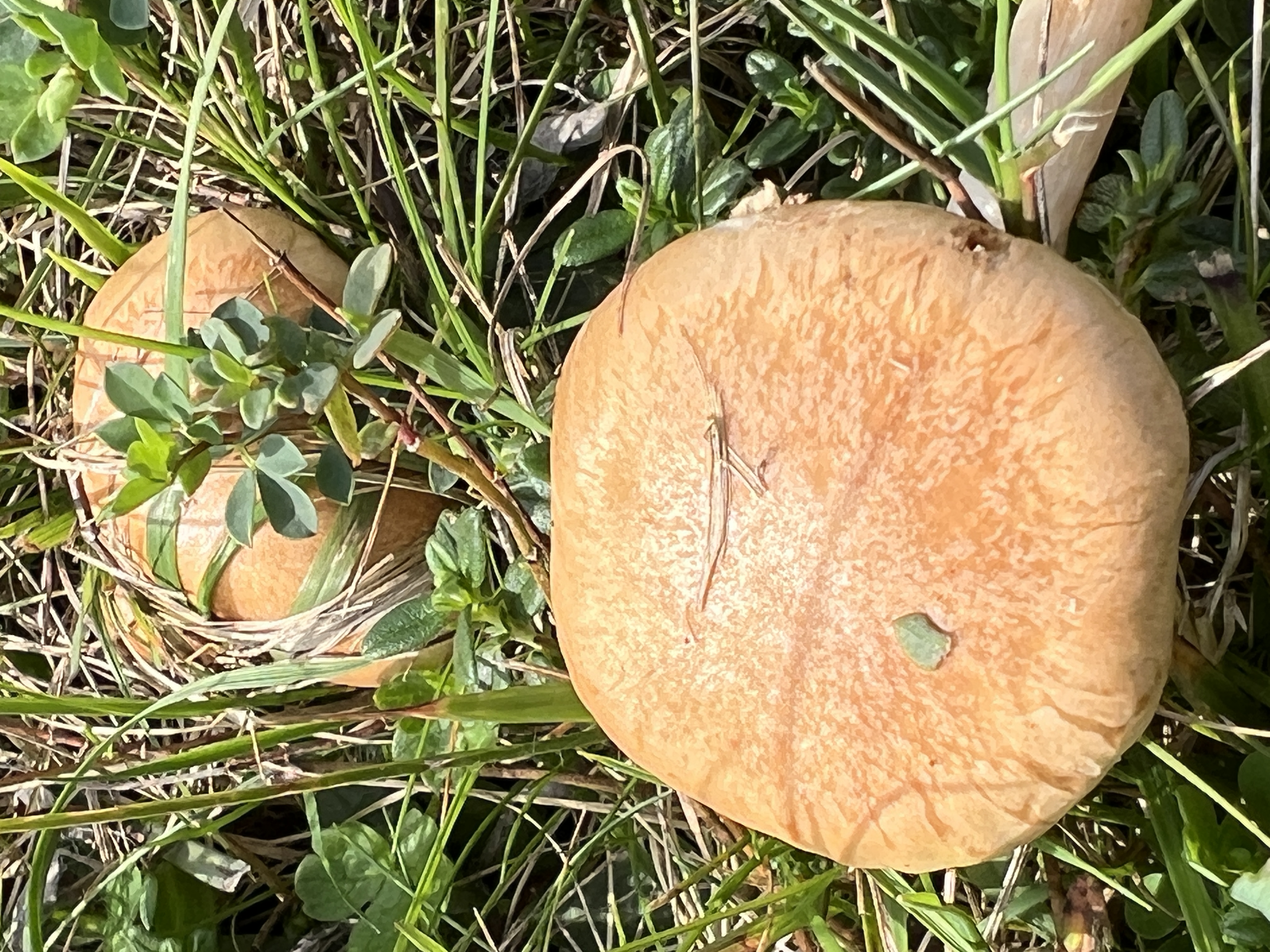
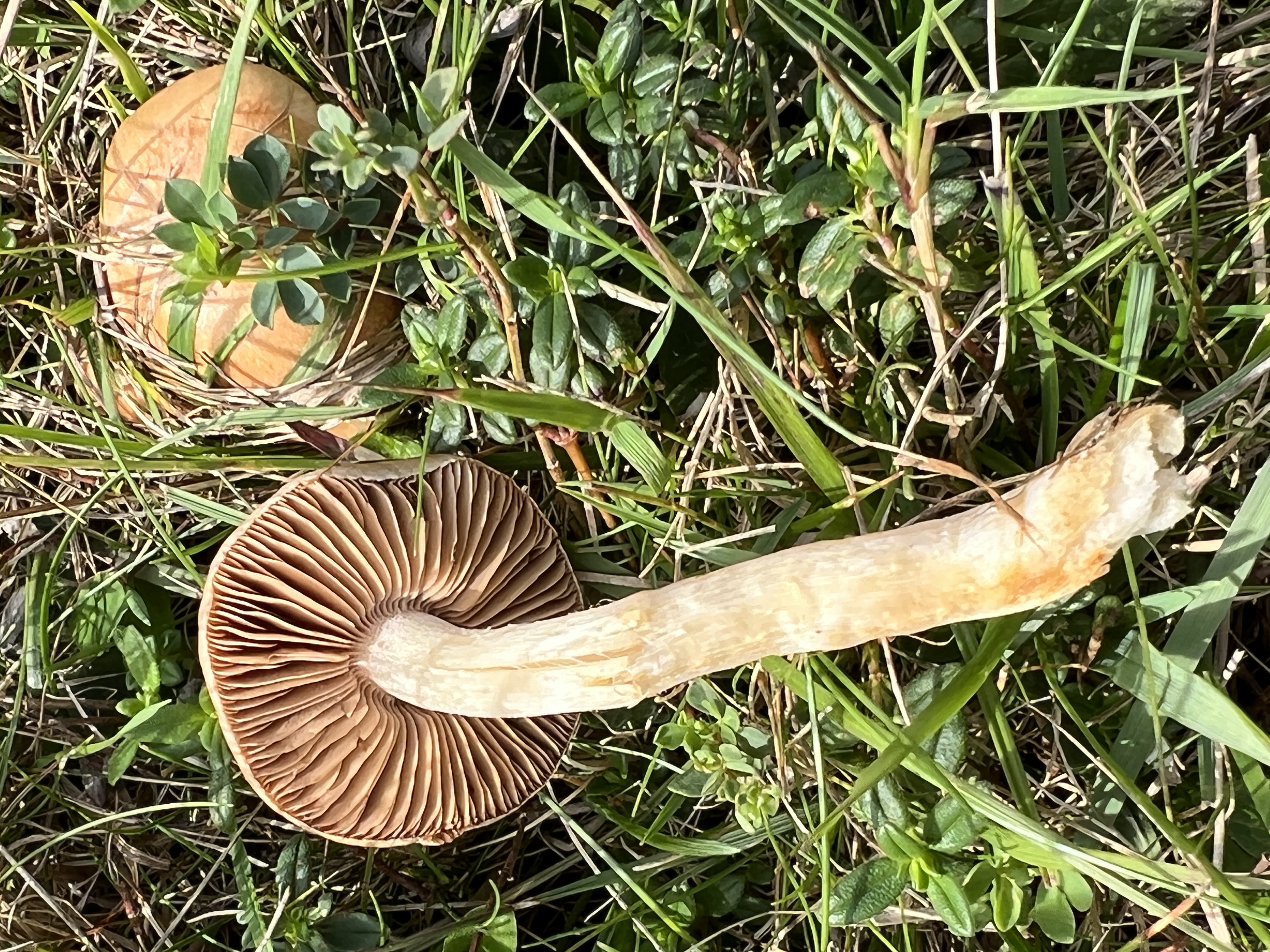
A fully documented, sequenced, and vouchered collection from England demonstrates that the species also occurs in ancient calcareous grassland, where it has been suggested to associate with Helianthemum nummularium — an association now confirmed by this record. This represents the first ecologically complete documentation for the species and provides evidence of a broader habitat amplitude than previously recognised. The grassland host, Helianthemum nummularium, is listed as Vulnerable (VU) on the England Red List of Vascular Plants (2025), indicating that this component of the species’ ecological network occurs within a declining habitat system.
Grassland Hebeloma are chronically under‑recorded: they fruit briefly, sparsely, and often inconspicuously, and many collections remain unsequenced or misidentified. As a result, grassland occurrences of H. vesterholtii are likely under‑documented rather than genuinely rare, and the species may be more widespread in calcareous grasslands than current data indicate.
H. vesterholtii functions as a broad‑habitat ectomycorrhizal species capable of occupying both woodland and calcareous grassland ecosystems, with its true distribution and ecological role obscured primarily by low survey intensity and the difficulty of identifying Hebeloma species without microscopy and sequencing.
Threats
Hebeloma vesterholtii faces threats that operate across both of its known habitat types: deciduous woodland and ancient calcareous grassland. Although the species is likely under‑recorded, the habitats it occupies are experiencing well‑documented declines, and these pressures may be affecting the species more severely than current data reveal.
In woodland habitats, threats include habitat loss and degradation through forestry operations, removal of mature broadleaf hosts (Fagus, Quercus, Carpinus, Castanea), soil disturbance, and changes in woodland structure. These processes can disrupt ectomycorrhizal networks and reduce the availability of suitable microhabitats.
In calcareous grasslands, the threats are more acute. These habitats have undergone long‑term decline across England due to agricultural intensification, abandonment of traditional grazing, scrub encroachment, and land development. The key associated host plant, Helianthemum nummularium, is listed as Vulnerable (VU) on the England Red List of Vascular Plants (2025), reflecting the ongoing contraction and fragmentation of this habitat. The Griffiths grassland decline report provides clear national‑scale evidence of the sustained loss, fragmentation, and degradation of semi‑natural, nutrient‑poor grasslands, reinforcing that the Helianthemum‑associated ecological ladder — which includes H. vesterholtii and other specialised fungi — is increasingly at risk.
Additional pressures include climate change, which may alter soil moisture regimes and phenology in both woodland and grassland systems, and pollution, particularly nitrogen deposition, which can shift plant and fungal community composition.
A further overarching issue is chronic under‑recording. Grassland Hebeloma fruit briefly and sparsely, and many collections remain unsequenced or misidentified. This means that declines linked to habitat loss may be occurring without detection.
Overall, the species is exposed to habitat‑based threats in both woodland and calcareous grassland, with the latter representing a declining and conservation‑priority ecosystem. Improved survey effort and molecular verification are essential to detect and understand the scale of these threats.
Conservation Actions
Targeted mycological survey work is urgently needed to document the true distribution, habitat range, and ecological role of Hebeloma vesterholtii. Fungi remain profoundly under‑studied, yet they perform essential daily ecological work that underpins entire trophic networks. Their roles are largely invisible because mycological survey effort is low, fruitbodies are ephemeral, and many taxa are easily misidentified without sequencing. Strengthening systematic fungal survey work — in both woodland and calcareous grassland, including Helianthemum‑associated systems — is therefore critical to documenting and conserving the ecological networks this species supports.
Priority actions include:
Targeted surveys in ancient calcareous grasslands, especially those supporting Helianthemum nummularium, to determine the frequency and ecological significance of grassland occurrences.
Continued monitoring of woodland populations associated with Fagus, Quercus, Carpinus, and Castanea to establish trends and detect potential declines.
Sequencing of field collections from both habitats to resolve misidentifications and improve understanding of habitat breadth.
Habitat protection for both woodland and calcareous grassland sites where the species is confirmed, recognising that these habitats support distinct but interconnected ecological networks.
Research on ecological function, including potential mycorrhizal associations in grassland systems, to clarify the species’ role within the Helianthemum ladder and broader soil fungal communities.
Integration into conservation planning, ensuring fungi are represented in site‑based management and biodiversity strategies.
Given the chronic under‑recording of grassland fungi and the high rates of Data Deficiency across ectomycorrhizal species, improved survey effort and molecular verification are essential to reveal the full ecological scope of H. vesterholtii and to safeguard the habitats on which it depends.
Research needed
Targeted research is required to clarify the true distribution, habitat range, and ecological associations of Hebeloma vesterholtii. The species is known from a small number of sequenced and vouchered records, many of which lack habitat or host metadata, limiting interpretation of its ecological breadth. Improved documentation will strengthen understanding of its occurrence across both woodland and calcareous grassland systems.
Priority areas for research include:
Targeted field surveys — Systematic surveys in both deciduous broadleaf woodland and ancient calcareous grassland, with particular attention to sites supporting Helianthemum nummularium, to determine the frequency and distribution of grassland occurrences.
Ecological studies — Investigation of host associations in both habitat types, including confirmation of ectomycorrhizal partners and assessment of whether the species forms consistent relationships within the Helianthemum ecological ladder.
Molecular verification — Sequencing of new and historical collections to resolve misidentifications within Hebeloma section Theobromina and to refine understanding of the species’ distribution.
Habitat‑linked monitoring — Long‑term monitoring of confirmed sites to detect changes in habitat quality and to understand how woodland management, grassland condition, and environmental pressures influence occurrence.
Population inference — Development of improved methods for inferring population trends in ectomycorrhizal fungi where fruitbody data are sparse, including integration of soil‑based and root‑associated sampling with vouchered fruitbody records.
These research actions will improve understanding of the species’ ecological role and distribution, support more accurate assessment of its conservation status, and inform management of the habitats on which it depends.
Use and Trade
Hebeloma vesterholtii Beker & U.Eberh is not known to be used or traded