- Proposed
- Under Assessment
- CRPreliminary Assessed
- 4Assessed
- 5Published
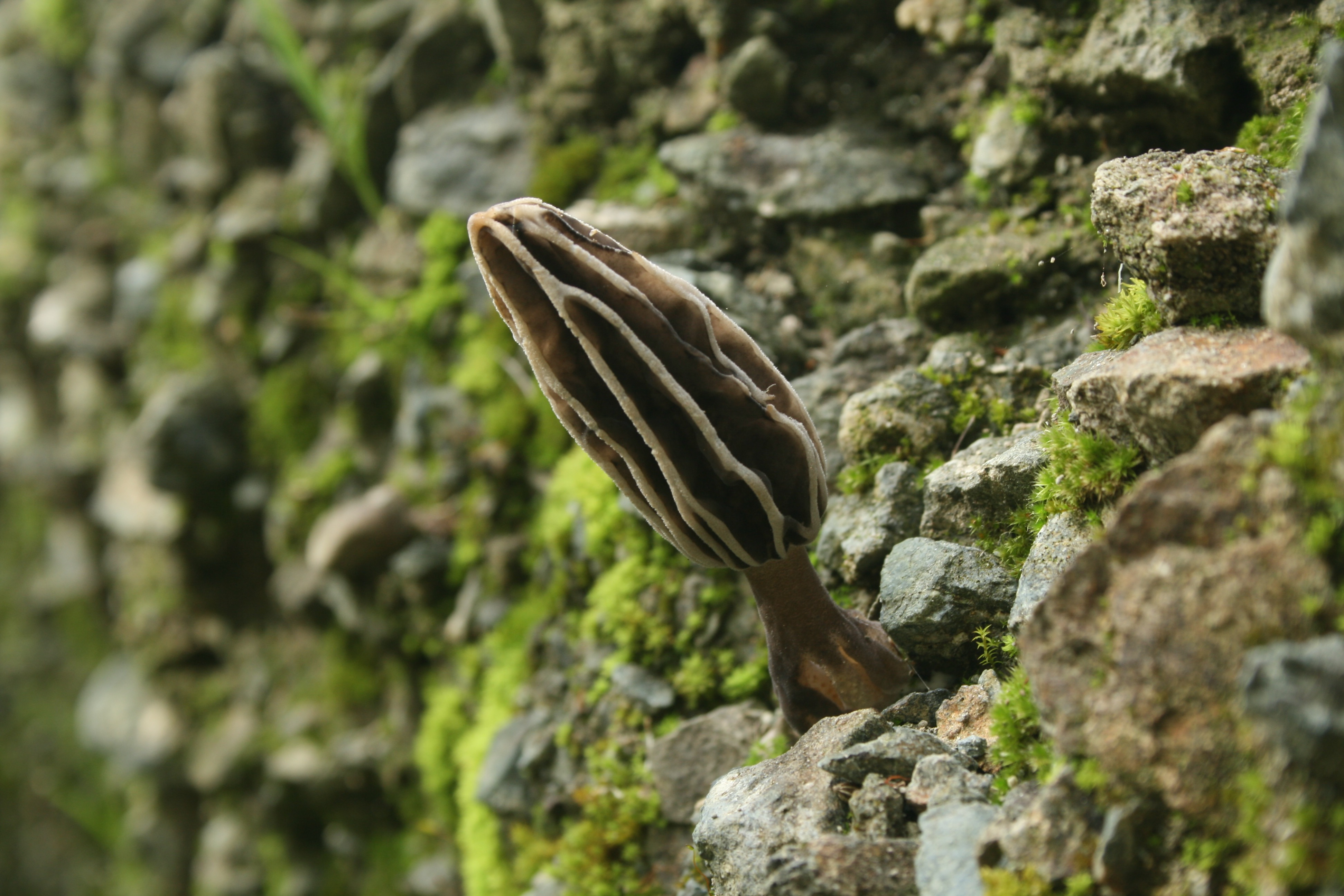
Morchella anatolica Işıloğlu, Spooner, Allı & Solak
- Scientific name
- Morchella anatolica
- Author
- Işıloğlu, Spooner, Allı & Solak
- Common names
- IUCN Specialist Group
 Cup-fungi, Truffles and Allies
- Kingdom
- Fungi
- Phylum
- Ascomycota
- Class
- Pezizomycetes
- Order
- Pezizales
- Family
- Morchellaceae
- Assessment status
- Preliminary Assessed
- Preliminary Category
- CR C1 + D
- Proposed by
- Michael Loizides
- Assessors
- Juan Andrés Sánchez-Gaviria
- Comments etc.
- Michael Loizides, Aída M. Vasco-Palacios
Assessment Notes
Justification
endemic to the Mediterranean basin
Taxonomic notes
Morchella anatolica is an ultra-rare species described in 2010 from Turkey. It’s an ancient climatic relict from the last ice age and, together with its sister-species M. rufobrunnea, occupies a basal position in global morel phylogenies which means it’s ancestral to all other species of Morchella.
Why suggested for a Global Red List Assessment?
Ultra rare climatic relict from the Pleistocene, ancestral in genus Morchella. Narrowly endemic in the Mediterranean basin.
Geographic range
Cyprus, Turkey, Spain, Kefalonia isl. (Greece), Lesvos isl. (Greece), Zakynthos isl. (Greece).
Population and Trends
Morchella anatolica is narrowly endemic to the Mediterranean basin and so far known from less than a dozen localities in four countries (Turkey, Spain, the island of Cyprus and insular Greece, see also Geographic range). The species is critically endangered because: (1) its extremely restricted distribution range; (2) its notable rarity in all the localities it has been documented so far; (3) its commercial value as an edible species belonging to a genus of highly sought after fungi commanding high prizes in international markets; and (4) accelerated climate changes and habitat loss particularly in the eastern Mediterranean basin, where most known collections of M. anatolica originate from. From genetic polymorphisms of its populations and comparison with the distribution of its sister-species M. rufobrunnea, it appears that M. anatolica had once a wider population became probably fragmented during the Pleistocene glaciations. Its current population range is therefore best understood as climatic refugia (see Loizides et al. 2021).
Population Trend: Decreasing
Habitat and Ecology
Saptrotrophic, possibly also facultatively biotrophic, occasionally found in the vicinity of Olea europaea.
Threats
As described in “Population and current Trends”: The species should be regarded as critically endangered because: (1) its extremely restricted distribution range; (2) its notable rarity in all the localities it has been documented so far; (3) its commercial value as an edible species belonging to a genus of highly sought after fungi commanding high prizes in international markets; (4) accelerated climate changes and habitat loss particularly in the eastern Mediterranean basin, where most known collections of M. anatolica originate from; and (5) A putative reduction of its distribution range since the Pleistocene, with its current distribution area likely representing a refugium.
Conservation Actions
To the best of the author’s knowledge, this ultra-rare and critically endangered species is so far under no protective legislation or protected by any conservation measures in any of the countries documented.
Research needed
Use and Trade
Bibliography
Loizides M, Gonou Z, Fransuas G, Drakopoulos P, Sammut C, Martinis A, Bellanger J-M (2021) Extended phylogeography of the ancestral Morchella anatolica supports preglacial presence in Europe and Mediterranean origin of morels. Mycologia 113(3):559–573. https://doi.org/10.1080/00275514.2020.1869489