- Proposed
- Under Assessment
- Preliminary Assessed
- Assessed
- LCPublished
Thecaphora melandrii (Syd.) Vánky & M. Lutz
- Scientific name
- Thecaphora melandrii
- Author
- (Syd.) Vánky & M. Lutz
- Common names
- IUCN Specialist Group
 Rust and Smut
- Kingdom
- Fungi
- Phylum
- Basidiomycota
- Class
- Ustilaginomycetes
- Order
- Urocystidales
- Family
- Glomosporiaceae
- Assessment status
- Published
- Assessment date
- 2020-05-24
- IUCN Red List Category
- LC
- Assessors
- M Piatek; Paul Smith; M Lutz
- Reviewers
- Teodor Denchev (Institute of Biodiversity and Ecosystem Research, Bulgarian Academy of Sciences, Bulgaria)
Assessment Notes
Justification
There is some evidence of a decline in the area occupied as shown by recent records (Smith et al. (2020 (in press)): Map 1), but we strongly suspect that this a result of fluctuation in recording rather than fluctuation in the occurrence of Thecaphora melandrii. There are many individuals (systemically infecting plants of the hosts) in each locality, so the total population of mature individuals is likely to be large. Finally, no specific threats have been identified. Therefore, this species is classified as Least Concern.Taxonomic notes
Thecaphora melandrii is segregated from T. saponariae using phylogenetic and morphological evidence that shows that it is host delimited (Vánky and Lutz 2007). It is confirmed from Silene latifolia, S. nutans, S. vulgaris and Stellaria graminea, and by Smith et al. (2020 (in press)) from Silene uniflora. Some other tentative host assignments have been suggested, but need confirmation by phylogenetic analysis, and are not included in this assessment.Geographic range
This species is confined to Europe, with few to scattered records in several countries. Smith et al. (2020 (in press)) present a map of the known localities.Population and Trends
There is some evidence of decline in the area occupied as shown by recent records (see Map 1 in Smith et al. (2020 (in press)), but we strongly suspect that this a result of fluctuations in recording rather than fluctuations in the occurrence of Thecaphora melandrii. We are not aware of any systematic monitoring of any populations. There are many individuals (systemically infecting plants of the hosts) in each locality, so the total population of mature individuals is likely to be large. Finally, no specific threats have been identified. Therefore, it is suspected to be stable.
Population Trend: Stable
Habitat and Ecology
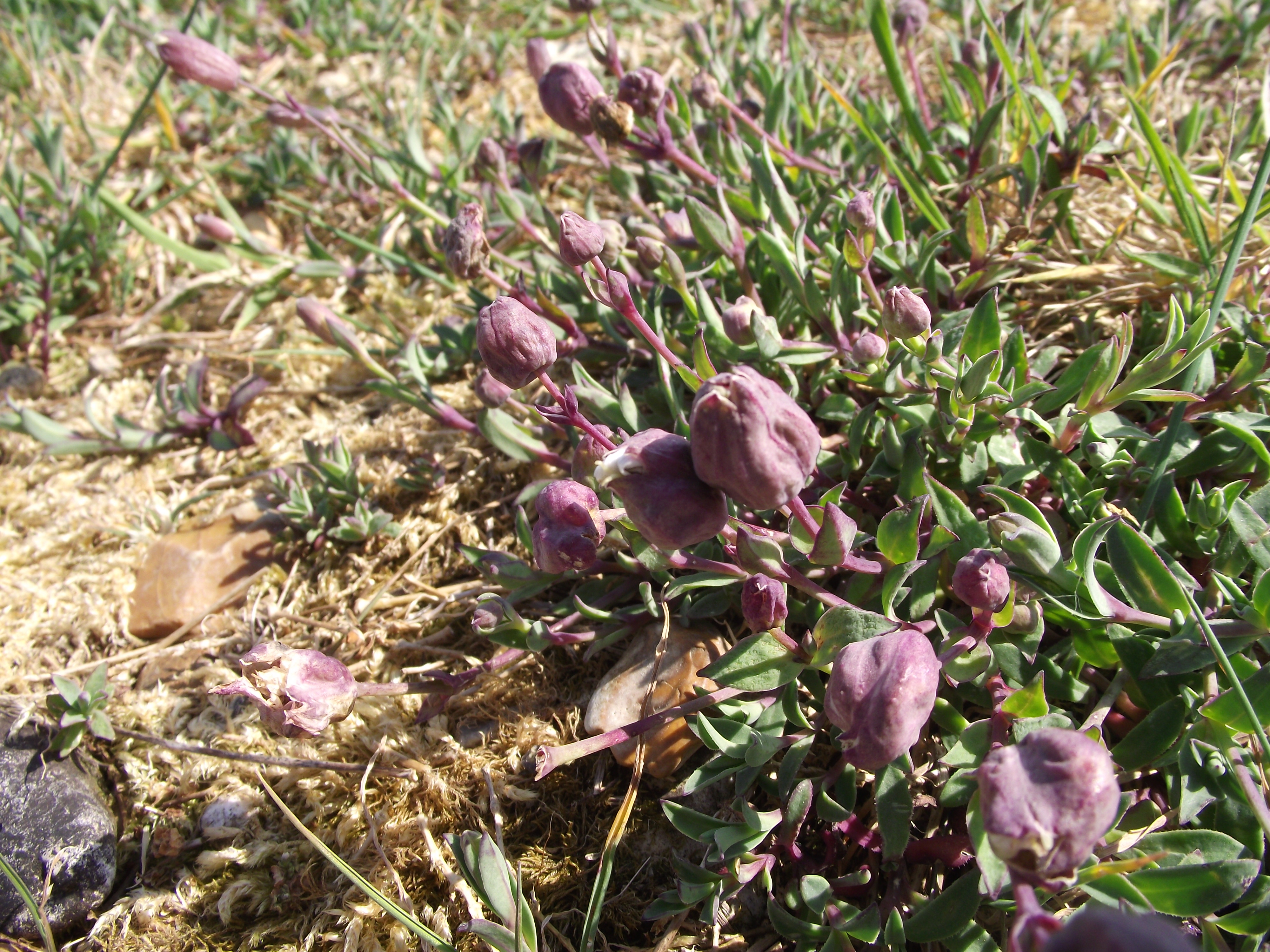
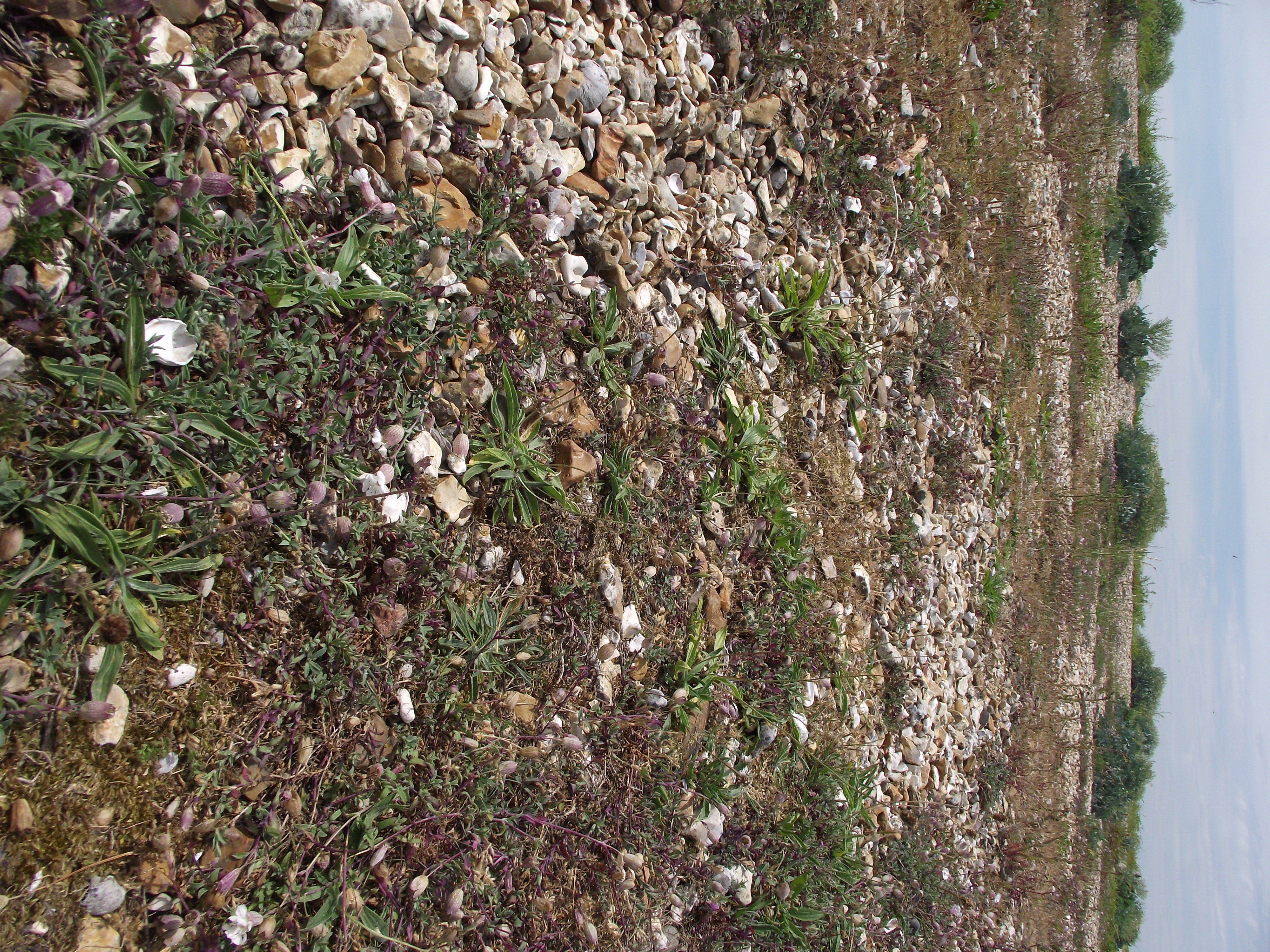
Thecaphora melandrii is a parasite which produces spore balls in the flowers of several hosts in the Caryophyllaceae. T. melandrii deforms and partially replaces the inner floral organs, and is therefore gall-forming. The infection remains within the calyx, but causes the buds to deform and remain closed, so that the infection is clearly detectable externally. The host species confirmed by genetic analysis (Silene latifolia ssp. alba, S. nutans, S. uniflora, S. vulgaris and Stellaria graminea) are very widespread and occupy a wide range of habitats. Smith et al. (2020 (in press)) summarise the known distribuition, from which it can be seen that many of the records are from continental climate zones, but coastal populations have also been found in Sweden and recently in the United Kingdom, and it seems likely that T. melandrii can thrive in a range of habitats where its hosts are present.Threats
No threats have been identified. Thecaphora melandrii is limited by the availability of its host plants in sufficient quantity and with sufficient continuity, but the confirmed hosts are common and widespread, which makes it surprising that T. melandrii itself is apparently much more restricted, even accounting for the relative under-recording of microfungi. Because the populations are so widely spread, local threats seem unlikely to have any appreciable impact on the overall population.Conservation Actions
One site in the UK is part of a designated Site of Special Scientific Interest, but no special management activity is needed.
No conservation actions are currently required. This may change as the local distribution of Thecaphora melandrii becomes better known.
Further research on Thecaphora melandrii falls into three strands:
1. Taxonomic work on the relation between Thecaphora species on caryophyllaceous hosts. Smith et al. (2020 (in press)) summarise questionable records from a number of hosts, and Vánky and Lutz (2007) list some tentative host species. Collections of Thecaphora species on these hosts are needed, so that they can be included in phylogenetic analyses, and either assigned to T. melandrii or to one or more related (or possibly new) species. This will clarify the host range.
2. Ecology and distribution
Smith et al. (2020 (in press)) summarise the ecology and distribution, but many of the records lack detail of the habitat, conditions and interactions of Thecaphora melandrii. Additional details of these habitats, and targeted searches to rediscover populations known only from old records and herbarium specimens would be valuable.
3. Coexistence work
Thecaphora melandrii is known to occur with two Microbotryum species (Smith et al. 2020 (in press)). Since all these species infect host anthers, it can be expected that there is competition for the restricted resource constituted by the hosts. T. melandrii creates a systemic infection, and Microbotryum species can also form systemic infections. The occurrence and interactions of these species in natural populations is of interest in understanding the dynamics and persistence of T. melandrii.