- Proposed
- Under Assessment
- Preliminary Assessed
- Assessed
- VUPublished
Phellodon secretus Niemelä & Kinnunen
- Scientific name
- Phellodon secretus
- Author
- Niemelä & Kinnunen
- Common names
 tajgataggsvamp
 huldresølvpigg
 Piilo-orakas
- IUCN Specialist Group
 Mushroom, Bracket and Puffball
- Kingdom
- Fungi
- Phylum
- Basidiomycota
- Class
- Agaricomycetes
- Order
- Thelephorales
- Family
- Bankeraceae
- Assessment status
- Published
- Assessment date
- 2024-12-15
- IUCN Red List Category
- VU
- IUCN Red List Criteria
- A2ce+3ce+4ce
- Assessors
- Sten Svantesson
- Reviewers
- Anders Dahlberg (Swedish Species Information Centre, Uppsala / IUCN SSC Cup-fungus, Truffle and Ally Specialist Group)
Assessment Notes
Justification
Phellodon secretus is a rare pine-associated ectomycorrhizal fungus, mainly confined to dry, acidic, old-growth pine forests. Its small, inconspicuous sporocarps are formed underneath logs and branched. It was not described until 2003 but has thereafter been extensively searched for and used as an indicator species for assessing the protection value of woodland sites in Fennoscandia. It has its main documented occurrence in the boreal parts of Fennoscandia and Russia. It has recently been recorded in USA, Portugal and UK, which may widen its habitat preferences. For now, the major part of the global population of P. secretus is considered to be confined to northern Europe. Typically, only a few mature individuals occur at each forest stand/location and individuals are considered to be long-lived, potentially as old or older than the tree individuals with which it is associated.P. secretus has been, and is being, negatively impacted by clear-cutting and reduced areas of old growth Scots Pines outside protected areas. It is suspected to have declined and to be continuously declining at the global scale due to decreasing area of old growth pine forests, and contributory impacts of nitrogen deposition. Due to its rareness and special ecology, it has a very limited ability to spread and re-establish after clear-cutting. Large scale modern rotation forestry in Fennoscandia and Russia has significantly reduced and will continuously significantly reduce the potential amount of appropriate habitat. In Fennoscandia, the past, ongoing and future population decline inferred from habitat change, i.e. clear-cutting, has been estimated from forest statistics of potential habitat decline to be between up to 50% over 50 years (three generations). Therefore, the species is globally assessed as Vulnerable (A2ce+3ce+4ce).
Taxonomic notes
Phellodon secretus was described in 2003 (Niemelä et al. 2003). Later, an old collection made in southern Finland in 1866 and deposited in Helsinki and Uppsala herbaria, has been identified as P. secretus. Recently, a sporocarps of P. secretus have been found in the UK and DNA from soil samples indicate its presence also in Portugal. Both display a minute genetic difference (3 bases in ITS) when compared to the holotype and other collections from Finland, Sweden and a mycorrhizal root tip recorded in California, USA (Svantesson et al. 2024). There is a small chance these may represent different taxa, but here they are treated as one species.Geographic range
Phellodon secretus is a rare fungus, found with sporocarps in boreal parts of Fennnoscandia (GBIF.org 2024) and European Russia (Arkhangelsk, Leningradskaya and Sverdlovskaya regions; T. Svetasheva pers. comm.). It has also been confirmed from a handful of soil samples from Estonia, soil samples and sporocarps from a single locality in the UK, a soil sample from northern Portugal and from an ectomycorrhizal root tip in California, USA (Svantesson et al. 2024, Wainhouse et al. 2024).Population and Trends
Phellodon secretus is a rare tooth fungus with inconspicuous, small cottony and easily overlooked sporocarps formed underneath fallen pine logs and largely confined to old-growth, dry, acidic pine forests. Since it was described in 2003, it has been been received a lot of attention and been extensively searched for. It is being used as an indicator for forests with high conservation values in Sweden (Nitare 2019). The majority of the European population is located in Sweden, Finland and possibly also Russia. In Norway, the total number of localities are estimated to be 200 (Artsdatabanken 2021), in Sweden 750 (SLU Artdatabanken 2020), in Finland probably within the same range as in Sweden (see Hyvärinen et al. 2019). The Russian population may be larger. These estimates may be too high, as a recent sequence analysis of P. secretus sprocarp collections from Sweden revealed only 1/3 to be of properly identified (Svantesson et al. 2024).
However, it is now clear that the habitat preferences of P. secretus is wider than previously believed and not restricted to dry, boreal localities only. It has recently been recorded in California, USA and within Europe in soil samples from northern Portugal and in the form of both sporocarps and soil samples from wooded heathland in southern England (Svantesson et al. 2024, Wainhouse et al. 2024). Nevertheless, the majority of the population is considered to be located in northern Europe.
In Fennoscandia, old-growth pine forest is estimated to have declined with more than 50% since 1960 (Svensson et al. 2019 from Sweden, Kotiaho 2017 from Finland). Clear-cutting forestry was introduced at a large scale in these countries around 1950 and on average 1% of the productive forest land is clear-cut annually. The habitat loss and reduced habitat quality is estimated to be similar in Russia. The area of boreal old-growth forests is estimated to correlate well with the population of P. secretus, since the species seems to have a poor ability to re-establish after clear-cutting. Hence the forest decline is regarded as an approximate proxy of its population trend (Dahlberg and Mueller 2011, Brandrud and Bendiksen 2014), although additional threats from development and nitrogen-deposition may be adding to population declines. The species is suspected to be declining at a rate of at least 30% (up to c.50%) over three generations (50 years) worldwide (see Dahlberg and Mueller 2011).
Population Trend: Decreasing
Habitat and Ecology
In boreal forests, Phellodon secretus forms ectomycorrhiza with Pinus sylvestris (based on records from pure stands, not root tips) and has its main occurrence in old-growth dry, acidic pine forests, a habitat historically formed by recurrent forest fires and for long a long time used for reindeer-herding. The inconspicuous, small and cottony sporocarps are formed underneath logs and branches on the ground, typically charred from past fires (Niemelä et al. 2003, Nitare 2019). The records from Portugal, UK and USA suggests that the habitat preferences of P. secretus are much wider than previously believed, but further work is required to determine conclusively whether it can switch hosts in different parts of this range (see Svantesson et al. 2024). In USA, it was recorded forming ectomycorrhiza with Pinus muricata (Svantesson et al. 2024). It is unclear if it may also associate with broad-leaved trees, as it was recorded in UK in a stand of Castanea sativa, albeit a planted Scots pine was located 10 m away (Wainhouse et al. 2024). In addition, the UK sporocarps were found fruiting in the open, not on the underside of logs (Wainhouse et al. 2024).Threats
Phellodon secretus is primarily threatened by clear-cutting of old-growth, acidic pine forests (see e.g. Svensson et al. 2019 from Sweden, Kotiaho 2017 from Finland). It is rarely, if ever, observed in forests regenerated after clear-cutting. Hence conversion of old growth forests to managed forest, i.e. reduced amount of habitat, is the main cause of the decline. It may also to some extent be negatively affected by habitat loss due to expansion of urban settlements, military areas, roads etc. into sandy pine forests (see Brandrud and Bendiksen, 2014). Like other hydnoid species in Bankeraceae, P. secretus is probably also strongly negatively affected by nitrogen deposition, which, however, might not be a big problem within its current range but could already have wiped out more southern populations in the past (Arnolds 2010).The major part of the potential pine forest habitat is located in northern Europe, including Russia. Around 1% of the forest is cut annually. Hence a conservative estimate of the potential decline of appropriate habitat is up to 50 % over a 50 year period (three generations, Dahlberg and Mueller 2011) taking into account uncertainties of numbers and size of sites and rates of logging in Russia.
Conservation Actions
Phellodon secretus is nationally Red Listed in Fennoscandia. Old-growth Scots pine forests should be set aside as reserves to protect subpopulations. At these sites, natural or prescribed burning should be considered to maintain desired forest dynamics. The ecology, extent and decline of populations outside the Fennoscandia would shed valuable light on the species, from a conservation perspective.Use and Trade
Phellodon secretus has no commercial use.Source and Citation
Svantesson, S. 2025. Phellodon secretus. The IUCN Red List of Threatened Species 2025: e.T273188695A273188871. Accessed on 22 November 2025.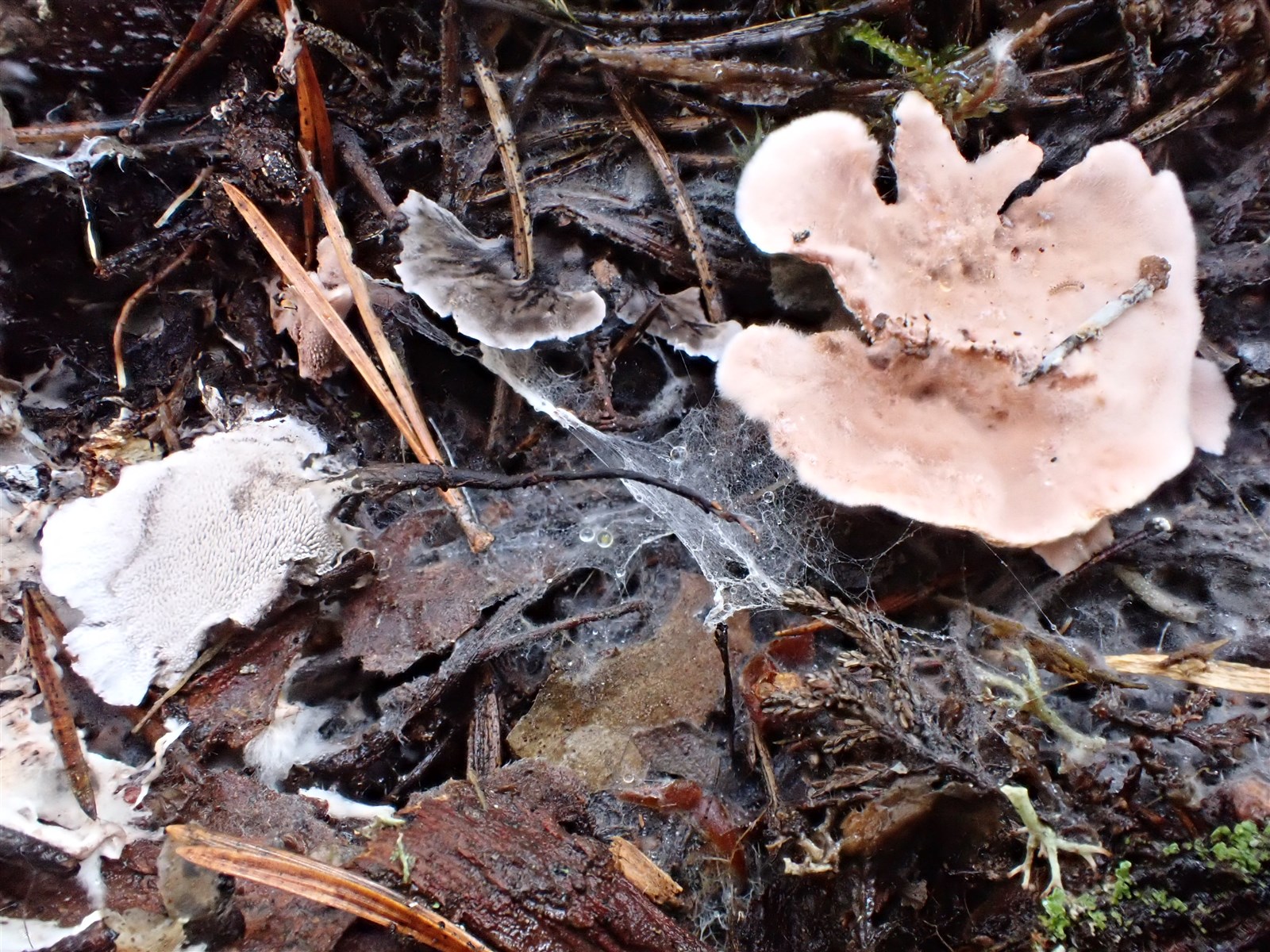
Phellodon secretus (left), Hydnellum gracilipes (right), photo Andreas Öster.
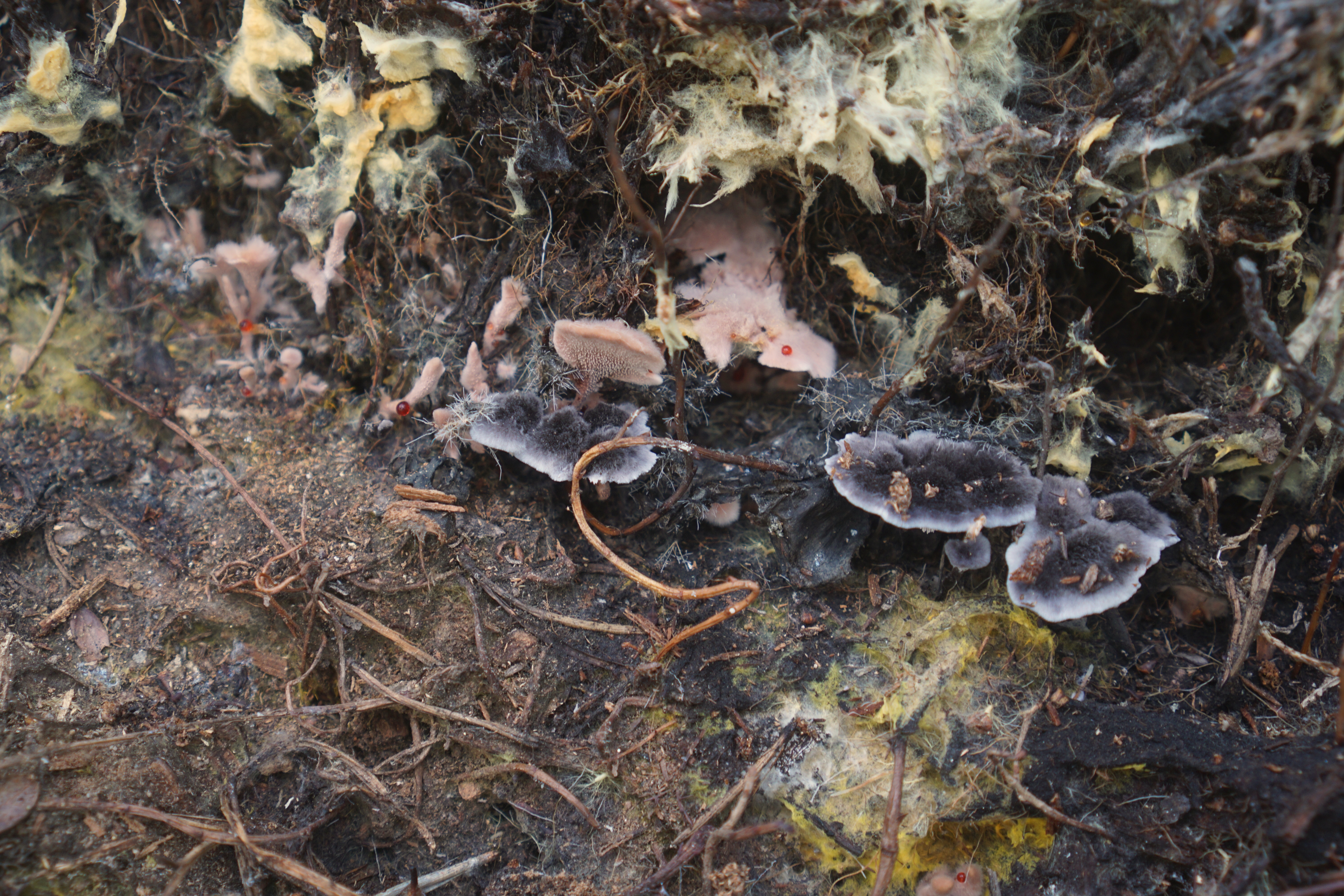
Phellodon secretus (right), Hydnellum gracilipes (left), photo Patrik Nygren
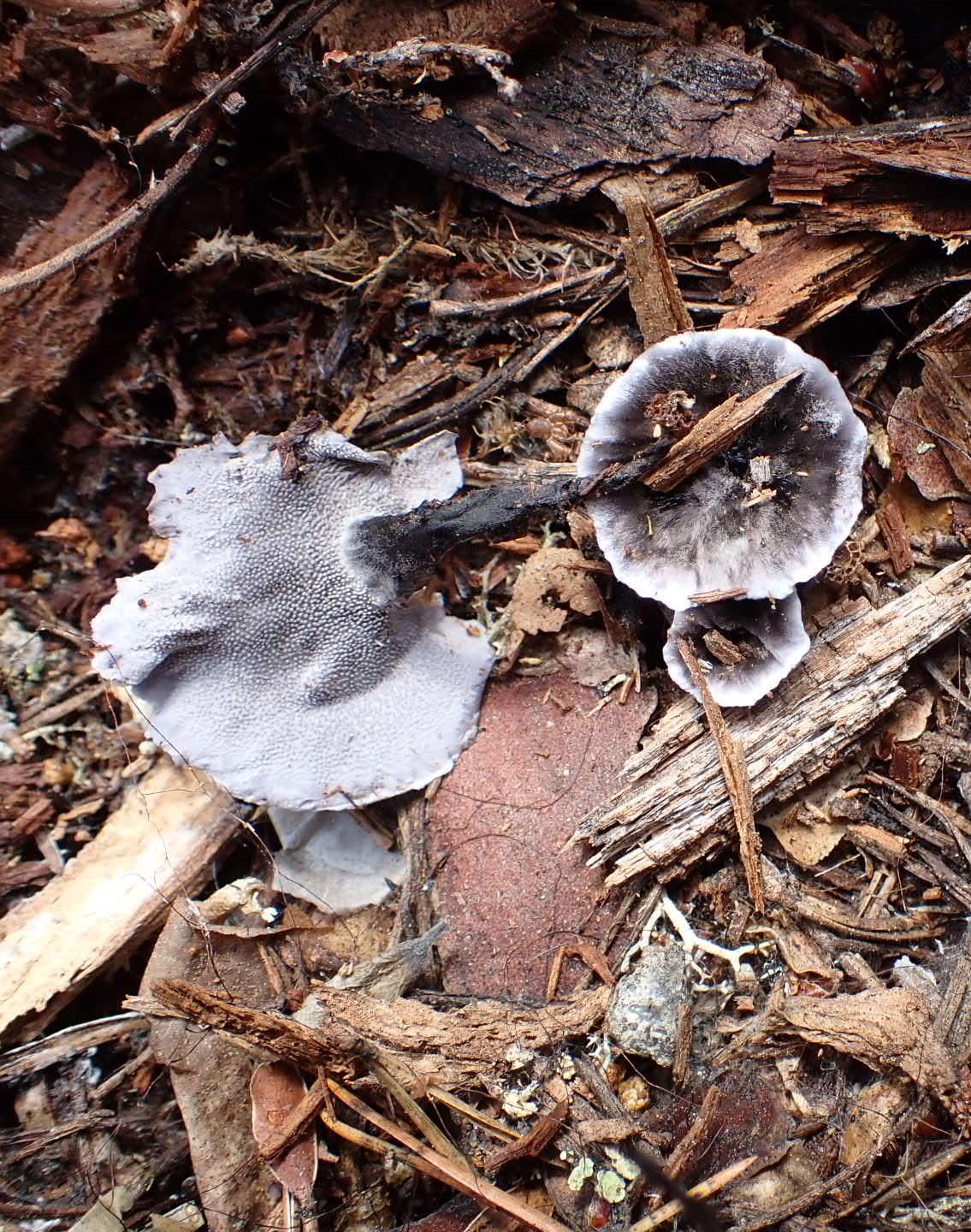
Phellodon secretus, photo Andreas Öster
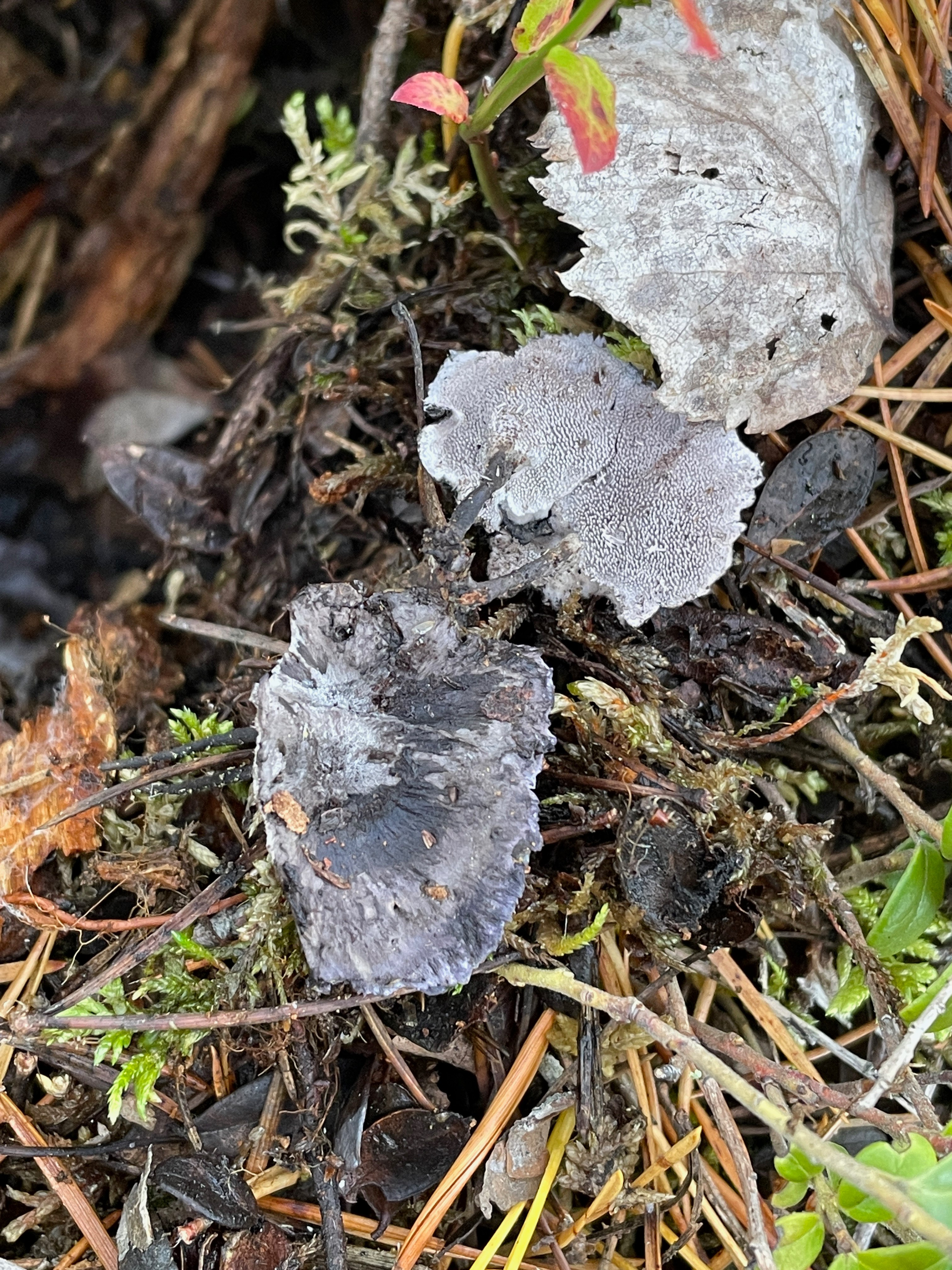
Phellodon secretus, photo Andreas Estensen
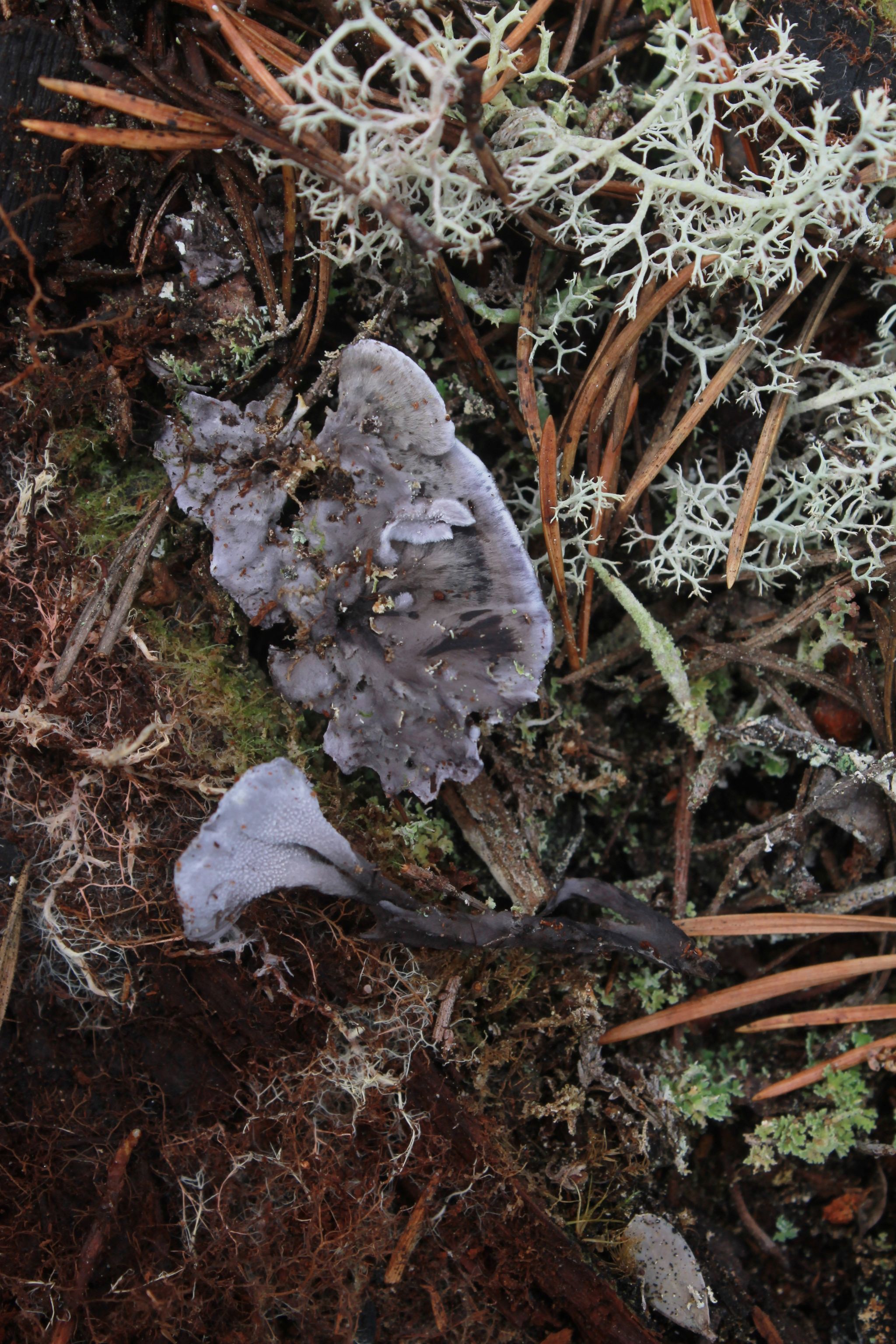
Phellodon secretus, photo Tore Stengrundet
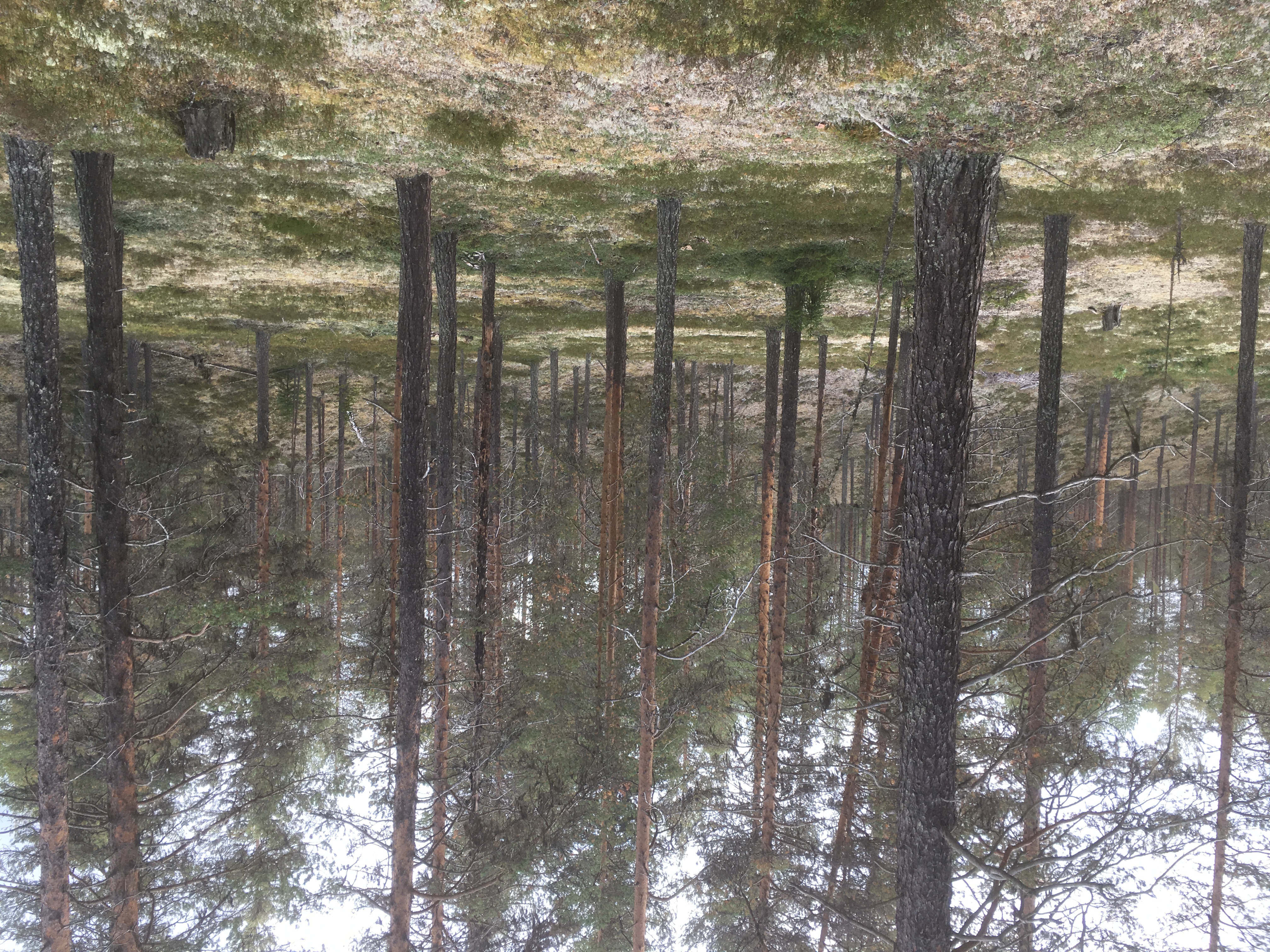
Sandy, acidic pine forest with tree continuity, Sweden, photo Carl Jansson