- Proposed
- 2Under Assessment
- 3Preliminary Assessed
- 4Assessed
- 5Published
Bovista graveolens Schwalb
- Scientific name
- Bovista graveolens
- Author
- Schwalb
- Common names
- IUCN Specialist Group
 Mushroom, Bracket and Puffball
- Kingdom
- Fungi
- Phylum
- Basidiomycota
- Class
- Agaricomycetes
- Order
- Agaricales
- Family
- Agaricaceae
- Assessment status
- Proposed
- Proposed by
- Mikael Jeppson
- Comments etc.
- Mikael Jeppson
Assessment Notes
Taxonomic notes
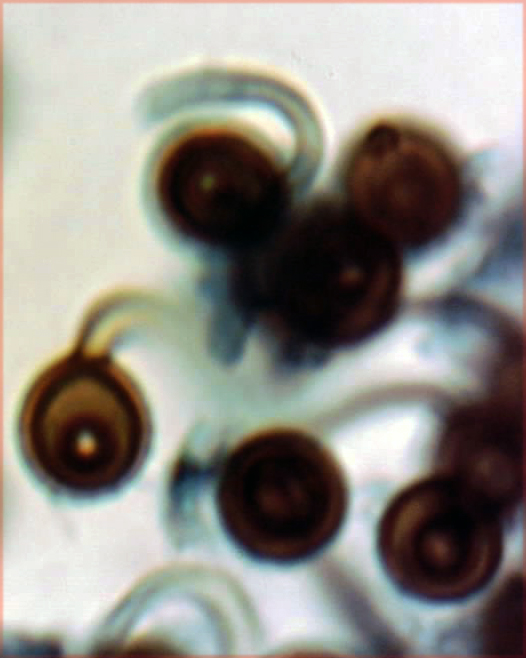
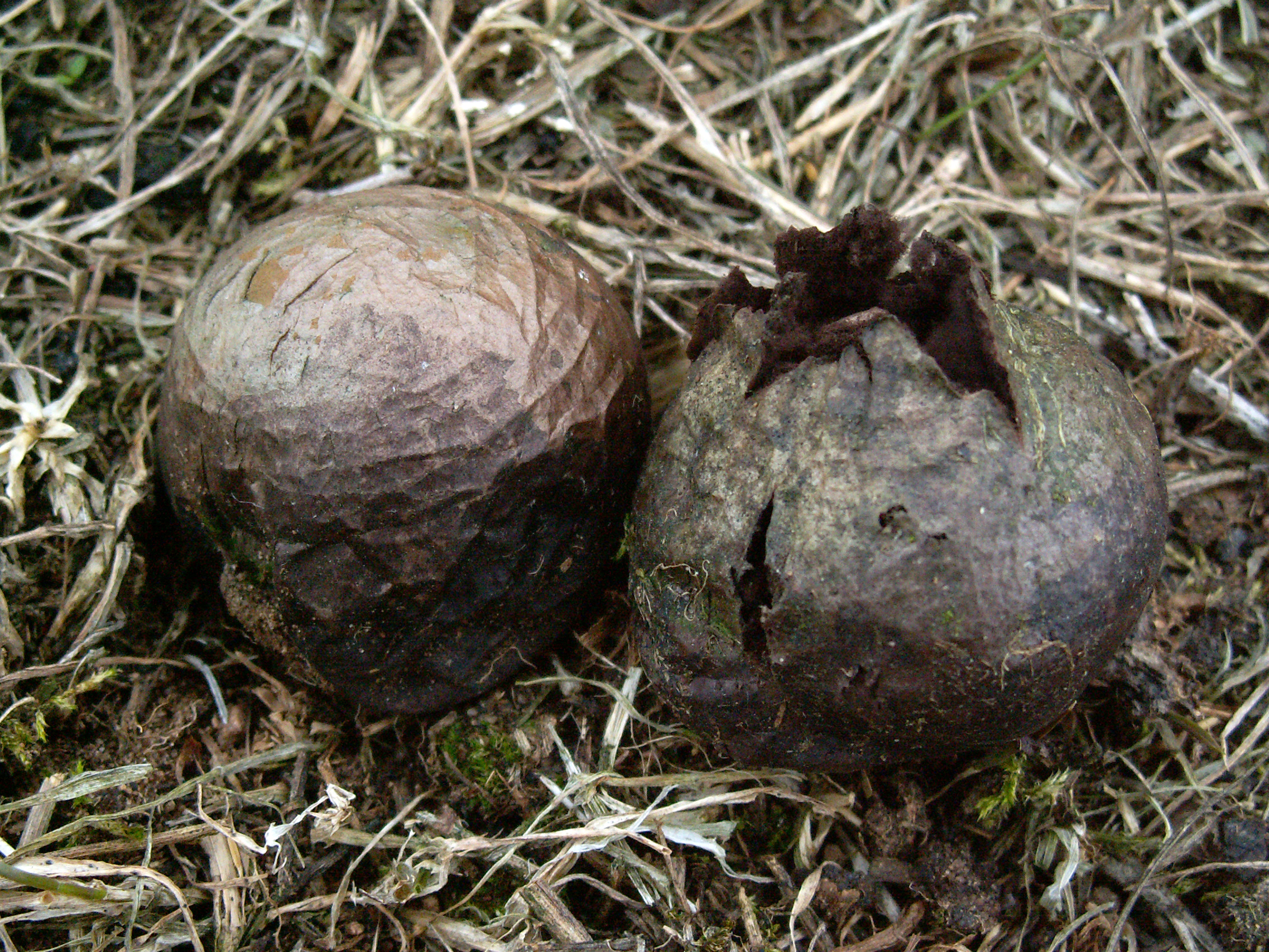
Bovista graveolens is a rare species closely related to the widely distributed and common look-alike B. nigrescens. Identifications require microscopic verification (spores with curved pedicel in B. graveolens, straight pedicel in B. nigrescens).
Why suggested for a Global Red List Assessment?
Bovista graveolens is a rare species with a sub-continental European distribution. Its currently known population is fragmented A number of localities seem to be out-dated and might have changed considerably due to modern land use. However, its preference for nitrogen-rich habitats may indicate that it is under-recorded in anthropgenous places like urban parks and gardens.
Suggested assessment: VU (C1)
Geographic range
Bovista graveolens is a rare species recorded from Europe, where it has a sub-continental distribution. It might have been overlooked in some areas due to its macromorphological similarities with B. nigrescens. Its currently known populations are fragmented and with only a few individuals on each locality. Some localities are out-dated and may have changed considerably. Records from N. America (Mexico & USA, Oregon) are ambiguous as sequenced specimens (eg KR811089 from Mexico) closely match the common and widespread Bovista nigrescens. These are not included in the current evaluation.
Population and Trends
Bovista graveolens is a rare species with an unclear population status. There are less than 80 records world-wide on GBIF, many dating back more than 25 years. It has been reported from appr. 25 localites since the year 2000.
Population is fragmented.
An ongoing population decline is likely due to changing land use (eg forestation, exploitation (roads, buildings). Its ability to grow in stubble fields and urban parks/gardens indicate however a possibility to survive in anthropogenic sites.
Estimated number of localities: 500
Estimated number of functional ind: 1000
Estimated number of mature individuals: 10000EOO: 4200000 km2
AOO: 116 km2
Population Trend: Decreasing
Habitat and Ecology
Bovista graveolens occurs in dry, sandy grazed grasslands as well as in open and warm deciduous woodland. A number of records are from man-made habitats such as stubble fields and wastelands. It seems to be somewhat nitrophilous.
Threats
Small and fragmented population.
Modern land management may be detrimental to it, but it can also have been under-recorded due to its macromorphological similarities with B. nigrescens.
Conservation Actions
Bovista graveolens is currently redlisted in the Czech Republic (EN) and Bulgaria (EN B1ab(iii,iv). Additional countries?
Research needed
The current distribution and the status of its localities should be further investigated.
Use and Trade
None