- Proposed
- Under Assessment
- Preliminary Assessed
- Assessed
- ENPublished
Echinodontium ryvardenii Bernicchia & Piga
- Scientific name
- Echinodontium ryvardenii
- Author
- Bernicchia & Piga
- Common names
- IUCN Specialist Group
 Mushroom, Bracket and Puffball
- Kingdom
- Fungi
- Phylum
- Basidiomycota
- Class
- Agaricomycetes
- Order
- Russulales
- Family
- Echinodontiaceae
- Assessment status
- Published
- Assessment date
- 2019-03-29
- IUCN Red List Category
- EN
- IUCN Red List Criteria
- C2a(i)
- Assessors
- Martyn Ainsworth (Royal Botanic Gardens, Kew, UK; IUCN SSC Mushroom, Bracket and Puffball Specialist Group); Annarosa Bernicchia (School of Agriculture and Veterinary Medicine, University of Bologna); Claudia Perini
- Reviewers
- Armin Mešić
Assessment Notes
Justification
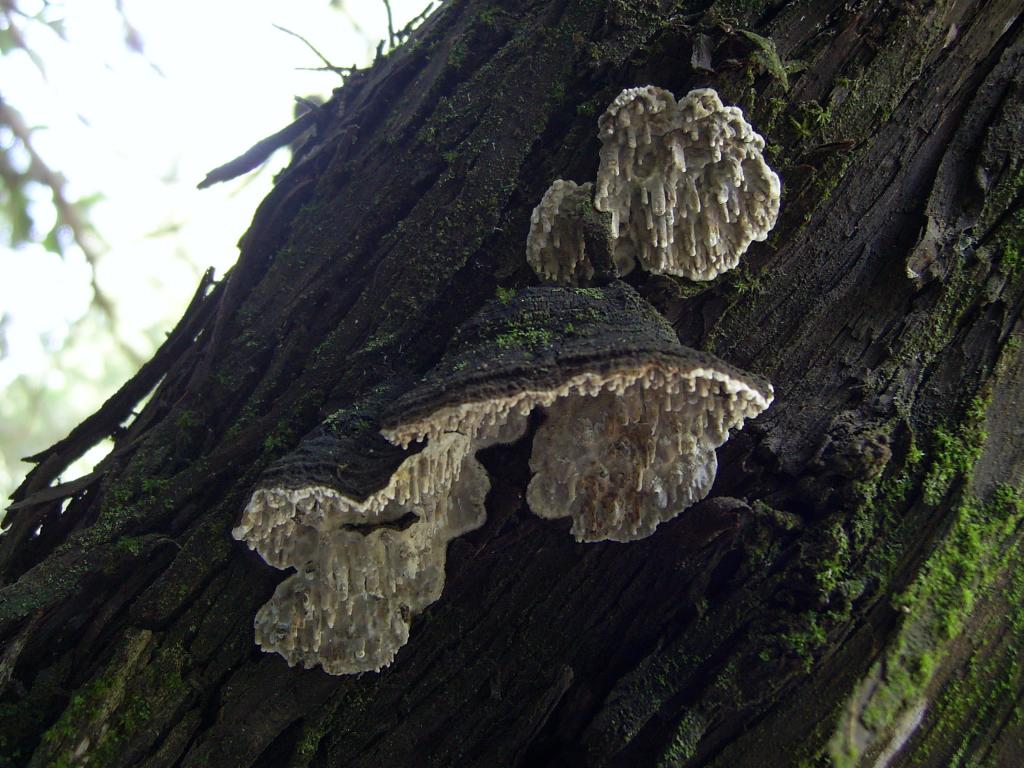
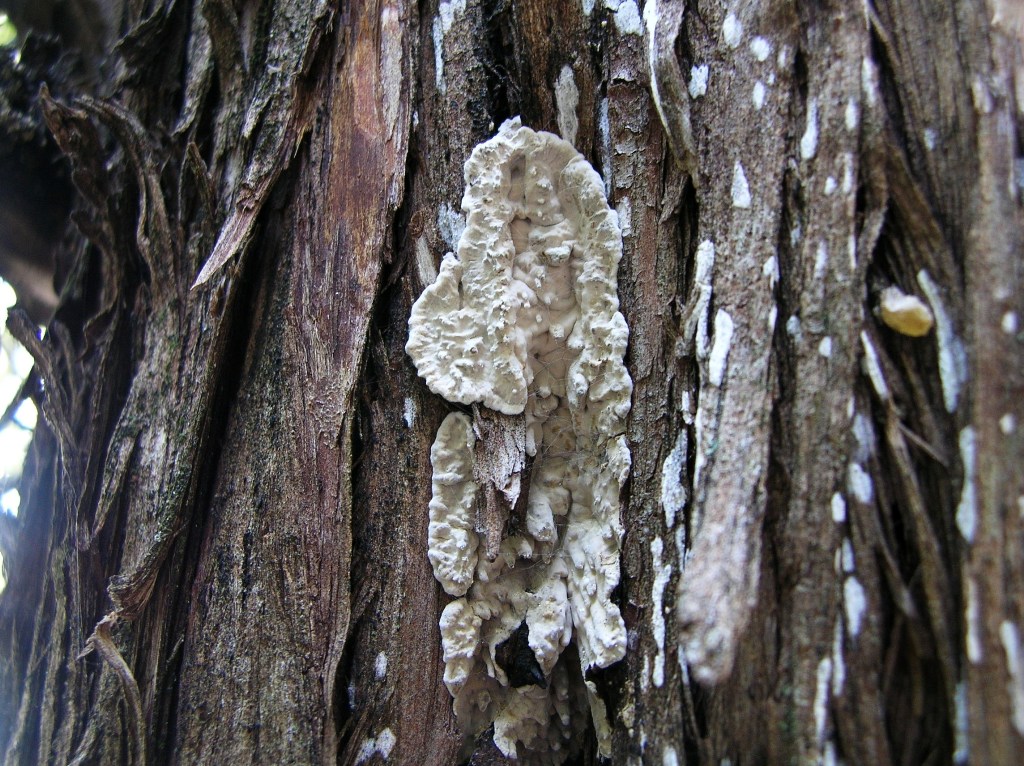
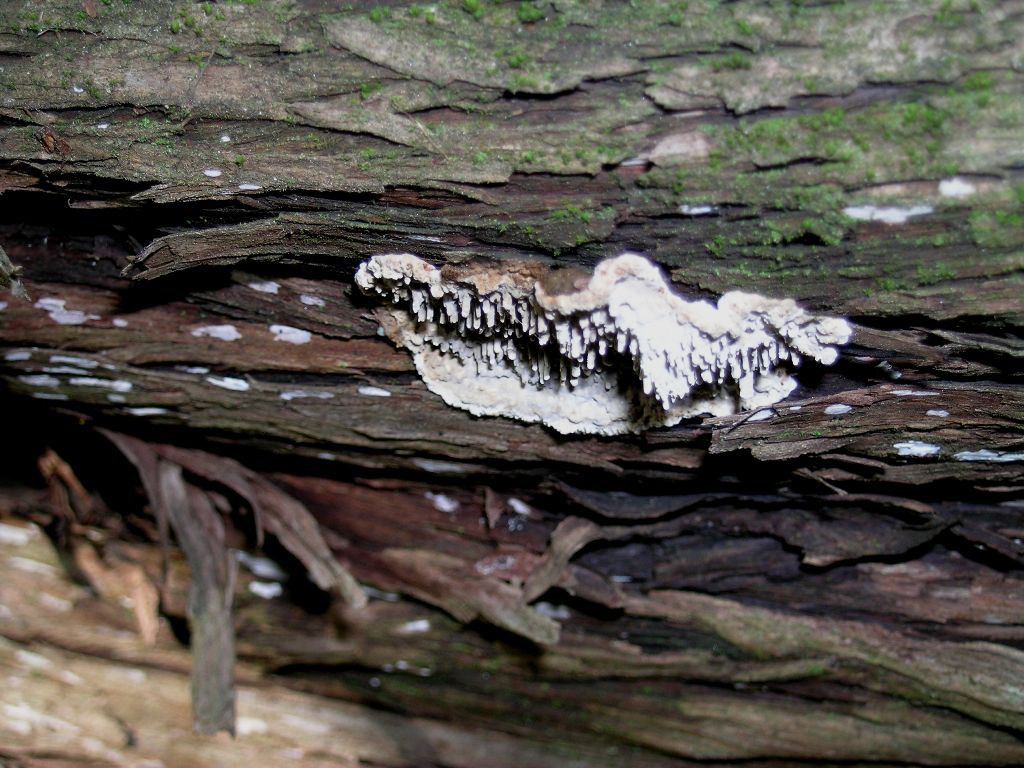
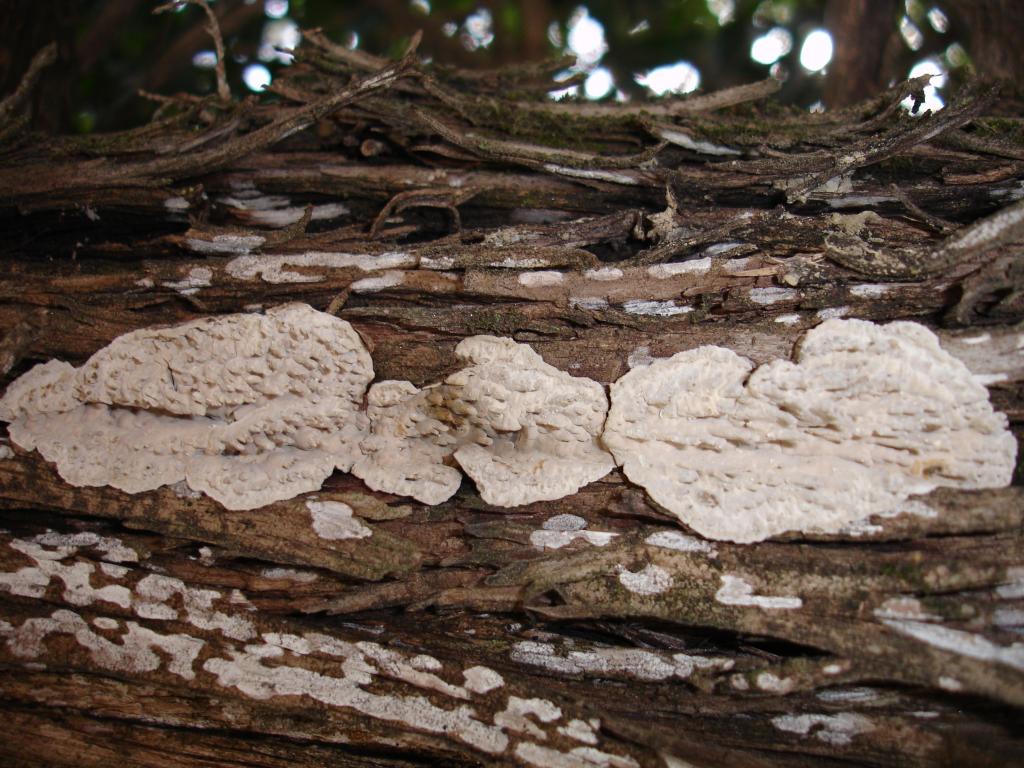
This is a wood-inhabiting tooth fungus forming highly distinctive and conspicuous basidiomata on trunks and large branches of old (“pluricentenari”) live standing Juniperus phoenicea and J. macrocarpa trees in Italy (Sardinia).It requires very old trees to fruit. The habitat, arborescent matorral (code 5210) (Natura2000) is in danger of disappearing. Moreover old juniper shrubs or trees, the preferred substrate for the growth of the fungus, are threatened and declining. It has been suggested that such Mediterranean veteran juniper habitat represents a glacial refugium and this habitat supports an entire suite of fungi with highly restricted distributions (Bernicchia et al. 2011).
Although there are only 3 small areas with fruitbodies known worldwide, there is uncertainty about the extent of its true distribution. The number of mature individuals is estimated not to exceed 600, with no more than 250 mature individuals in the largest subpopulation. A continuing decline is inferred based on the reduction in number of old trees on which it can grow. It therefore qualifies as EN C2a(i).
Taxonomic notes
Sequencing for AFTOL project shows it is not closely related to the type of the genus (Larsson & Larsson 2003). It is expected that it will be transferred to another genus but this has no bearing on its conservation status.Geographic range
The first collection was made in 1997 and the species was described in 1998, but by 2005 (Bernicchia 2005) there were apparently still only three records known worldwide (and two collections preserved) and all were from sites in Sardinia (Capo Comino, Lanaittu Valley and Portixeddu). A few more recent finds have been made in the Lanaittu/Tiscali area of Sardinia (Bernicchia et al. 2011 and pers. obs.); perhaps 25 occupied trees are known. There are no records reported outside Italy, but it may have further localities in Europe, North Africa or the Middle East.Population and Trends
The Sardinian populations are: Capo Comino (Nuoro) on a Juniperus phoenicea trunk in dunes where Bernicchia (pers. obs.) has tried to refind it but the old trunk has been cut; Lanaittu Valley (Nuoro) at 180 m altitude from 1997 onwards on old trunks of J. phoenicea, where no more than 5-6 occupied trees seen and no more than 10 estimated in the area (Bernicchia pers. obs.); Portixeddu (Cagliari) on an old trunk of J. macrocarpa in 1999 (site not revisited by Bernicchia). It is expected that one genet occurs within most occupied trees and it is hypothesised that the fungus is long-lived. The associated tree is not of conservation concern although it should be emphasized that it is only the very oldest trees that support fruiting populations of this fungus. Based on the documented collections in Bernicchia et al. (2011), it seems that currently there are no more than 15 known occupied trees worldwide although clearly not all suitable habitat has been surveyed. It is expected that there are four mature individuals (two genets and two ramets per genet) per occupied tree, giving a total of 60 in the known localities. Taking into account the large likelihood of many as yet unknown localities, this is multiplied by ten to give a total of 600 mature individuals.
Population Trend: Unknown