- Proposed
- 2Under Assessment
- 3Preliminary Assessed
- 4Assessed
- 5Published
Entoloma luteobasis Ebert & E. Ludw.
- Scientific name
- Entoloma luteobasis
- Author
- Ebert & E. Ludw.
- Common names
- IUCN Specialist Group
 Mushroom, Bracket and Puffball
- Kingdom
- Fungi
- Phylum
- Basidiomycota
- Class
- Agaricomycetes
- Order
- Agaricales
- Family
- Entolomataceae
- Assessment status
- Proposed
- Proposed by
- Simon Harding
- Comments etc.
- Simon Harding
Assessment Notes
Taxonomic notes
Modern revisionary work combining morphology, ecology and multilocus molecular data has demonstrated that the traditional Entoloma bloxamii sensu lato concept comprises several distinct evolutionary lineages. *E. ochreoprunuloides* is now treated as a synonym of E. luteobasis (Brandrud et al. 2019). Within this former aggregate, E. luteobasis is now recognised as a separate species, distinguishable from E. bloxamii s.str., E. madidum, E. atromadidum and E. inopiliforme by a combination of genetic divergence, basidiome pigmentation, spore morphology and ecological preference for nutrient‑poor calcareous grasslands. Earlier records assigned to E. bloxamii s.l. may therefore include misapplied material, and only those supported by modern morphological interpretation or molecular data can be confidently attributed to E. luteobasis. The species concept used here follows the treatment established in recent European taxonomic studies of the bloxamii complex.
Why suggested for a Global Red List Assessment?
Entoloma luteobasis is proposed for global assessment and listing as Endangered under criterion B2ab(ii,iii,iv). The species has a very restricted Area of Occupancy, is known from a small number of highly fragmented locations, and is confined to nutrient‑poor calcareous grasslands that have undergone long‑term and ongoing contraction across Europe. These habitats continue to decline through agricultural improvement, altered grazing regimes, afforestation, nutrient enrichment, atmospheric nitrogen deposition, and other forms of land‑use change.
The known sites are few, small, and isolated, making them vulnerable to local extinction from relatively minor changes in management or land use. Continuing declines in AOO, habitat quality, and number of locations are inferred from the well‑documented pressures affecting calcareous grasslands throughout the species’ range. Given its narrow ecological requirements and the sensitivity of its habitat to nutrient inputs, succession, and climate‑related stress, E. luteobasis warrants consideration for global listing as Endangered.
Geographic range
Entoloma luteobasis is known from a small number of scattered sites across Europe. The main concentration of records is in Norway, with additional confirmed occurrences in Sweden, Belgium, Denmark, France, Italy, Switzerland, and the United Kingdom. The species occupies isolated calcareous grassland systems, and suitable habitat is highly fragmented across its range. There is no evidence of large, continuous populations or connectivity between sites.
Population and Trends
Entoloma luteobasis is known from a small number of scattered sites across Europe, with the main concentration of records in Norway, followed by Sweden, and additional, more isolated occurrences in Belgium, Denmark, France, Italy, Switzerland, and the United Kingdom. Each site represents a discrete calcareous grassland system, and there is no evidence of connectivity between subpopulations at a continental scale. At most sites the species is represented by one to a few basidiomes in any given year, consistent with patterns seen in other rare grassland Entoloma species.
Given the very small number of known sites and the consistently low number of basidiomes observed per locality, the global population is likely to comprise well under several thousand mature individuals, and may be considerably smaller. The global population is therefore considered small and severely fragmented, with each locality functioning as an independent, vulnerable subpopulation. Recolonisation between sites is unlikely due to the extreme isolation of suitable habitat patches and the species’ narrow ecological requirements.
Although direct population trends cannot be quantified, continuing global decline is inferred from the widespread and ongoing loss and degradation of calcareous grasslands across Europe. Drivers include agricultural intensification, nutrient enrichment, abandonment of traditional grazing, scrub encroachment, and atmospheric nitrogen deposition. These pressures operate across the species’ entire known range, implying reductions in habitat quality, extent, and subpopulation viability.
Overall, the global population of E. luteobasis is considered small, highly fragmented, and undergoing continuing decline, with no evidence of large, stable, or resilient subpopulations anywhere within its range.
Population Trend: Decreasing
Habitat and Ecology
Entoloma luteobasis is a specialist of nutrient‑poor calcareous grasslands, occurring in short‑sward, low‑productivity turf maintained by traditional grazing or mowing. It is associated with long‑established, unimproved calcareous grassland on open, well‑drained, base‑rich soils with low nitrogen and phosphorus availability. Like other grassland Entoloma species, it appears highly sensitive to nutrient enrichment, scrub encroachment, and changes in grazing intensity.
Across its range, the species occupies small, isolated habitat patches embedded within agricultural landscapes. These grasslands have undergone long‑term decline due to intensification, abandonment, afforestation, and atmospheric nitrogen deposition. Fruiting is typically sparse, with only one to a few basidiomes produced per site in a given year.
Threats
Entoloma luteobasis is threatened by the ongoing loss, fragmentation, and degradation of unimproved calcareous grasslands across Europe. Agricultural intensification — including reseeding, ploughing, fertiliser application, slurry spreading, and conversion to improved pasture — continues to reduce the extent and quality of suitable habitat. Even low‑level nutrient enrichment from adjacent farmland or atmospheric nitrogen deposition can eliminate the specialised fungal communities characteristic of nutrient‑poor grasslands.
Abandonment of traditional grazing or mowing leads to rapid sward closure, litter accumulation, and scrub encroachment, all of which reduce habitat suitability. Afforestation and tree planting on open grassland further contribute to habitat loss and fragmentation, while small‑scale infrastructure works such as road widening or verge “improvement” can remove or isolate remaining patches.
Pollution from agricultural drift, fertiliser runoff, and herbicide or pesticide contamination poses additional pressure. Climate‑related changes, including increased summer drought and temperature extremes, may exacerbate declines by altering soil moisture regimes and reducing fruiting opportunities.
Conservation Actions
Protection and appropriate management of unimproved calcareous grasslands are essential for the conservation of Entoloma luteobasis. Priority actions include maintaining or restoring low‑intensity grazing or mowing regimes, preventing nutrient enrichment, and controlling scrub encroachment. Safeguarding remaining habitat patches from conversion, afforestation, or agricultural intensification is critical. Continued survey effort, monitoring, and documentation of sites are needed to clarify distribution, assess trends, and support long‑term conservation planning.
Research needed
Additional work would refine knowledge of the species but is not required to justify its inclusion for assessment. Targeted surveys of calcareous grasslands may reveal further sites, and periodic checks of known localities would support future reassessments. Improved understanding of ecological preferences and responses to habitat change would strengthen long‑term conservation planning.
Use and Trade
There is no known use or trade of this species.
Bibliography
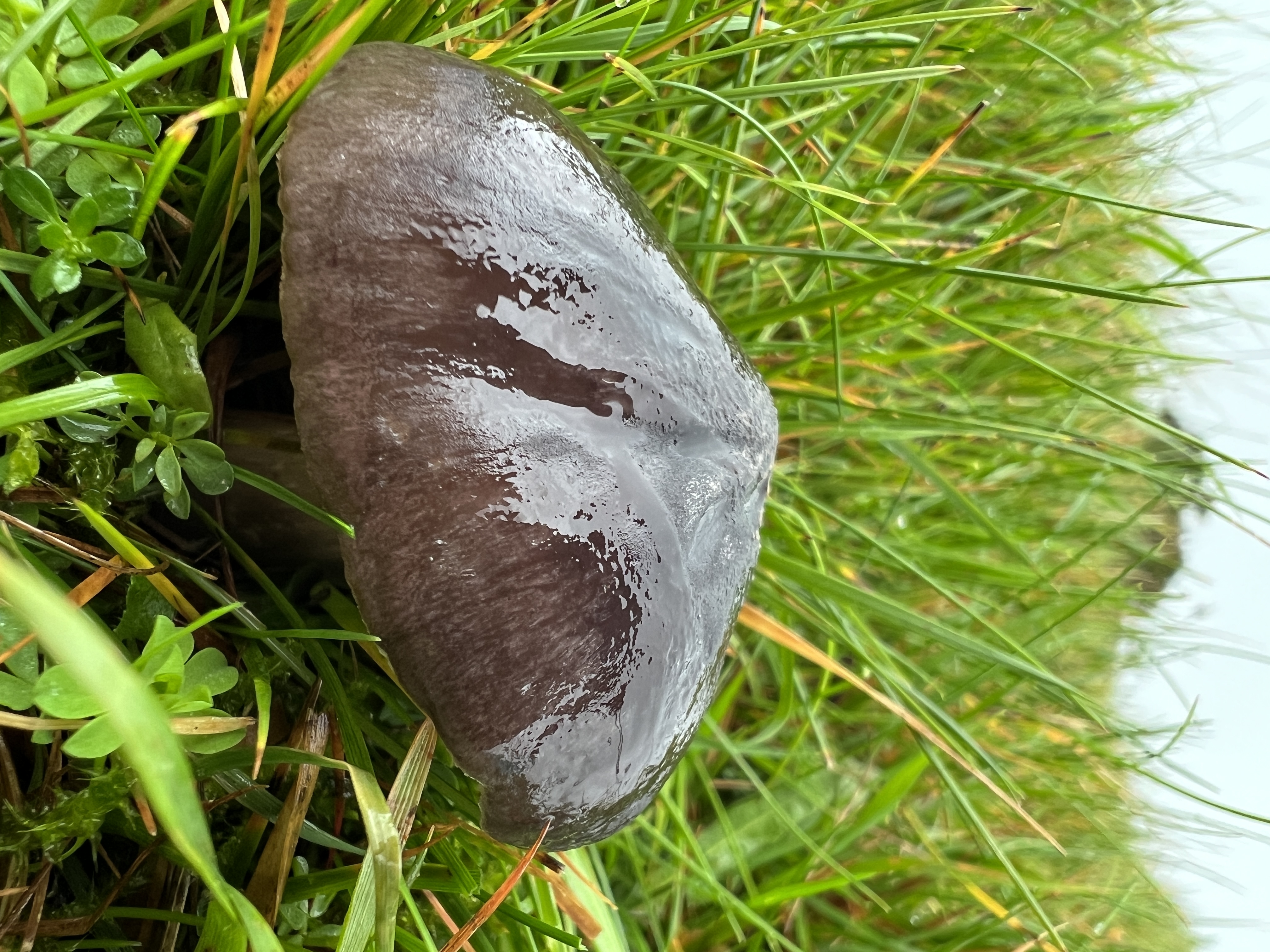
Entoloma luteobasis – Exmoor, England (sequenced). © Simon Harding
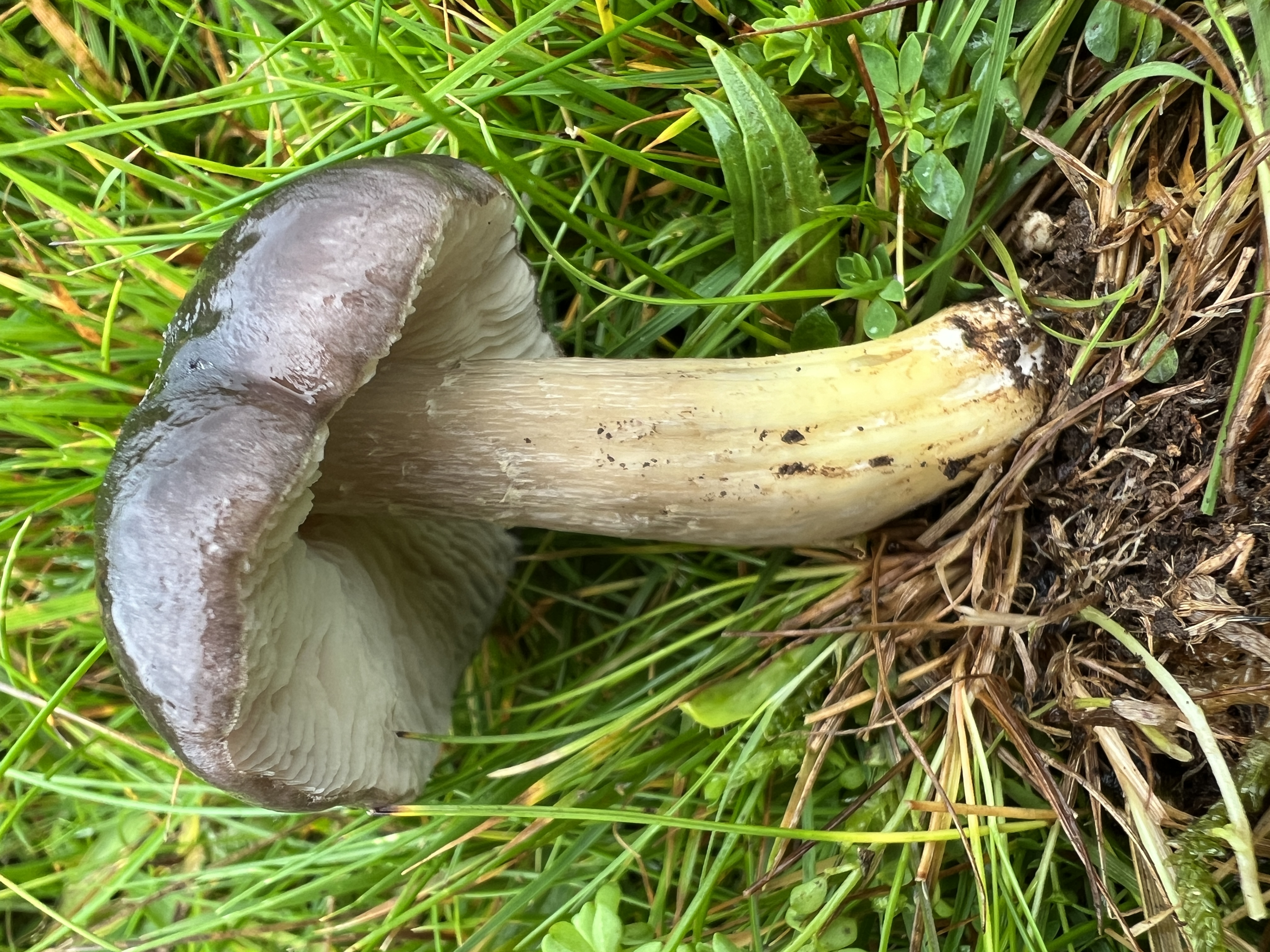
Entoloma luteobasis – Exmoor, England (sequenced). © Simon Harding
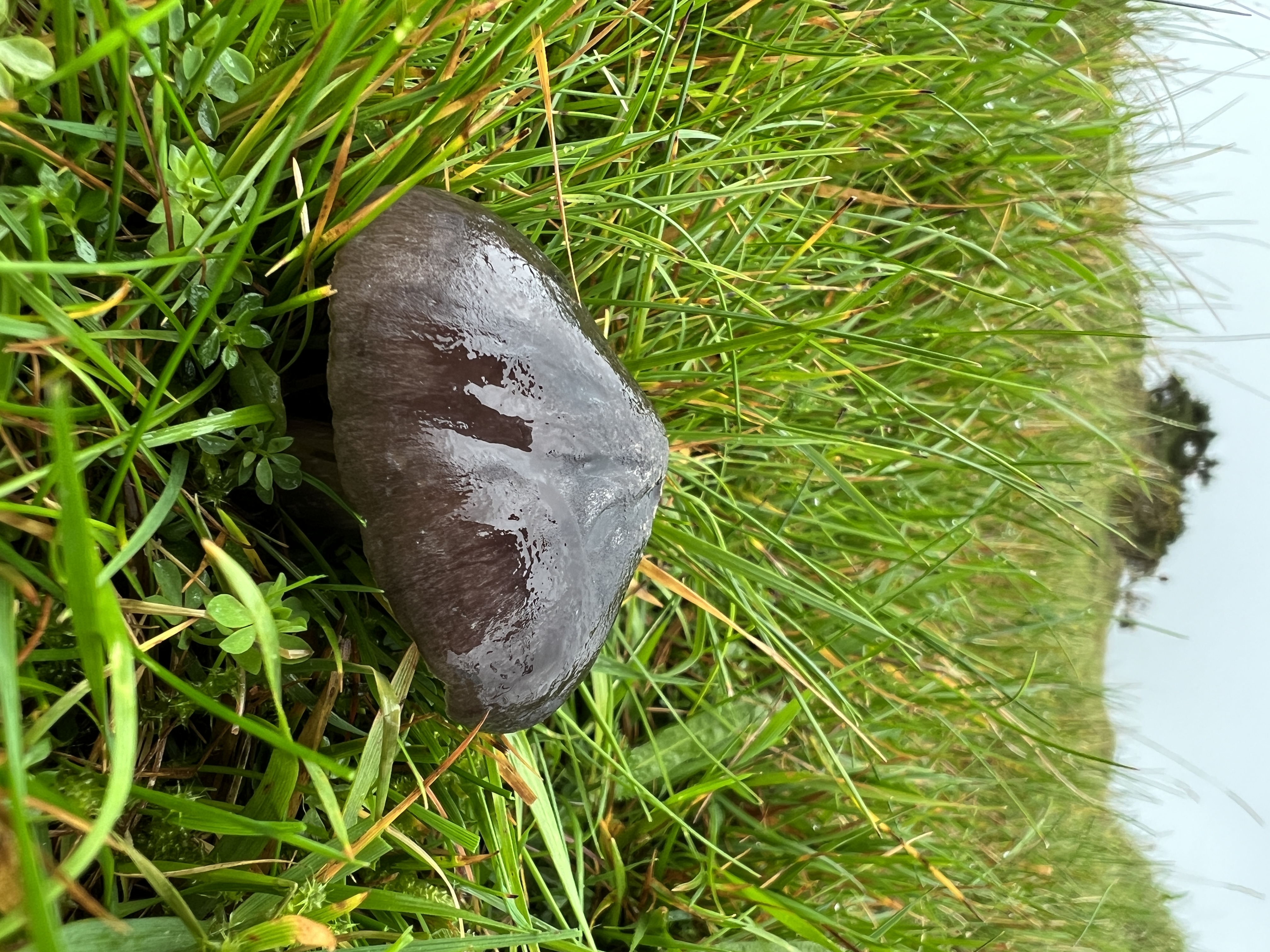
Entoloma luteobasis – Exmoor, England (sequenced). © Simon Harding
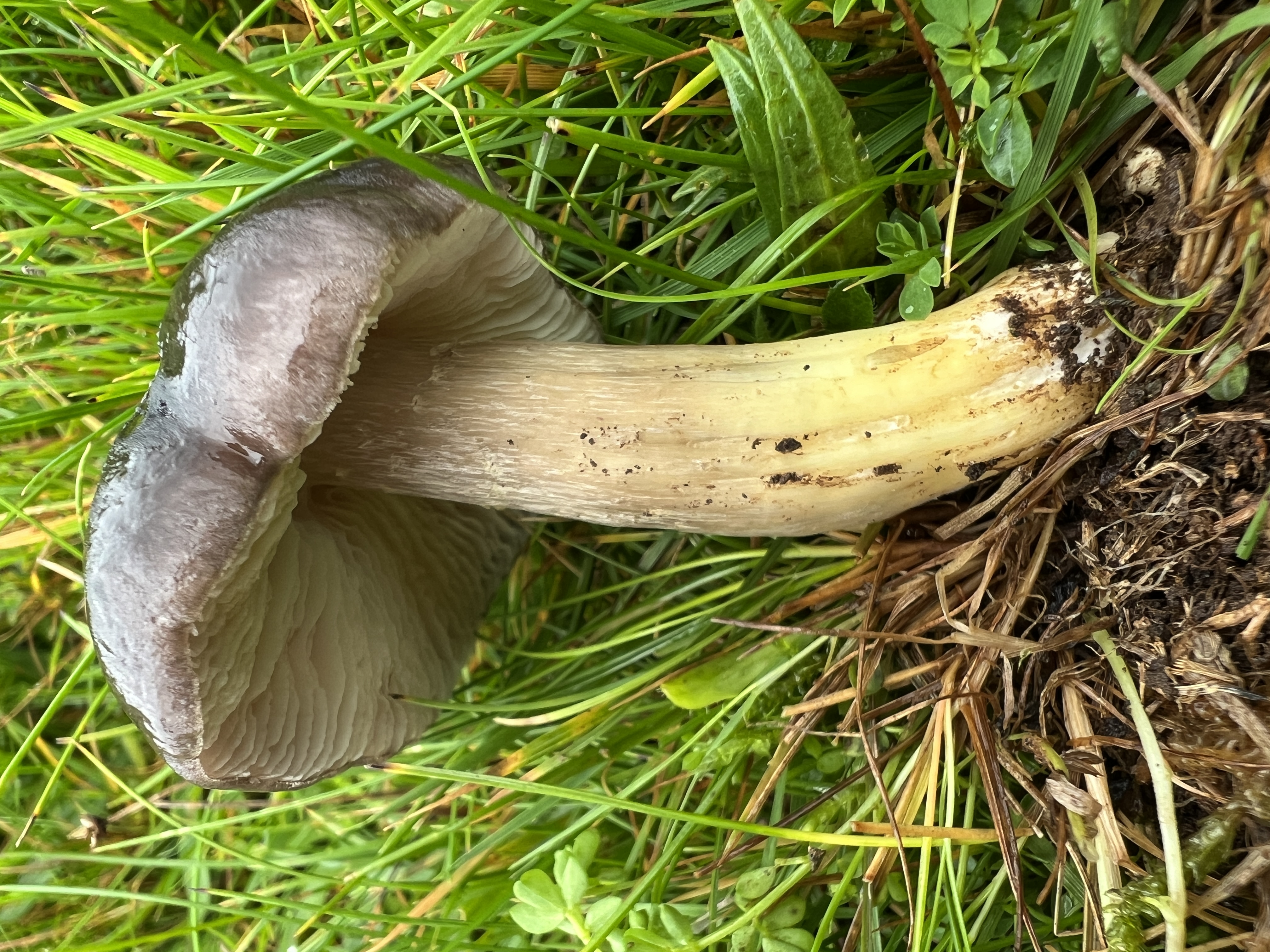
Entoloma luteobasis – Exmoor, England (sequenced). © Simon Harding
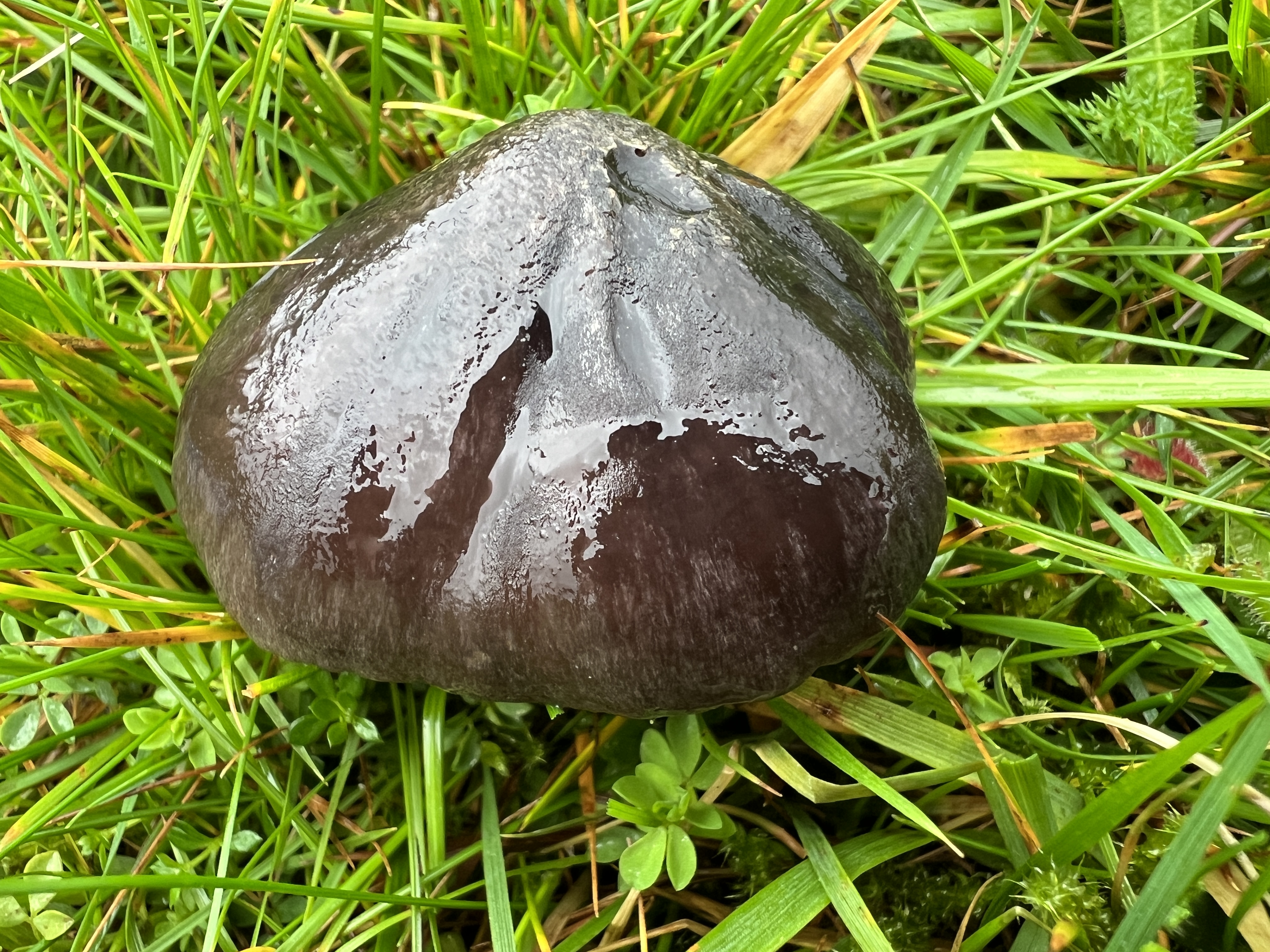
Entoloma luteobasis – Exmoor, England (sequenced). © Simon Harding
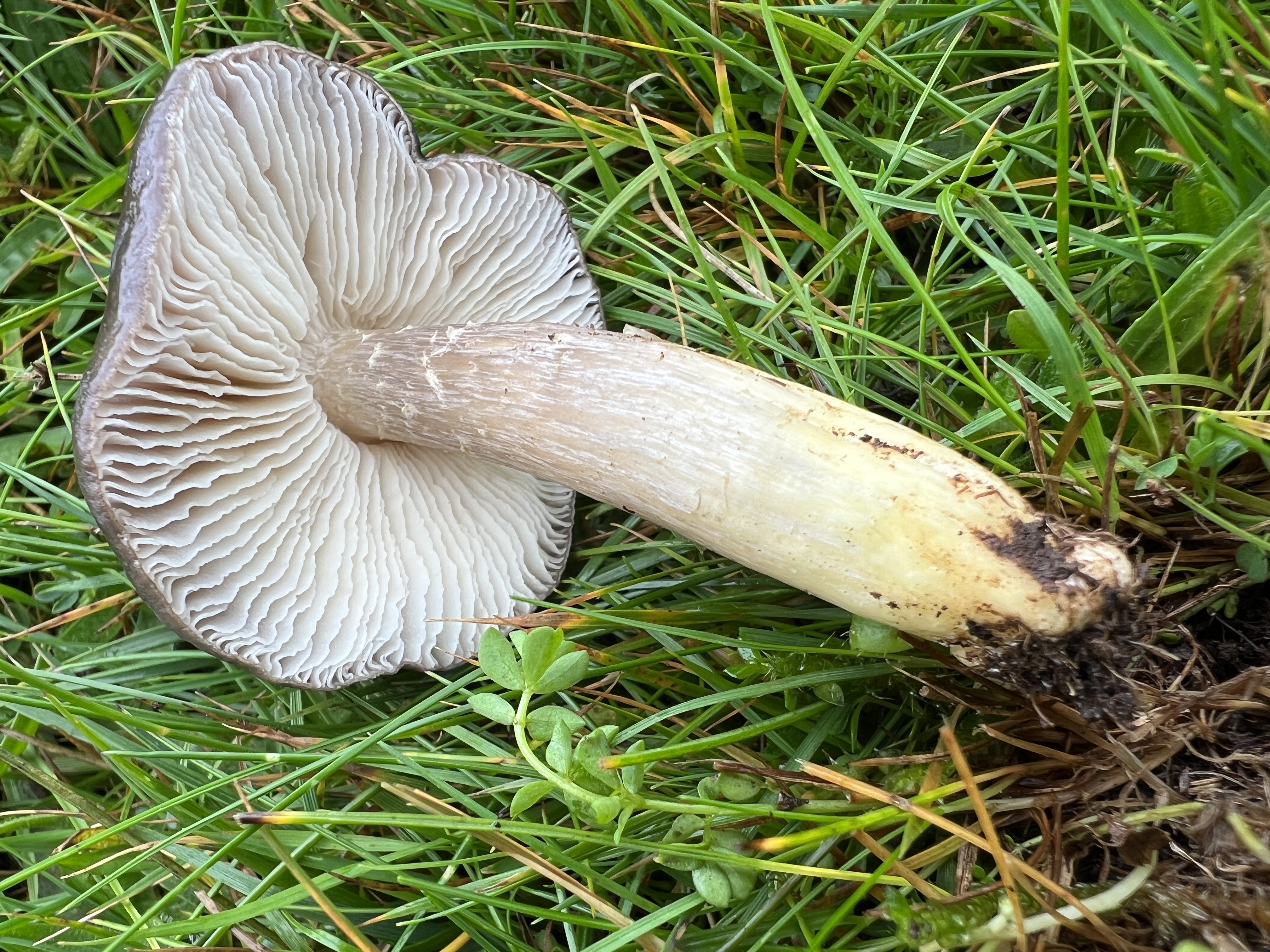
Entoloma luteobasis – Exmoor, England (sequenced). © Simon Harding
Country occurrence
Regional Population and Trends
| Country | Trend | Redlisted |
|---|