- Proposed
- 2Under Assessment
- 3Preliminary Assessed
- 4Assessed
- 5Published
Amanita colombiana Tulloss, Ovrebo & Halling
- Scientific name
- Amanita colombiana
- Author
- Tulloss, Ovrebo & Halling
- Common names


- IUCN Specialist Group
 Mushroom, Bracket and Puffball
- Kingdom
- Fungi
- Phylum
- Basidiomycota
- Class
- Agaricomycetes
- Order
- Agaricales
- Family
- Amanitaceae
- Assessment status
- Proposed
- Proposed by
- Aída M. Vasco-Palacios
- Assessors
- Nataly Gomez-Montoya, Cristina Benjumea, Ana Esperanza Franco-Molano, Laura Velez-Jaramillo, Ana BOLANOS, Lina Rocio Davila Giraldo
- Editors
- Nataly Gomez-Montoya, Laura Velez-Jaramillo, Cristina Benjumea
Assessment Notes
Justification
Amanita colombiana is distributed in humid montane forests dominated by oaks and forms ectomycorrhiza associations with preference for Quercus humboldtii. Nevertheless, less common associations with other oak species in Costa Rica have also been documented (Q. seemannii, Q. oocarpa). As an obligatory mycorrhizal fungus, its survival depends directly on the persistence and health of these forests. Although there is no direct information on population declines of the fungus, a significant decrease is inferred due to: i) the historical and ongoing loss of Q. humboldtii habitat, ii) a record of approximately 42% loss of oak populations in Colombia, a species that is also categorized as Vulnerable (VU A2cd) (Cárdenas & Salinas, 2007), iii) the recent increase in deforestation rates and the projection that this trend will continue in the future, iv) based on this evidence, a population decline for A. colombiana of between 35% and 50% is suspected, justifying its categorization as Vulnerable (VU), and v) To date, there have been no current studies on the conservation status of forests in Costa Rica. The oak forests of the Cordillera of Talamanca’s are recognized as being highly sensitive to environmental change and land use practices, although up-to-date information is lacking. Approximately 30 years ago, these forests were already described as fragmented systems (Kappelle, 1996)
Taxonomic notes
Amanita colombiana is distinguished by its striate pileus margin, inamyloid spores in Melzer’s reagent (a diagnostic feature of the subgenus Amanita) and the absence of an annulus, a typical character of species belonging to section Vaginatae. However, one of the most distinctive morphological features of this species is the presence of reddish and pulverulent volva; a character that distinguished it from the morphologically similar species Amanita sororcula, which occurred sympatrically with A. colombiana in Colombia. Both species belong to series Ceciliae; however, Amanita sororcula differs in having a pale gray submembranous volva.
Why suggested for a Global Red List Assessment?
Amanita colombiana, described by Tulloss, Ovrebo & Halling (1992), from Colombia and also found in Costa Rica, is an ectomycorrhizal species associated with Quercus forests. In Colombia, the oak forests (Quercus humboldtii) are ecosystems severely threatened by deforestation and ongoing transformation of the Andean landscape. Its highly restricted distribution, the documented decline and degradation of its habitat, and the vulnerability of its sole known host justify its treatment as a priority species for conservation assessment.
Although available information for Costa Rica is limited and often outdated, the oak forest of the Cordillera Talamanca is recognized as being highly sensitive to environmental change and land-use practices. This vulnerability is associated mainly related to their restricted geographic distribution and the specific environmental conditions required for their persistence. Approximately 30 years ago, these forests were already described as fragmentated systems (Kappelle, 1996), this may suggest that degradation processes have persisted or even intensified to the present day. The anterior presumption is supported by the 2020 global assessment of oaks in the red list, which estimated that 31% of oak species are threatened with extinction. In this assessment, most species classified as Threatened or Near Threatened exhibited a reduction in their geographic range, based on estimates of extents of occurrence (EOO) and Area of Occupancy (AOO). Moreover, the assessment noted that the intensity and frequency of threats vary among regions and countries, with agriculture and aquaculture being the most common pressures in Asia, Europa, México, and Central America (Carrero et al., 2020)
Geographic range
Amanita colombiana is one of the 26 species of the genus reported by Colombia (Tulloss et al., 1992; Palacio et al., 2014; Vargas-Estupiñán, 2017; Vasco-Palacios et al., 2018; Gómez‐Montoya et al., 2022). Specimens belonging to this species have been collected in montane forests of the Andean region, specifically at the central and eastern cordillera, associated with forest dominated by Quercus humboldtii, in the departments of Antioquia, Boyacá, Tolima and Santander (Vargas-Estupiñán, 2017; Gómez-Montoya et al., 2022), but also recorded in Costa Rica (Tulloss et al., 2011), in Alajuela province, associated with forest of Q. oocarpa and other species of Quercus (New York Botanical Garden, 1998) and San José province, associated with forest of Q. seemannii (New York Botanical Garden, 1993).
To date there are no confirmed reports of Amanita colombiana in Panamá. However, considering Panama’s biogeographic position between Colombia and Costa Rica, as well as the presence of its host species Q. humboldtii, Q. seemannii, y Q. oocarpa, is possible that the species may occur in localities within Panamá that provide the necessary biotic conditions for its occurrence.
Population and Trends
The population of Amanita colombiana is not directly assessed in the sources, but its status is inferred from the health and trends of its primary habitat.
Population trend inferred as declining due to continued loss of host forests.
Subpopulations are likely small and isolated.Amanita colombiana is an obligate mycorrhizal fungus, with very few known host species forming this type of association. It shows a strong preference for Quercus humboldtii, a tree with a restricted distribution between Colombia and Panamanian Darien ( González-Orozco et al. 2011). Consequently, any decline in the populations of its hosts directly threatens the persistence of this species. Although there is no direct information on population declines for A. colombiana, a significant reduction is inferred due to extensive habitat loss, both past and present, and the deterioration of habitat quality, at least in Colombia, where the species has been most frequently recorded. Regarding the Costa Rica populations, it is difficult to assess their conservation status, as records are scarce and the status of associated host species has not been updated in recent years
In Colombia, lost of nearly 42% of the populations of Quercus humboldtii have been reported, and the species is currently classified as Vulnerable (VU A2cd) (Cárdenas & Salinas, 2007) . In recent years, deforestation in Colombia has increased significantly and is expected to continue, largely associated with illegal exploitation of high-value timber species, such as oak.
In this context, the fragmented distribution of Amanita colombiana, together with the expansion of the agriculture frontier, unsustainable logging, and the multiple disturbances affecting its tree host, suggests that the Colombian population of the species have undergone an estimated decline of 35-50% over three generations.
Population Trend: Decreasing
Habitat and Ecology
Life form: Ectomycorrhizal fungus.
Associated with different species of Quercus
Ectomycorrhizal fungi depend heavily on host viability.
Habitat and substrate requirements: Amanita colombiana is associated with tropical oak forests, with Quercus humboldtii as its main host species. Nevertheless, occasional association with Mesoamericans oaks species, including Q. seemanii and Q. oocarpa, have been reported.
These montane forests are characterized by their high biodiversity and, in Colombia, are distributed along the three Andean mountain ranges, whereas in Costa Rica they occur primarily in the Cordillera de Talamanca. Ectomycorrhizal fungi constitute a dominant group among the fungal species assessed in the Red List.
Threats
Major threats include:
Agriculture expansion (annual and perennial crops).
Cattle ranching and pasture establishment.
Residential and commercial development.
Logging and forest fragmentation.
Climate change and extreme weather events.
Potential ecological competition with introduced species (e.g., A. muscaria).
Conservation Actions
Conservation needs include:
- Protecting and managing Q. humboldtii forests.
- Monitoring populations and habitat conditions.
- Integrating fungi into conservation planning frameworks.
- Promoting sustainable land-use practices around remaining forests.The inclusion of A. colombiana in the Red List
The inclusion of A. colombiana in the Red List, under vulnerable (VU) category should prompt the implementation of specific conservation actions. Red List assessments, such as the present one, can serve as a guideline for land managers and conservation practitioners, particularly in the contexts where fungi are underrepresented in national or regional conservation frameworks. Priority actions for the conservation of the species include the protections, management, and restoration of oak forest, as the ecology and persistence of A. colombiana are closely linked to the presence and conservation status of this host.
Research needed
- Expanded phylogenetic sampling of Amanita in Colombia.
- Surveys in additional Andean and lowland forests.
- Demographic studies (population size, structure).
- Evaluating protected area effectiveness for fungal conservation.
- Estado de los bosques donde se ha reportadoTo improve future assessments and conservation strategies, additional research is needed, particularly in oak forests in regions where the species has not yet been recorded, such as the oak forest of Panamá and the western Colombian Cordillera, where it may potentially occur. It is also recommended to include more Amanita species in future phylogenetic analyses, by examining herbarium collections and conducting further field sampling in Andean montane forests and lowland tropical forest across the region (From Costa Rica to Colombia)
Use and Trade
No information available; no evidence of use or collection.
Although many Amanita species are collected and some of them are edible, data suggests this species is harvested.In the available scientific literature, there are no records of traditional, commercial, or other significant uses of Amanita colombiana, nor is there any fungi evidence that the species is part of local markets for edible or medicinal fungi. Studies in the genus Amanita in Colombia have focused primarily on taxonomic and chemical aspects, particularly on the identifications and characterization of amatoxins and phallotoxins produced by various species of the genus, including those collected in forest of Quercus humboldtii (Vargas-Estupiñán et al., 2011). In general, many Amanita species are recognized for their toxicity and lack documented dietary use; consequently, no traditional or commercial uses of A. colombiana have been reported, suggesting the absence of stablished trade for human consumptions or economic exploitation.
Bibliography
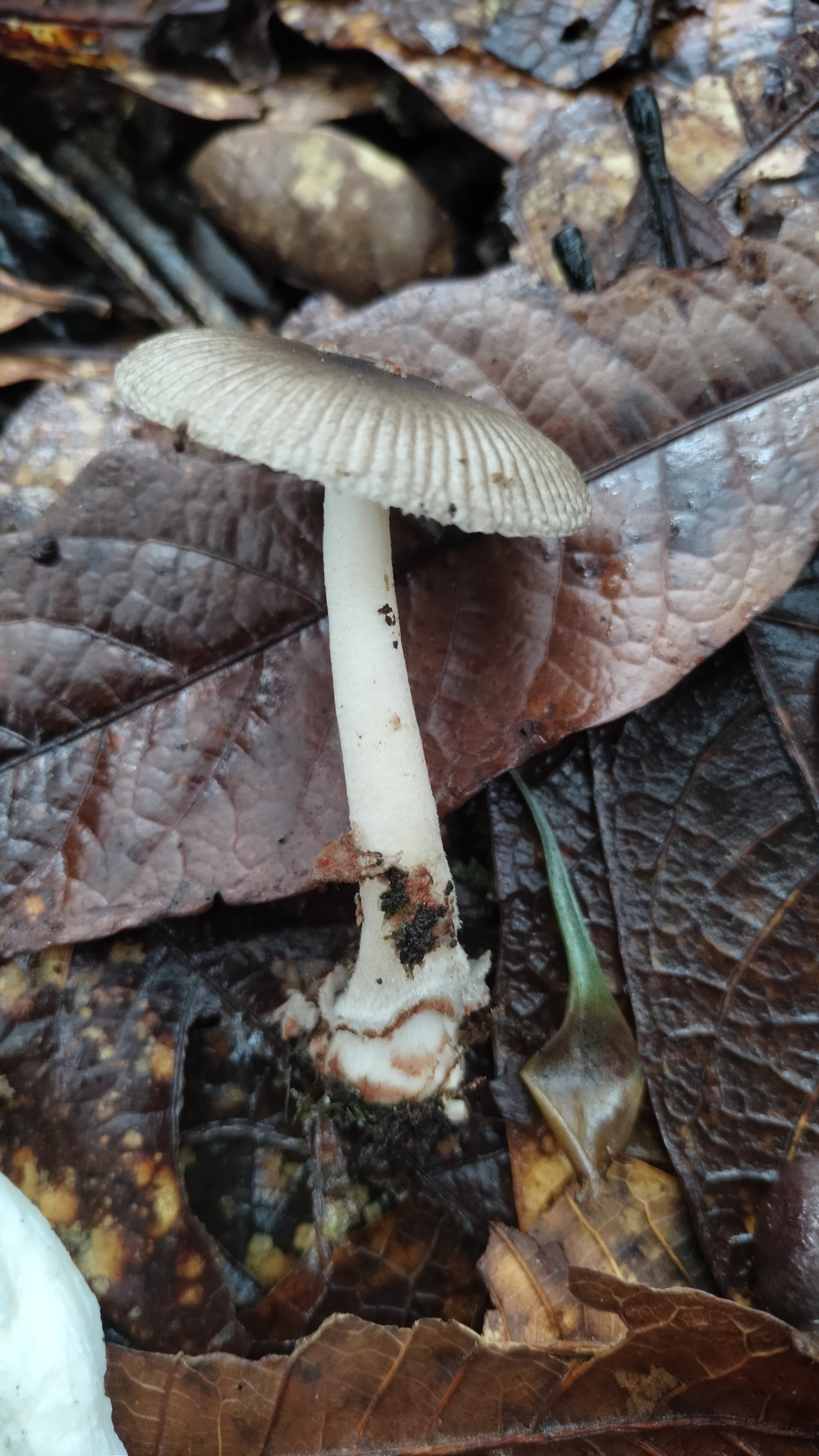
Amanita colombiana details of volva Photographer Laura Velez Jaramillo These images will be used solely for educational purposes and will not be used for commercial gain
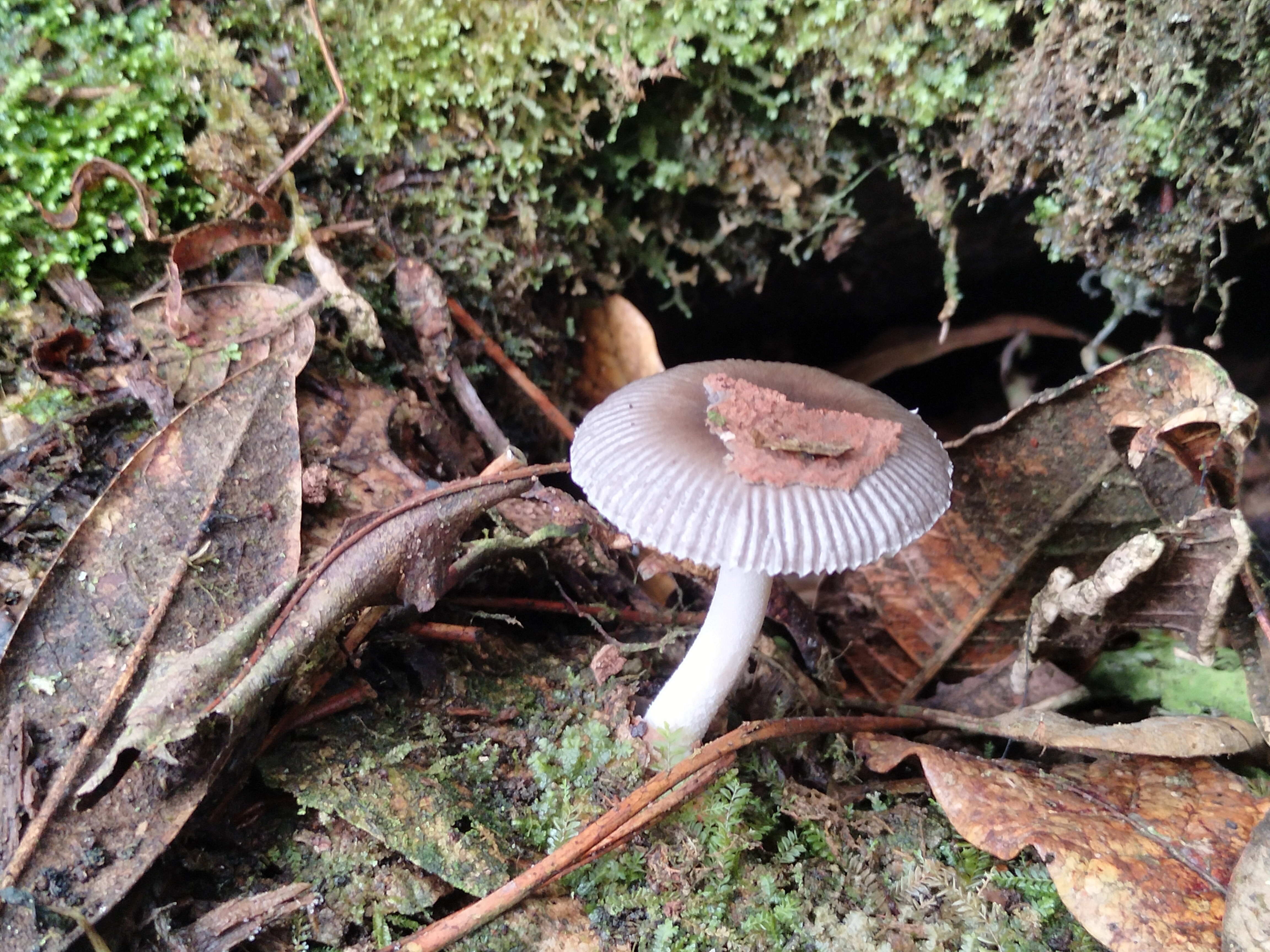
Amanita colombiana Photographer Laura Velez Jaramillo These images will be used solely for educational purposes and will not be used for commercial gain
Country occurrence
Regional Population and Trends
| Country | Trend | Redlisted |
|---|