- Proposed
- Under Assessment
- NTPreliminary Assessed
- 4Assessed
- 5Published
Rhizoplaca glaucophana (Nyl.) W.A. Weber
- Scientific name
- Rhizoplaca glaucophana
- Author
- (Nyl.) W.A. Weber
- Common names
- IUCN Specialist Group
 Lichens
- Kingdom
- Fungi
- Phylum
- Ascomycota
- Class
- Lecanoromycetes
- Order
- Lecanorales
- Family
- Lecanoraceae
- Assessment status
- Preliminary Assessed
- Preliminary Category
- NT B2b(iii), C2a(i)
- Proposed by
- Jason Hollinger
- Assessors
- Jason Hollinger
- Comments etc.
- Jessica Allen
Assessment Notes
Justification
This species has a relatively small AOO (212 km² based on current and historic observations) and throughout much of its range its potential habitat has been fragmented and has declined in extent owing to fire and development, and has declined in quality owing to air pollution and ranching in the Central Valley.
However, fieldwork revisiting several critical historical sites has shown that sites in the most threatened areas are still thriving with no sign of sensitivity to recent fires or close proximity to intense agriculture or grazing.
Lack of significant historic or projected decline excludes criterion A.
The restricted AOO qualifies for criterion B, with the secondary conditions of declining extent and quality of potential habitat. Based on number of currently known locations, AOO = 212 km², qualifying for EN, however it is likely higher.
The total population size is very poorly known. Based on known occurrences it could be as low as about 500, but the upper limit is unknown. The maximum subpopulation size is 219 (Cholame Valley). Depending on the total population size, it may qualify for C2a(i).
It may also qualify for criterion D1.
Given the uncertainty we recommend NT.
Taxonomic notes
Why suggested for a Global Red List Assessment?
This species is endemic to southern California and known from only several dozen localities.
Geographic range
Rhizoplaca glaucophana is endemic to southern California. Its EOO is 145,000 km², and its AOO is at least 212 km², likely considerably higher (see comments under Population and Current Trends).
USA: California (Alameda, Calaveras, El Dorado, Fresno, Kern, Lake, Los Angeles, Madera, Mariposa, Monterey, Riverside, San Benito, San Bernardino, San Diego, San Luis Obispo, Santa Barbara, Santa Clara, Tehama, Tulare, Tuolumne, Ventura Counties).
Population and Trends
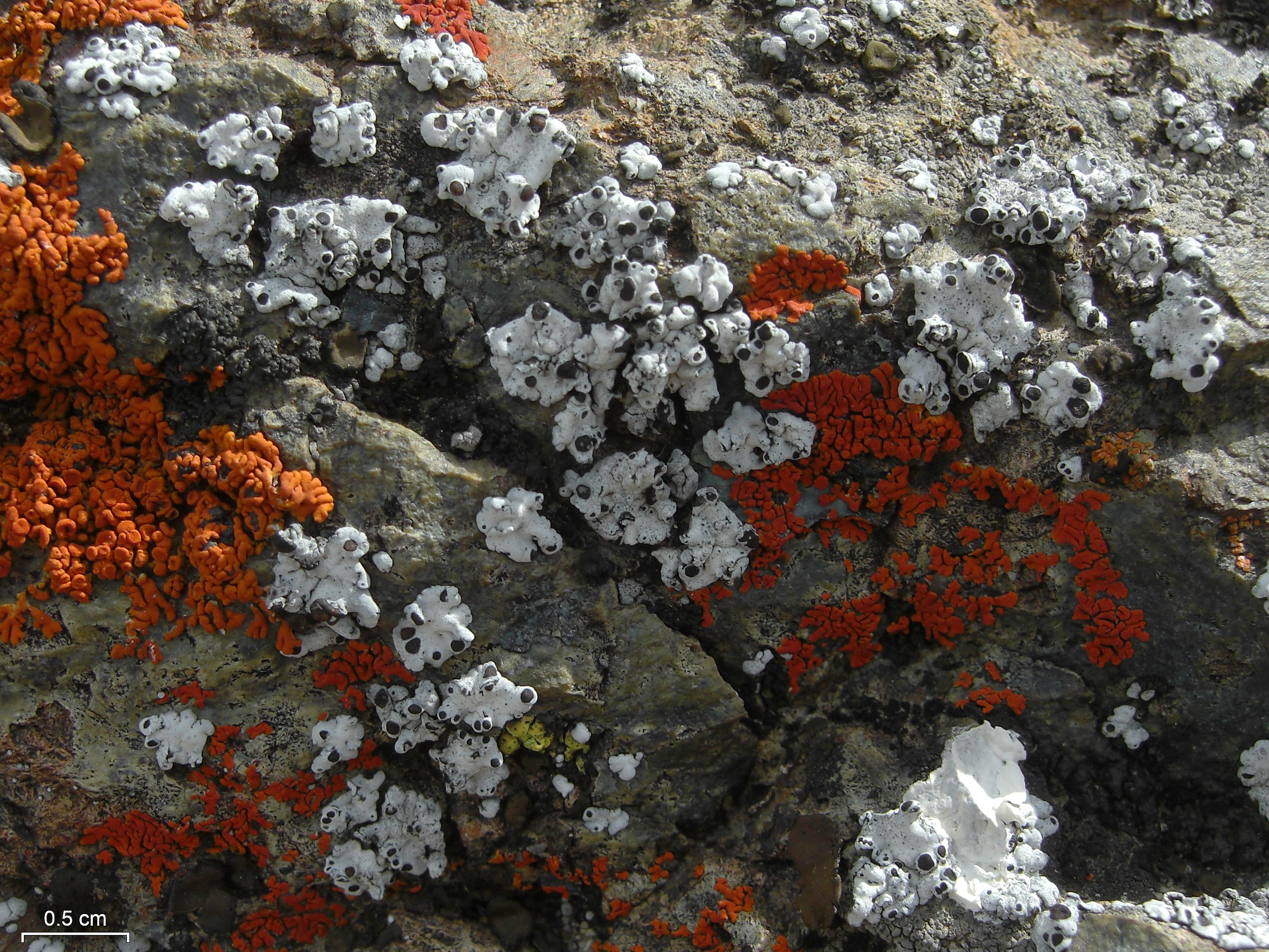
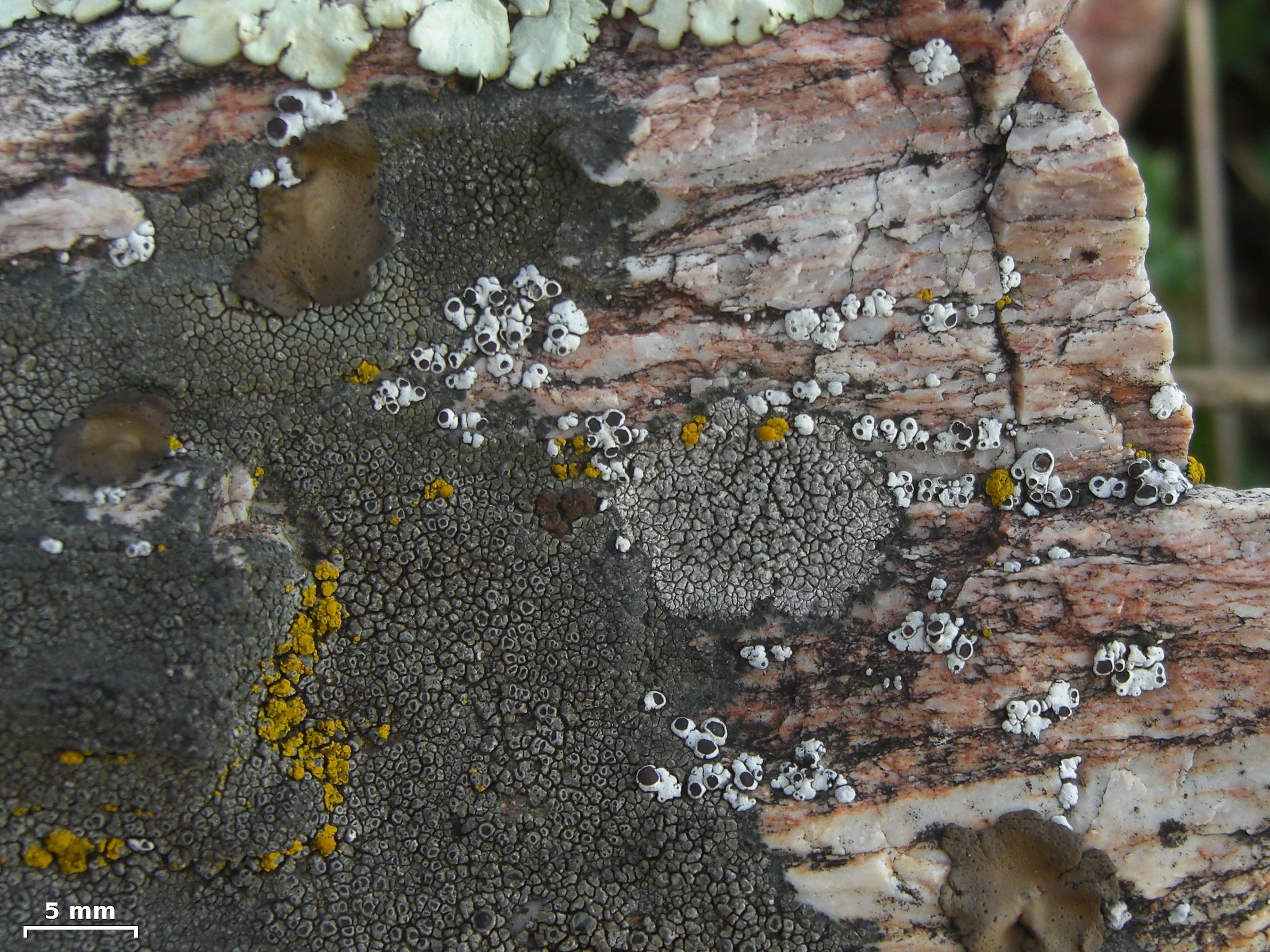
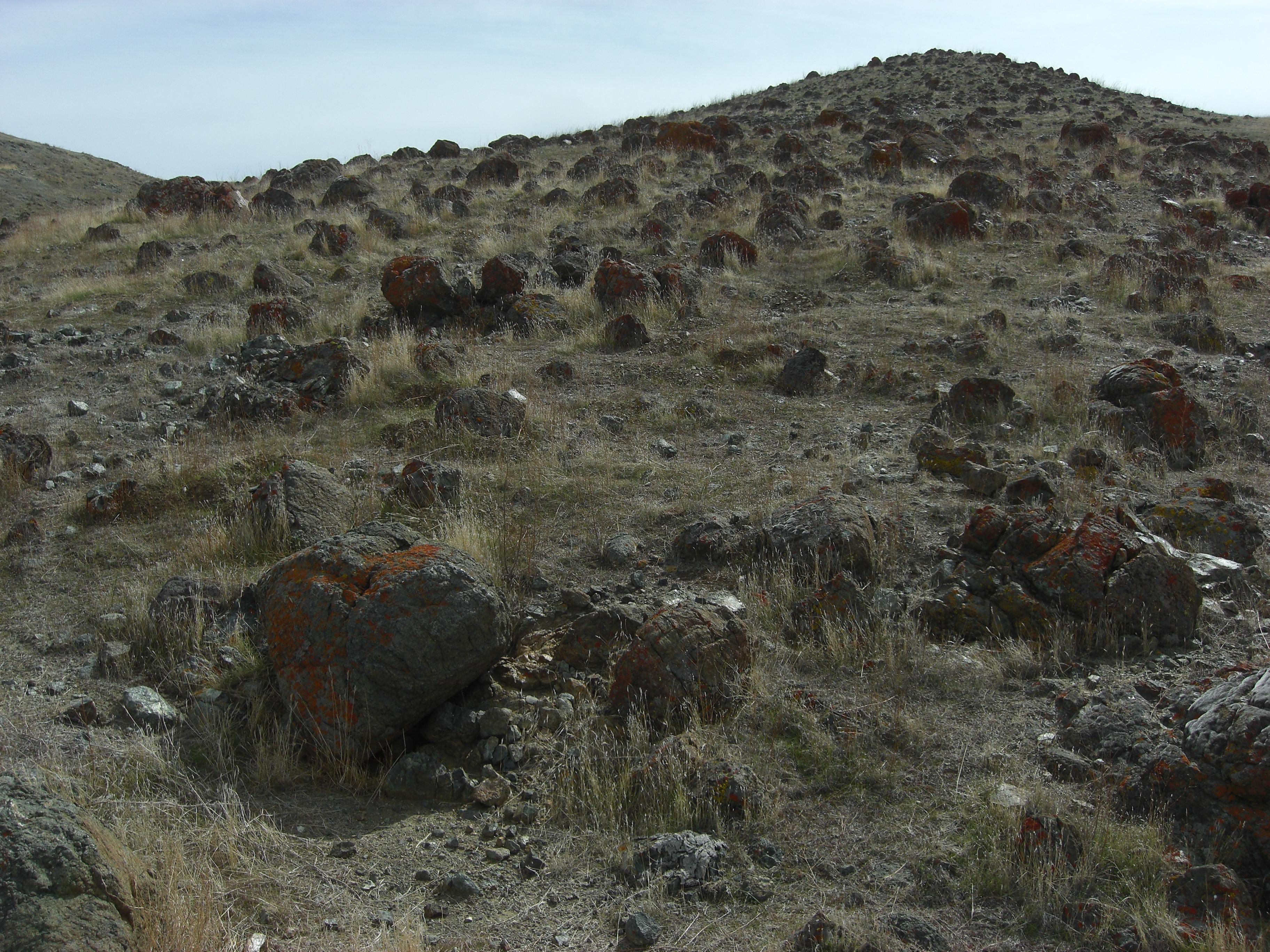
Rhizoplaca glaucophana is a conspicuous lichen easily recognized at a glance in the field, so the small number of known localities it has been found at is generally considered strong evidence of its rarity. However, recent fieldwork has shown that it can occur on scattered boulders widely over a landscape, so the overall population size is probably relatively large despite the small number of documented localities.
Based on recent fieldwork and historical records, we can place a lower bound on the population size (number of boulders occupied) at around 500. However at a number of sites recently visited we expect it to be present at a far greater number of boulders, at least locally. If we estimate that we saw only 10% of the occurrences at these rich sites, the population rises to at least 1000. Much of the range is on private ranch land and therefore not easily accessible to survey. Very rough estimates suggests that equivalent habitat is present throughout the region, and the population could easily be 100x what has been directly observed, setting an upper limit somewhere in excess of 1,000,000.
Owing to the sparseness on the landscape, it is likely that individual subpopulations are relatively small. The maximum observed is about 219 (Cholame Valley).
Several photograph-based monitoring sites were established in 2021, e.g., in the San Joachim Experimental Range, which can facilitate a better objective measure of population trends.
Population Trend:
Habitat and Ecology
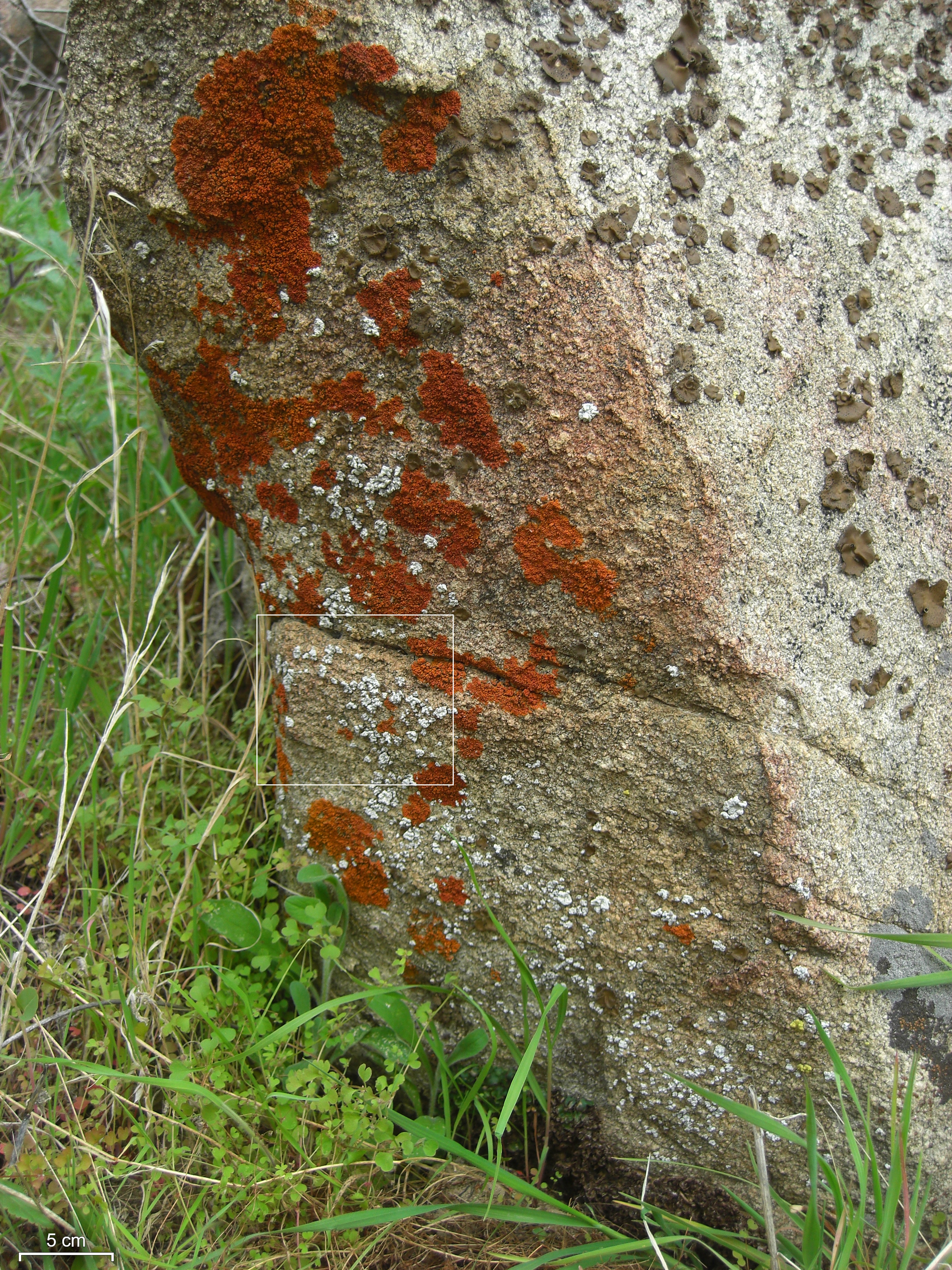
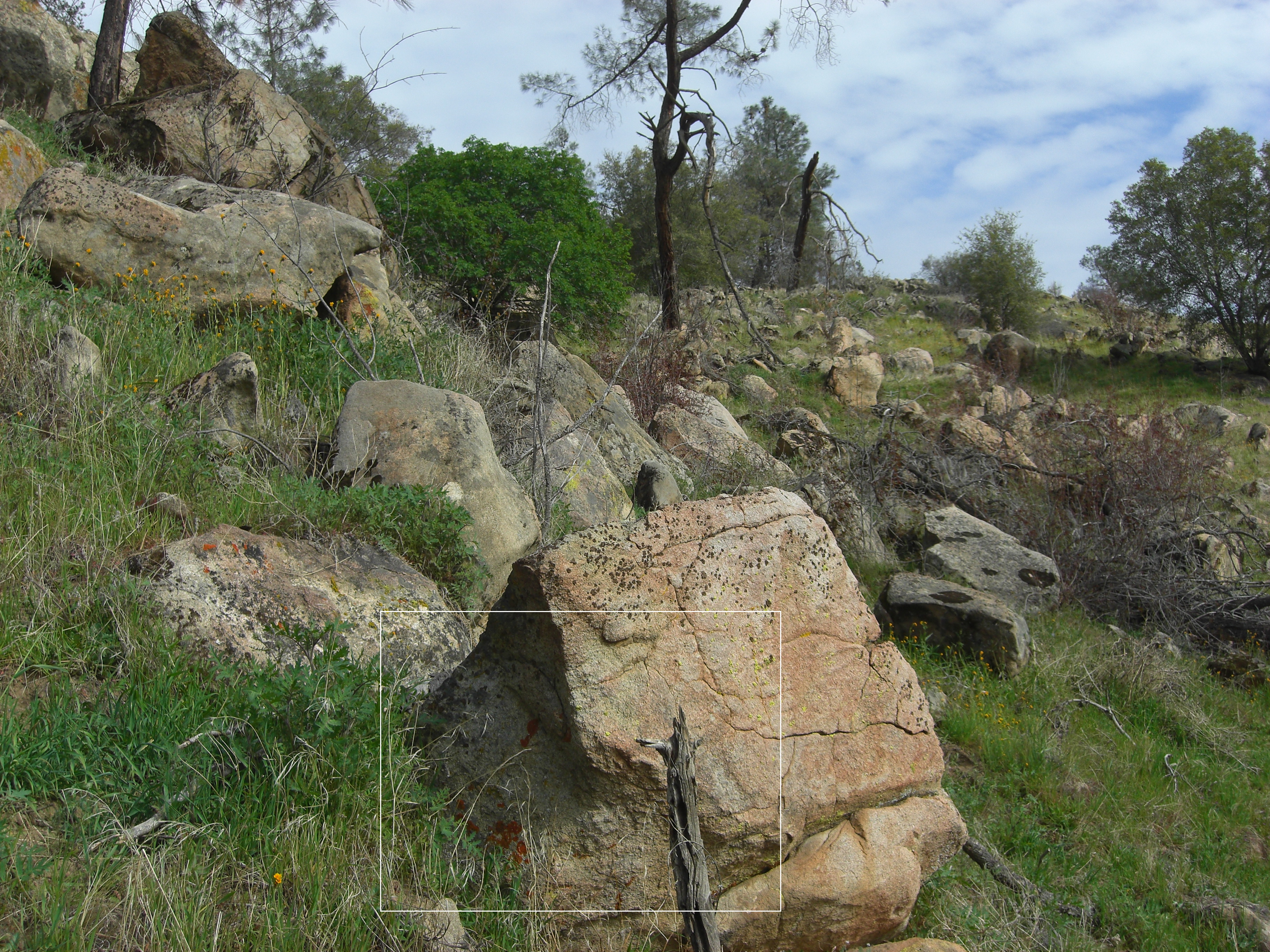
Rhizoplaca glaucophana occurs on small siliceous boulders or near the base of larger outcrops at relatively low elevation (ca. 100-1600 m). It has been found in grasslands, foothills and canyons and on large outcrops in open woodlands. It is most common in the foothills of the southern Sierra Nevada and Coastal Range.
Threats
The strongest threat to Rhizoplaca glaucophana is posed by increasing frequency and intensity of wildfire in central and southern California, especially subpopulations in woodlands and chaparral. As this species is most frequently found close to the ground, even fast-moving, ground-level fire in grasslands is a potential threat.
Land development including road building, housing developments, dams and mining are also concerns because subpopulations tend to be restricted to fairly small areas, so even small-scale disturbance can easily affect an entire subpopulation.
Lichens in general are well known to be sensitive to air pollution; however, populations in the highly agricultural landscape of the Central Valley show no evidence of physiological sensitivity to pollution.
Conservation Actions
Some subpopulations are in protected areas such as Yosemite National Park, however much of its potential range is low elevation and therefore mostly privately owned.
Known populations should be monitored and protected from development wherever possible.
Research needed
Undiscovered subpopulations of Rhizoplaca glaucophana are likely to exist. The foothills of the Sierra Nevada and eastern side of the Coastal Range are poorly studied by lichenologists. Surveys of likely habitat will probably turn up additional localities. Revisiting monitoring sites established in 2021 will help quantify effects of fire, air quality and climate change.
Use and Trade
Rhizoplaca glaucophana has no known commercial or cultural uses.
Bibliography
Country occurrence
Regional Population and Trends
| Country | Trend | Redlisted |
|---|