- Proposed
- Under Assessment
- Preliminary Assessed
- ENAssessed
- 5Published
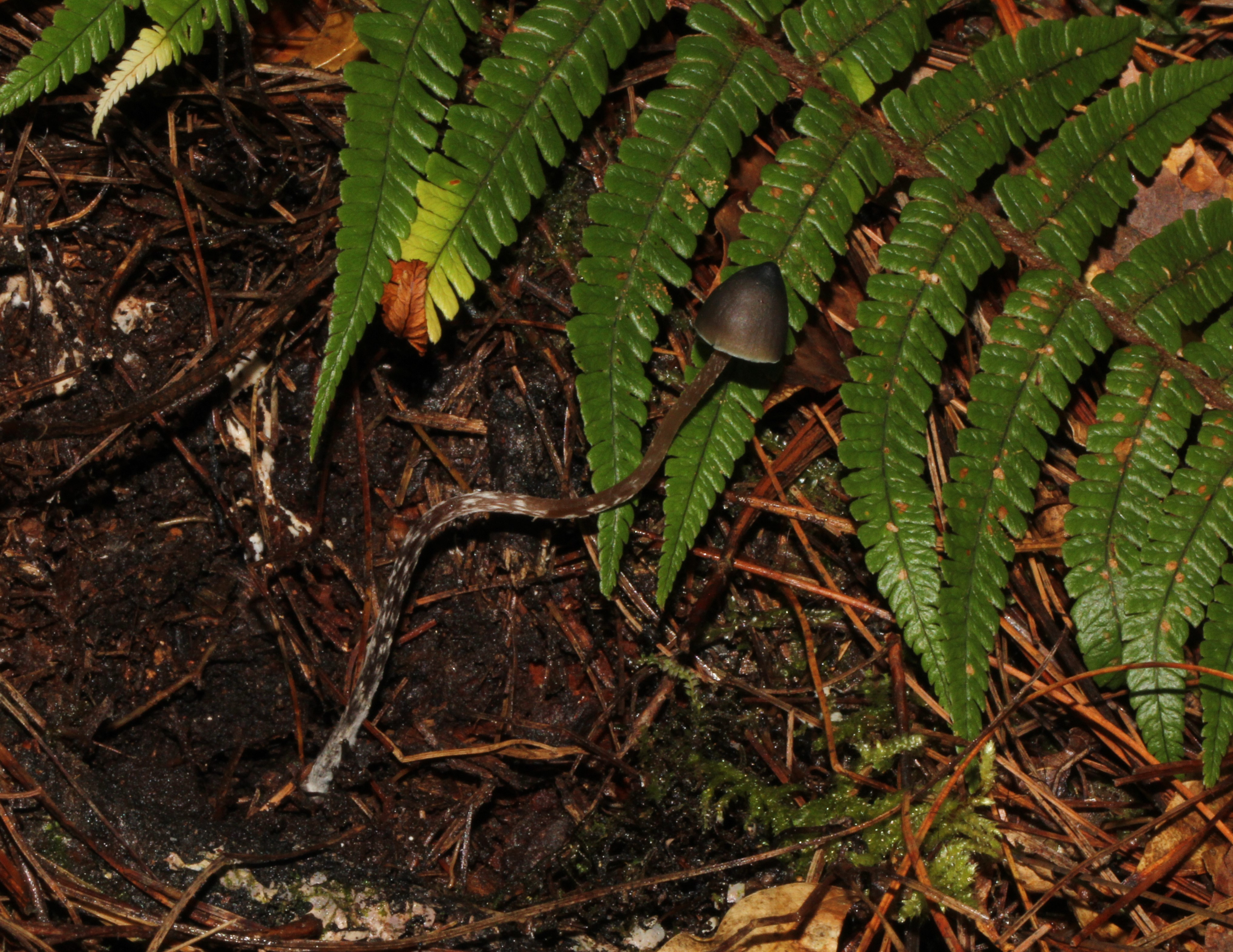
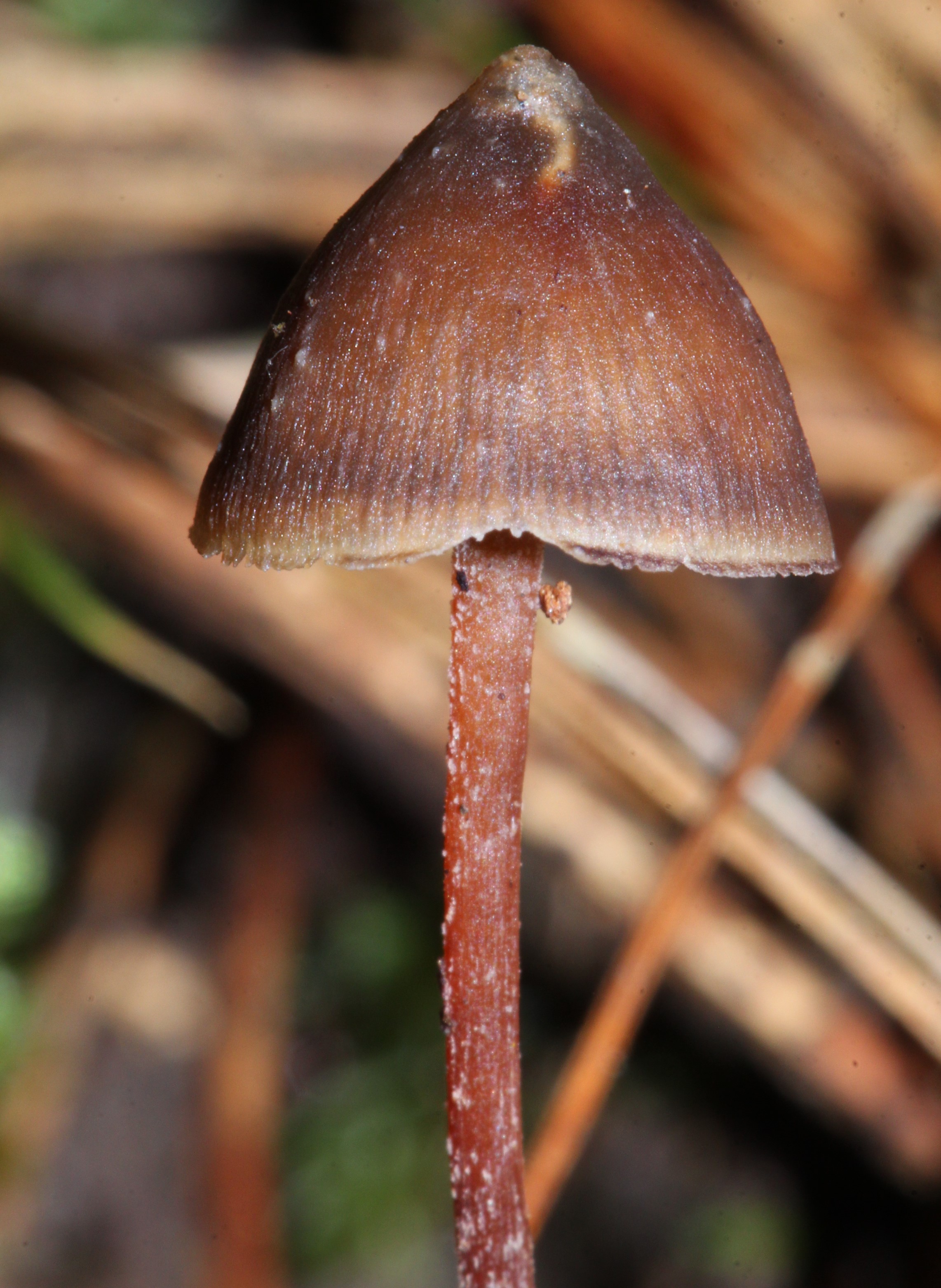
Psilocybe fagicola R. Heim & Cailleux
- Scientific name
- Psilocybe fagicola
- Author
- R. Heim & Cailleux
- Common names
 señores principales
- IUCN Specialist Group
 Mushroom, Bracket and Puffball
- Kingdom
- Fungi
- Phylum
- Basidiomycota
- Class
- Agaricomycetes
- Order
- Agaricales
- Family
- Strophariaceae
- Assessment status
- Assessed
- Preliminary Category
- EN A3c
- Proposed by
- Lilia Pérez Ramírez
- Assessors
- Roberto Garibay Orijel, Lilia Pérez Ramírez
- Editors
- Roberto Garibay Orijel, Ricardo Garcia-Sandoval
- Contributors
- Lilia Pérez Ramírez
- Comments etc.
- Anders Dahlberg
Assessment Notes
Psilocybe fagicola inhabits only in the mountain cloud forests of western Mexico. According with current climate change models, mountain cloud forest in Mexico will suffer a reduction of 68% in the following 60 years. Additionally this species has hallucinogenic properties and is consumed for recreational purposes. Its reduced distribution and restriction to a very vulnerable vegetation type make this species endangered.
Justification
The species should be listed as Endangered under criteria A3c, because it is projected a reduction in the EOO and quality of habitat of more than 50% in the next 50 years (three generations).
Taxonomic notes
Psilocybe fagicola R. Heim & Cailleux, 1959
Is a small blue staining papilonated Psilocybe. It characterises by and evident pseudorhiza, subromboidal spores and few pleurocistidia. It is a alucinogenic fungus.
Psilocybe xalapensis Guzmán and López, P. wassoniorum Guzmán and Pollock, and y P. fagicola var. mesocystidiata Guzmán are synonyms (Guzmán 1983).
Why suggested for a Global Red List Assessment?
Psilocybe fagicola inhabits only in the mountain cloud forests of western Mexico. According with current climate change models, mountain cloud forest in Mexico will suffer a reduction of 68% in the following 60 years. Additionally this species has hallucinogenic properties and is consumed for recreational purposes. Its reduced distribution and restriction to a very vulnerable vegetation type make this species endangered.
The species should be listed as Endangered under criteria A3c, because it is projected a reduction in the EOO and quality of habitat of more than 50% in the next 50 years (three generations).
Geographic range
It is endemic to southwestern Mexico, inhabiting the mountain cloud forests of the “Sierra Madre Oriental” mountain range. It is known from Hidalgo, Oaxaca, and Veracruz states. It is particularly abundant in Veracruz where most of its subpopulations belong.
Population and Trends
Psilocybe fagicola distributes in western Mexico, the northern-most subpopulation is in Hidalgo: Zacualtipan.The southermost known subpopulations are in Oaxaca: La Esperanza, Huautla and Soyatitla. It is particularly abundant in central Veraruz with a huge subpopulation with several localities in the Cofre de Perote-Xalapa region: Acatlán, Loma Alta San Andres Tlalnehuayocan, La Galera, Tres Cruces, Perote, Acajete, Coatepec, and Xalapa. There is an other subpopulation the Miahuatlan mouontains (Manuel Gutierrez, Miahuatlan, Chicinquiaco. Al localities are Mounttain Cloud forests. Potentialy this species could distribute further North thru Sierra “Gorda de Querétaro” and South thru Chimalapas in Chiapas following the potential distribution of Mountain cloud forest in the “Sierra Madre Oriental” mountain range. Even while this region is 800 km long, the Mountain Cloud forest is fragmented occupying 1% of the Mexican territory and is severely threatened by global warming.
Population Trend: Decreasing
Habitat and Ecology
It is a leaf-litter saprobe mushroom, rarely foung among moss. It develops in Mountain Cloud forests associated to Fagus, Liquidambar, Pinus, Quercus and Oreomunnea. Altitude range 1800-2000 m.
Threats
Many sub populations are close to cities so they are been converted to urban areas. Mountain cloud forests represents less than 1% of the forest area in Mexico, and is severely fragmented, it has been predicted a reduction of 68% of the mountain cloud fores in Mexico in the next 50 years due to climate change (Ponce-Reyes et al. 2012).
Conservation Actions
The species is considered threatened in Mexican law, a category broadly equivalent to IUCN EN, but no particular conservation plan has been implemented. The main conservation actions needed are related with the preservation of the habitat. Global warming mitigation.
Research needed
To explore north and south its know distribution to verify its real distribution range.
Use and Trade
Hallucinogenic recreational
Bibliography
Guzmán, G., J.Q. Jacobs, F. Ramírez-Guillén, D.M. Murrieta-Hernández. 2005. The taxonomy of Psilocybe fagicola-complex. Journal of Microbiology 43: 158-165
Ramírez Guillén, F., l. Acosta Rosado, L. Aragón Axomulco, S. Avendaño Reyes y R. Novelo Gutiérrez, 2017. Digitalización y sistematización de las colecciones biológicas del INECOL. Instituto de Ecología, A.C. Bases de datos SNIB-CONABIO_Hongos. Proyecto No. ME014. Ciudad de México
Guzmán, G. (1978). Species of Psilocybe known from Central and South America. Mycotaxon 7, 225-255
Guzmán, G. (1983). The genus Psilocybe. Beih. Nova Hedwigia 74. Cramer, Vaduz.
Ponce-Reyes, R., Nicholson, E., Baxter, P. W. J., Fuller, R. A. and Possingham, H. (2013). Extinction risk in cloud forest fragments under climate change and habitat loss. Diversity and Distributions 19, 518–529.