- Proposed
- Under Assessment
- 3Preliminary Assessed
- 4Assessed
- 5Published
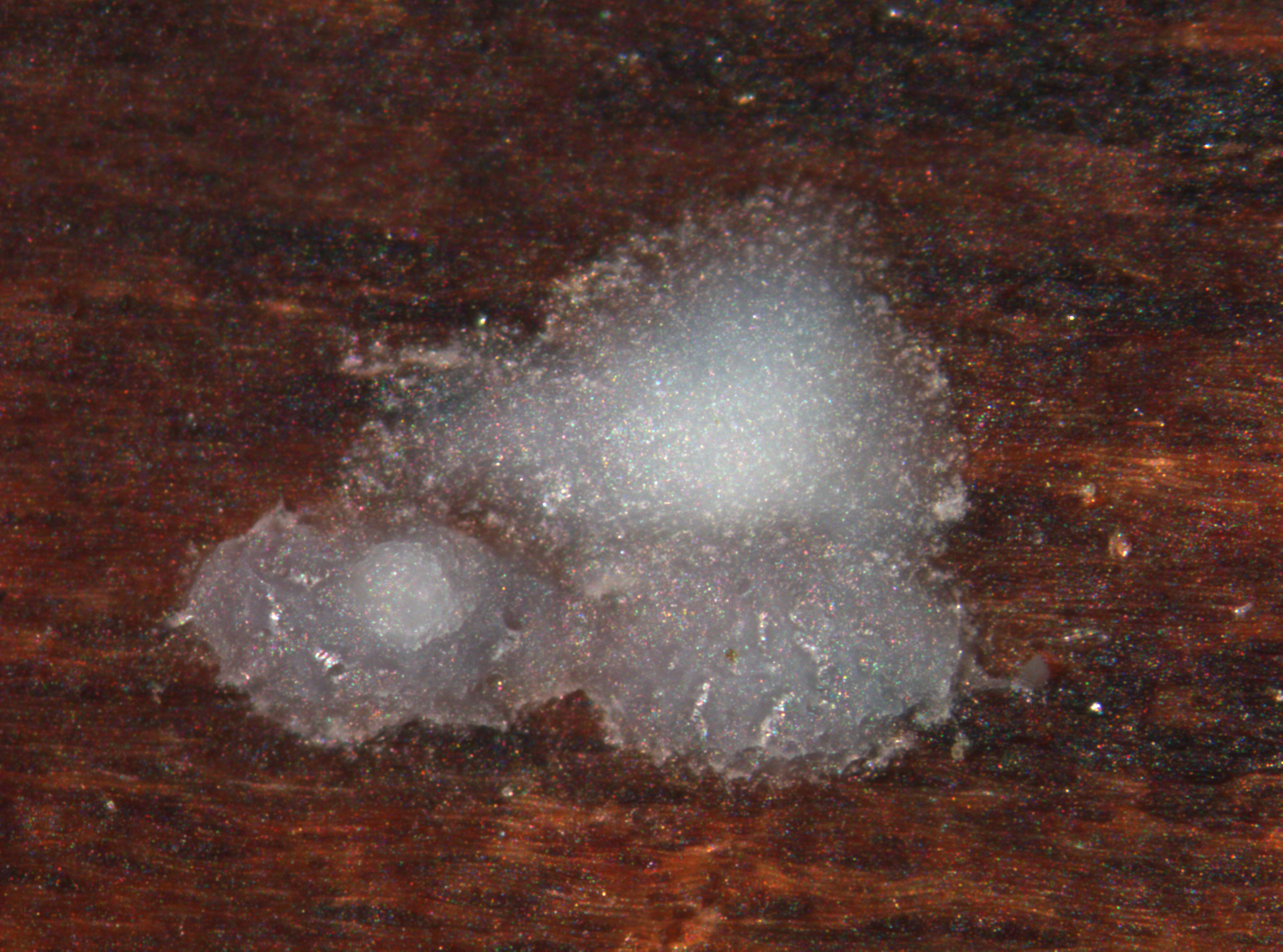
Digitatispora marina Doguet
- Scientific name
- Digitatispora marina
- Author
- Doguet
- Common names
 Havklat
- IUCN Specialist Group
 Cup-fungi, Truffles and Allies
- Kingdom
- Fungi
- Phylum
- Basidiomycota
- Class
- Agaricomycetes
- Order
- Atheliales
- Family
- Atheliaceae
- Assessment status
- Under Assessment
- Proposed by
- Teppo Rämä
- Assessors
- Teppo Rämä
- Contributors
- Isabel Fernandes
- Comments etc.
- Anders Dahlberg
Assessment Notes
Taxonomic notes
The species is placed in Niaceae in Agaricales (Abdel-Wahab et al. 2019, Azevedo et al. 2018, Sulistyo et al. 2021).
Why suggested for a Global Red List Assessment?
Digitatispora marina is one of the few filamentous basidiomycetes in the marine environment. It develops fruiting bodies that can be detected by naked eye in the field, is easy to identify and has a wide distribution range. The species is adapted to colder waters so there is a potential threat with warming sea water temperatures. Aquatic Fungi Specialist Group thinks this is a suitable fungus to start red listing of aquatic microfungi.
Geographic range
Circumpolar in temperate-cold waters of the Northern and Southern hemisphere.
Population and Trends
Global number of known occurrences documenting the sexual fruiting body of the fungus is 65. Additionally, there are 33 occurrences in marine seawater and sediment metagenomes from tropical-cold waters that were detected by screening the full genome of the fungus against the entire Sequence Read Archive metagenome collection, but these are excluded from the evaluation, since it is not known whether these occurrences represent fruiting fungi or just floating/sedimented spores.
Since there are not many people that know the fungus and are looking for its fruiting bodies globally and there is abundant suitable substrate available, it is estimated that the total number of occurrences/localities is more than 100 times more than currently known. The species is sexually reproducing in water temperatures below 15°C (Hughes 1968, Byrne 1975). Warming sea surface water temperatures may possess a threat to the species by limiting its sexual reproduction, formation of mature fruiting bodies, spatially and temporally. However, the species has a circumpolar distribution in southern and northern hemisphere and currently conditions for reproduction are abundant. More data is needed to assess the current population trend.
Population Trend: Uncertain
Habitat and Ecology
Saprotrophic on intertidal and drifting wood including test panels, other man-made wooden structures and archeological timbers (Tudor ship Mary Rose) in the marine environment. The fungus can develop fruiting bodies fully or periodically submerged in marine waters. Substrates include deciduous wood (Betula, Fagus, Quercus) and rarely conifers (Pinus). Temperate water species that is found fruiting in cold waters, below 15°C; however no fruiting body occurrences are known in the Arctic or Antarctica. Hughes (1968) reports the species from waters with temperature varying between -1 and 13°C and salinities ~30-32‰ in Newfoundland, Canada. Brooks (1975) reports that the species is collected only during winter and spring when water temperatures remain below ~15°C in Rhode Island, USA. In laboratory, the fungus grows best at 15-20°C (Doguet 1964, Panebianco 1994). Doguet (1964) and Brooks (1975) characterizes this as a psychrophilic fungus with growth in low temperatures below 10°C and growth ceasing at approximately 25°C in laboratory cultures.
Threats
Rising sea water temperatures that may narrow down the geographic range and temporal window of the fungus for sexual reproduction.
Conservation Actions
ex-situ conservation in culture collections.
Research needed
The current population size and distribution range of the species should be monitored using DNA barcodes from morphologically identified specimens and DNA-based methods, since sea surface temperatures are rising. Habitat changes caused by rising temperatures should be monitored. Since this is a circumpolar species there is possibility for it being a species complex, although we have no indications of that based on current data. One genome is existing, but several could be sequenced from different parts of the world to investigate the population structure.
Would also be useful to know whether less wooden substrates enter the marine system than previously possibly decreasing the population size in the future.
Use and Trade
The enzymatic capabilities of the species show promise in being utilized in biotechnology (Heimland 2022).