- Proposed
- 2Under Assessment
- 3Preliminary Assessed
- 4Assessed
- 5Published
Microglossum rufescens (Grélet) Bon
- Scientific name
- Microglossum rufescens
- Author
- (Grélet) Bon
- Common names
- IUCN Specialist Group
 Cup-fungi, Truffles and Allies
- Kingdom
- Fungi
- Phylum
- Ascomycota
- Class
- Leotiomycetes
- Order
- Helotiales
- Family
- Geoglossaceae
- Assessment status
- Proposed
- Proposed by
- Simon Harding
- Comments etc.
- Simon Harding
Assessment Notes
Taxonomic notes
Microglossum rufescens is a well‑defined member of the Microglossum olivaceum complex and is distinguished by its reddish‑brown to rufescent coloration and characteristic spore morphology. The species has historically been confused with other earthtongues in the complex, particularly M. olivaceum, due to overlapping macroscopic features. Modern treatments recognise M. rufescens as a distinct taxon based on consistent morphological characters and supported by molecular data where available.
Some older records attributed to M. olivaceum or other Microglossum species may represent M. rufescens, and molecular confirmation of historic and ambiguous material would help clarify the true distribution. No infraspecific taxa are recognised, and there are no known nomenclatural issues affecting the current use of the name.
Why suggested for a Global Red List Assessment?
Microglossum rufescens is a rare and habitat‑restricted fungus associated with long‑established, nutrient‑poor grasslands. These ancient grasslands have undergone sustained decline across Europe due to agricultural intensification, nitrogen deposition, afforestation, changes in grazing regimes, and conversion to more productive or managed grassland types. The species is known from scattered records, always in small numbers and consistently within low‑nutrient, short‑turf grassland systems.
Its ecology makes it highly sensitive to changes in sward structure, soil nutrient status, and moisture balance. Under‑grazing, scrub encroachment, and shifts in land management reduce habitat suitability by altering microclimate and soil conditions. Atmospheric nitrogen enrichment continues to drive sward densification and loss of moss‑rich microhabitats, further diminishing the quality of suitable sites. These pressures collectively contribute to ongoing decline in the extent and condition of the specialised grassland habitats required by the species.
Given its rarity, scattered distribution, dependence on declining ancient grasslands, and sensitivity to modern land‑use change, Microglossum rufescens warrants global assessment. It represents an important component of the specialist grassland fungal community, and its conservation status reflects the broader vulnerability of long‑established, low‑nutrient grasslands across Europe.
Given these factors, the species appears to meet the conditions for listing as Endangered under criterion B2ab(iii), and therefore merits consideration for global assessment.
Geographic range
Microglossum rufescens is a European species with a confirmed distribution centred in north‑western and central Europe. Verified occurrences are associated with temperate, nutrient‑poor grasslands, including managed meadows, calcareous slopes, and short‑sward pastures.
Confirmed records include preserved specimens, sequenced vouchers, expert‑validated observations, and repeated occurrences in appropriate habitat across the United Kingdom, Ireland, Sweden, Denmark, Germany, Finland, Slovakia, France, the Netherlands, and Belgium. These countries collectively represent the core modern distribution of M. rufescens.
Based on the number and size of verified sites, the Area of Occupancy (AOO) is inferred to be well below 500 km². The species occurs in isolated pockets of ancient grassland separated by large areas of unsuitable habitat, resulting in severe fragmentation.
Insufficient data exists from Greece, Spain, Bulgaria, Russia, and the USA to support inclusion in the confirmed distribution. Records from these countries may represent early identifications, observations without voucher material, or data types not suitable for species‑level confirmation. The USA is explicitly excluded because historic records represent earlier misapplication of the name and do not correspond to M. rufescens.
Population and Trends
Microglossum rufescens is a rare species restricted to ancient, nutrient‑poor grasslands with long ecological continuity. It typically occurs as scattered individuals or small clusters of fruitbodies, and most sites produce only limited fruiting in any given year. The species shows no evidence of colonising improved, restored, or recently created grasslands, and appears confined to long‑established semi‑natural systems.
Across Europe, these ancient grasslands are in documented decline due to agricultural intensification, abandonment, afforestation, nutrient deposition, and scrub encroachment. As the species is dependent on these long‑established habitats and does not expand into new ground, the reduction in habitat extent and quality directly implies a decreasing population trend.
Where ancient grassland structure persists — including naturally grazed systems on thin soils — small, stable subpopulations remain. However, these refugial sites represent a shrinking fraction of the former extent of suitable habitat. Given the ongoing loss and degradation of long‑established grasslands, and the species’ limited capacity for colonisation, the overall population trend for M. rufescens is inferred to be declining.
Population Trend: Decreasing
Habitat and Ecology
Microglossum rufescens is a terrestrial ascomycete associated with nutrient‑poor, semi‑natural grasslands that possess long-term ecological continuity. It occurs in ancient, stable grassland systems with thin soils and an open structure maintained by natural or low-intensity grazing. Typical habitats include openly grazed pastures, calcareous slopes, lightly grazed unfertilised meadows, and other long‑established grasslands that have remained free from agricultural improvement.
The species fruits on soil among short grasses, mosses, and low herbaceous vegetation. Occupied sites are characterised by low nutrient status, absence of fertiliser inputs, and a mosaic of sward heights created by sustained natural grazing from rabbits, deer, ponies, or low-intensity livestock. These conditions support the open microhabitats and stable soil chemistry required by the species.
Fruiting occurs in autumn, usually between September and November depending on local climate. As with other earthtongues, M. rufescens is sensitive to nutrient enrichment, sward closure, scrub encroachment, and loss of extensive or natural grazing. It forms part of the wider CHEGD assemblage of grassland fungi, although it is less frequently encountered than many waxcap species and appears to require particularly stable, undisturbed grassland conditions.
The species is not associated with woody substrates, dung, or decaying plant material, and no mycorrhizal relationship has been demonstrated. Its persistence is closely linked to the conservation of semi‑natural calcareous and neutral grasslands with long-term ecological continuity.
Threats
The primary threat to Microglossum rufescens is the ongoing loss and degradation of ancient, nutrient‑poor grasslands across Europe. These long‑established grassland systems are declining due to agricultural intensification, fertiliser application, reseeding, soil improvement, and conversion to arable land. Such changes eliminate the low‑nutrient, open soil conditions required by the species.
Abandonment of traditional grazing or natural grazing regimes leads to sward closure, increased litter accumulation, and scrub encroachment, all of which reduce habitat suitability. Afforestation, tree planting on open grassland, and the spread of coarse grasses further contribute to the loss of the open, thin‑soil structure in which the species persists.
Atmospheric nitrogen deposition continues to enrich formerly nutrient‑poor grasslands, accelerating sward densification and altering soil chemistry. This process is pervasive across Europe and affects even protected sites, contributing to long‑term habitat decline.
Because M. rufescens shows no evidence of colonising improved or newly created grasslands, the reduction in ancient semi‑natural grassland directly reduces the species’ available habitat. The threats affecting these grasslands are widespread, ongoing, and well documented, and they collectively drive a continuing decline in habitat extent and quality for M. rufescens.
Conservation Actions
The conservation of Microglossum rufescens depends on the protection and long‑term maintenance of ancient, nutrient‑poor grasslands. Priority actions include safeguarding remaining semi‑natural grassland sites from agricultural improvement, afforestation, nutrient enrichment, and mechanical disturbance. Ploughing, harrowing, and ground preparation for wildflower enhancement schemes should be avoided, as these actions destroy the thin‑soil structure and long ecological continuity required by the species.
Maintaining natural or low‑intensity grazing regimes is essential to preserve the open soil conditions and low nutrient status on which the species depends. Existing grassland sites should be managed to prevent sward closure and scrub encroachment, particularly where abandonment has occurred. Protection of thin‑soil grasslands, calcareous slopes, and long‑established pastures is critical, as the species shows no evidence of colonising improved or newly created grasslands.
Monitoring of known sites is recommended to track habitat condition and fruiting occurrence. Increased recording effort in suitable but under‑surveyed regions may help clarify the species’ distribution and identify additional refugial populations. Conservation actions aimed at the wider CHEGD assemblage will also benefit M. rufescens, as these species share similar habitat requirements and threats.
Research needed
Further research is required to clarify the full distribution of Microglossum rufescens, particularly in regions with suitable ancient grasslands that remain under‑recorded. Targeted surveys in calcareous and nutrient‑poor grasslands in central and southern Europe may help identify additional subpopulations.
Molecular confirmation of existing and historic records would improve understanding of species limits within the Microglossum olivaceum complex and help resolve potential misidentifications. Sequencing of voucher material from under‑surveyed regions is especially important.
Long‑term monitoring of known sites would help document fruiting frequency, habitat stability, and responses to nutrient enrichment, sward closure, and changes in grazing regimes. Research into microhabitat conditions, soil characteristics, and grazing patterns at occupied sites would refine understanding of the species’ ecological requirements.
Improved documentation of habitat continuity and site history would support better identification of landscapes capable of sustaining the species.
Use and Trade
Microglossum rufescens has no known use or trade. It is not collected for consumption, cultivation, or commercial purposes, and there is no evidence of any utilisation of the species.
Bibliography
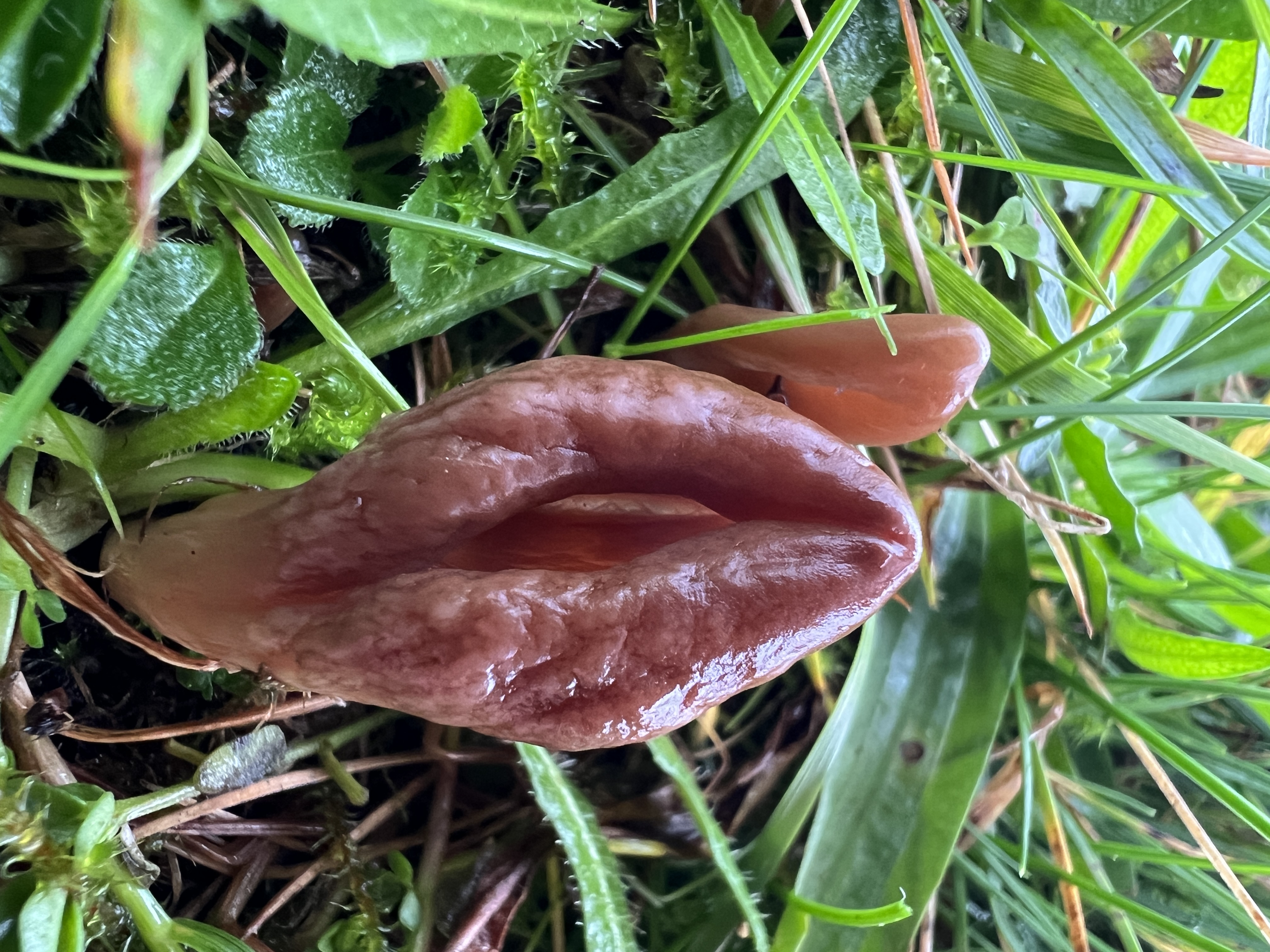
Microglossum rufescens – Ancient Grassland, Exmoor, South West England. Image © Simon Harding
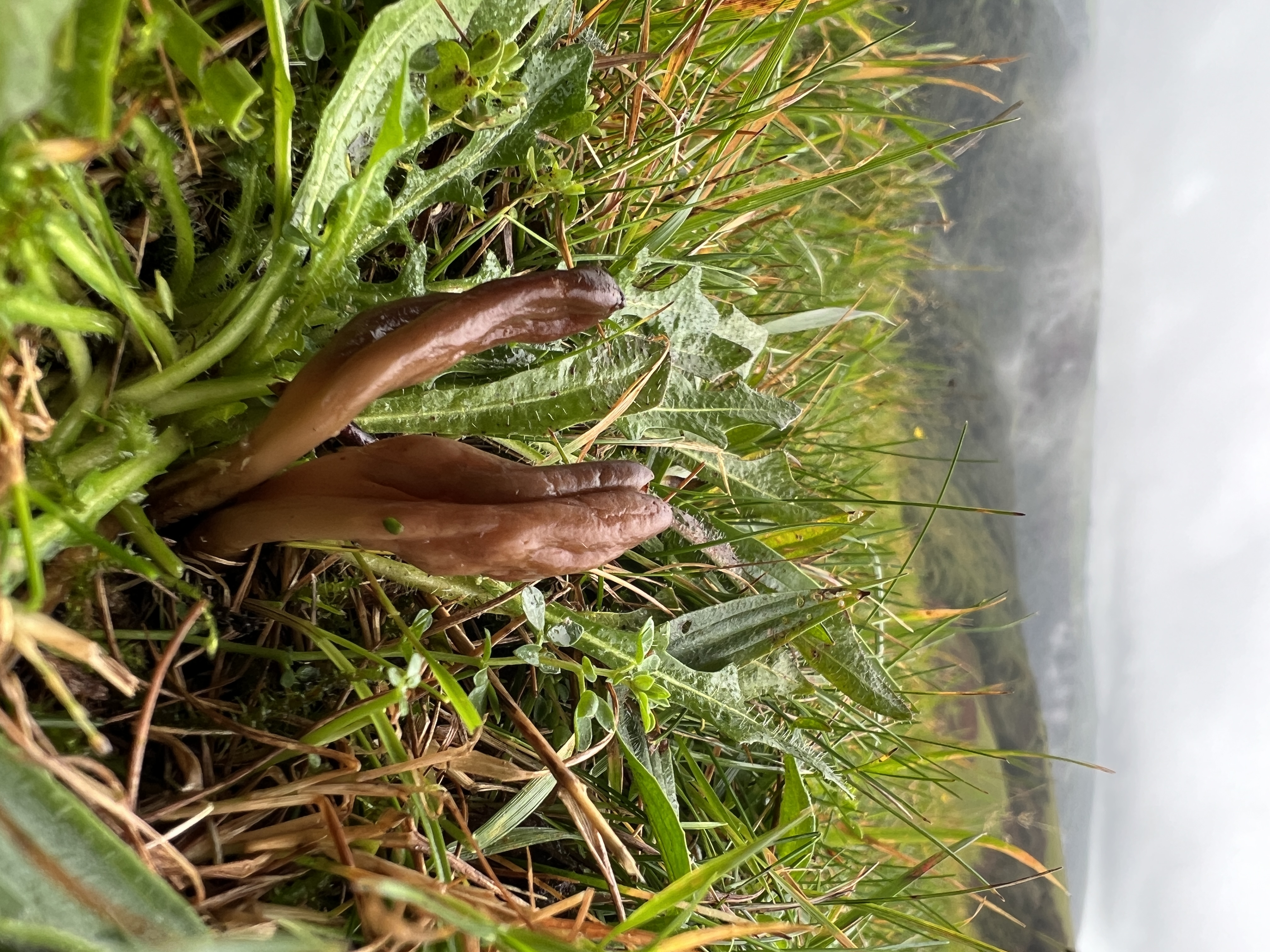
Microglossum rufescens – Ancient Grassland, Exmoor, South West England. Image © Simon Harding
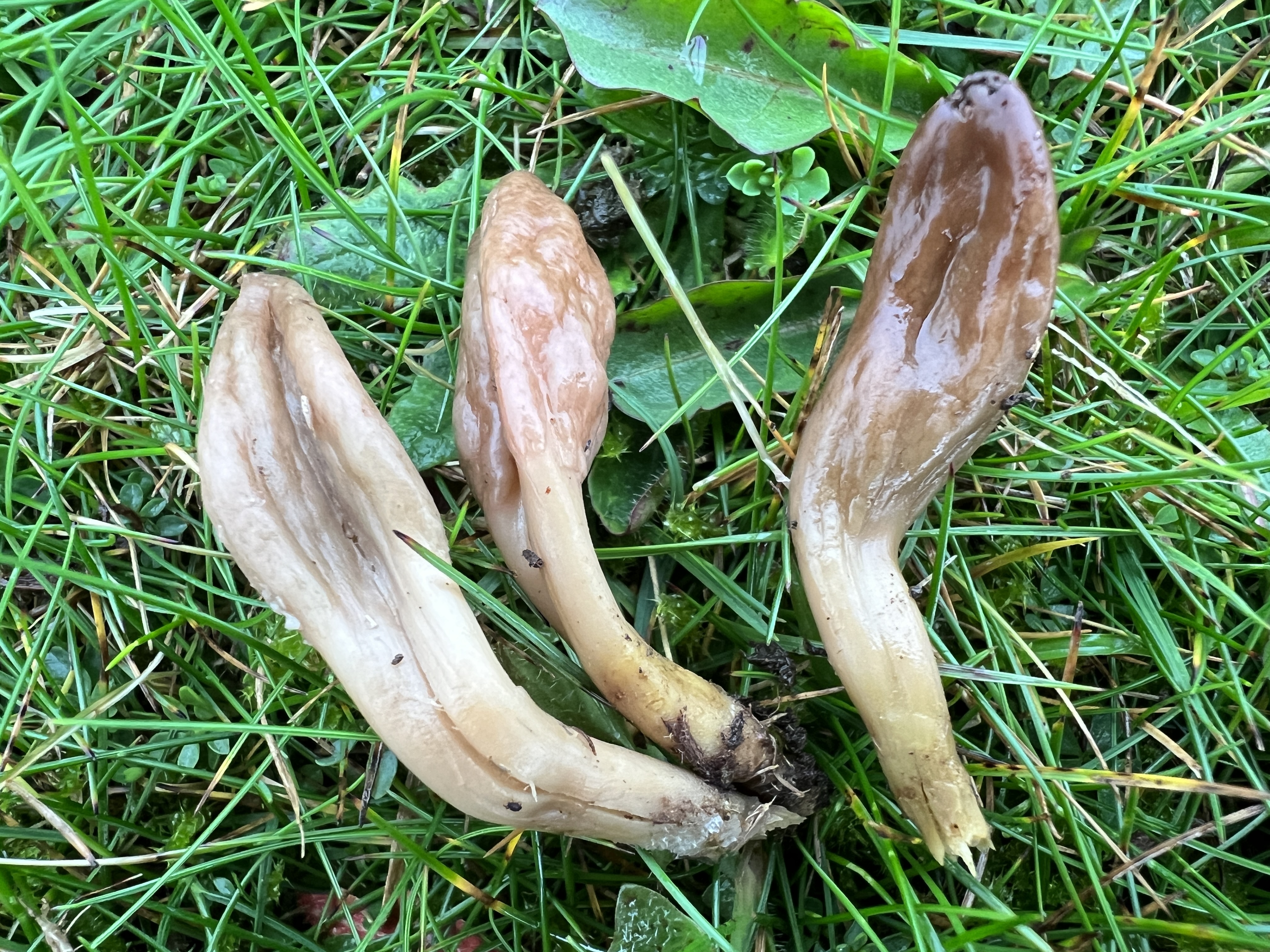
Microglossum rufescens – Ancient Grassland, Exmoor, South West England. Image © Simon Harding
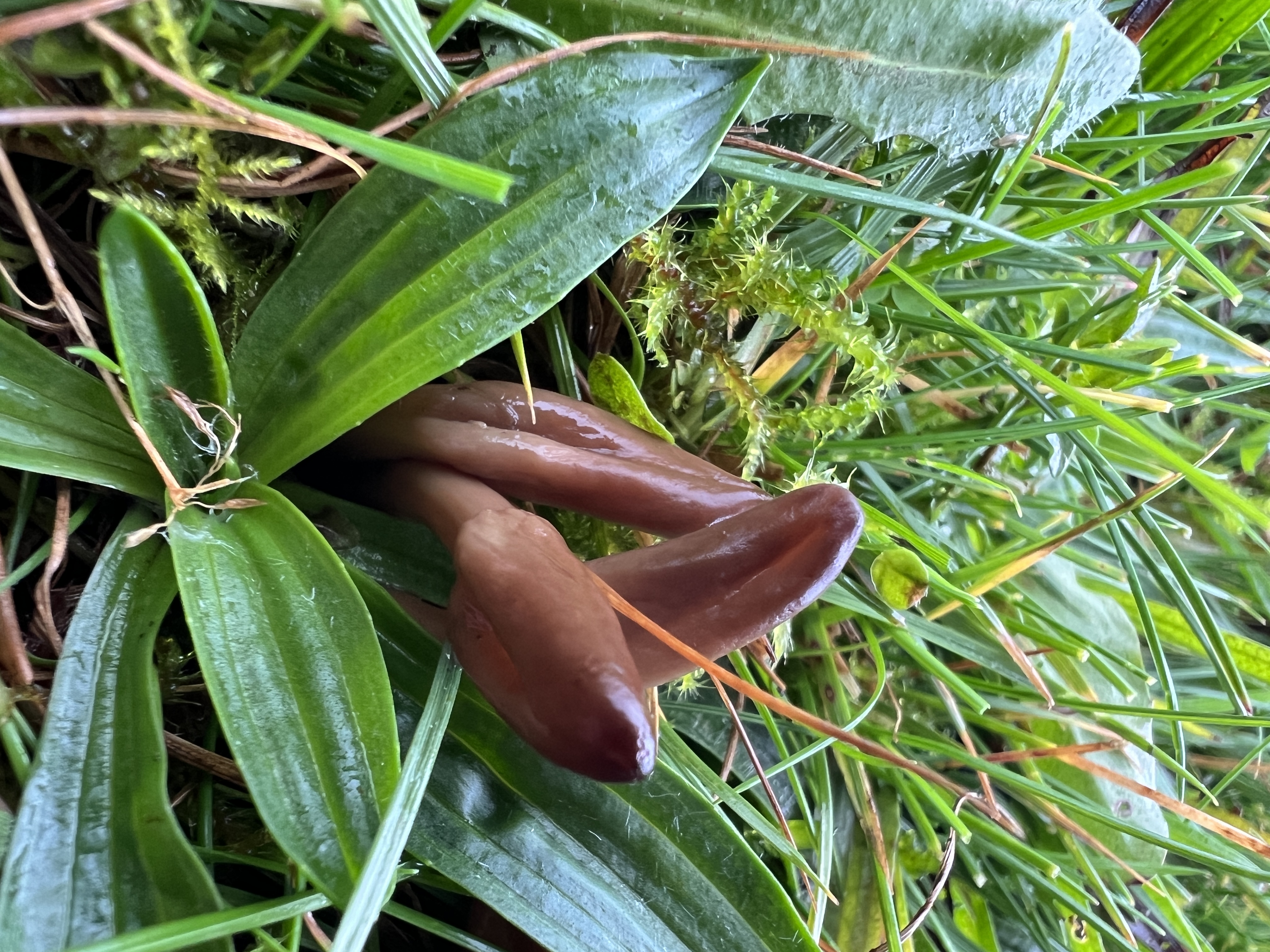
Microglossum rufescens – Ancient Grassland, Exmoor, South West England. Image © Simon Harding
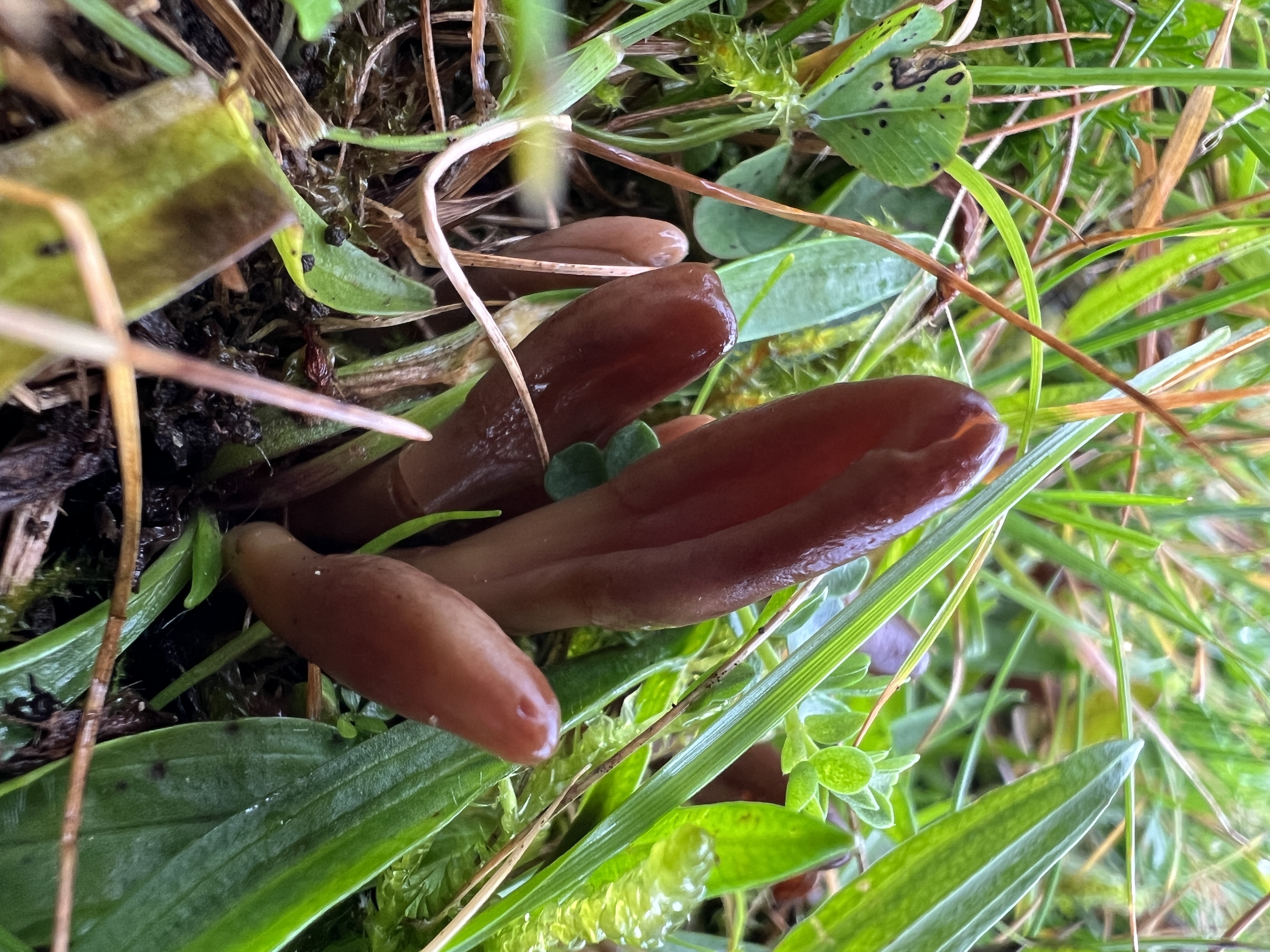
Microglossum rufescens – Ancient Grassland, Exmoor, South West England. Image © Simon Harding
Country occurrence
Regional Population and Trends
| Country | Trend | Redlisted |
|---|