- Proposed
- Under Assessment
- Preliminary Assessed
- Assessed
- DDPublished
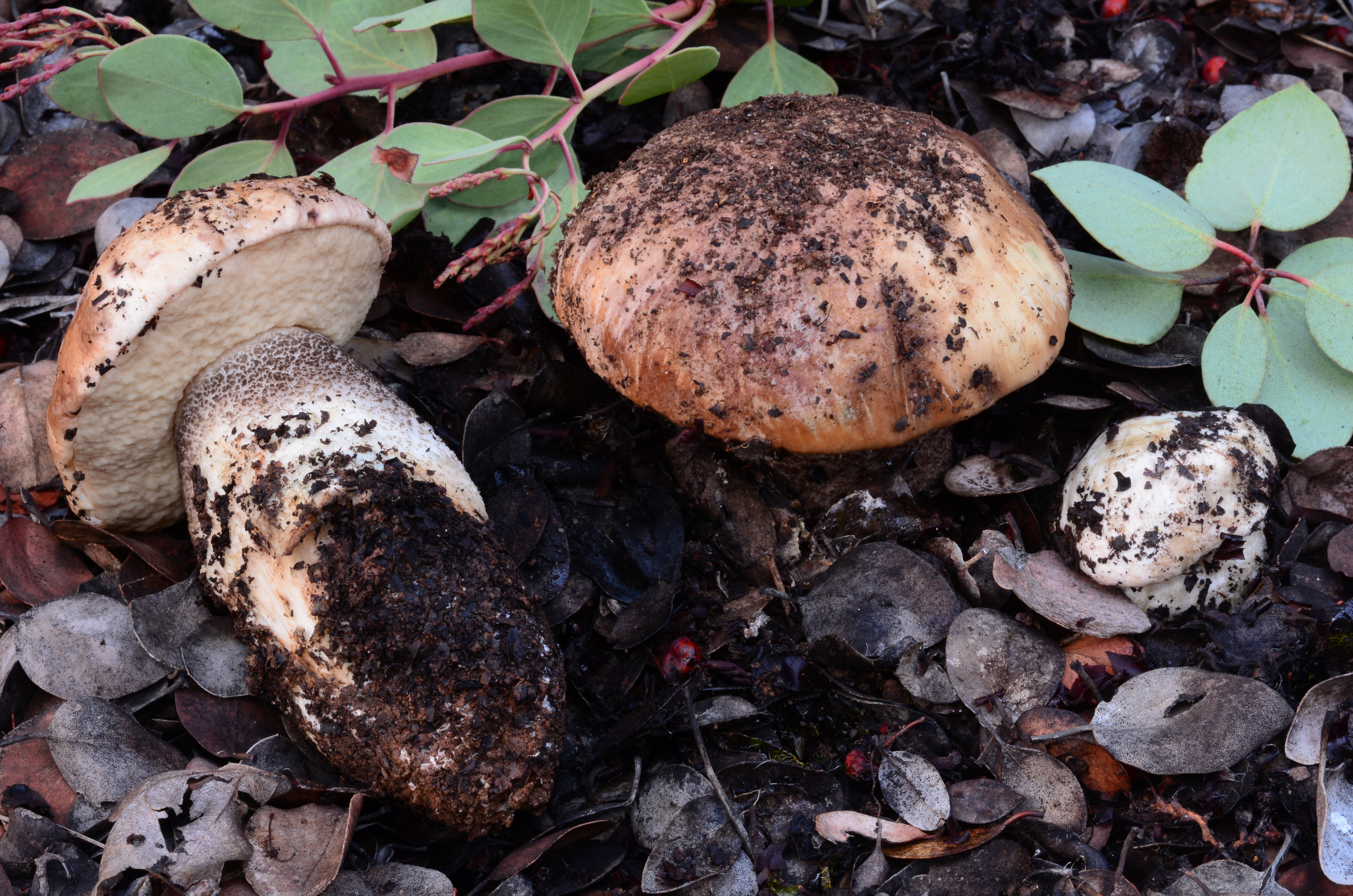
Leccinum arbuticola Thiers
- Scientific name
- Leccinum arbuticola
- Author
- Thiers
- Common names
- IUCN Specialist Group
 Mushroom, Bracket and Puffball
- Kingdom
- Fungi
- Phylum
- Basidiomycota
- Class
- Agaricomycetes
- Order
- Boletales
- Family
- Boletaceae
- Assessment status
- Published
- Assessment date
- 2024-12-10
- IUCN Red List Category
- DD
- Assessors
- Gregory Mueller (Chicago Botanic Garden / IUCN SSC Mushroom, Bracket and Puffball Specialist Group); Noah Siegel (25 Prospect Hill Road, Royalston, MA 01368, US / Global Fungus Assessment)
- Reviewers
- Anders Dahlberg (Swedish Species Information Centre, Uppsala / IUCN SSC Cup-fungus, Truffle and Ally Specialist Group)
Assessment Notes
Justification
Leccinum arbuticola is a bolete which grows with Madrone and Manzanita. Most records come from the Nevada City-Grass Valley area in the Sierra Nevada foothills of California, with other scattered locations in the Sierra Nevada foothills.Currently it is known from 31 collections, from nine sites but all but three of the of the records are over 30 years old. However, this species comes from an area which has been poorly surveyed for fungi in the past 40 years. Efforts should be made to locate this species, and assess trends. As it is currently not possible to estimate if this species is under severe decline, or is severely under-sampled, is more common and occurs over a much wider distribution throughout its host plants' range, it is assessed as Data Deficient.
Taxonomic notes
This species was described based on collections made in Nevada County, California, USA (Thiers 1975).Geographic range
Currently known from California, USA, this species has been reported from the Sierra Nevada foothills, with a single record from interior Mendocino County.Reports from Mexico (Mycoportal 2024) likely represent a distinct species, and are not included in this assessment.
Population and Trends
This species is currently known from 31 collections, from nine localities; however, all but three of those records are older than 30 years (Mycoportal 2024). It is not clear if the lack of recent collections represents a lack of people looking for, and correctly identifying, this species versus a dramatic decline in its population. Habitat dominated by Pacific Madrone (Arbutus menziesii) and Manzanita (Arctostaphylos spp.) is widespread, but more data are needed to identify the additional factors comprising suitable habitat for this species. The zone this species occurs in is subjected to sporadic rainfall, and these areas can go years before receiving adequate rainfall to produce sporocarps. Taking a precautionary view, it is assumed that the species is in decline.
Population Trend: Decreasing