- Proposed
- 2Under Assessment
- 3Preliminary Assessed
- 4Assessed
- 5Published
Termitomyces clypeatus R. Heim
- Scientific name
- Termitomyces clypeatus
- Author
- R. Heim
- Common names
 kyikyikyi
 momègnèmègnè
 akukufi
- tre; trede
 nlong
nlong butumbwe
 vigon’gongo
- hnget sut hmo
- buomboko
 nyonzwe
- champignon de gazelle
- botolo; monsoye
 umkowankowan
- busunda
- vihungumuruyo
- monbolokoboloko (‘gazelle mushroom’)
- ormambuli
- boua paka
 yaorgoundou (‘mushroom of the termite mound’)
 itikpajè (‘bird’s foot’); soisoi
- ubudzugwe
- lukuu; vidungwe; bunyamuswa
- nyonzwe; uzuma
- ungala
- huve
- busolele
- uzuma
 chiswa
- nakasuguli; ujonjo
 olu-abojose (‘start of rain mushroom’); olu-esunsun (‘termite mushroom’); takele (‘tasty morsel’)
- IUCN Specialist Group
 Mushroom, Bracket and Puffball
- Kingdom
- Fungi
- Phylum
- Basidiomycota
- Class
- Agaricomycetes
- Order
- Agaricales
- Family
- Lyophyllaceae
- Assessment status
- Proposed
- Proposed by
- Atik Retnowati
- Assessors
- Boris Armel Olou, Anna Ralaiveloarisoa, Prudence Yombiyeni, Sydney Thony Ndolo Ebika, Zouberou Mouanfon Njiaghait
- Contributors
- Atik Retnowati, Bee Kin Thi
- Comments etc.
- Atik Retnowati
- Reviewers
- Gregory Mueller, E. Ricardo Drechsler-Santos
Assessment Notes
Taxonomic notes
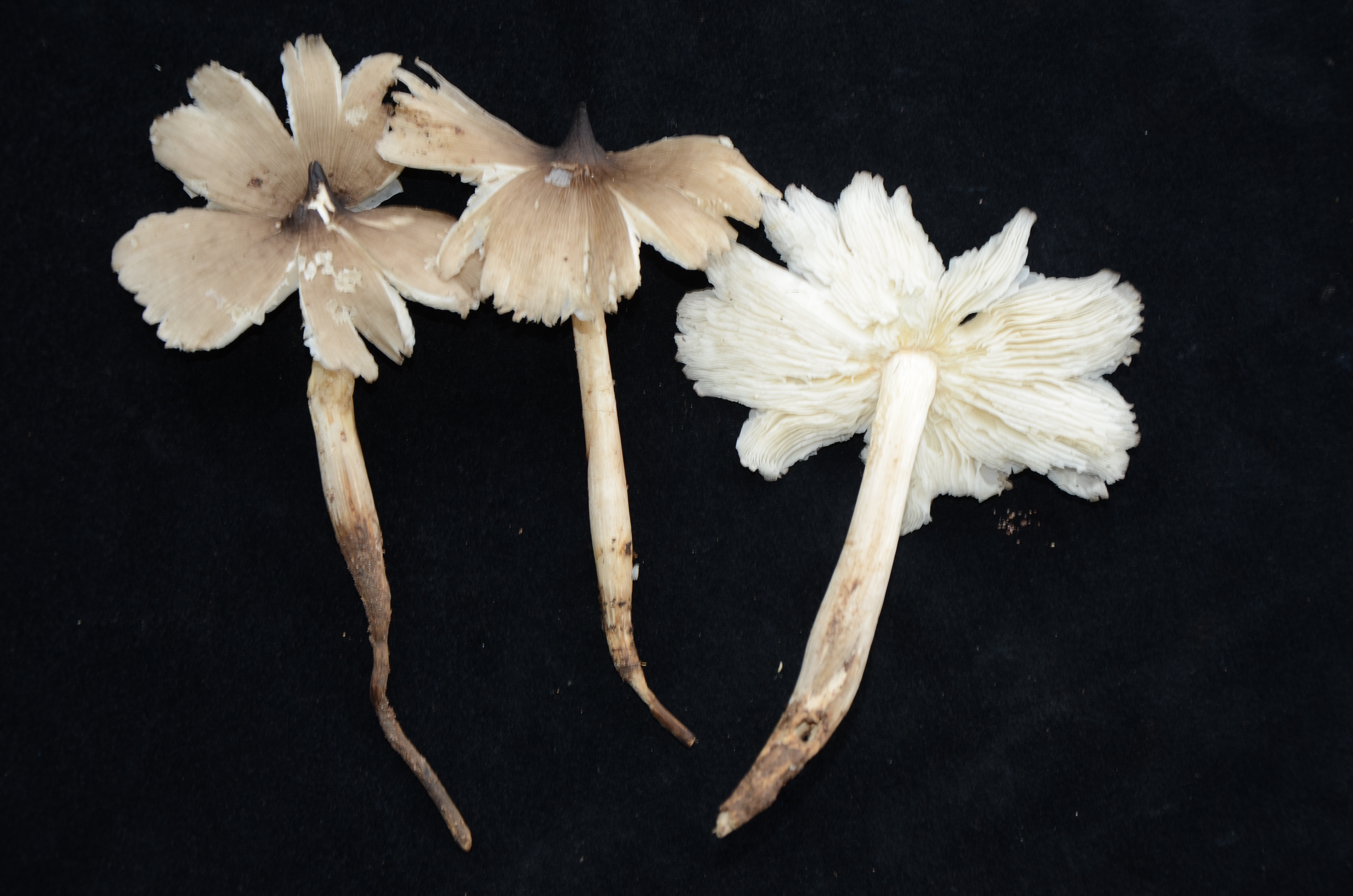
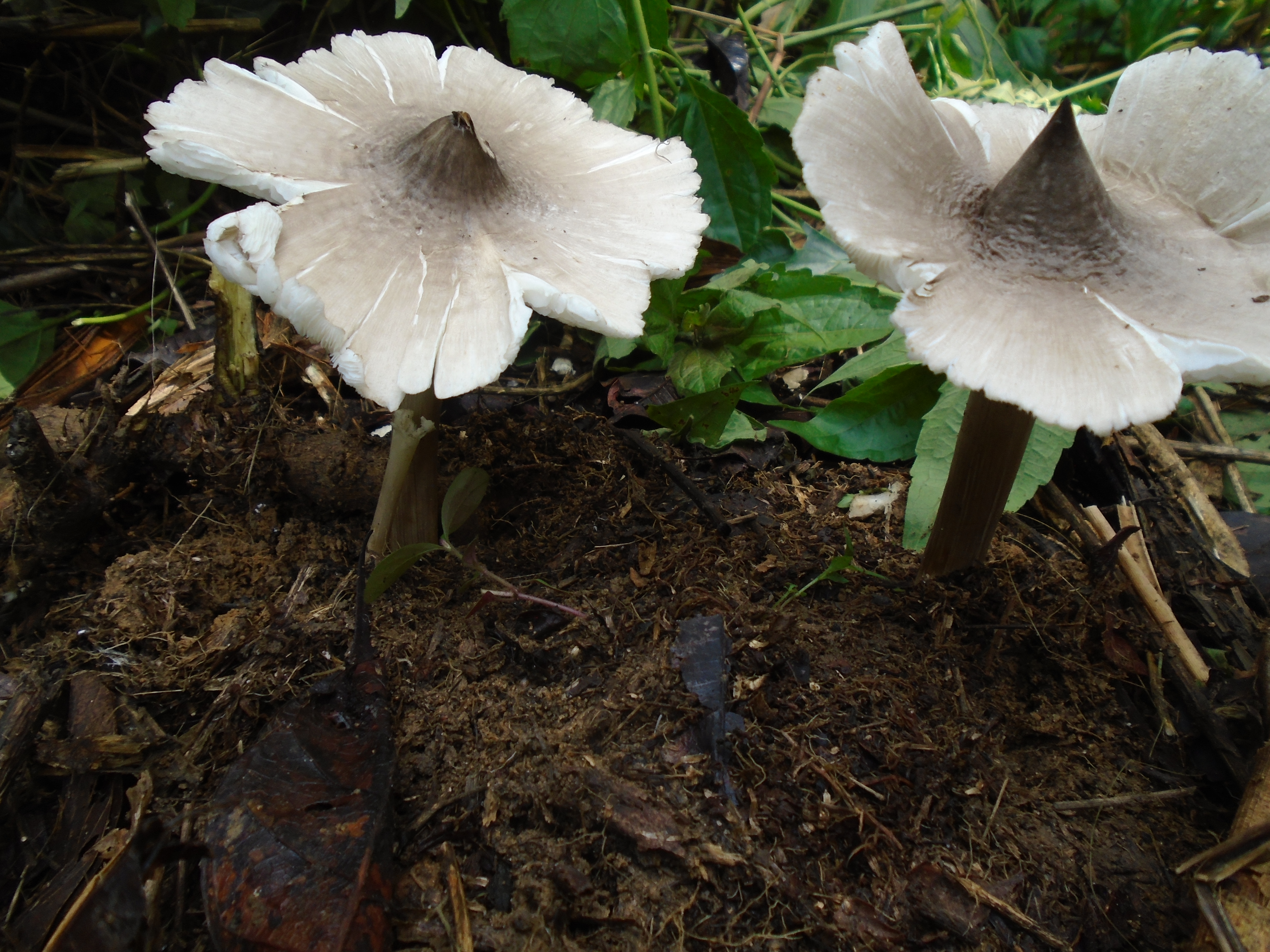
Termitomyces clypeatus is a small to medium-sized mushroom growing in small groups on or near termite colonies, each sporophore having a central umbo that becomes very pointed, and no ring.
Why suggested for a Global Red List Assessment?
Geographic range
Benin, Burkina Faso, Burundi, Cameroon, Central African Republic, Côte d’Ivoire, Democratic Republic of the Congo, Ethiopia, Gabon, Ghana, Kenya, Malawi, Mozambique, Nigeria, South Africa, Tanzania, Uganda, Zambia, Zimbabwe. Type locality.
Estimated extent of occurrence and Estimated area of occupancy [calculated using http://geocat.kew.org], over 14.0 million km2 and 220 km2 respectively in Africa.
Population and Trends
Very common species and well distributed in its geographic range, but likely declining due to the threats. About 250 scientific records (specimens, databases and bibliographic sources combined, excluding duplicates) from at least September 1923 to November 2021, with observations in every month of the year, with no obvious peak. These 250 scientific records include all the observation (Africa, Asia, America, and Australia). However, we excluded occurrence outside of Africa, and then considered the occurrence on GBIF where we have 93 records for Africa.
Population Trend: Decreasing
Habitat and Ecology
This species occurs reflect those of its associated termites, and include: amenity & protected areas (lawns); coastal (coastal miombo
woodland); cultivated ground (coffee agroforest, homesteads, paddyfield bunds); grassland; margins (riverside); ruderal; woodland (evergreen tropical forest, gallery forest, miombo woodland, moistdeciduous tropical forest, mixed woodland, open forest, plantations of exotic trees).
Threats
The threats for Termitomyces clypeatus include: climate change, exploitation, habitat destruction and persecution. In Tanzania, climate change is forcing pastoral Maasai and Kurya communities into subsistence farming, and this may have a knock-on effect of greater foraging pressure on the present species. In Ethiopia, deforestation and fires are specifically identified as threats to fungi, including the present species. In the Democratic Republic of the Congo, habitat destruction through fire, exploitative harvesting of young sporophores, climate change, charcoal production, and shifting agriculture all as threats to Termitomyces species. In Zimbabwe, agricultural development and other habitat destruction (particularly an increase in tobacco farms) are resulting in huge loss of miombo woodland, and this will increasingly affect survival of termite colonies. Agricultural development also has negative impacts through persecution: repeated destruction of termitaria, and pesticides applied to control termites that damage crops also destroy the termite-fungus. Another threat in rural areas is exploitation: there is an increasing demand for fired bricks to supply growing populations with housing: a whole termite mound (unclaimed by any particular villager) is excavated to great depth to extract the clay needed for the bricks. In poor economic situations, the immediate financial return on selling bricks far outweighs that of a seasonal, uncertain crop of termite-fungi.
Conservation Actions
So far, we have few conservation actions in some countries. For example, In rural communities of Zimbabwe, a productive termite mound within a village is protected by the adjacent home owner, and agricultural practice around the mound protects the resource and community law treats theft of these fungi as a punishable offence. Aside this, no conservation efforts to save Termitomyces clypeatus and few if any of the countries from which this species is known include fungi in their CBD national biodiversity strategies, action plans and reports, and none consider Termitomyces species.
Research needed
Population dynamic and monitoring,
Ex situ conservation through cultivation,
Accurate identification of termite species associated with Termitomyces clypeatus
Use and Trade
Termitomyces clypeatus is used as food, medicine as a source income generation. As a food, the species is is widely collected by foragers throughout its range. In traditional medicine, the Sefwi people in Ghana use this species to alleviate rheumatism, against diarrhoea, and to lower blood pressure. In Ethiopia T. clypeatus is used to treat gastric problems and constipation in adults, and underweight children. In Cameroon it is one of several species of this genus used to treat ear inflammation, rheumatism pains, paralysis, as a love charm (perhaps thereby implying aphrodisiac properties) and, possibly with mental health implications, for chasing evil spirits. Sales of harvests species in Tanzania can contribute significantly to family incomes: at 2013 prices, a picker could typically earn up to US$900 in a single year (Tibuhwa, 2013)