- Proposed
- Under Assessment
- Preliminary Assessed
- Assessed
- LCPublished
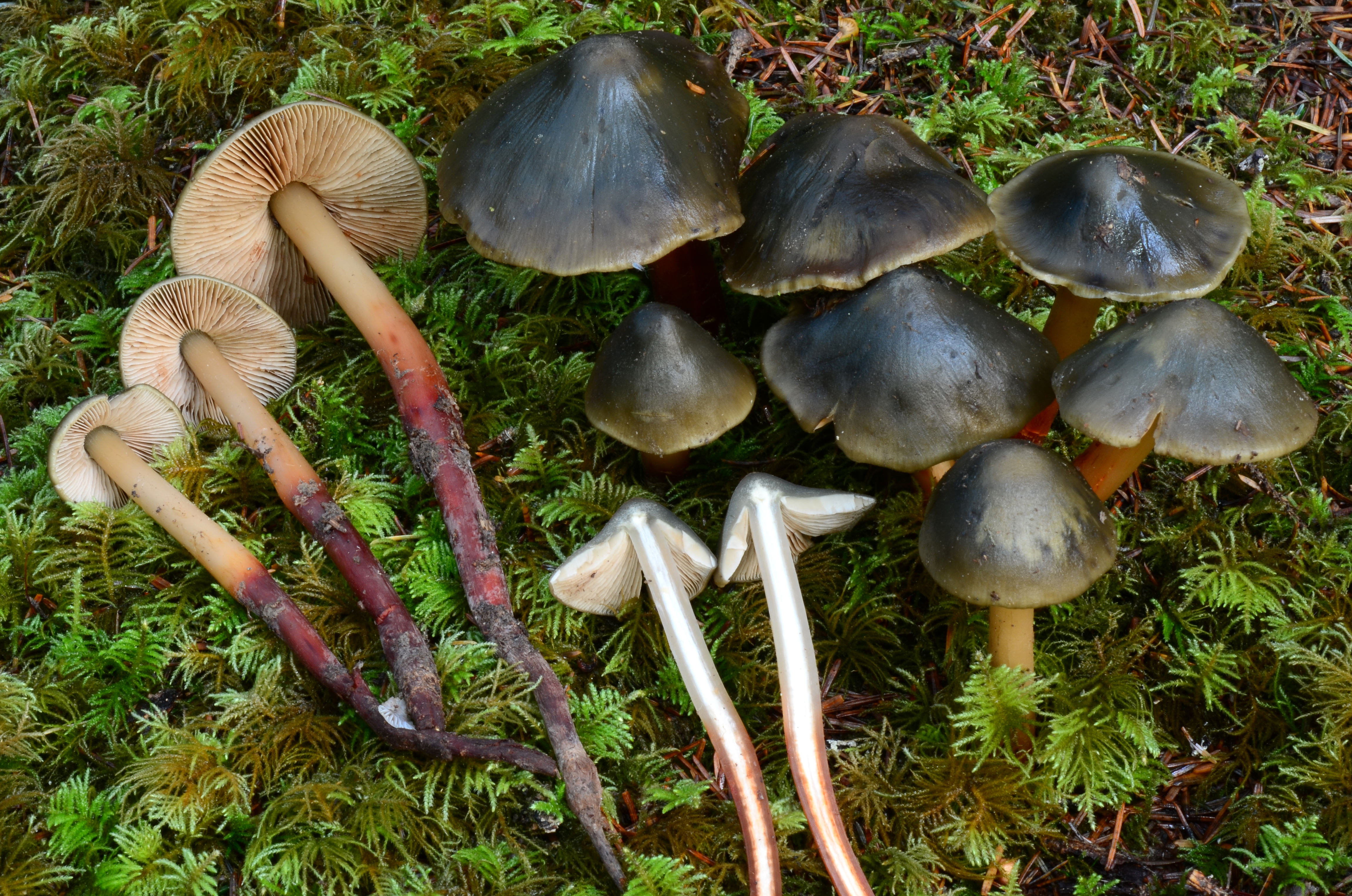
Phaeocollybia olivacea A.H. Sm.
Search for another species...
- Scientific name
- Phaeocollybia olivacea
- Author
- A.H. Sm.
- Common names
 Olive Phaeocollybia
- IUCN Specialist Group
 Mushroom, Bracket and Puffball
- Kingdom
- Fungi
- Phylum
- Basidiomycota
- Class
- Agaricomycetes
- Order
- Agaricales
- Family
- Cortinariaceae
- Assessment status
- Published
- Assessment date
- 2024-12-27
- IUCN Red List Category
- LC
- Assessors
- Noah Siegel (25 Prospect Hill Road, Royalston, MA 01368, US / Global Fungus Assessment); Gregory Mueller (Chicago Botanic Garden / IUCN SSC Mushroom, Bracket and Puffball Specialist Group)
- Reviewers
- Anders Dahlberg (Swedish Species Information Centre, Uppsala / IUCN SSC Cup-fungus, Truffle and Ally Specialist Group)
Assessment Notes
The content on this page is fetched from The IUCN Red List of Threatened Species: https://www.iucnredlist.org/species/198479993/198487315
Justification
Phaeocollybia olivacea is a widespread species in Oregon and California, into Washington State and Idaho, USA, with ~150 known localities. Although most collections come from mid to late seral stage and old growth forests this species appears to be able to colonise forest at a younger age than most Phaeocollbyia species. Based on the number of known sites, and recent reports, this species appears to be locally common where suitable habitat exists. While overall habitat has declined, and continues to do so it is common enough, and has a large enough habitat range to qualify as Least Concern (LC).Taxonomic notes
Phaeocollybia olivacea was described from a type collection made in southwest Oregon, USA (Smith 1957). The name Phaeocollybia olivacea has been misapplied to collections of the similar P. fallax, and P. pseudofestiva. All three can grow in close proximity; some collections identified as P. olivacea contain fruitbodies of two or more of these species.Geographic range
This species is known from Santa Cruz County, California, northwards in coastal and Coast Range forests, through the Siskiyou Mountains, Oregon coast and Coast Range, Oregon Cascade foothills into Washington state, and rarely in the Sierra Nevada of California. There is one record from the Washington-Idaho border area.Population and Trends
The population is widespread and although there is habitat loss in parts of its range, it overall appears stable. Currently, it is known from 150 sites in California and Oregon into Washington State. Although it has a preference for late seral stage and old growth forests, it is not restricted to such sites, and appears to be able to colonise forest at a younger age than most Phaeocollybia species. Based on the number of known sites, and recent reports, this species appears to be locally common, and stable.
Population Trend: Stable