- Proposed
- Under Assessment
- Preliminary Assessed
- Assessed
- VUPublished
Hygrocybe aurantiosplendens R. Haller Aar.
- Scientific name
- Hygrocybe aurantiosplendens
- Author
- R. Haller Aar.
- Common names
 Orange Waxcap
 gyllen vokssopp
 orangegylden vokshat
 Glänzender Orange-Saftling
 Prachtwasplaat
 voskovka skvostná
 lúčnica oranžová
 Fager vaxskivling
 Lounavahakas
 Wilgotnica ozdobna
 Orangeglänzender Saftling
- IUCN Specialist Group
 Mushroom, Bracket and Puffball
- Kingdom
- Fungi
- Phylum
- Basidiomycota
- Class
- Agaricomycetes
- Order
- Agaricales
- Family
- Hygrophoraceae
- Assessment status
- Published
- Assessment date
- 2024-10-30
- IUCN Red List Category
- VU
- IUCN Red List Criteria
- A2ce+3ce+4ce
- Assessors
- Ivona Kautmanova (Slovak National Museum, Bratislava); Tea von Bonsdorff (Finnish Museum of Natural History); Eef Arnolds (Foundation Paddestoelen Werkgroep Drenthe, The Netherlands); Armin Mešić; John Bjarne Jordal
- Reviewers
- Anders Dahlberg (Swedish Species Information Centre, Uppsala / IUCN SSC Cup-fungus, Truffle and Ally Specialist Group); Gregory Mueller (Chicago Botanic Garden / IUCN SSC Mushroom, Bracket and Puffball Specialist Group)
Assessment Notes
Justification
Hygrocybe aurantiosplendens is a typical representative of the rich funga of old, unimproved grasslands, a habitat type that is decreasing rapidly in all of Europe. It occasionally grows also in scrub and calcareous forests on moist to dry, base-rich soils. The species is very striking by its size and bright orange basidiocarps and is usually well distinguishable from related species. It is only known from Europe, and is widespread, but rare to very rare everywhere (Boertmann 2010) and decreasing. H. aurantiosplendens is listed as Near Threathened or Threatened in many national Red Lists.Over the distribution range we assume a total habitat and population decline of 30-49% over the past 50 years (approximately three generations). Habitat quality has also become impaired and the decline in population size over this time could be even higher. This decline in habitat is ongoing and expected to continue over the next 50 years. The species meets the thresholds for Vulnerable under criteria A2ce+3ce+4ce.
Taxonomic notes
The taxonomic status of collections from North America (GBIF 2021) and the Russian Far East (T. Svetasjeva pers. comm.) is uncertain, and they are here regarded as probably related species.Geographic range
Hygrocybe aurantiosplendens is widely distributed in Europe. The species is most frequent in northern Europe (Scandinavia, Great Britain) and more rare in the south (here often in mountain regions). Data under this name from from North America (GBIF 2021) and the Russian Far East (T. Svetasjeva pers. comm.) are regarded as uncertain.Population and Trends
GBIF (2024) lists ca 1,600 occurrences of Hygrocybe aurantiosplendens from Europe. It is widespread, but rare to very rare everywhere (Boertmann 2010) and decreasing. The largest subpopulations seem to be in Scandinavia and Great Britain. The total number of individuals is unknown but probably exceeds 20,000 mature individuals.
Griffith et al. (2013) estimated a habitat loss of 90% over the last 75 years for the CHEG-fungi (grassland fungi of the groups Clavariaceae, Hygrocybe s.l., Entoloma and Geoglossaceae) as a whole in Western Europe (i.e. loss in seminatural grasslands, based on available information). According to the Food and Agriculture Organization of the United Nations (FAO 2006), the area of grasslands in the EU declined by 12.8% over 13 years (1990-2003). The habitat quality of seminatural grasslands is also declining, strengthening the population decline. More than 75% of the grassland habitats are in an unfavourable conservation status (EEA 2021). We assume a total habitat loss of 30-49% over the last 50 years (three generations). In combination with the reduction in habitat quality, this is conservatively assumed to equate to a population loss of 30-49% over the last 50 years (three generations). This trend is is ongoing and expected to continue in the future. The decline is reflected in the position of H. aurantiosplendens on many national Red Lists, e.g. Endangered in Denmark (Moeslund et al. 2023), Finland (Hyvärinen et al. 2019), Poland (Mirek et al. 2006); Vulnerable in Austria (Dämon and Krisai-Greilhuber 2017) and Germany (Dämmrich et al. 2016); Near Threatened in the Netherlands (Arnolds and Veerkamp 2008), Norway (Artsdatabanken 2021), Sweden (SLU Artdatabanken 2020).
Population Trend: Decreasing
Habitat and Ecology
Hygrocybe aurantiosplendens is a characteristic species of old, unimproved, low productive grasslands on loamy, weakly acid to basic, often calcareous soils. It occurs from sea level up to the alpine zone (2,500 m in the Alps), but is not found in the alpine zone in Norway. It occasionally grows also in scrub and calcareous forests on moist to dry, base-rich soils. In Norway, about 20% of all records are from calcareous forests, the rest mainly from open grasslands (Jordal et al. 2016). Like other waxcaps, the species probably lives in biotrophic association with herbaceous plants, but details are unknown (Halbwachs et al. 2018).Threats
Threats to this species are from grassland improvement (fertiliser application and soil disturbance) for agro-industry farming, the abandoning of low productive grasslands, and conversion to forest plantations on poor grassland sites. Moreover the species is vulnerable to acidification and nitrogen deposition (Arnolds 2015).Conservation Actions
The most important action will be: the conservation of sites with rich subpopulations of Hygrocybe aurantiosplendens as nature reserves; continuation of traditional management: mowing and removal of sward and/or grazing in low densities without fertiliser application. If grazing by heavy animals destroys part of the soil, light animals like sheep should be recommended. Habitat conservation by governmental support to traditional agricultural practices is most important, this exists in many countries to maintain extensive agricultural areas, and should be extended to larger areas than today. The species is a representative of a rich funga with many more rare and threatened species; therefore its protection will be beneficial to many more threatened fungi (Boertmann 2010, Arnolds 2015). There is a conservation action plan for this species in Sweden (Jordal 2011). Additionally, more detailed research on habitat requirements of H. aurantiosplendens would be useful, and its habitats should be monitored.Use and Trade
No use or trade is known.Source and Citation
Kautmanova, I., von Bonsdorff, T., Arnolds, E., Mešić, A. & Jordal, J. 2025. Hygrocybe aurantiosplendens. The IUCN Red List of Threatened Species 2025: e.T76212451A247852292. Accessed on 20 November 2025.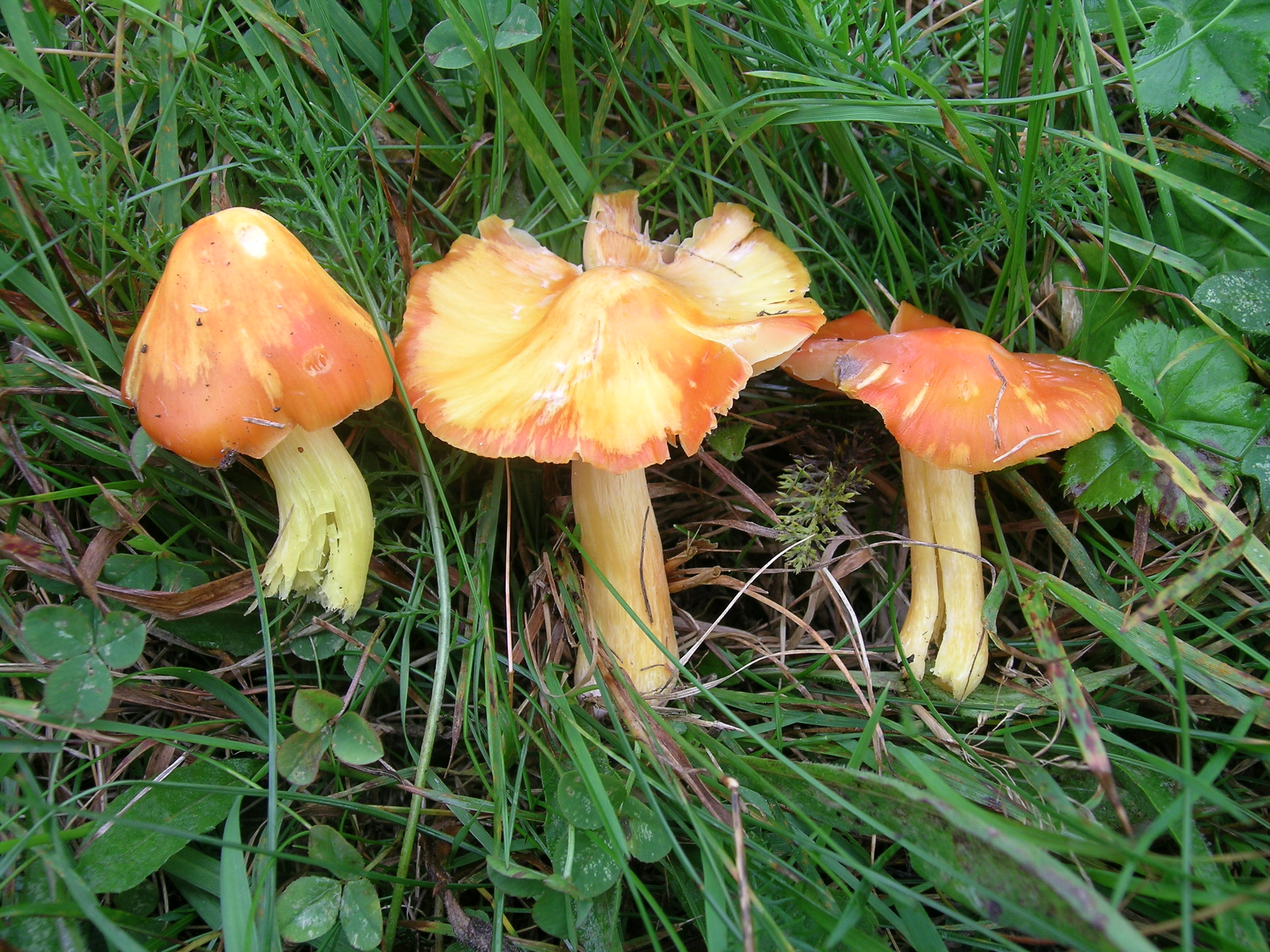
Hygrocybe aurantiosplendens. Norway: Nord-Fron 06.09.2005. Photo: John Bjarne Jordal
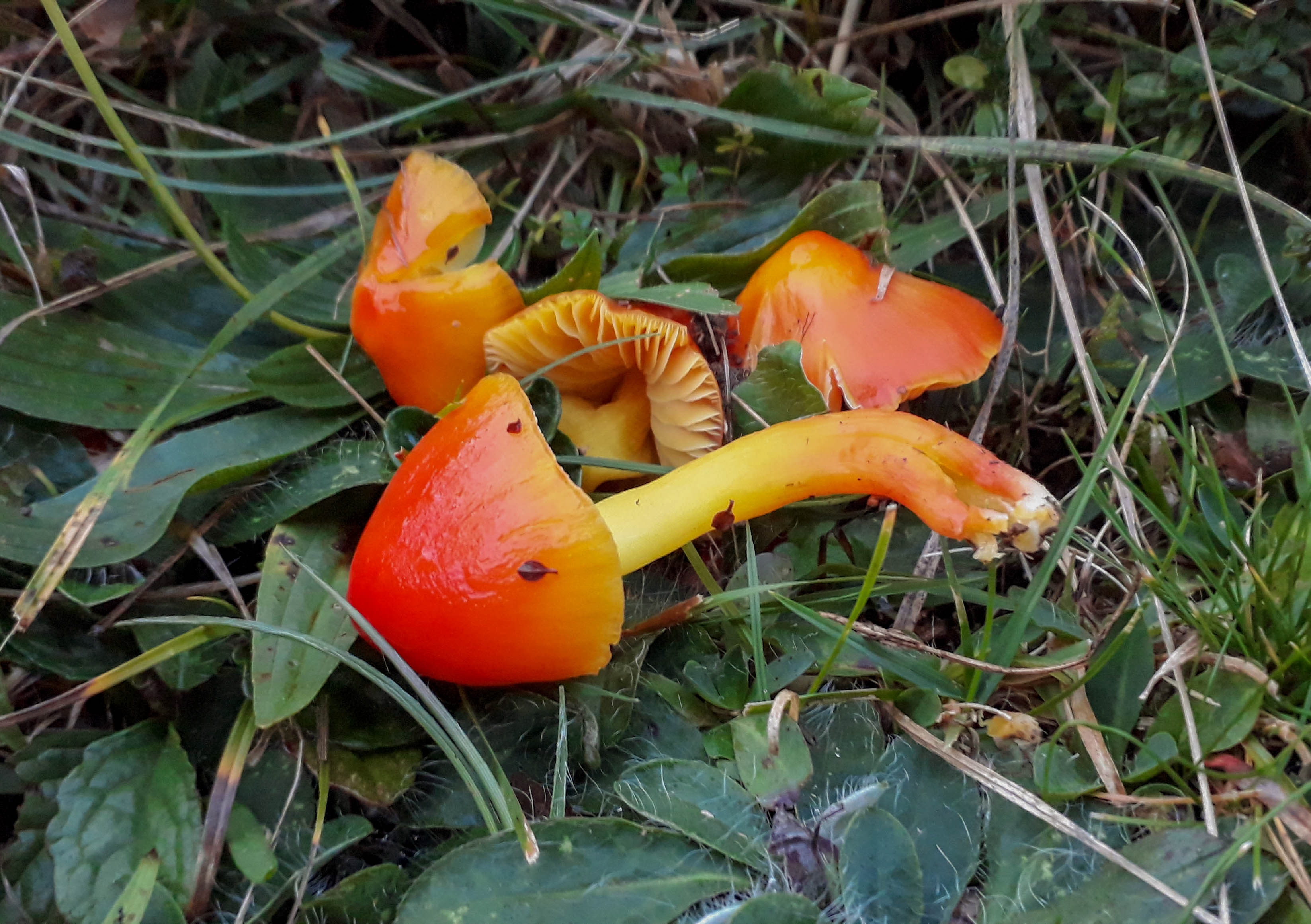
Hygrocybe aurantiosplendens. Photography: Nicolas Schwab. Renan, Switzerland.


Hygrocybe aurantiosplendens. Photography: Nicolas Schwab. Renan, Switzerland.
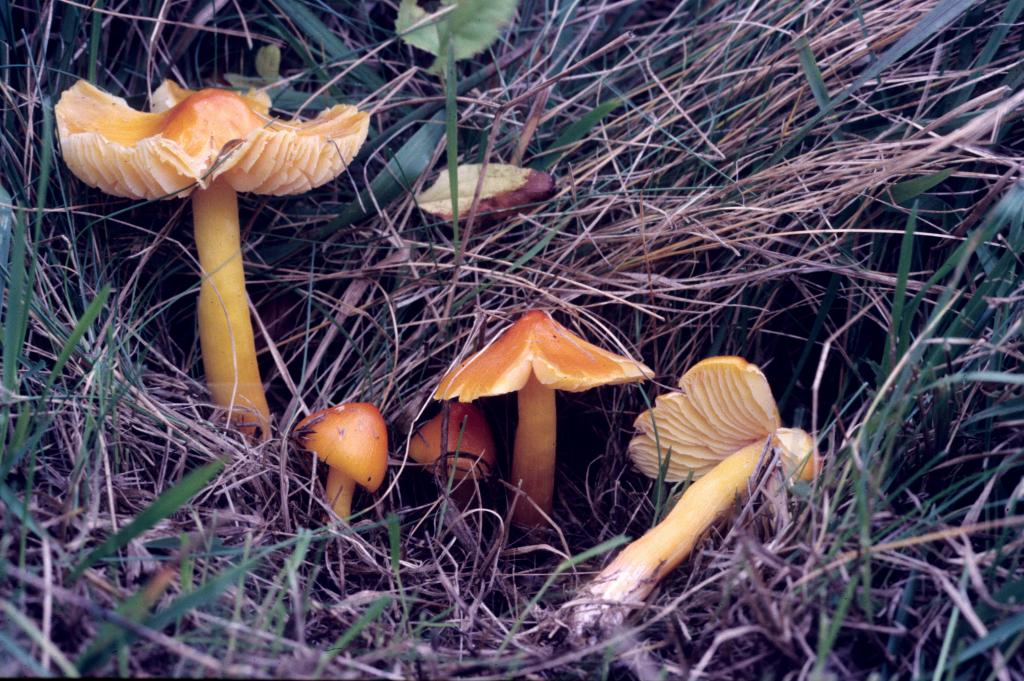
Hygrocybe aurantiosplendens, The Netherlands, Limburg. Photo E. Arnolds.
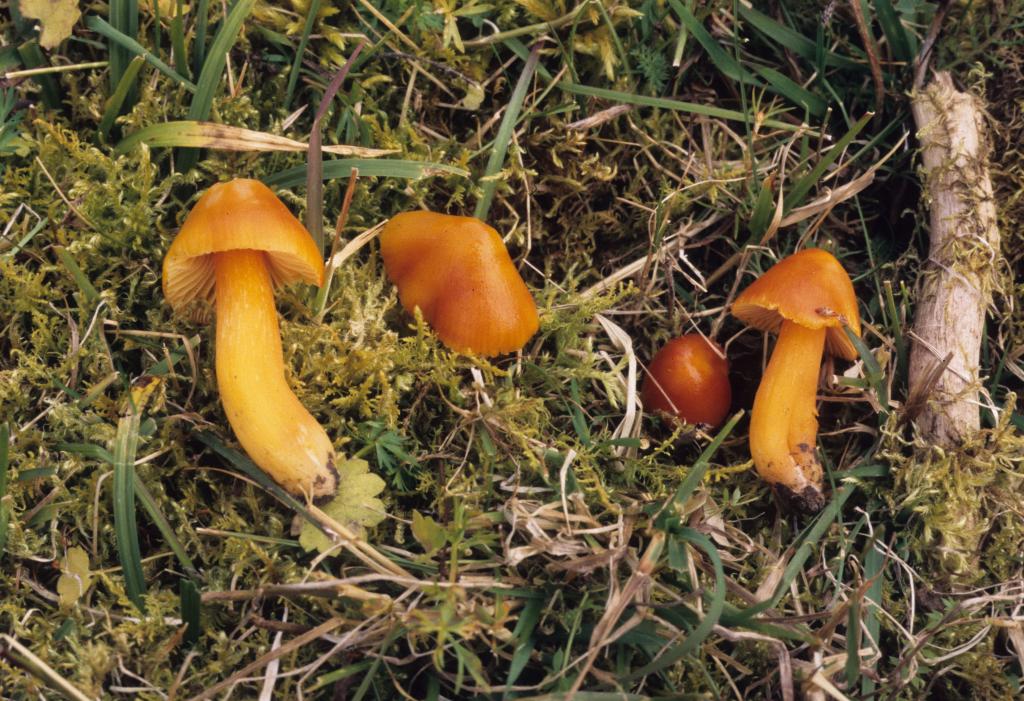
Hygrocybe aurantiosplendens, The Netherlands, Limburg. Photo E. Arnolds.