- Proposed
- 2Under Assessment
- 3Preliminary Assessed
- 4Assessed
- 5Published
Amanita echinocephala (Vittad.) Quél.
- Scientific name
- Amanita echinocephala
- Author
- (Vittad.) Quél.
- Common names
 Solitary Amanita
- IUCN Specialist Group
 Mushroom, Bracket and Puffball
- Kingdom
- Fungi
- Phylum
- Basidiomycota
- Class
- Agaricomycetes
- Order
- Agaricales
- Family
- Amanitaceae
- Assessment status
- Proposed
- Proposed by
- Simon Harding
- Comments etc.
- Simon Harding
Assessment Notes
Taxonomic notes
Why suggested for a Global Red List Assessment?
Grassland populations of Amanita echinocephala occur in long‑continuity, often ancient calcareous grasslands where Helianthemum nummularium persists on thin, nutrient‑poor soils. These occurrences are exceptionally rare, typically represented by single fruitbodies, and appear restricted to warm, drought‑prone microrefugia with stable soil structure.
Although the species is more frequently recorded in calcareous woodland, the grassland populations represent a distinct ecological subset dependent on the same threatened habitat conditions as other Helianthemum‑associated fungi. In this setting the species forms part of a multi‑trophic ecological ladder: its ectomycorrhizal association supports Helianthemum, which in turn supports a suite of specialist invertebrates that contribute to the prey base of declining grassland birds such as Skylark. Losing the fungus from grassland therefore represents a direct blow to several already Red‑listed or threatened species, demonstrating that even widespread fungi can face elevated extinction risk when integral to a threatened habitat. Their presence reflects the integrity of ancient calcareous grassland systems, where soil continuity, low nutrient status, and long‑term ecological stability allow the persistence of specialised ectomycorrhizal networks.
Given the ongoing decline of ancient calcareous grasslands across Europe, documenting and assessing these grassland populations is essential for understanding and conserving the fungal component of this threatened ecosystem.
Geographic range
Amanita echinocephala is rarely recorded in calcareous grassland habitats in Europe, with grassland occurrences appearing to be highly localised and infrequently documented in formal datasets. The species is more widely reported from calcareous regions across Europe, but most records do not include habitat information, making it unclear whether comparable grassland populations occur outside the United Kingdom. Its overall distribution is fragmented, reflecting the patchy and declining extent of long‑established calcareous soils across its range.
Population and Trends
Populations of Amanita echinocephala in ancient calcareous grassland are extremely small, highly localised, and typically represented by single or very few fruitbodies. These grassland occurrences form a distinct ecological subset dependent on long‑continuity alkaline soils and Helianthemum‑associated microrefugia. Such sites are rare, fragmented, and declining across Europe, and the species shows no evidence of recolonising areas where soil structure or habitat continuity has been lost.
The species is more frequently recorded in calcareous woodland, but these populations are also scattered and fragmented, reflecting the patchy distribution of ancient calcareous woodland and the long‑term decline of undisturbed alkaline soils. Across both habitats, fruiting is irregular and often limited to singletons, suggesting low detectability and small effective population sizes.
Overall, the population is inferred to be decreasing, driven by the continuing decline in the extent and quality of ancient calcareous grassland and associated soil microrefugia. Increased recreational pressure, nutrient enrichment, scrub encroachment, and inappropriate tree planting contribute to ongoing habitat degradation. Given the species’ dependence on stable soil conditions and its limited ability to disperse or recolonise, these pressures are likely to result in further local losses.
The population is therefore considered severely fragmented, with a continuing decline in habitat quality and in the number of functional locations, consistent with the assessment of Vulnerable (VU) B2ab(iii).
Population Trend: Decreasing
Habitat and Ecology
Amanita echinocephala is most frequently recorded in predominantly Beech‑dominated woodland on calcareous soils, where it is an uncommon to rare ectomycorrhizal species. Much more rarely, it occurs in ancient calcareous grasslands on thin, nutrient‑poor, drought‑prone soils with long habitat continuity. Grassland records are exceptionally scarce and often represented by single fruitbodies, reflecting both the species’ natural rarity and the limited extent of suitable grassland microrefugia. In these open, lightly grazed or ungrazed swards it is found within mosaics of Helianthemum nummularium, Hippocrepis comosa, Anthyllis vulneraria, Thymus spp. and other calcicolous herbs. In this grassland setting it forms ectomycorrhizal associations with Helianthemum nummularium, acting as a symbiotic partner that enables the plant to persist under drought‑prone, nutrient‑poor conditions. The species forms part of the below‑ground fungal infrastructure characteristic of ancient calcareous grasslands, where such symbioses are fundamental to habitat function. As a rare species in a rare habitat, its grassland occurrences represent a vital component of the processes that support the ecological ladder of ancient calcareous grasslands.
Soil processes and carbon storage
Long‑established calcareous grasslands function as significant below‑ground carbon stores, with carbon retained within stable soil–fungal systems that develop only under prolonged ecological continuity and minimal disturbance. The ectomycorrhizal community contributes to carbon sequestration and stabilisation through soil aggregation, organic‑matter turnover and the long‑term retention of carbon within undisturbed calcareous soils. The presence of A. echinocephala in these microrefugia therefore indicates both ecological continuity and the persistence of these carbon‑rich soil systems.Associated species and trophic context
Grassland occurrences of Amanita echinocephala represent part of the ectomycorrhizal foundation that enables Helianthemum nummularium to persist in drought‑prone, nutrient‑poor calcareous soils. The stability and vigour of Helianthemum populations, in turn, support a suite of specialist invertebrates that are directly dependent on the plant, including the Red‑listed Northern Brown Argus (Aricia artaxerxes), the Cistus Forester (Adscita geryon), and several host‑specific Rock‑rose leaf‑miners and case‑bearers. Additional calcicolous Lepidoptera such as Brown Argus (Aricia agestis) and Grizzled Skipper (Pyrgus malvae) also utilise the same habitat mosaic. These invertebrates contribute to the prey base of Skylark (Alauda arvensis), a UK Red‑listed species whose nestlings rely heavily on abundant insect prey.The presence of A. echinocephala — albeit extremely rarely — signals the integrity of this multi‑trophic ecological ladder: long‑continuity soils support the fungal community; the fungal community supports Helianthemum; and Helianthemum supports both generalist herbivores and specialist, often threatened, invertebrates.
Ecological systems do not end with fungi — they begin with them.
Threats
Amanita echinocephala is threatened by the continuing loss, fragmentation and degradation of ancient calcareous grasslands, where it forms ectomycorrhizal associations with Helianthemum nummularium (a plant that is itself nationally Vulnerable in England). These grasslands are declining through abandonment, scrub encroachment, inappropriate grazing regimes, nutrient enrichment, tree‑planting schemes, rewilding initiatives that remove or reduce grazing, and conversion to improved pasture or amenity grassland. These pressures directly erode the thin, nutrient‑poor, drought‑prone soils required for the fungus–plant symbiosis, and therefore undermine the wider ecological network dependent on this association.
The loss of Helianthemum mosaics has cascading consequences for A. echinocephala. The plant supports a specialist invertebrate assemblage including, but not limited to, Northern Brown Argus (Aricia artaxerxes), Cistus Forester (Adscita geryon), and several Rock‑rose leaf‑miners and case‑bearers. These invertebrates, in turn, contribute to the prey base of Skylark (Alauda arvensis), a UK Red‑listed species whose nestlings depend heavily on abundant insect prey. Degradation of calcareous grassland therefore threatens not only A. echinocephala but an entire chain of interdependent species.
Soil disturbance, nutrient inputs and compaction further disrupt the long‑established soil–fungal systems that allow A. echinocephala to persist. The loss of bare ground, ant hills and warm south‑facing slopes removes the microhabitats essential for both fungal fruiting and Helianthemum survival. The solution lies in maintaining open, low‑nutrient, grazed calcareous grassland with stable soil structure — the only conditions under which A. echinocephala, its host plant, and the dependent invertebrate and bird communities can persist.
Although A. echinocephala also occurs in calcareous woodland, these populations are scattered and secondary to the grassland component. Woodland threats include canopy alteration, soil disturbance and nutrient enrichment from recreational pressure, timber extraction and atmospheric nitrogen deposition, all of which disrupt ectomycorrhizal networks.
Given the species’ extreme rarity in grassland, its dependence on long‑continuity alkaline soils, and the ongoing decline of ancient calcareous grasslands across Europe, the continued loss of ecological continuity poses a significant threat to the persistence of Amanita echinocephala and the wider trophic systems it supports.
Conservation Actions
The conservation of Amanita echinocephala in ancient grasslands depends on the protection and favourable management of ancient calcareous grasslands where Helianthemum nummularium persists on thin, nutrient‑poor, drought‑prone alkaline soils. These grassland microrefugia support the long‑continuity soil conditions required for the species’ ectomycorrhizal associations and for the wider ecological network dependent on this habitat.
Maintaining open, short‑turf calcareous grassland through appropriate grazing is essential to prevent scrub encroachment, retain warm microclimates, and preserve the fine‑scale mosaics of Helianthemum and other calcicolous herbs. Avoiding nutrient enrichment, soil disturbance and compaction is critical, as these pressures disrupt the stable soil structure required for both A. echinocephala and its host plant. Conservation actions should also prevent tree planting, wildflower‑meadow creation, or rewilding initiatives that alter soil structure or reduce grazing continuity within ancient calcareous grasslands.
Protecting Helianthemum mosaics is central to conserving A. echinocephala, as these mosaics support a specialist invertebrate assemblage including Northern Brown Argus (Aricia artaxerxes), Cistus Forester (Adscita geryon), and several Rock‑rose leaf‑miners and case‑bearers. These invertebrates contribute to the prey base of Skylark (Alauda arvensis), a UK Red‑listed species whose nestlings depend heavily on abundant insect prey. Conservation of A. echinocephala therefore reinforces a wider chain of interdependent species, linking fungal symbiosis to plant persistence, invertebrate diversity and the foraging ecology of declining grassland birds.
Securing known grassland sites through statutory protection, land management agreements or inclusion in agri‑environment schemes would help ensure the long‑term viability of these highly restricted populations. Monitoring should track habitat quality, soil condition, grazing continuity and the persistence of Helianthemum mosaics, as these are key indicators of the ecological stability required by the species.
Although Amanita echinocephala also occurs in calcareous woodland, conservation measures in woodland settings address a different set of ecological conditions and do not replace the need for targeted action within ancient grasslands. Where relevant, maintaining semi‑natural woodland structure, minimising soil disturbance and preventing nutrient inputs will help support the broader woodland component of the species’ range.
Research needed
Targeted research is required to clarify the distribution, ecology and conservation significance of Amanita echinocephala within ancient calcareous grasslands. Grassland populations are exceptionally rare, typically represented by single fruitbodies, and occur only where long‑continuity alkaline soils and Helianthemum mosaics persist. Priority areas include:
Population size, distribution & trends (1.2):
Structured Field Mycology surveys are needed to document grassland occurrences, as current fungal recording does not distinguish between woodland and grassland populations. Although the distribution of Helianthemum is well‑mapped, coordinated targeted surveys are required to establish where A. echinocephala persists within ancient calcareous grasslands. Anecdotal photographic evidence on‑line suggests additional grassland occurrences exist but remain undocumented in formal datasets, highlighting the need for targeted survey work. eDNA approaches may assist in detecting below‑ground mycelium where fruiting is infrequent or absent.Life history & ecology (1.3):
Further study of the ectomycorrhizal relationship between A. echinocephala and Helianthemum nummularium is required to understand host specificity, functional roles in nutrient capture, drought tolerance and contributions to soil carbon retention. Research into the wider ectomycorrhizal assemblage associated with Helianthemum would clarify the ecological network underpinning ancient calcareous grasslands. Documenting the below‑ground fungal infrastructure of this threatened habitat is essential, as these networks support nutrient exchange, drought resilience, the persistence of Helianthemum itself, and the broader ecological ladder.Habitat trends (3.4):
Improved monitoring of ancient calcareous grassland condition — including soil nutrient status, grazing continuity, and indicators of long‑term ecological stability — would strengthen inference of fungal population trends and habitat suitability.Threats (1.5):
Research into the impacts of nutrient enrichment, recreational pressure, grazing abandonment, scrub encroachment and inappropriate tree planting on the below‑ground fungal community would support more accurate assessment of habitat vulnerability and the resilience of Helianthemum‑associated fungi.Conservation planning (1.6):
Integration of fungal data into grassland management plans is needed, recognising the role of ectomycorrhizal fungi in supporting Helianthemum, specialist invertebrates and long‑term soil carbon storage. A lack of dedicated funding for fungal survey work remains a barrier to generating the data required for effective conservation planning.Survey and monitoring gaps:
Current funding and survey effort in grassland fungi is heavily biased toward CHEGD species, leaving the wider ectomycorrhizal and root‑associated assemblage under‑recorded despite its equal or greater ecological importance. Dedicated Field Mycology surveys and the integration of eDNA methods are needed to document the full fungal community associated with Helianthemum and ancient calcareous grasslands.
Use and Trade
Amanita echinocephala is not known to be used or traded
Bibliography
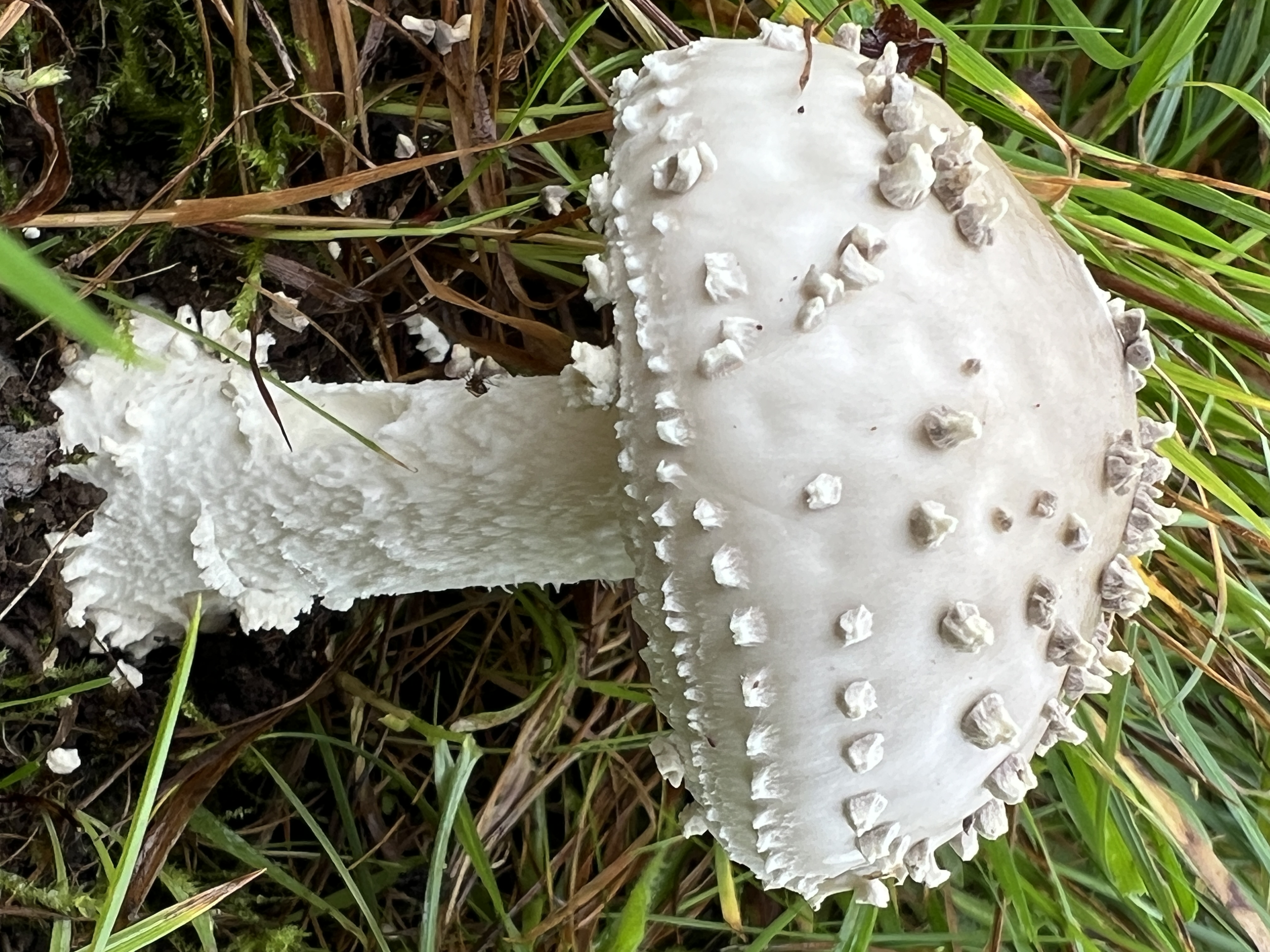
Amanita echinocephala fruiting with Helianthemum in ancient calcareous grassland on a Cotswold Common. Image © Simon Harding
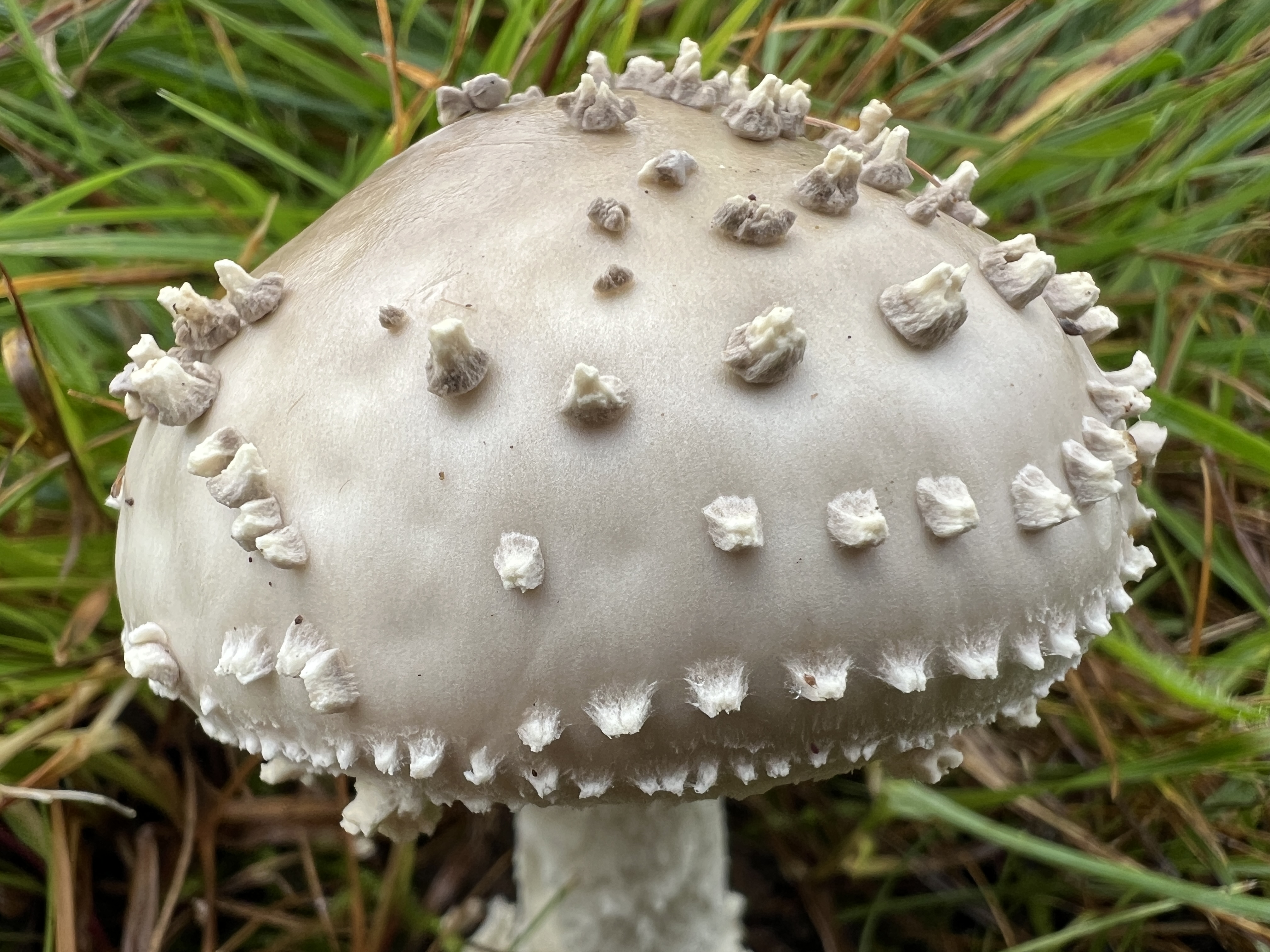
Amanita echinocephala fruiting with Helianthemum in ancient calcareous grassland on a Cotswold Common. Image © Simon Harding
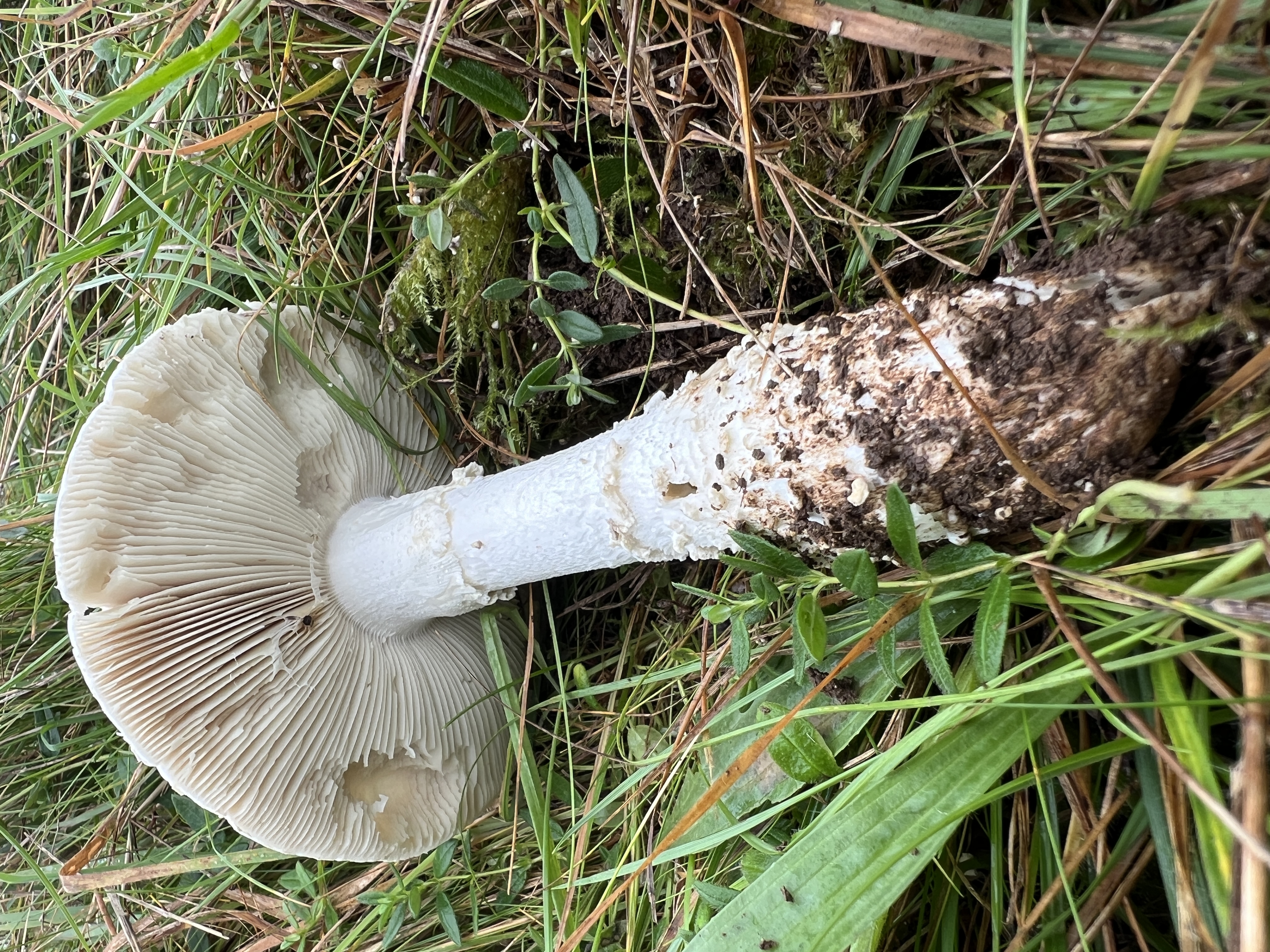
Amanita echinocephala fruiting with Helianthemum in ancient calcareous grassland on a Cotswold Common. Image © Simon Harding
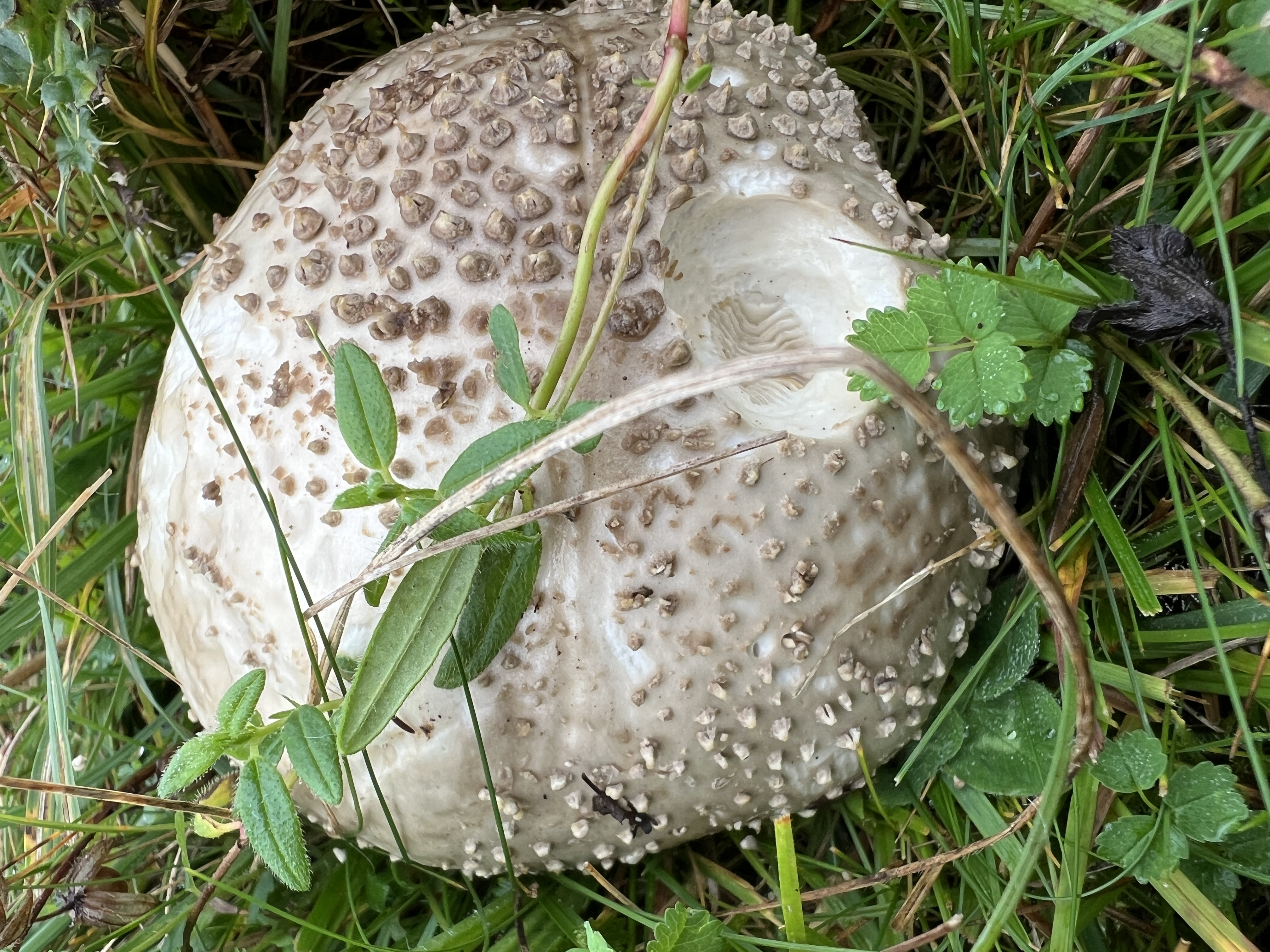
Amanita echinocephala fruiting with Helianthemum in ancient calcareous grassland on a Cotswold Common. Image © Simon Harding

Amanita echinocephala fruiting with Helianthemum in ancient calcareous grassland on a Cotswold Common. Image © Simon Harding
Country occurrence
Regional Population and Trends
| Country | Trend | Redlisted |
|---|