- Proposed
- Under Assessment
- Preliminary Assessed
- Assessed
- LCPublished
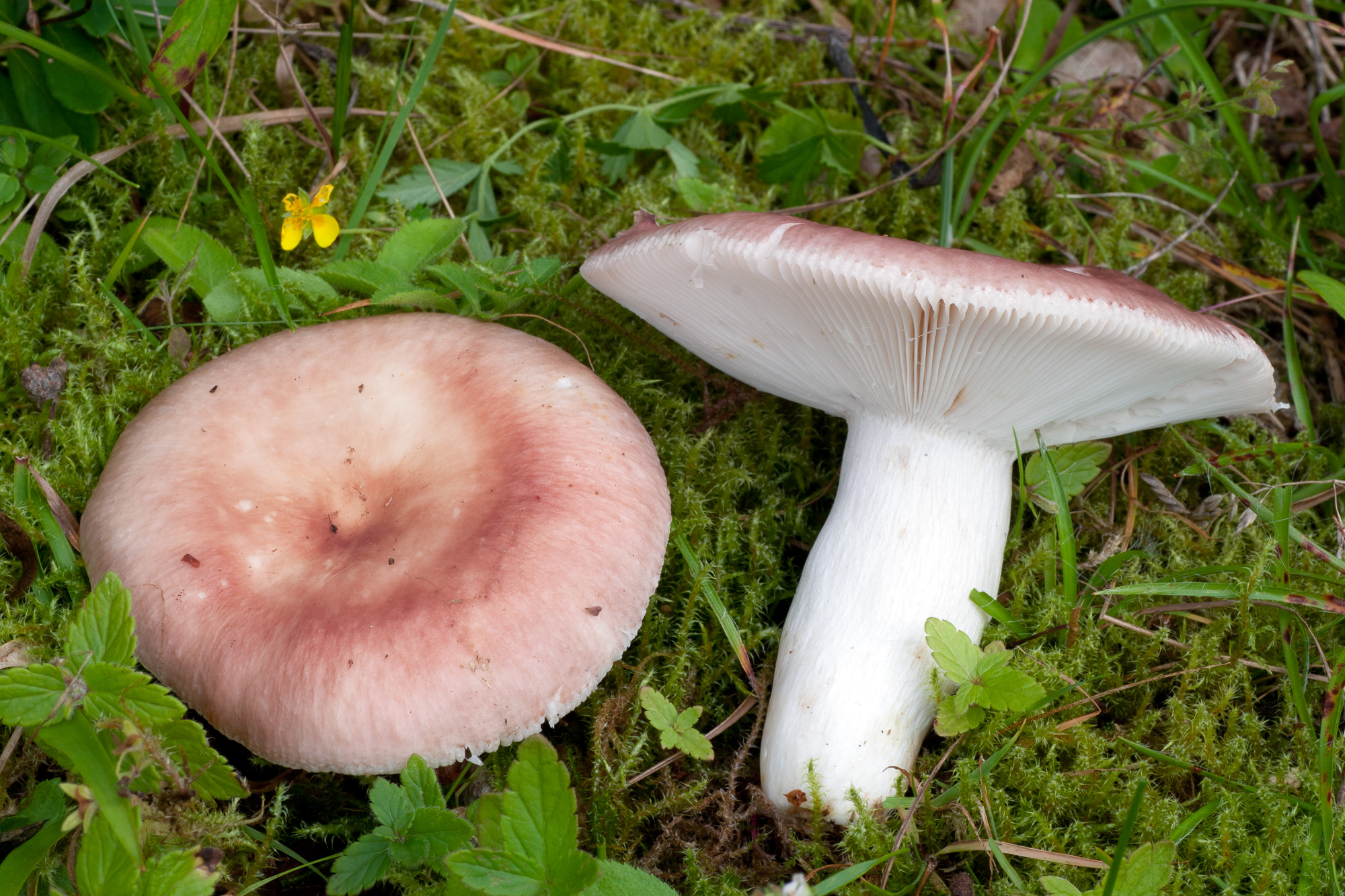
Russula vesca Fr.
Search for another species...
- Scientific name
- Russula vesca
- Author
- Fr.
- Common names
 kantkremla
  Plankumainā bērzlape
- IUCN Specialist Group
 Mushroom, Bracket and Puffball
- Kingdom
- Fungi
- Phylum
- Basidiomycota
- Class
- Agaricomycetes
- Order
- Russulales
- Family
- Russulaceae
- Assessment status
- Published
- Assessment date
- 2018-03-22
- IUCN Red List Category
- LC
- Assessors
- Anders Dahlberg (Swedish Species Information Centre, Uppsala / IUCN SSC Cup-fungus, Truffle and Ally Specialist Group)
- Reviewers
- Tommy Knutsson (Swedish Species Information Centre, Uppsala, Sweden)
Assessment Notes
The content on this page is fetched from The IUCN Red List of Threatened Species: https://www.iucnredlist.org/species/122090747/223014776
Justification
Russula vesca is a widespread, edible, ectomycorrhizal fungus in Eurasia and North America. There is no evidence of decline. It can be locally abundant where suitable habitat exists. Therefore, it is assessed as Least Concern (LC).Geographic range
Russula vesca is fairly common to common in temperate to arctic and alpine areas in Europe, Asia and in North America. The area of occupancy (AOO) of this species is much larger than 2,000 km², and its extent of occurrence (EOO) is much larger than 20,000 km².Population and Trends
The population size is likely to be very large since this is such a widespread species, and more or less stable as there is no indication of any decline.
Population Trend: Stable