- Proposed
- Under Assessment
- Preliminary Assessed
- Assessed
- LCPublished
Phylloporus pelletieri (Lév.) Quél.
- Scientific name
- Phylloporus pelletieri
- Author
- (Lév.) Quél.
- Common names
 poroblaszek żółtoczerwony
 Goudplaatzwam
 lupeňopórovec hnedožltý
 Golden Gilled Bolete
 Europäisches Goldblatt, Europäischer Blätterröhrling
 Філопор рожево-золотистий
- IUCN Specialist Group
 Mushroom, Bracket and Puffball
- Kingdom
- Fungi
- Phylum
- Basidiomycota
- Class
- Agaricomycetes
- Order
- Boletales
- Family
- Boletaceae
- Assessment status
- Published
- Assessment date
- 2019-03-28
- IUCN Red List Category
- LC
- Assessors
- Izabela Kałucka; Tatyana Svetasheva
- Reviewers
- Irja Saar; Susana Gonçalves (Centre for Functional Ecology, Department of Life Sciences, University of Coimbra, 3000-456 Coimbra, Portugal); Tor-Erik Brandrud (Norwegian institute for nature research (NINA), Norway)
Assessment Notes
Justification
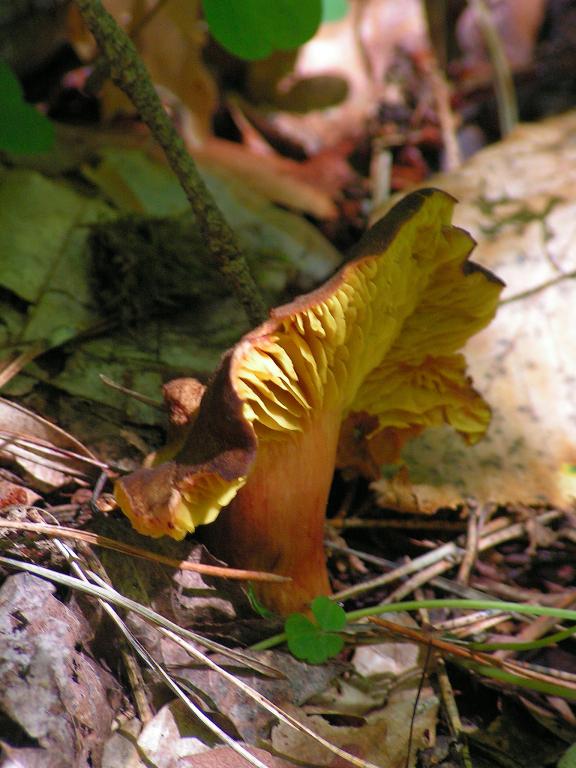
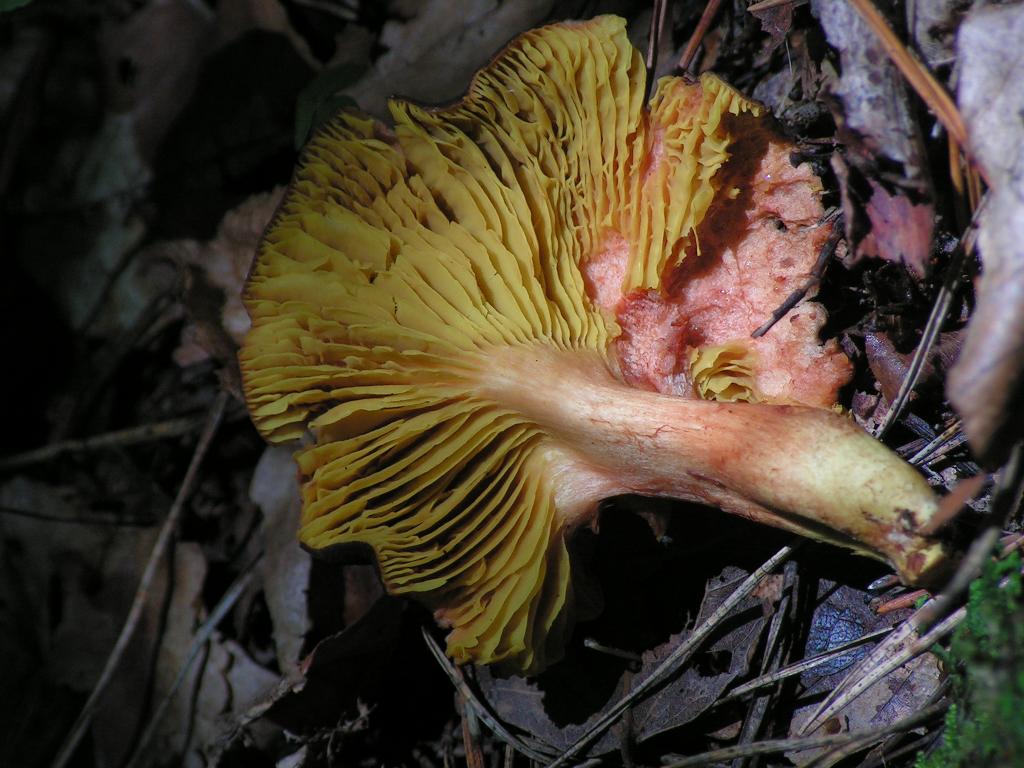
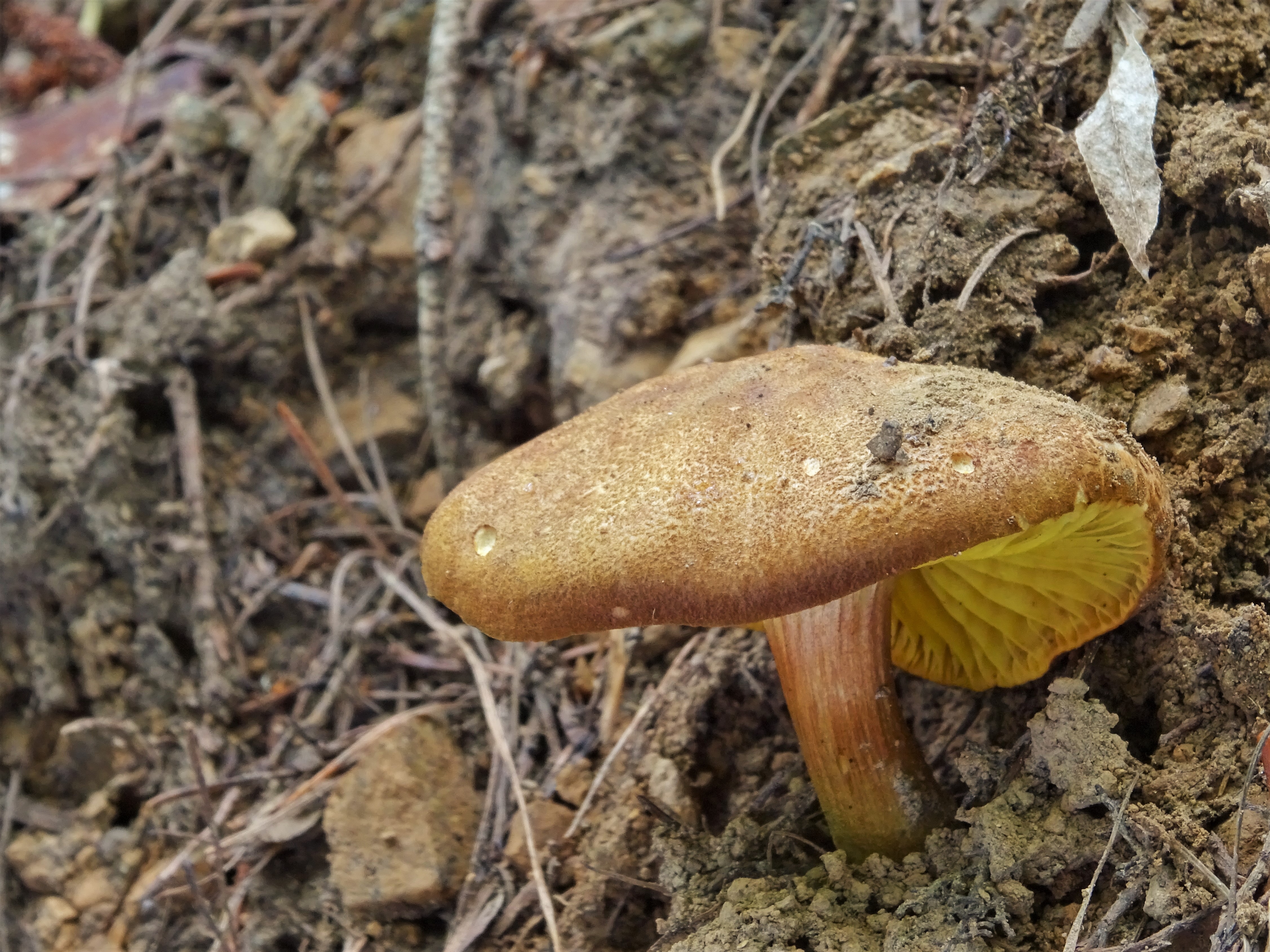
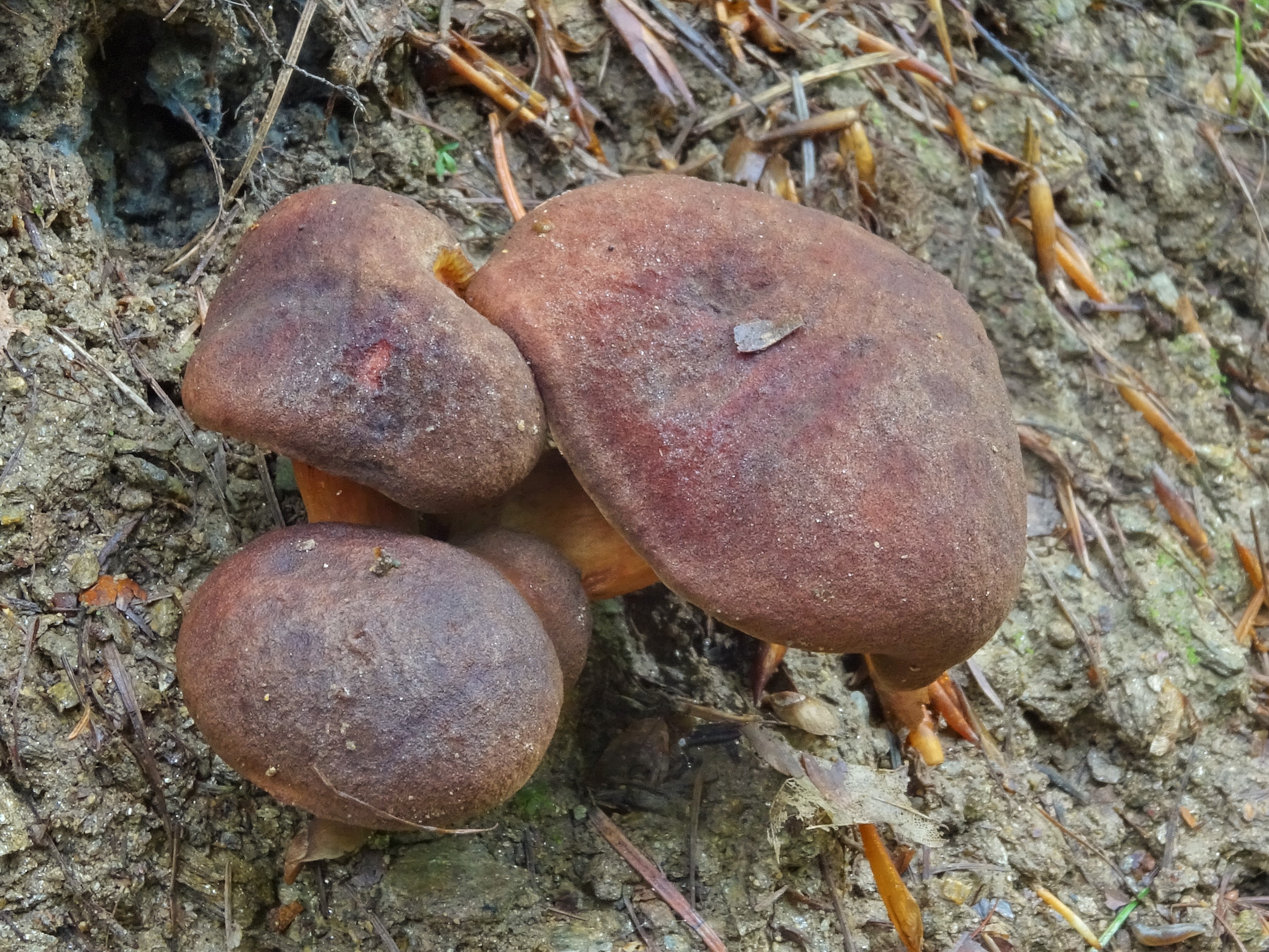
Phylloporus pelletieri is a rather rare ectomycorrhizal species with easy recognisable appearance. It prefers predominantly old well-preserved deciduous or mixed forests formed mostly by Fagaceae species on the well-drained soil. It can also appear in secondary forests.Although some local decline of its habitat is reported, it is suspected to be less than 15% overall. With a large range throughout Europe, and many of its known localities present in protected areas, the species is assessed is Least Concern.
Taxonomic notes
In North America there are a few records under the name Phylloporus pelletieri that we are not considering in the present assessment. Some of these records are very old, and have not been confirmed through molecular evidence.Phylloporus rhodoxanthus is a similar but distinct American species confirmed by molecular studies (Neves et al. 2012). Furthermore, a number of Asian species are described in this paper, to which the reports of P. pelletieri from Japan, Korea, India, etc. might belong.
Geographic range
This species has a predominantly western European distribution. It is rather widespread in Central and Southern Europe, with two sites in the Caucasus (Adygea and Karachay-Cherkess Republics).Population and Trends
According to Fraiture and Otto (2015) the total quantity of possible localities in Europe 1,000. The species has been included in the Red Lists of 12 European countries as Cr, En or Vu. Ongoing declining can be considered about 15-30% due to loss and degradation of habitats (for example in Adygea the part of suitable habitats affected by the construction of Olympic town in 2013-2014).
The number of known localities today is about 1000, and it is expected to be at least five times more (5,000 localities). Total number of functional individual can be 5,000 x 2 =10,000, and mature individuals 10,000 x 10 = 100,000.
The species is known to suffer local declines from the change or loss of habitats quality (especially Nitrogen eutrophication) (Karash et al. 2009), declining is estimated in more than 20% in a 50-year period (three generations) in these areas. On the other hand, in some countries the species population is considered to be stable. Furthermore, the species is associated with a wide range of deciduous forest including secondary habitat and it is found unlikely that these habitats taken together have a decline of more than 15% (NT threshold according to standards in Dahlberg and Mueller 2011).
Population Trend: Unknown
Habitat and Ecology
Phylloporus pelletieri is an ectomycorrhizal fungus that associates with Fagus, Castanea, rarely with Quercus, Carpinus, Corylus, possibly some conifer trees. The species occurs predominantly in old-growth forests, but sometimes also in secondary forests including parks. It is found in nemoral or boreo-nemoral zones from lowland to ca 1,200 m above sea-level, most frequently in mountain forests, on the well-drained sandy or loamy acidic soils. Usually it grows solitary with one or a few fruitbodies per locality.Threats
The main threats to this species are destruction or damage of habitats because of clear-cutting of old-growth natural broadleaved forests, and loss of habitat quality (especially Nitrogen eutrophication) as well as degradation of habitats due to inadequate forest management and increasing of recreation pressure.Conservation Actions
The key conservation action required for this species are the protection of habitats in law, especially old-growth natural broadleaved forests, or appropriate forest management and regulation of recreational pressure if it is not possible to protect localities.Research is needed to clarify ecology and preferable habitats, and investigate individual and population size.
According to Dalhberg and Croneborg (2003) the 38% of the known localities by that year, occurred in Nature 2000 protected areas.