- Proposed
- Under Assessment
- Preliminary Assessed
- Assessed
- ENPublished
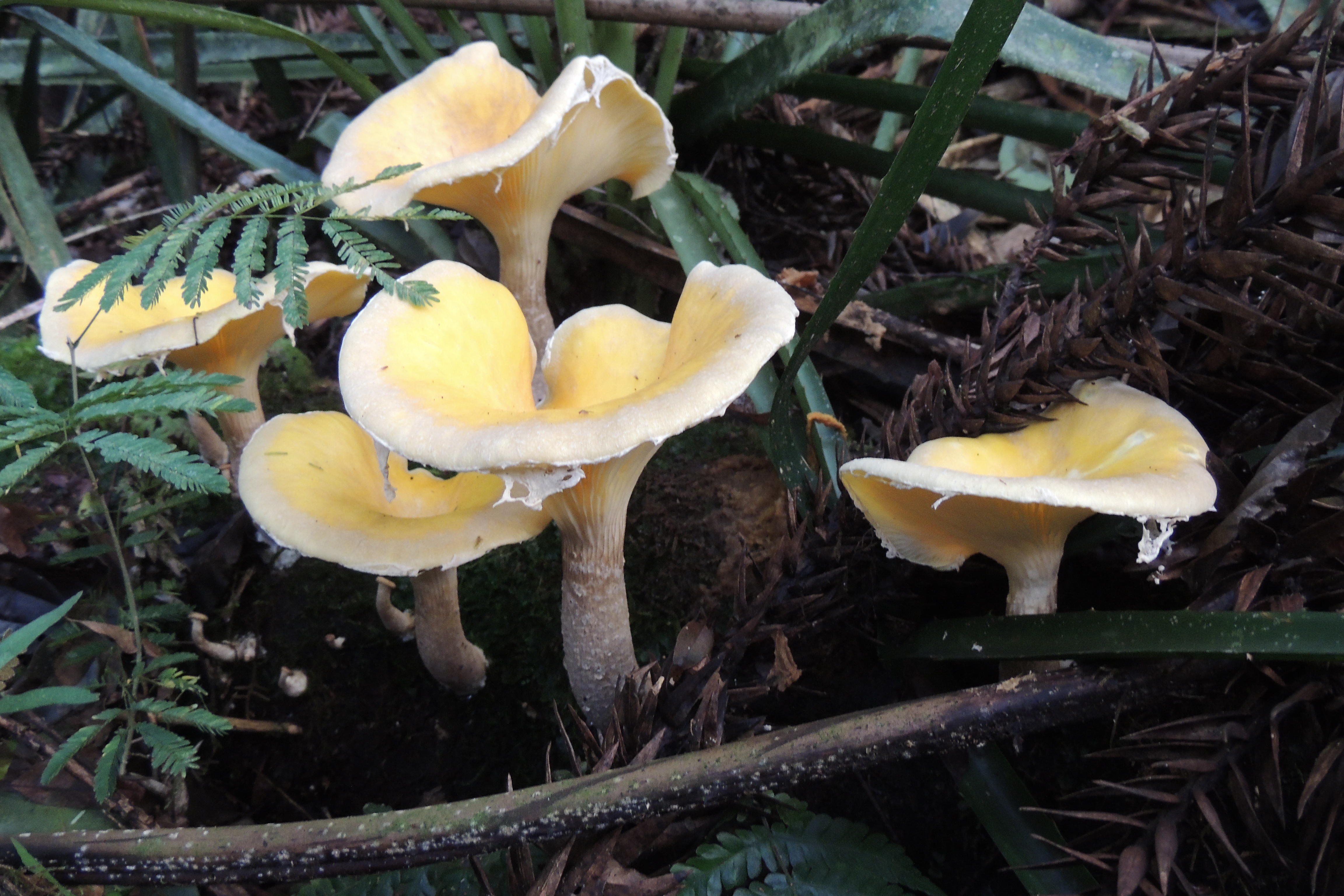
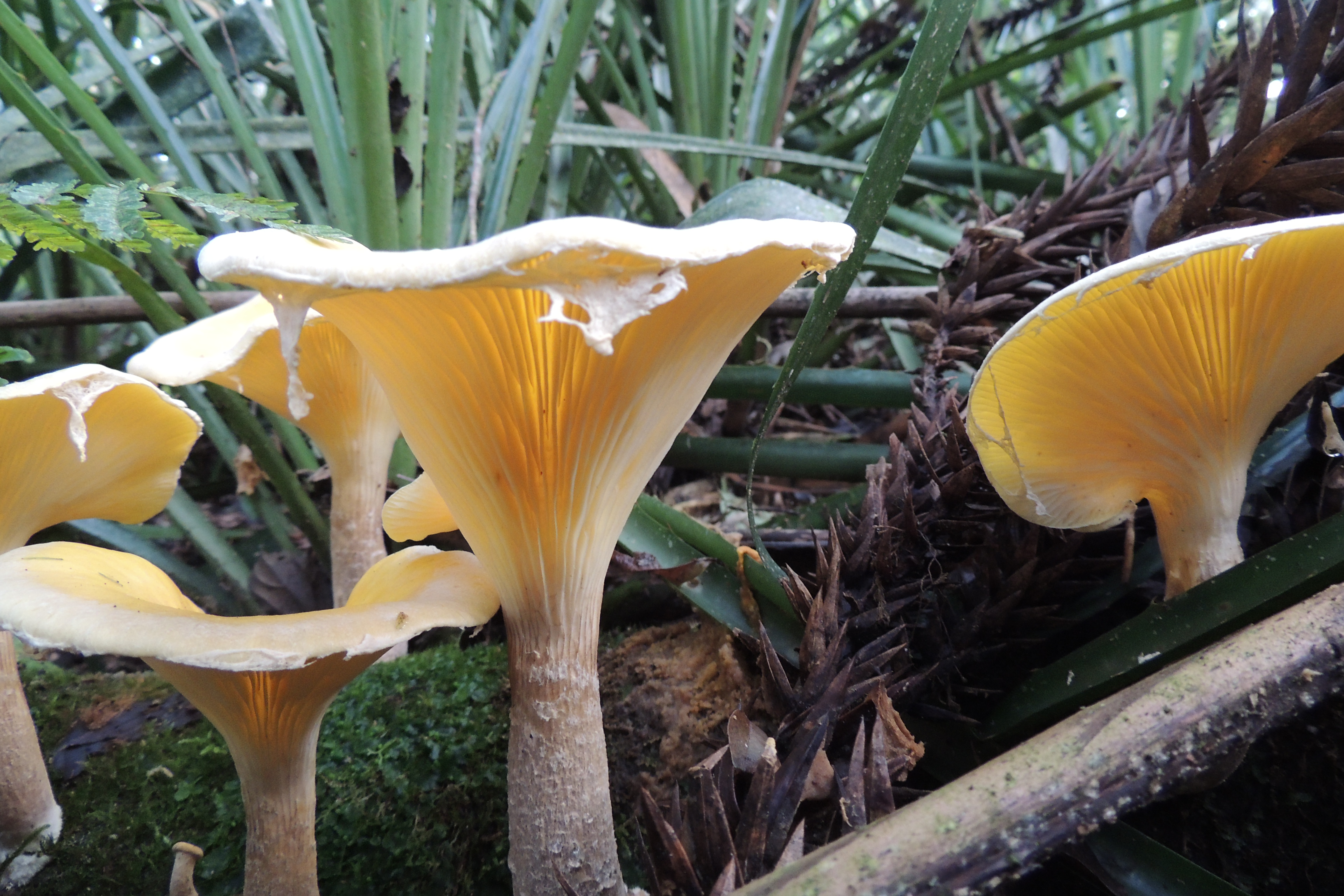
Pleurotus magnificus Rick
- Scientific name
- Pleurotus magnificus
- Author
- Rick
- Common names
 Carapicu-amarelo
- IUCN Specialist Group
 Mushroom, Bracket and Puffball
- Kingdom
- Fungi
- Phylum
- Basidiomycota
- Class
- Agaricomycetes
- Order
- Agaricales
- Family
- Pleurotaceae
- Assessment status
- Published
- Assessment date
- 2024-01-25
- IUCN Red List Category
- EN
- IUCN Red List Criteria
- A2c+3c+4c
- Assessors
- Felipe Bittencourt; Nelson Menolli Jr; Genivaldo Alves-Silva
- Reviewers
- E. Ricardo Drechsler-Santos; Kelmer Martins da Cunha; Gregory Mueller (Chicago Botanic Garden / IUCN SSC Mushroom, Bracket and Puffball Specialist Group)
Assessment Notes
Justification
Pleurotus magnificus is an edible species known only from 9 sites within areas of the Araucaria forest at elevations of 800-1,700 m above sea level. It is considered to be restricted to these areas and conditions. The species is consumed by local populations, as its use is viewed as safe. It is considered rare throughout its range, as it produces conspicuous basidiomata and a great sampling effort has been made in its habitat. Recent sampling efforts in Araucaria forest areas have been made in southern Brazil and the species was not found. P. magnificus' habitat is severely fragmented and has suffered a historical and continuous loss of area that reached ca. 90% of its original cover area (Ribeiro et al. 2009, Global Forest Watch 2020), mainly due to anthropogenic disturbances. The total population size is estimated at 8,750 mature individuals occurring in one subpopulation. A 50% population decline is expected to be have occurred, and ongoing, over 40 years, which reflects a loss of habitat area and quality including the potential consequences of climate change. Based on the suspected population reduction, P. magnificus is considered Endangered under A2c+3c+4c.Taxonomic notes
Pleurotus magnificus was described by Rick (1906) from material collected in southern Brazil, Rio Grande do Sul state. Previous records from Brazil as Pleurotus dryinus most likely represent P. magnificus.Geographic range
Pleurotus magnificus is a edible wood-decaying species that is believed to be restricted to Araucaria forest at altitudes exceeding 800-1,000 m above sea level (asl) in southern and southeastern Brazil with records from the states of Minas Gerais, Paraná, Rio Grande do Sul, Santa Catarina, and São Paulo. Although the species is mainly associated with Araucaria forest areas, it might also occur in other Atlantic Forest regions near the Araucaria forest. The species has never been found in Atlantic Forest provinces that do not intersect with the Araucaria forest, despite high sampling effort in the biome. The exact sites of the records include the municipalities of Canela and São Leopoldo in Rio Grande do Sul, Lages and Três Barras in Santa Catarina, Gonçalves and Itamonte in Minas Gerais, Guarapuava in Paraná, and São Bento do Sapucaí in São Paulo.Population and Trends
Pleurotus magnificus is currently known from 9 sites. Although the species produces large (up to 20cm in diameter) and conspicuous basidiomata, it has been recorded few times, even in intensively sampled areas such as Araucaria forest patches in southern Brazil. Thus, P. magnificus is considered a rare species. All of the species' occurrences are restricted to the Araucaria forest in altitude areas between 800 and 1,700 m asl, and is expected to be restricted to areas with similar habitat and conditions throughout the Araucaria forests. There are approx. 350 potential sites where the species may be found, each containing up to 25 mature individuals. The total population is estimated at 8,750 mature individuals all in one subpopulation.
The species habitat has suffered a historical and continuous loss of area that reached ca. 90% of its original cover area (Ribeiro et al. 2009, Global Forest Watch 2020), mainly due to anthropogenic disturbances. Additionally, the Araucaria forest is composed of small fragments (less than 50 ha), which decreases the habitat quality for the species. The population is considered to be in decline, with a suspected past, ongoing and future decline of at least 50% over 40 years (three generations) (Castro et al. 2009, Ribeiro et al. 2009).
Population Trend: Decreasing
Habitat and Ecology
This species is a wood-decaying fungus with large basidiomata (up to 20 cm diam. pileus) as gregarious, scattered to caespitose growths on large dead trunks of gymnosperms and angiosperms (e.g. Psidium sp., see Rick 1906). Based on the known occurrence of the species and long term sampling in the Atlantic Forest, it is expected that the species is restricted to high altitude areas (above 800-1000 m asl) within the Araucaria forest, and to a lesser extent in transient areas with neighbouring provinces.Threats
Pleurotus magnificus is mainly threatened by habitat area loss and quality decline. The species is considered to be restricted to the Araucaria forest, a highly disturbed formation that has suffered a historical loss of ca. 90% of its original cover area, e.g. for agriculture, urbanisation etc. (Ribeiro et al. 2009). The species habitat is still suffering an ongoing decline (Global Forest Watch 2020), with remaining areas composed of small fragments (less than 50 ha), which are surrounded by croplands and anthropogenic grasslands (Global Forest Watch 2020). Furthermore, only a small percentage of the remaining fragments are within legal protected areas (Indrusiak and Monteiro 2009). The Araucaria forest is restricted to high altitude areas with specific climate conditions that will be severely impacted by climate change, with a projected loss of 60% by 2070 (Castro et al. 2019).Conservation Actions
The main action needed to conserve the species is the protection of the remaining habitat fragments cover, and their quality, via public policies to create and maintain new conservation units. Additionally, as species within Pleurotus are easily isolated and cultivated, the genetic diversity of P. magnificus could be preserved in vitro in ex situ conservation strategies.As P. magnificus is a wild edible species, more efforts are needed to understand if it could be cultivated. Also, future research should address the possible impact of foraging in the species' population if it becomes widely known for its edibility. Further efforts should be made to better understand the species-specific climate requirements, as well as to confirm the species generation length and its host preferences.