- Proposed
- Under Assessment
- Preliminary Assessed
- NTAssessed
- 5Published
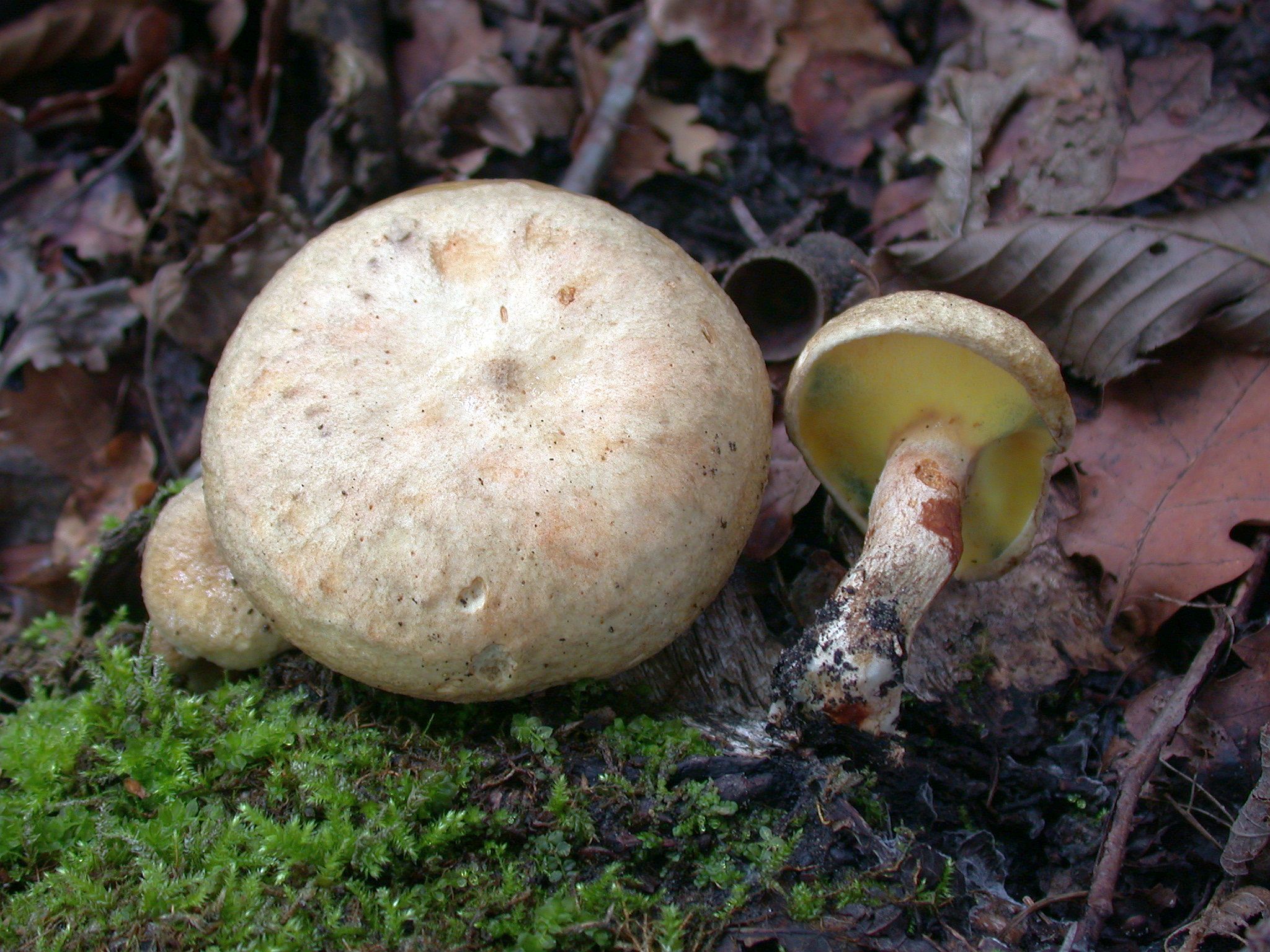
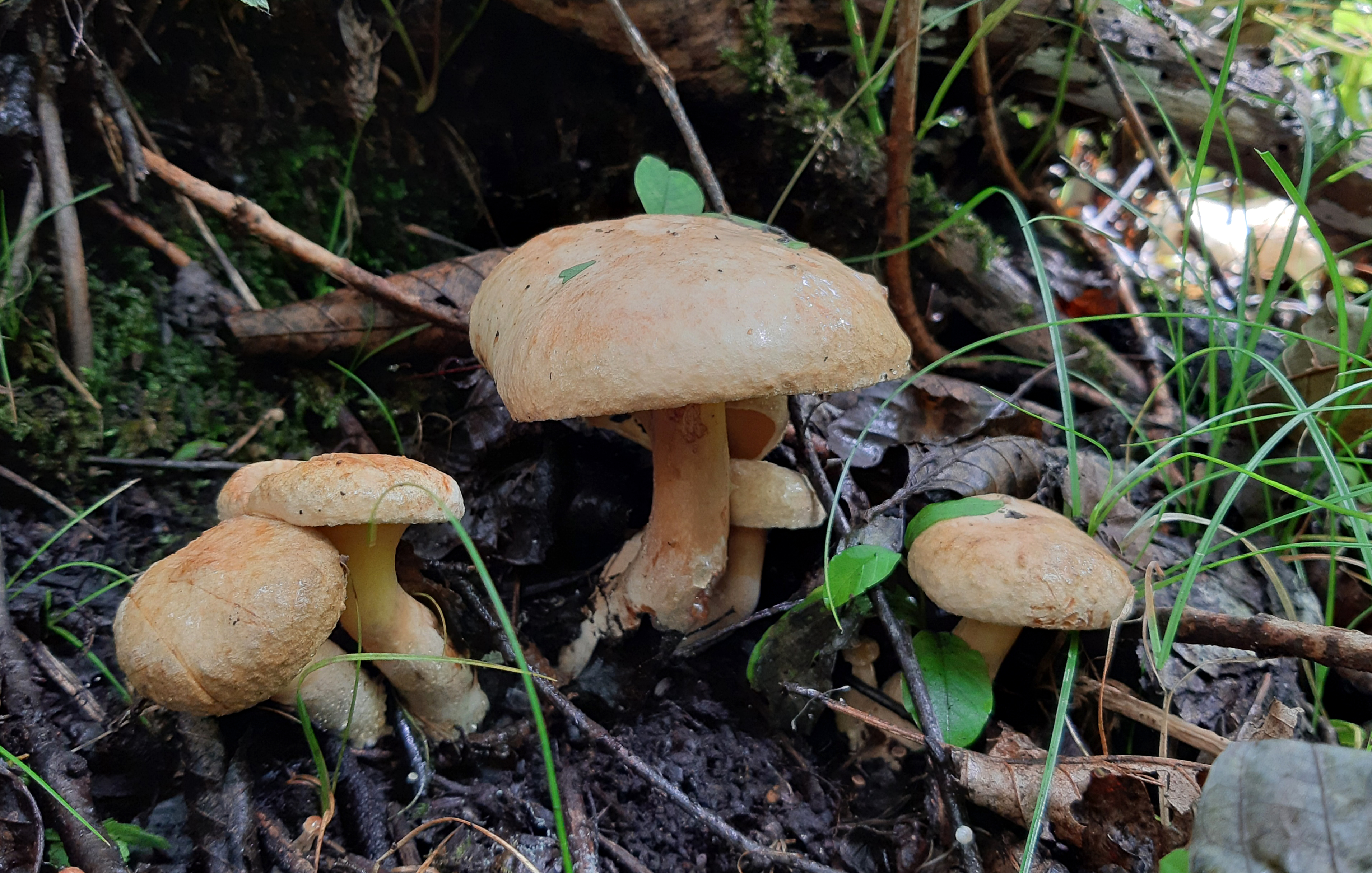
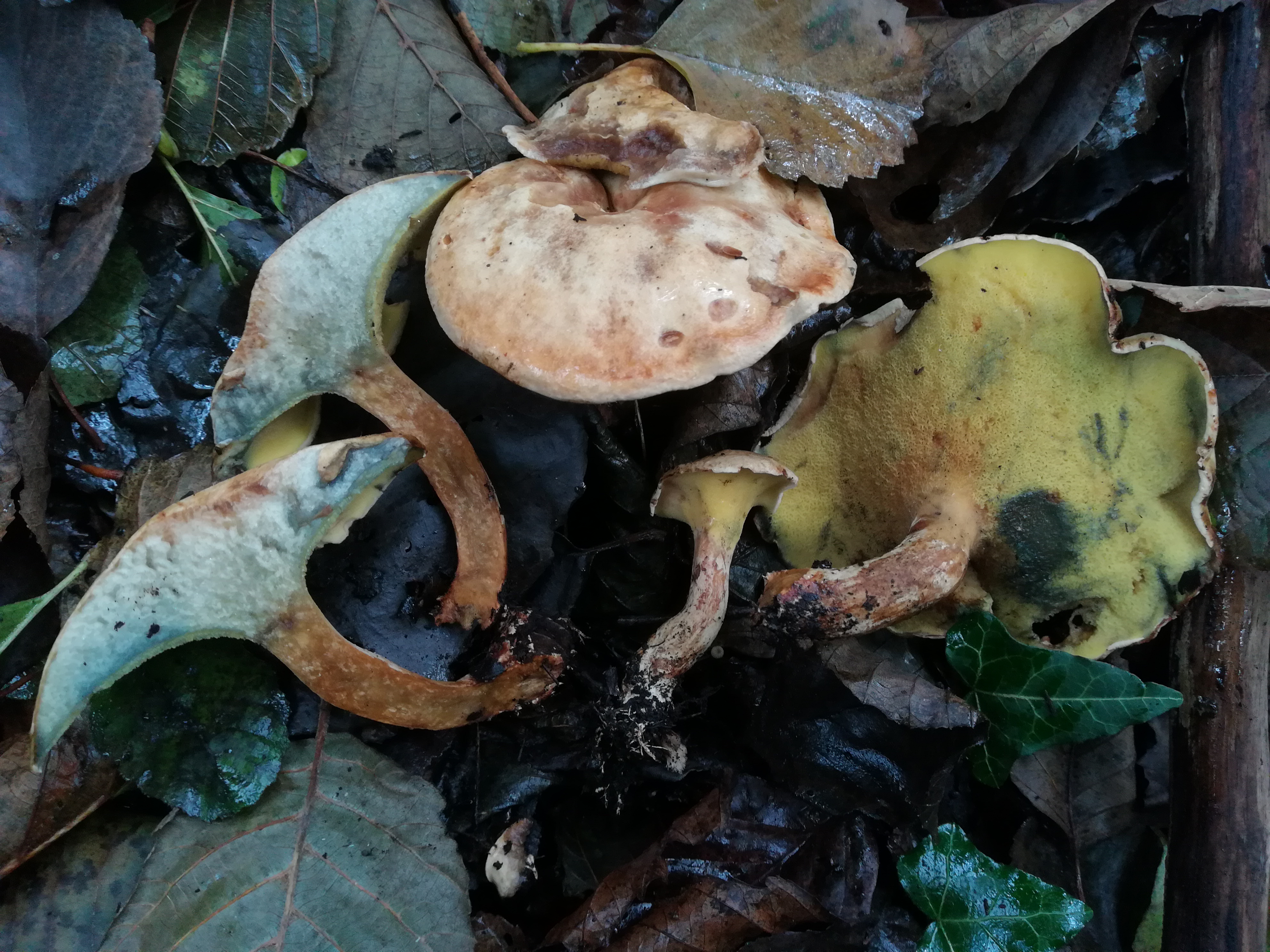
Gyrodon lividus (Bull.) Sacc.
- Scientific name
- Gyrodon lividus
- Author
- (Bull.) Sacc.
- Common names
 Alder Bolete
 Alkšņu zobiņbeka
 alsopp
 евлово вргањче
 Erlen-Grübling
 Оловносив гиродон
 žuti johovac
- IUCN Specialist Group
 Mushroom, Bracket and Puffball
- Kingdom
- Fungi
- Phylum
- Basidiomycota
- Class
- Agaricomycetes
- Order
- Boletales
- Family
- Paxillaceae
- Assessment status
- Assessed
- Preliminary Category
- NT A2c + 3c + 4c
- Proposed by
- Slavica Tofilovska
- Assessors
- Slavica Tofilovska
- Comments etc.
- Inita Daniele, Monika Kolényová, Irmgard Krisai-Greilhuber
- Reviewers
- Anders Dahlberg
Assessment Notes
Justification
Gyrodon lividus is mycorrhizal species with Alnus spp, it is regarded as a rare species in southern European countries, where the assessment varies from vulnerable to endangered and even critically endangered, though in northern European countries is least concerned. Decline of appropriate habitat due to increase in temperature and reduced moisture, and diseases on alder trees are the main threats. The appearance of disease as Phytophthora alni and Cryptodiaporthe oxystoma are causing serious threat to the mycorrhizal partner, inducing high mortality in Alnus trees. This might develop in a widespread problem and cause severe future decline of Gyrodon lividus on global level. Population size of maximum of 50.000 mature individuals is estimated (2500 x 2 x 10). Global population decline in the past, present and future due to melioration of wetlands, land use change, and hydrological changes is inferred (decline in three generations, in 50y). The species is categorized as Near Threatened under criteria A2c + 3c + 4c.
Taxonomic notes
Why suggested for a Global Red List Assessment?
Gyrodon lividus is mycorrhizal species with Alnus spp, it is regarded as a rare species in southern European countries, where the assessment varies from vulnerable to endangered and even critically endangered, though in northern European countries is least concerned. Decline of appropriate habitat due to increase in temperature and reduced moisture, and diseases on alder trees are the main threats. The appearance of disease as Phytophthora alni and Cryptodiaporthe oxystoma are causing serious threat to the mycorrhizal partner, affecting foliage, causing bark necrosis and inducing high mortality in Alnus trees. This might develop in a widespread problem and cause decline of Gyrodon lividus on global level.
Geographic range
Gyrodon lividus is primarily a European species with a wide distribution across the continent. However, it has also been reported from parts of Asia, including Pakistan (Razaq and Shahzad 2017), Nepal (voucher Cotter 1416, NY 48182), China (voucher Wang 59, NY 01042761; ENA sequence MG711609) and Japan (Nagasawa 2001), as well as North America in California (Hayward and Thiers 1984). In a recent phylogenetic study based on ITS sequence data, Gyrodon lividus specimens from Italy, Germany, the UK, and the USA clustered together (Datta et al. 2025). However, further analyses using additional molecular markers would be beneficial to clarify this wide geographic distribution.
In GBIF, 2800 occurrences are listed and most of them originate from Northern and Central Europe, while a smaller number of records are reported from southern regions (GBIF.org 2026). The distribution pattern is influenced by habitat availability and G. lividus is associated with Alnus spp found in wetlands and riparian habitats.
Population and Trends
A high number of occurrences in GBIF are listed, however observations are repeated on some sites, especially in northern European countries, while records from other areas are omitted. A total number of known and predicted sites is estimated at 2500, and on one site two 2 functional individuals are present. In a well preserved, typical habitat as a wetland, a highest number of five functional individuals may be present, however on other sites in a non-representative habitat maybe only one functional individual. Gyrodon lividus is mycorrhizal species with scattered to gregarious fruiting, consequently each functional individual corresponds to 10 mature individuals (Dahlberg and Mueller 2011). Therefore, a maximum of 50.000 mature individuals is estimated (2500 x 2 x 10). The population trend is in a decline due to past conversion of wetlands into arable land, continuous destruction of habitat quality, and future habitat quality decline because of diseases on Alnus in Europe (decline in three generations, in 50y).
The species is assessed as LC in Denmark (2019), Germany (2016), Latvia (2023), Norway (2021), Sweden (2025), as NT in Austria (2017), Croatia (2008), as VU in Czech Republic (2024), Romania (2006), as EN in Macedonia (2021) and CR in Bulgaria (2015). The assessment of species for Red List in France is not obtained at national level, instead it is done at regional level, therefore the species is assessed under the category NT – in the regions Auvergne-Rhône-Alpes (2023) and Midi-Pyrénées (2015); while VU – in the region Poitou-Charentes (2019).
Population Trend: Decreasing
Habitat and Ecology
Gyrodon lividus is mycorrhizal species with Alnus spp. and is typically associated with alder-dominated habitats in wetlands or along rivers and streams in minor stands of alder on damp soil. It’s reported from habitats with different soil types, soils with high levels of ground water, nitrogen-rich ecological conditions, on a rather calcareous and moderate acid soil, riparian forest on mineral soil and alluvial littoral forest (Roy et al. 2013, Polemis et al. 2020, Šmíd et al. 2022). The EU Habitats Directive Annex I lists Alluvial forests with Alnus glutinosa Gaertn. and Fraxinus excelsior L. (91E0*) as a priority habitat for conservation.
The sporocarps appear solitary or in groups, sometimes fused at the base, it is a conspicuous and well searched species.
Threats
The major threat to maintaining a stable population of Gyrodon lividus is the loss of suitable habitats. Though wetlands with Alnus spp. have a wide distribution throughout Europe, they are mainly found in northern Europe and decrease towards southern parts (Verhoeven 2014). They are considered rare in south Europe and the Mediteranean region, where they are highly impacted by anthropogenic hydrological changes. In Europe, the melioration of wetlands for land-use change to arable land in the past was on large scale and is still ongoing in some areas (Davidson 2014, Kaden et al. 2026). This has led to severe fragmentation or total loss of alder wetland forests of in some parts of southern Europe, therefore they are rare and only remnants exist. Recognizing this vulnerability, the EU Habitats Directive Annex I lists “Alluvial forests with Alnus glutinosa and Fraxinus excelsior (91E0*)” as a priority habitat for conservation.
One of the threats to the vitality of the habitat is the disease caused by the oomycete Phytophthora alni that spreads in Europe inducing high mortality in Alnus trees, also the disease Cryptodiaporthe oxystoma is present (San-Miguel-Ayanz et al. 2016). It is expected the disease to spread to the whole distribution range as a consequence of climatic changes.
In some parts of Europe, one of the main threats are floods caused by downhill water runoffs, a consequence of fires that destroyed vegetation in the surrounding mountains and disabled recovery by grazing (Polemis et al. 2020).
Conservation Actions
The melioration of wetlands and land-use change represent major threats and must be mitigated. Implementing targeted conservation measures towards ensuring stable hydrological levels and minimizing destructions from agricultural water abstraction are necessary. The wetlands should be preserved in their natural condition, therefore agricultural activities in surrounding arable land should adopt cautious management of fertilizers.
Where possible, implementation of activities for restoration of riparian and woodland habitats in southern Europe are recommended.
Logging of Alnus trees by stream banks should not be a practice.
Actions towards prevention of spread and control of the disease on Alnus spp caused by Phytophthora alni should be taken.
Research needed
Research on disease caused by Phytophthora alni.
Monitoring of population trend in protected wetlands and wetlands in natural state, compared to highly impacted wetlands, especially to impact of hydrological regimes and use of fertilizers.
Aiming at further exploring the distribution and dynamics of occurrence of Gyrodon lividus, monitoring on an annual basis at the established site, coupled with field research at the potential sites in southern Europe is recommended.
It is advisable to digitize and regularly update forest inventories and forestry plans on national levels.
Use and Trade
Gyrodon lividus is an edible species, but it is not well known among amateur mycologists and is therefore rarely collected. It is not commercially traded. The species has been shown to possess antioxidant potential (Bal 2018).