- Proposed
- 2Under Assessment
- 3Preliminary Assessed
- 4Assessed
- 5Published
Amanita pantherina (DC.) Krombh.
- Scientific name
- Amanita pantherina
- Author
- (DC.) Krombh.
- Common names
 Panthercap
- IUCN Specialist Group
 Mushroom, Bracket and Puffball
- Kingdom
- Fungi
- Phylum
- Basidiomycota
- Class
- Agaricomycetes
- Order
- Agaricales
- Family
- Amanitaceae
- Assessment status
- Proposed
- Proposed by
- Simon Harding
- Comments etc.
- Simon Harding
Assessment Notes
Taxonomic notes
Why suggested for a Global Red List Assessment?
Amanita pantherina is widely recorded in woodland, but grassland populations occur in long‑continuity, often ancient calcareous grasslands where the species forms ectomycorrhizal associations with Helianthemum. These occurrences are consistent, habitat‑specific, and form part of the diverse ectomycorrhizal community characteristic of ancient calcareous grassland microrefugia.
Although the species is not uncommon in suitable habitat, these grassland populations depend on a highly threatened habitat type that is undergoing ongoing decline through nutrient enrichment, scrub encroachment, fragmentation, and the loss of traditional management.
Ectomycorrhizal fungi play a key role in supporting Helianthemum under drought and nutrient‑poor conditions, enabling the persistence of the plant and the specialist invertebrates that depend on it. The presence of A. pantherina therefore reflects the integrity of a wider ecological “ladder”, where multiple species rely on the same ancient, long‑continuity grassland conditions.
Conserving these fungal populations means maintaining the functional base of ancient calcareous grasslands — supporting Helianthemum, the specialist invertebrates that depend on it, and the wider biodiversity that relies on the continuity of this habitat.
Geographic range
Amanita pantherina is widespread across the temperate Northern Hemisphere, with records from Europe, Asia, and North America. Across most of its global range the species is associated with woodland habitats.
The grassland populations considered in this assessment are restricted to long‑continuity calcareous grasslands where Helianthemum persists on nutrient‑poor, drought‑prone soils. These occurrences are highly localised within Europe, including the United Kingdom and Ireland, and are confined to ancient grassland systems with stable ecological continuity.
Woodland populations are not included in this assessment, as they occupy a different ecological setting and do not reflect the conservation issues associated with ancient calcareous grassland habitats.
Population and Trends
Amanita pantherina is globally widespread and generally common in woodland habitats across the Northern Hemisphere. However, the grassland populations of A. pantherina considered in this assessment are highly localised, occurring only where Helianthemum nummularium persists within long‑continuity calcareous grasslands.
There is no separate recording format for grassland occurrences of this species, and fungal databases do not distinguish between woodland and grassland records. Population size and trends for the grassland populations must therefore be inferred from habitat distribution and continuity, particularly the presence of Helianthemum on nutrient‑poor, drought‑prone calcareous soils.
Helianthemum nummularium, once widespread in England, was assessed as Vulnerable (VU) on the 2025 England Red List of Vascular Plants (Natural England / BSBI), reflecting significant national‑level declines. The contraction and fragmentation of Helianthemum grasslands directly reduces the extent of suitable habitat for the grassland populations of A. pantherina.
These populations are small, spatially restricted, and dependent on ancient grassland structure. Their trends are inferred to follow the well‑documented decline of ancient calcareous grasslands across Europe, including the 30–50% long‑term loss reported by Griffiths et al. (2013). Ongoing nutrient enrichment, agricultural intensification, abandonment of traditional grazing, and scrub encroachment continue to erode habitat quality and extent.
No evidence suggests that grassland populations are increasing, and their extent is likely contracting in line with the decline of Helianthemum and its associated ancient grassland habitat.
Population Trend: Decreasing
Habitat and Ecology
The grassland form of Amanita pantherina occurs in warm, short‑turf calcareous grasslands on thin, nutrient‑poor soils, typically on south‑facing slopes with long habitat continuity. It is found in open, lightly grazed or ungrazed swards, often within mosaics of Helianthemum nummularium, Hippocrepis comosa, Anthyllis vulneraria, Thymus spp. and other calcicolous herbs. The species is associated with ancient calcareous grassland structure, including bare ground, ant hills, eroded turf, and warm microclimatic pockets that favour fruiting.
Soil processes and carbon storage
Long‑established calcareous grasslands function as significant below‑ground carbon stores, with carbon locked into stable soil–fungal systems that develop only under long periods of continuity and minimal disturbance. The fungal community contributes to carbon sequestration and stabilisation through soil aggregation, organic‑matter turnover, and the long‑term retention of carbon within undisturbed calcareous soils. The presence of the grassland form of A. pantherina is therefore an indicator of both ecological continuity and the persistence of these carbon‑rich soil systems.Associated species and trophic context
The grassland form of A. pantherina occurs within the same calcareous‑grassland mosaics that support Helianthemum nummularium, a keystone host plant for a specialist invertebrate guild including Northern Brown Argus (Aricia artaxerxes), Cistus Forester (Adscita geryon), and several Rock‑rose leaf‑miners and case‑bearers (Bucculatrix helianthemi, B. regaella, Coleophora eupreta, C. ochrea). Additional calcareous‑grassland Lepidoptera such as Brown Argus (Aricia agestis) and Grizzled Skipper (Pyrgus malvae) also utilise Rock‑rose. These invertebrates contribute to the prey base of Skylark (Alauda arvensis), a UK Red‑listed species whose nestlings depend almost entirely on insects until fledging and which experiences high predation pressure, making invertebrate abundance essential for reproductive success. This multi‑trophic assemblage highlights the ecological importance and long continuity of the calcareous grassland habitat in which the grassland form of A. pantherina persists.Ecological systems do not end with fungi — they begin with them.
Threats
The grassland populations of Amanita pantherina are threatened primarily through the decline and degradation of ancient calcareous grasslands. These habitats have undergone long‑term contraction across Europe due to agricultural intensification, nutrient enrichment, and land‑use change. The 30–50% loss of ancient calcareous grassland reported by Griffiths et al. (2013) reflects a sustained and ongoing reduction in suitable habitat.
Nutrient enrichment from fertiliser drift, atmospheric deposition, and past agricultural inputs disrupts the low‑nutrient conditions required by Helianthemum and its associated ectomycorrhizal fungi. Even modest increases in soil fertility can lead to competitive exclusion by fast‑growing grasses, reducing the extent of suitable microrefugia.
Grazing abandonment and scrub encroachment further threaten these habitats by altering soil structure, shading out Helianthemum, and disrupting the open, drought‑prone conditions required for the grassland fungal community.
Fragmentation of ancient grasslands isolates remaining populations, reducing ecological continuity and increasing vulnerability to local extinction.
Because A. pantherina forms part of the below‑ground fungal network that supports nutrient exchange, soil aggregation, and carbon retention, its decline contributes to the weakening of the wider ecological ladder associated with Helianthemum. Loss of this species from grassland systems therefore reflects — and exacerbates — the broader degradation of ancient calcareous grassland ecosystems.
Conservation Actions
The conservation of Amanita pantherina grassland populations depends on the protection and favourable management of long‑continuity calcareous grasslands supporting Helianthemum nummularium. These habitats require sustained low‑nutrient conditions, light grazing, and minimal soil disturbance to maintain the ecological continuity necessary for the associated ectomycorrhizal community.
Site/area protection (1.1):
Safeguarding remaining ancient calcareous grasslands through statutory designation, agri‑environment schemes, and long‑term protection of Helianthemum‑rich areas is essential. Sites supporting stable Helianthemum turf should be prioritised due to their role in maintaining the wider ecological ladder.Site/area management (2.1):
Appropriate grazing regimes, prevention of nutrient enrichment, and control of scrub encroachment are required to maintain the open, drought‑prone conditions necessary for Helianthemum and its associated fungal community. Avoidance of soil disturbance is critical to preserve below‑ground fungal networks and carbon‑rich soil structure.Habitat and natural process restoration (2.3):
Restoration of degraded calcareous grasslands, including nutrient reduction measures, re‑establishment of light grazing, and removal of invasive scrub, can help recover suitable habitat. Restoration efforts should prioritise areas with remnant Helianthemum populations or potential for recolonisation.Awareness and communications (4.3):
Raising awareness among land managers, conservation practitioners, and policymakers about the ecological importance of Helianthemum grasslands — including their role in supporting specialist fungi, invertebrates, and long‑term soil carbon storage — is needed to ensure appropriate management and protection.Policies and regulations (5.2):
Integration of fungal conservation into grassland management policies, including recognition of the ecological significance of ectomycorrhizal fungi in maintaining habitat resilience and carbon retention, would support long‑term protection of these systems. The Vulnerable status of Helianthemum nummularium on the England Red List strengthens the case for targeted policy measures.Conserving A. pantherina in grasslands therefore contributes to the protection of a wider ecological and biogeochemical network, supporting Helianthemum, specialist invertebrates, and the carbon‑rich soils characteristic of ancient calcareous grasslands.
Research needed
Targeted research is required to clarify the distribution, ecology, and conservation significance of Amanita pantherina in ancient calcareous grasslands. Priority areas include:
Population size, distribution & trends (1.2):
Structured Field Mycology surveys are needed to document grassland populations, as current fungal recording does not distinguish between woodland and grassland occurrences. Mapping Helianthemum‑rich calcareous grasslands would help infer the extent of suitable habitat. eDNA approaches may assist in detecting below‑ground mycelium where fruiting is infrequent.Life history & ecology (1.3):
Further study of the ectomycorrhizal relationship between A. pantherina and Helianthemum nummularium is required to understand host specificity, functional roles in nutrient capture, drought tolerance, and contributions to soil carbon retention. Research into the wider ectomycorrhizal assemblage associated with Helianthemum would clarify the ecological network within ancient calcareous grasslands.
Documenting the below‑ground fungal infrastructure of this threatened habitat is essential, as these ectomycorrhizal networks underpin nutrient exchange, drought resilience, soil carbon stability, and the persistence of Helianthemum itself.Habitat trends (3.4):
Improved monitoring of ancient calcareous grassland condition — including soil nutrient status, grazing continuity, and indicators of long‑term ecological stability — would strengthen inference of fungal population trends and habitat suitability.Threats (1.5):
Research into the impacts of nutrient enrichment, grazing abandonment, and scrub encroachment on the below‑ground fungal community would support more accurate assessment of habitat vulnerability and the resilience of Helianthemum‑associated fungi.Conservation planning (1.6):
Integration of fungal data into grassland management plans is needed, recognising the role of ectomycorrhizal fungi in supporting Helianthemum, specialist invertebrates, and long‑term soil carbon storage. A lack of dedicated funding for fungal survey work remains a barrier to generating the data required for effective conservation planning.Survey and monitoring gaps:
Current funding and survey effort in grassland fungi is heavily biased toward CHEGD species, leaving the wider ectomycorrhizal and root‑associated assemblage under‑recorded despite its equal or greater ecological importance. Dedicated Field Mycology surveys and the integration of eDNA methods are needed to document the full fungal community associated with Helianthemum and ancient calcareous grasslands.
Use and Trade
There is no known use or trade of this species.
Bibliography

Amanita pantherina with Helianthemum in ancient calcareous grassland. Image © Simon Harding

Amanita pantherina with Helianthemum in ancient calcareous grassland. Image © Simon Harding

Amanita pantherina with Helianthemum in ancient calcareous grassland. Image © Simon Harding
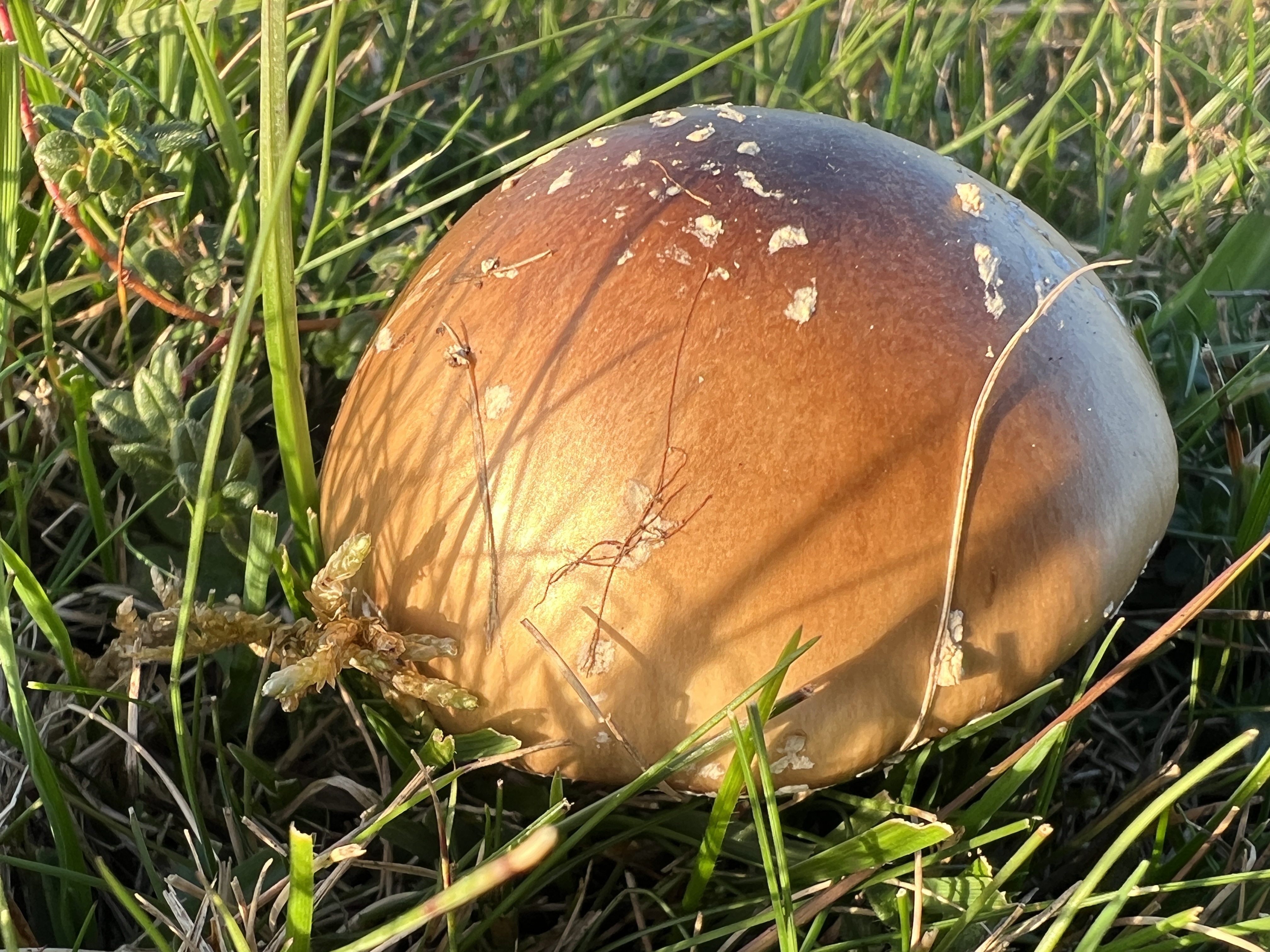
Amanita pantherina with Helianthemum in ancient calcareous grassland. Image © Simon Harding
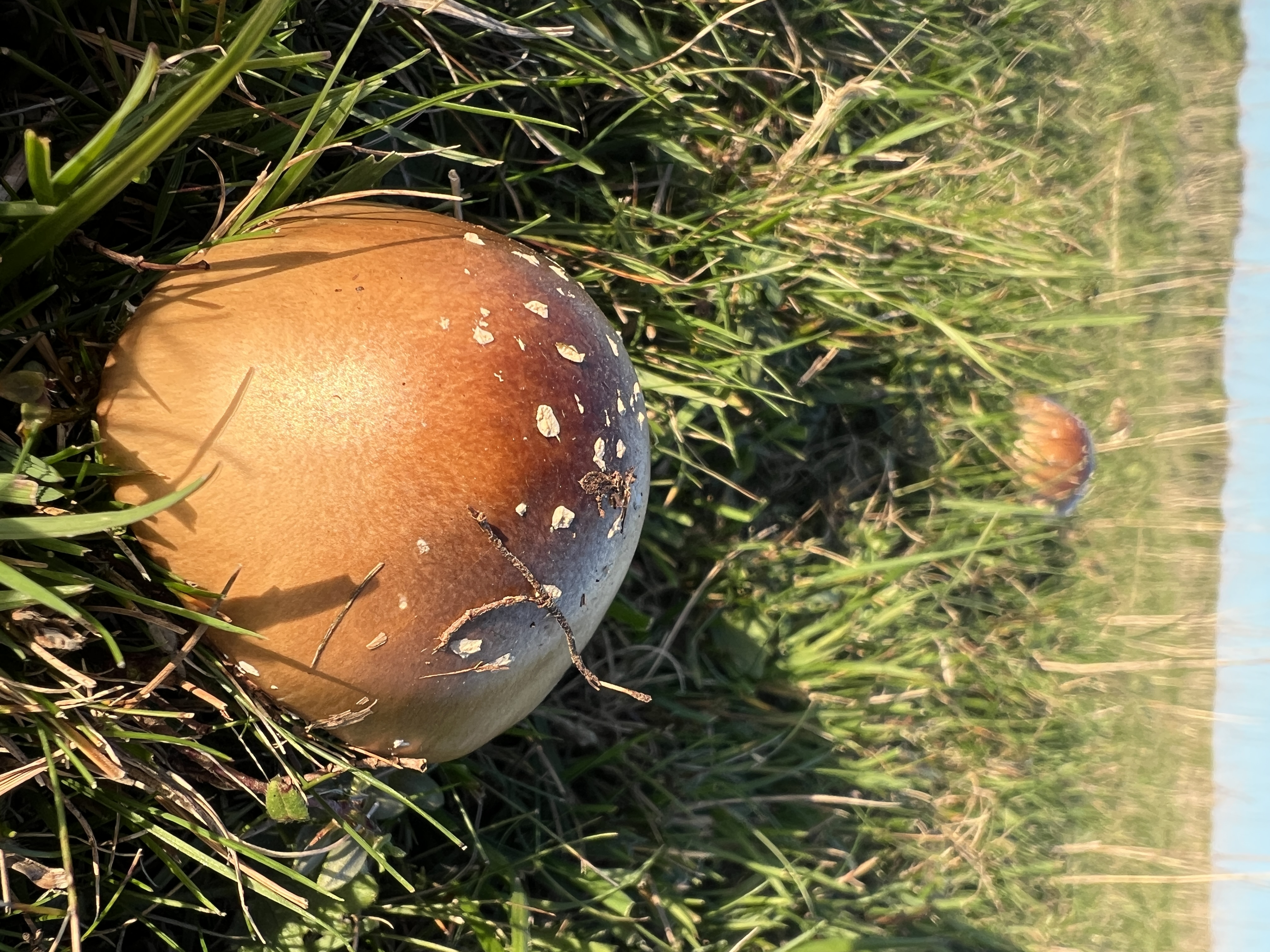
Amanita pantherina with Helianthemum in ancient calcareous grassland. Image © Simon Harding
Country occurrence
Regional Population and Trends
| Country | Trend | Redlisted |
|---|