- Proposed
- 2Under Assessment
- 3Preliminary Assessed
- 4Assessed
- 5Published
Entoloma moserianum Noordel.
- Scientific name
- Entoloma moserianum
- Author
- Noordel.
- Common names
- IUCN Specialist Group
 Mushroom, Bracket and Puffball
- Kingdom
- Fungi
- Phylum
- Basidiomycota
- Class
- Agaricomycetes
- Order
- Agaricales
- Family
- Entolomataceae
- Assessment status
- Proposed
- Proposed by
- Simon Harding
- Comments etc.
- Simon Harding
Assessment Notes
Taxonomic notes
The species is currently placed within genus Entoloma, subgenus Entoloma, under the modern infrageneric framework used in recent European treatments. The name is accepted, and there are no synonyms and no common names in use. No taxonomic revisions have altered the circumscription of the species since its original description.
Why suggested for a Global Red List Assessment?
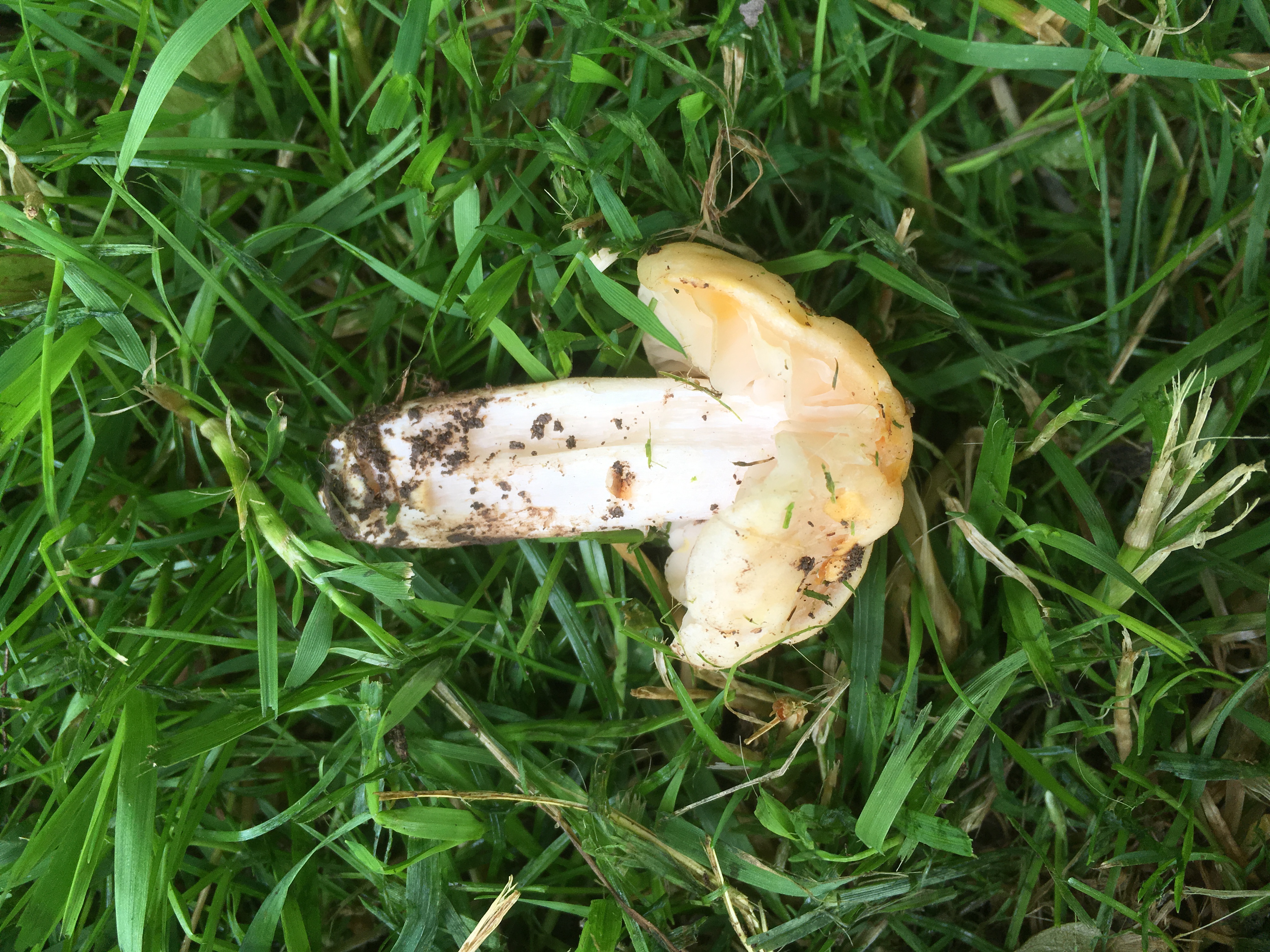
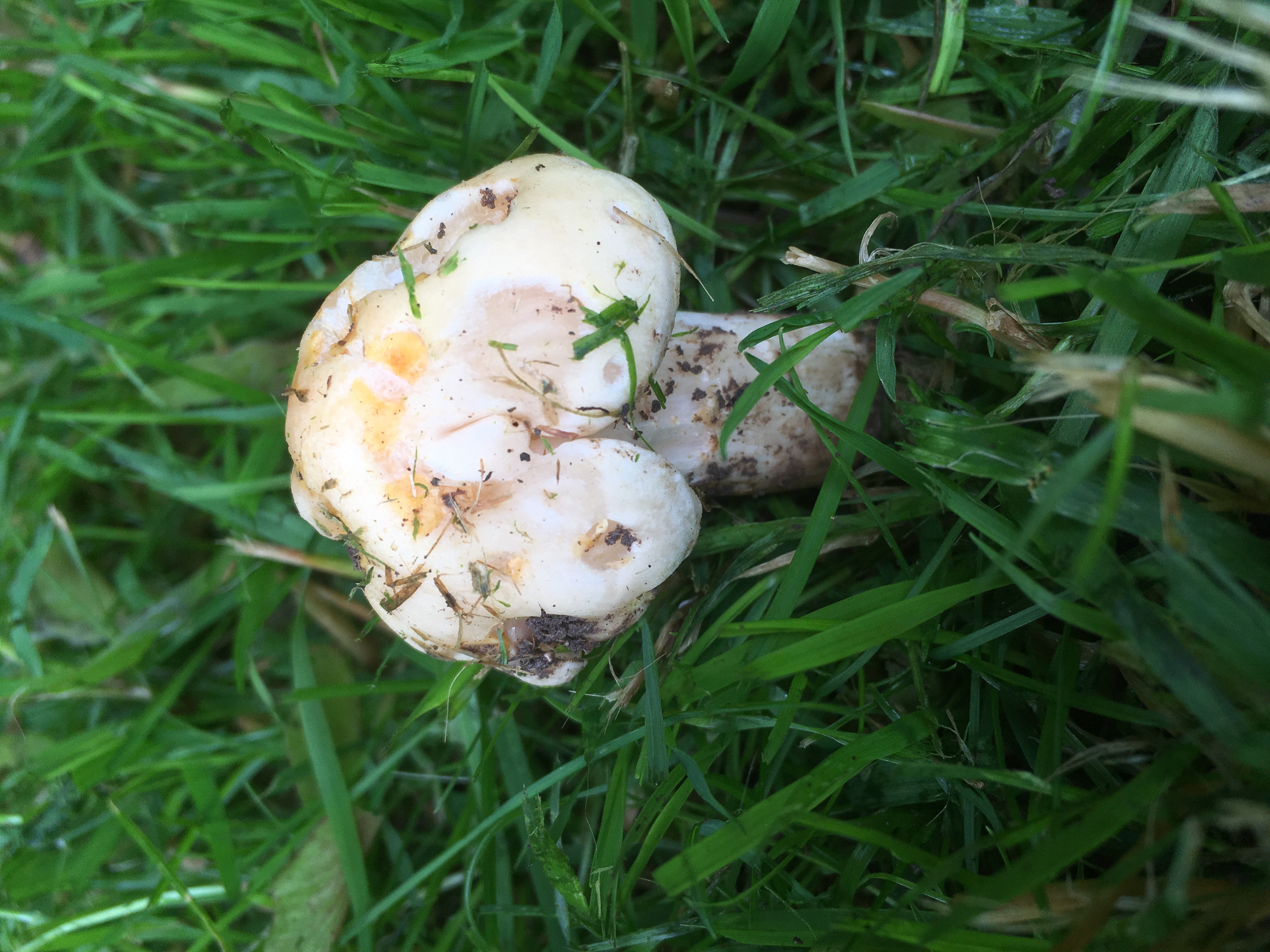
Entoloma moserianum warrants global assessment because it is an exceptionally rare, morphologically distinctive species restricted to a very small number of verified localities across Europe. Since its original description from river‑plain deciduous forest in the Netherlands, confirmed occurrences have been documented only from Germany, Austria, Italy, and a single British locality. Despite sustained recording effort in suitable habitats, no additional verified sites have been found, indicating that the species is genuinely scarce rather than under‑recorded. Its robust basidiocarps, pale colours, characteristic bright yellow staining, abundant cheilocystidia, and distinctive nitric‑acid reaction make it readily recognisable when encountered.
Across its range, the species is confined to long‑continuity, nutrient‑poor habitats now undergoing ongoing decline, including river‑plain deciduous forest on heavy clay, heliophilous calcareous woodland, and ancient hedgerow grassland. These habitats are threatened by agricultural intensification, nutrient enrichment, hydrological alteration, loss of ancient hedgerows, and changes in woodland and grassland management. The species’ dependence on stable, semi‑natural systems places it at particular risk from landscape homogenisation and fragmentation.
E. moserianum is known from very few locations, and its Area of Occupancy (AOO) is likely below 20 km² when measured using IUCN 4 km² grid cells. Continuing decline in habitat extent and quality is inferred across its European range. Given its extremely limited distribution, ecological specificity, distinctive morphology, and the absence of evidence for wider occurrence despite targeted recording, Entoloma moserianum meets the conditions for listing as Endangered under criterion B2ab(ii,iii).
Geographic range
Entoloma moserianum is a very rare European species known from a small number of verified localities. Confirmed records come from the Netherlands, Germany, Austria, Italy, and the United Kingdom. These sites represent long‑continuity, nutrient‑poor habitats including river‑plain deciduous forest on heavy clay, calcareous heliophilous woodland, and ancient hedgerow grassland.
Netherlands – Historical records from river‑plain deciduous forest in Gelderland, including the type locality. Multiple GBIF entries represent duplicates of the same underlying specimens or literature citations.
Germany – Verified historical records from river‑influenced deciduous woodland, documented in continental literature. These are not consistently represented in GBIF but are accepted as confirmed occurrences.
Austria – A verified herbarium specimen from deciduous woodland, held at the University of Vienna (WU). Additional GBIF observations from 1976–1977 represent retrospective assignments made before the species was formally described; these unvouchered records correspond to a single locality and are not treated as confirmed.
Italy – Four verified localities, including the published record from Spagnago di Cornedo Vicentino (Vicenza) in calcareous heliophilous woodland (Battistin & Righetto 2009), and additional confirmed sites at Monte San Lorenzo, Valdagno, and San Briccio. GBIF duplicates represent repeated listings of the same occurrences.
United Kingdom – A verified record from Gloucestershire in ancient hedgerow grassland, documented by Kibby & Harding (2016). GBIF lists this record more than once due to dataset aggregation (BRERC and Kew).
Unverified records (refined)
Additional GBIF points from Spain, France, and Belgium lack vouchers, published confirmation, or supporting ecological information. The French cluster (1998–2003) consists of unvouchered club‑level observations from ecologically unsuitable suburban habitats in Hauts‑de‑France, with no diagnostic features recorded and high potential for confusion with common yellow‑staining agarics (Agaricus xanthodermus) and pale Entoloma species. The single Belgian record is a grid‑centroid IFBL entry without a specimen or diagnostic notes. These records cannot be verified to the standard required for use in a global Red List proposal.IUCN guidance states that unverified records should not be used when their inclusion would materially alter the threat category. Accepting these points would artificially increase the number of locations, expand the Area of Occupancy (AOO), and enlarge the Extent of Occurrence (EOO), thereby weakening the evidence of extreme rarity. For this reason, only fully verified records are included in this assessment.
Range summary
The verified distribution remains extremely limited, with very few localities and no evidence of repeated fruiting at any site. The species’ known range is fragmented and restricted to declining long‑continuity habitats.
Population and Trends
Entoloma moserianum is known from a very small number of verified localities across Europe, and all evidence indicates that it occurs at extremely low densities. Most records consist of single, isolated fruiting events, with no site producing repeated collections over multiple years. In the United Kingdom, the species is known from a single verified collection made in 2016, with no further records in the decade since despite targeted recording in suitable habitats. Similar patterns are seen across the Netherlands, Germany, Austria, and Italy, where records remain infrequent and widely separated. This strongly suggests that the species is genuinely scarce rather than under‑recorded.
Across its range, the species shows no evidence of stable or persistent populations. Its dependence on long‑continuity, nutrient‑poor habitats that are themselves undergoing decline indicates that the population is likely decreasing. Habitat loss, nutrient enrichment, hydrological alteration, and the reduction of ancient hedgerow and woodland‑edge systems all contribute to inferred continuing decline in both the number of mature individuals and the quality of available habitat.
Given the very small number of known sites, the absence of repeated fruiting, and ongoing decline in habitat extent and quality, the population of Entoloma moserianum is considered very small, severely fragmented, and in continuing decline.
Population Trend: Decreasing
Habitat and Ecology
Entoloma moserianum is a terrestrial agaric restricted to long‑continuity, nutrient‑poor habitats in temperate Europe. The species was originally described from river‑plain deciduous forest on heavy clay soils in the Netherlands, where it occurred in open, lightly sunlit patches beneath Quercus, Fraxinus and Tilia. Subsequent verified records show a consistent ecological pattern: the species favours undisturbed deciduous woodland systems with stable soil structure, low nutrient status, and long habitat continuity.
In Italy, the species has been recorded in heliophilous calcareous broadleaved woodland at low elevation (c. 200 m), associated with Ulmus minor, Corylus avellana, Acer campestre and Robinia pseudacacia. The soil was humus‑rich but not nutrient‑enriched, and the site exhibited long ecological continuity. In the United Kingdom, the species has been found in ancient hedgerow grassland, occurring in rough, semi‑natural grassland adjacent to a 200‑year‑old hedgerow on heavy clay soils. This demonstrates that the species can occupy both woodland and grassland microhabitats, provided they retain structural continuity, low nutrient status, and semi‑open conditions.
Across its range, E. moserianum favours open or lightly shaded microsites within long‑established deciduous woodland or hedgerow systems. Fruiting occurs on soil, typically as isolated basidiomata or in small groups. The species is not known from intensively managed, nutrient‑enriched, or recently disturbed habitats. Its occurrence in river‑plain forest, calcareous woodland, and ancient hedgerow grassland indicates a dependence on stable, semi‑natural ecosystems that are increasingly fragmented and declining across Europe.
Threats
Entoloma moserianum is threatened primarily by the continuing decline, degradation, and fragmentation of long‑continuity, nutrient‑poor habitats across Europe. The species is restricted to river‑plain deciduous forest on heavy clay, calcareous heliophilous woodland, and ancient hedgerow grassland. All of these habitat types have undergone substantial contraction over recent decades and are subject to multiple interacting pressures that reduce habitat quality and ecological continuity.
Agricultural intensification is a major threat. Nutrient enrichment from fertilisers, slurry, and atmospheric deposition alters soil chemistry and reduces mycelial viability, diminishing the suitability of formerly stable woodland edges and semi‑natural grasslands. The loss of unimproved grassland and the simplification of field margins directly affect hedgerow‑associated microhabitats where the species has been recorded. Herbicide drift and verge spraying further degrade these habitats.
Hydrological alteration of river‑plain forest systems—including drainage, flood control, and changes in groundwater dynamics—threatens the clay‑based woodland habitats where the species was originally described. These interventions modify soil moisture regimes, reduce hydrological stability, and disrupt the long‑term ecological conditions required by the species.
Habitat fragmentation and structural loss are ongoing threats in both woodland and hedgerow systems. Removal of ancient hedgerows, increased shading from unmanaged woodland succession, and loss of open, lightly shaded microsites reduce the availability of suitable fruiting conditions. In calcareous woodland, canopy closure and shrub encroachment diminish the heliophilous conditions under which the species has been observed.
Land‑use change, including development, forestry intensification, and conversion of semi‑natural habitats to improved pasture or plantation, further reduces the extent and quality of suitable sites. The species has not been recorded from managed or nutrient‑enriched habitats and appears unable to persist under altered soil conditions.
Given the extremely small number of known localities, any further loss or degradation of habitat is likely to have a significant impact on the global population. Continuing decline in habitat extent, quality, and ecological integrity is inferred across the species’ range.
Conservation Actions
Targeted conservation measures are required to protect the extremely limited and declining habitat types in which Entoloma moserianum occurs. The species is restricted to long‑continuity, nutrient‑poor ecosystems such as river‑plain deciduous forest on heavy clay, calcareous heliophilous woodland, and ancient hedgerow grassland. These habitats are highly fragmented and vulnerable to agricultural intensification, hydrological alteration, and structural loss. Conservation actions should therefore focus on maintaining habitat quality, preventing further decline, and improving the protection of known and potential sites.
Habitat protection and management
Safeguard remaining river‑plain deciduous forest, calcareous woodland, and ancient hedgerow grassland through legal protection or conservation agreements. Maintain low‑nutrient soil conditions by preventing fertiliser drift, slurry runoff, and other sources of nutrient enrichment. Preserve open or lightly shaded microsites within woodland and hedgerow systems by avoiding excessive canopy closure and managing shrub encroachment. Protect hydrological regimes in river‑plain forest systems by avoiding drainage, flood control modifications, and groundwater disruption.Landscape‑scale conservation
Retain and restore ancient hedgerows and associated semi‑natural grassland margins, particularly in regions where the species has been recorded. Promote management practices that maintain structural continuity and prevent homogenisation of woodland edges and field margins.Monitoring and research
Conduct targeted surveys in suitable long‑continuity habitats to improve understanding of the species’ distribution and ecological requirements. Monitor known sites for repeated fruiting, habitat change, and potential decline. Encourage documentation of new records through national fungal recording schemes and specialist networks.Policy and awareness
Integrate fungal conservation considerations into woodland, hedgerow, and river‑plain management policies. Raise awareness among land managers, contractors, and conservation bodies of the importance of nutrient‑poor, long‑continuity habitats for rare fungi.Given the extremely small number of known localities and the ongoing decline in habitat extent and quality, these actions are essential to prevent further loss of E. moserianum and to support any potential recovery.
Research needed
Further research would support conservation planning for Entoloma moserianum, but the species is already sufficiently documented to justify its current assessment. Its morphology, ecology, and phylogenetic placement are well established, and the extreme rarity demonstrated by verified records is not considered an artefact of under‑recording. Additional work should therefore focus on refining ecological understanding and improving monitoring rather than establishing basic identity or distribution.
Targeted surveys
Focused searches in long‑continuity river‑plain forest, calcareous deciduous woodland, and ancient hedgerow grassland to determine whether any additional localities persist.
Monitoring of known sites to detect repeated fruiting, habitat change, and long‑term persistence.Ecology and habitat continuity
Investigation of soil chemistry, hydrological stability, and woodland‑edge structure to clarify the specific microhabitat conditions required by the species.
Assessment of the impacts of nutrient enrichment and canopy change on potential habitat suitability.Population dynamics
Documentation of fruiting frequency and mycelial persistence at known sites to improve understanding of population stability and long‑term viability.
Use and Trade
Entoloma moserianum has no known use or trade. It is not collected for consumption, cultivation, or commercial purposes, and there is no evidence of any utilisation at local or international levels.
Bibliography
Country occurrence
Regional Population and Trends
| Country | Trend | Redlisted |
|---|