- Proposed
- Under Assessment
- Preliminary Assessed
- Assessed
- NTPublished
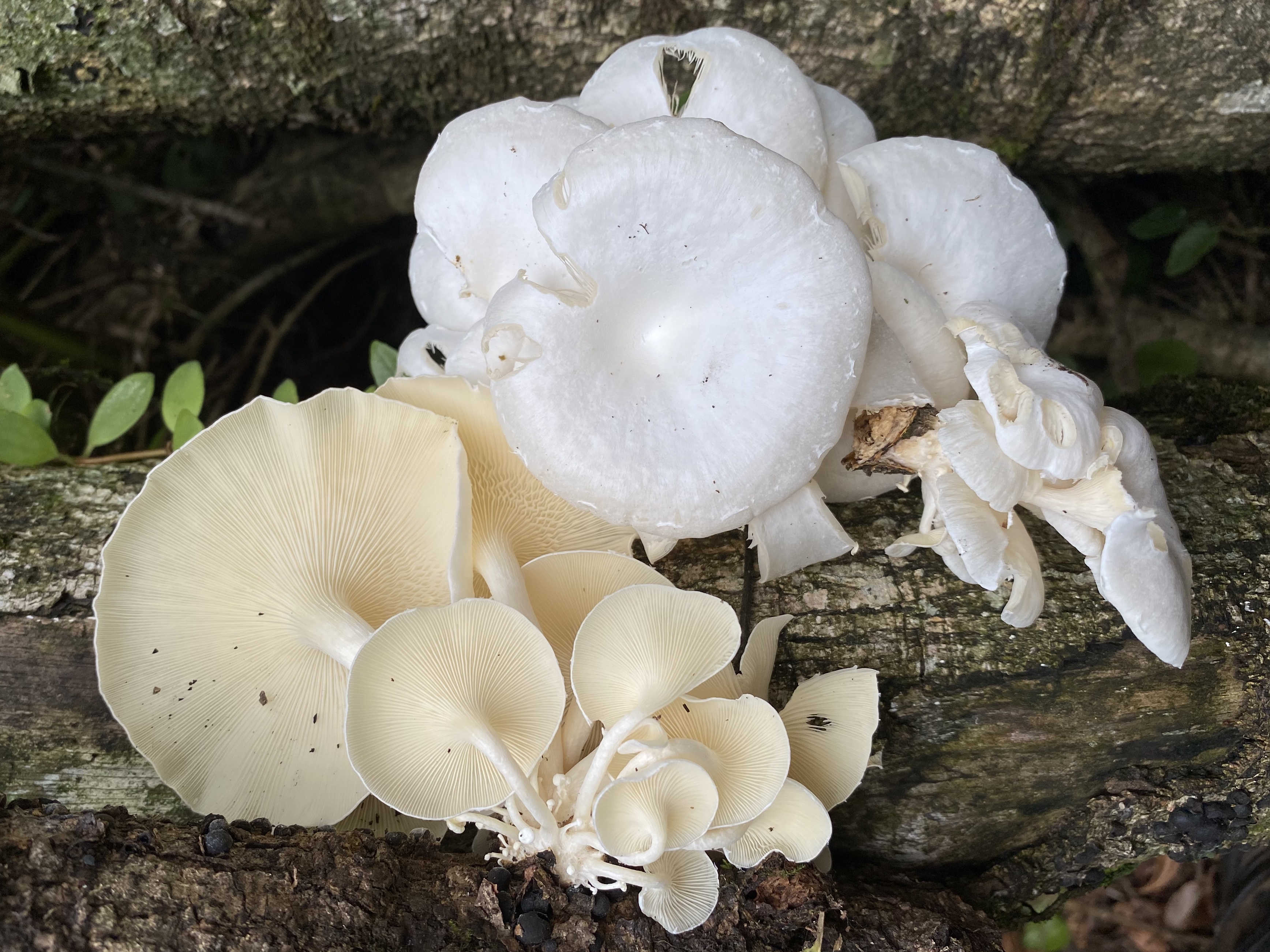
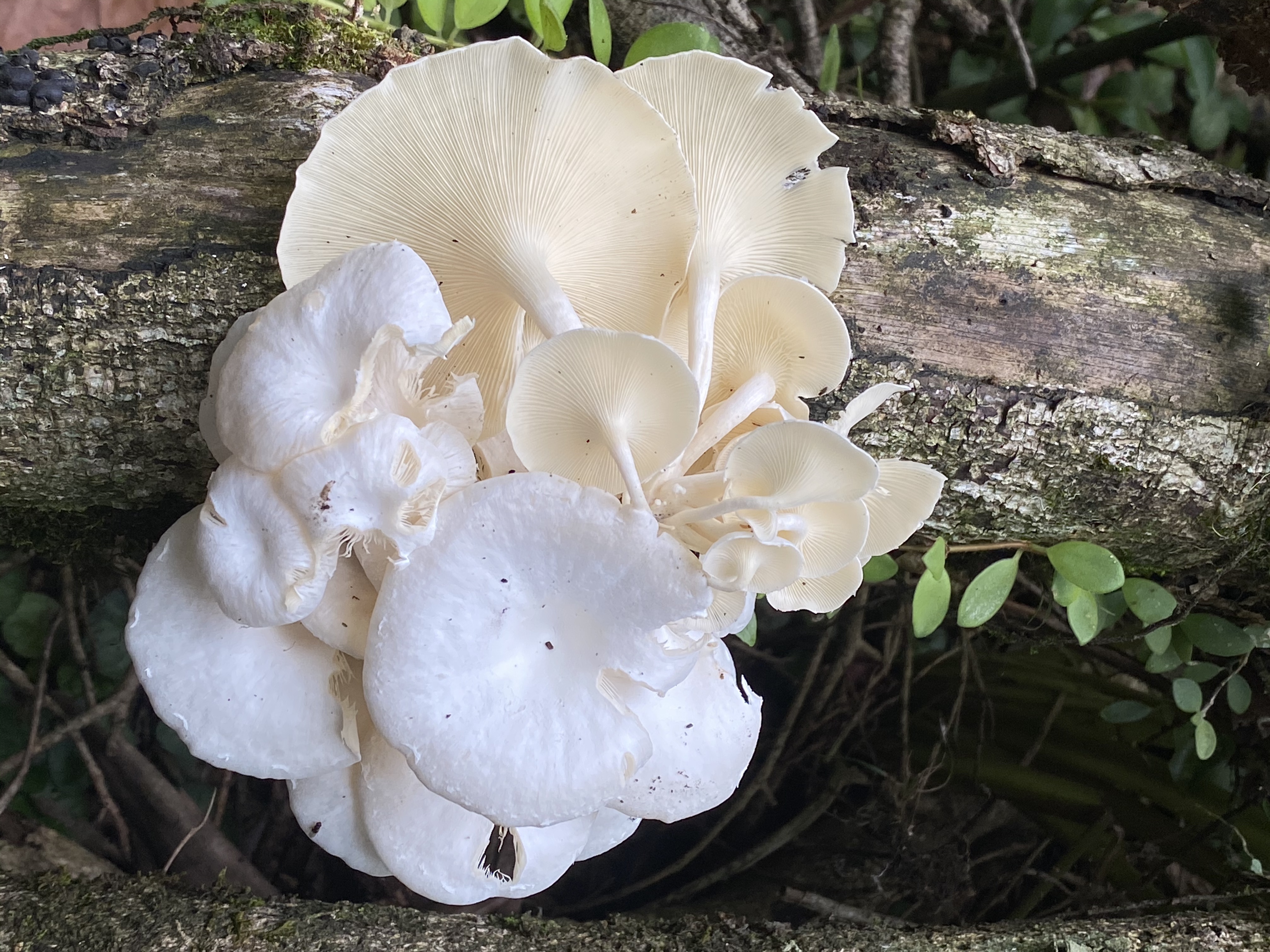
Lentinus concavus (Berk.) Corner
- Scientific name
- Lentinus concavus
- Author
- (Berk.) Corner
- Common names
- IUCN Specialist Group
 Mushroom, Bracket and Puffball
- Kingdom
- Fungi
- Phylum
- Basidiomycota
- Class
- Agaricomycetes
- Order
- Polyporales
- Family
- Polyporaceae
- Assessment status
- Published
- Assessment date
- 2024-01-25
- IUCN Red List Category
- NT
- IUCN Red List Criteria
- A3c+4c
- Assessors
- Genivaldo Alves-Silva; Nelson Menolli Jr
- Reviewers
- E. Ricardo Drechsler-Santos; Gregory Mueller (Chicago Botanic Garden / IUCN SSC Mushroom, Bracket and Puffball Specialist Group); Kelmer Martins da Cunha
Assessment Notes
Justification
Lentinus concavus is an edible species known from around 40 sites being well distributed in tropical and subtropical areas of the Central America in the Caribbean, and within South America in the Amazon and the Brazilian southern Atlantic Forest. The species is consumed, harvested, and commercialized by indigenous and original populations as its use is considered safe if well cooked. It is common throughout its wide range, producing conspicuous and several basidiomata that grow caespitose in clusters on a wide variety of dead wood logs. Although there is a continuous and high sampling effort in Atlantic Forest areas within northeastern Brazil, the species was never collected in this region. A reduction of area in the Brazilian Atlantic Forest of around 8% is expected to be met in 30 years (three generations), based on recent ongoing trends. In the Amazon, the L. concavus population is mainly threatened by impacts of climate change, where a reduction of around 15% is expected to be met in the same time frame. In Central America and the Caribbean regions, it is expected a total reduction of 13% in three generations (30 years). For these regions, considering the impacts of habitat fragmentation on small patches, and the associated impacts on remaining habitat quality, together there is expected to be an ongoing and future loss of suitable habitat of at least 19% over three generations, with a similar rate of population reduction. Therefore, L. concavus is considered Near Threatened under A3c+4c.Geographic range
Lentinus concavus was described by Berkeley (1852) as Panus concavus based on a material from the Dominican Republic, in Santo Domingo (Pegler 1983). Based on additional bibliographical records, L. concavus is recorded from Brazil, Colombia, Cuba, Dominica, the Dominican Republic, Ecuador, Peru, Trinidad and Tobago, and Venezuela (Pegler 1983, Minter et al. 2001, Franco-Molano et al. 2005, Vasco-Palacios et al. 2005, Gates et al. 2021, Angelini 2022, Rengifo et al. 2022).In Brazil, L. concavus is recorded for the states of Acre, Mato Grosso do Sul, Roraima, Rio Grande do Sul, and São Paulo (Fidalgo and Prance 1976, Bononi, 1992, Bononi et al. 2008, Sanuma et al. 2016, Timm 2018).
Curated data from GBIF.org (2024) confirms and expands the distribution of L. concavus to Bolivia, Brazil (in the states of Amazonas, Mato Grosso do Sul, Paraná, Rio de Janeiro, and São Paulo), Colombia, Costa Rica, Cuba, Dominica, the Dominican Republic, Ecuador, Haiti, Honduras, French Guiana, Jamaica, and Puerto Rico. Considering the geographic distribution in the Neotropical region and the available pictures, the records from Indonesia (Lestari et al. 2018) and Mexico (GBIF.org 2024, gbifID 3113332306) are doubtful and therefore were not considered in the distribution of the species.
Population and Trends
Lentinus concavus is a species with medium to high detectability, growing abundantly, caespitose, with numerous basidiomata in clusters on a wide variety of dead wood logs. The species is known from 85 collections in ca. 40 sites, being well distributed in tropical and subtropical areas of the Central America in the Caribbean, and within South America in the Amazon and the Brazilian Atlantic Forest. Although there is a continuous and high sampling effort in the Brazilian Atlantic Forest areas within northeastern Brazil, the species was never collected in this region, and thus it is believed that its distribution does not reach high latitudes in this biome. The species is expected to occur in 2,500–3,000 sites with 30 individuals per site. The population size is estimated between 75,000-90,000 mature individuals.
The species' habitat is threatened mainly by historical and continuing urbanization in the Atlantic Forest (Tabarelli et al. 2010, Rezende et al. 2018) and climate change impacts in the Amazon (Zhang et al. 2015). In Central America and the Caribbean where the species has been reported, the main threats are similar to others in tropical areas such as anthropogenic disturbances and urbanization (Portillo-Quintero and Smith 2018). Considering those threats, it is suspected that the species will suffer a reduction of at least 19% in the next 30 years (three generations). The population decline was suspected in light of extension loss of suitable habitat (Zhang et al. 2015, da Silva et al. 2020, Global Forest Watch 2024) and the putative negative influence that habitat degradation has on species occupation in a given environment (Berglund and Jonsson 2003, Haddad et al. 2015).
Population Trend: Decreasing
Habitat and Ecology
Lentinus concavus is a saprotrophic species that grows on dead wood logs without known host specificity. The species has medium to high detectability, growing abundantly, caespitose, with around four clusters per log of 5-15 basidiomata. In Brazil the species occurs in well preserved areas within the Amazon and south and southeastern Atlantic Forest. In the Caribbean and Central America regions the species also occurs in conserved humid tropical forest areas.Threats
The Amazon Forest is essential for maintaining the global climate system (Swann et al. 2015). The changes in the land use and the expansion of the cattle and soy industries in the Amazon have increased deforestation rates (Zhang et al. 2015). Other threats are also constant such as fire, illegal gold mining and logging (Condé et al. 2019). A number of modelling studies predict that about 50% of the Amazon basin will be replaced by savanna and arid land vegetation by the end of the 21st century (Zhang et al. 2015).As well as the Amazon Forest, the Atlantic Forest is also threatened. The Atlantic Forest has been suffering threats and loss of area over time. As a result of the long history of disturbance, most of the remaining Atlantic Forest is immersed in human-modified landscapes, with many small, edge-affected forest remnants (Joly et al. 2014). According to Rezende et al. (2018), there is only 28% of native vegetation cover for the Atlantic Forest biome, including both forest (26%) and non-forest native formations (2%). Habitat loss and fragmentation, logging, fire, hunting, and climate change have caused an alarming loss of biodiversity in the biome. The expansion of urban areas is also an important pressure further reducing the area of the Atlantic Forest (Joly et al. 2014).
In Central America and the Caribbean regions where the species has been reported, the main threats are similar to those in South America, which reflect the overall threats to Tropical forests (Portillo-Quintero and Smith 2018). Considering the annual area loss in the Brazilian Atlantic Forest from 1985-2018 of 0.25% (da Silva et al., 2020) and a continuing decline, a reduction of around 8% is expected to be met in 30 years. In the Amazon, the Lentinus concavus population is mainly threatened by impacts of climate change, where a reduction of around 14% is expected to be met in the same time frame (Zhang et al. 2015). In Central America and the Caribbean regions where the species has been reported, from 2001-2022, an annual reduction of 0.61% has taken place, and considering a continuous declining, it is expected a total reduction of 13% in three generations (30 years) (Global Forest Watch 2024). For these areas, considering the impacts of habitat fragmentation in small patches, these percentages will probably reflect an underestimate of overall changes as there will also habitat quality losses (Berglund and Jonsson 2003, Haddad et al. 2015), which can be suspected in a loss of at least 19% of suitable habitat.
Conservation Actions
The main conservation action to benefit the species' population is the protection of its habitat. In Brazil, most specimens were collected in conserved areas, thus large fragments should be a priority to conserve the species as it guarantees habitat quality as well as the creation of new areas. Lentinus concavus is an edible species and the collecting and sustainable use of the species is important. As the outcomes of climate change are among the main threats to the species population and its habitat, ex situ conservation based on in vitro cultures to protect the species' genetic diversity is necessary.New surveys are needed to better understand the distribution of the species in its known range, as well as in other areas where the species probably occurs, but which has not been reported yet, such as the northeastern Atlantic Forest in Brazil. The cultivation potential and medicinal properties of the species also need to be further studied. The large scale harvest to commercial purposes of the species needs to be better understood regarding negative impacts in its population stability.
Use and Trade
The mushrooms of Lentinus concavus are edible and it has been reported to be used by traditional communities in Brazil (Fidalgo and Prance 1976, Sanuma et al. 2016), Colombia (Vasco-Palacios et al. 2008, González-Cuellar et al. 2021), and Ecuador (Perez and Stefania 2020). L. concavus is consumed by the Yanomami indigenous people in the Amazon Forest in Brazil. They consume the mushroom roasted in leaves. The species needs to be well cooked before consumption, as it can cause nausea and dizziness.L. concavus is traded by the Sanöma, part of the Yanomami people who inhabit the Awaris region, in the mountain forests of the extreme northwest of Roraima, Brazil. The Sanöma Mushroom mix that is sold by the Yanomami people may contain more than 10 mushroom species and is a product of the Yanomami agricultural system.