- Proposed
- 2Under Assessment
- 3Preliminary Assessed
- 4Assessed
- 5Published
Entoloma catalaunicum (Singer) Noordel.
- Scientific name
- Entoloma catalaunicum
- Author
- (Singer) Noordel.
- Common names
 Bluefoot Pinkgill
- IUCN Specialist Group
 Mushroom, Bracket and Puffball
- Kingdom
- Fungi
- Phylum
- Basidiomycota
- Class
- Agaricomycetes
- Order
- Agaricales
- Family
- Entolomataceae
- Assessment status
- Proposed
- Proposed by
- Simon Harding
- Assessors
- Simon Harding
- Comments etc.
- Gregory Mueller
Assessment Notes
Taxonomic notes
Entoloma catalaunicum is placed in Entoloma subgenus Cyanula, subsection Rhynchocystidiata in recent European treatments. The species is well defined and supported by the modern treatment in Fungi Europaei 5b, including the designation of an epitype by Dima et al. (2023). Historical confusion with pink forms of E. serrulatum has been resolved through the structure and pigmentation of the lamella edge. No synonymies or unresolved taxonomic issues are currently recognised.
Why suggested for a Global Red List Assessment?
Entoloma catalaunicum is a rare European species with a highly restricted distribution and a strong association with long‑established, nutrient‑poor calcareous or base‑rich semi‑natural habitats. These grassland systems, often characterised by high ecological continuity, are undergoing continuing decline across much of Europe due to land‑use change, abandonment, nutrient enrichment, scrub encroachment, and climate‑driven shifts in moisture and seasonality. The species occupies a narrow ecological niche and appears to have low tolerance of disturbance, making recolonisation unlikely where habitat quality deteriorates. Its occurrence in sites with long habitat continuity suggests that it may serve as an indicator of stable, undisturbed grassland ecosystems where other rare or specialist fungi are likely to occur. The small number of confirmed sites, restricted Area of Occupancy, fragmentation, and ongoing decline in habitat extent and quality indicate that E. catalaunicum meets the conditions for listing as Vulnerable under criterion B2ab(ii,iii,iv).
Geographic range
Entoloma catalaunicum is known from a small number of scattered sites in Europe, where it occurs in long‑established, nutrient‑poor, base‑rich grasslands. Its distribution is highly restricted and fragmented, reflecting both the limited extent of suitable habitat and the species’ apparent dependence on grasslands with long ecological continuity. The Area of Occupancy is small, and continuing decline is inferred due to ongoing loss and degradation of ancient, unimproved grasslands across its range. No evidence suggests that the species occupies recently created or restored grasslands, and recolonisation of degraded sites appears unlikely.
Population and Trends
Entoloma catalaunicum is known from a small number of confirmed sites across Europe, reflecting its narrow ecological niche and the limited extent of suitable long‑established, nutrient‑poor grasslands. The population is inferred to be small and fragmented, with continuing decline in the number of mature individuals expected due to ongoing loss and degradation of habitat. No evidence suggests the species can recolonise sites where habitat quality has deteriorated, and local extirpations are likely where nutrient enrichment, abandonment or afforestation occur.
Population Trend: Decreasing
Habitat and Ecology
The species occurs in long‑established calcareous grassland and subalpine calcareous heath on basic soils. In the Pyrenees it has been recorded where grassland and Pinus sylvestris woodland form a natural mosaic, but this likely reflects the structure of the landscape rather than a dependence on trees. Based on current records, the species appears to be associated primarily with ancient, base‑rich, low‑nutrient grassland systems. The species is restricted to habitats with long ecological continuity, and its occurrence in these systems reflects a dependence on stable, low‑nutrient soils that have experienced minimal disturbance over long periods.
Threats
Entoloma catalaunicum is restricted to long‑established calcareous grassland and subalpine calcareous heath on basic soils. These ancient, low‑nutrient habitats have undergone substantial long‑term decline across Europe, as documented in national and regional grassland assessments, including the analyses summarised in the Entoloma bloxamii sensu lato Red List assessment. That assessment, drawing on the detailed work of Griffiths and colleagues, reports a 30–50% decline in semi‑natural calcareous grasslands over the past 50 years, driven by abandonment of traditional grazing, nutrient enrichment, scrub encroachment, afforestation, agricultural intensification and development pressures.
Additional pressures arise from land‑management changes that alter or remove the low‑nutrient, open structure of ancient grasslands. These include rewilding initiatives that reduce or eliminate grazing, tree‑planting schemes, and wildflower‑meadow creation projects where soil disturbance or nutrient addition leads to the loss of long‑established calcareous grassland conditions. Such interventions can permanently alter soil chemistry, vegetation structure and ecological continuity, contributing to the ongoing decline of suitable habitat across the species’ range.
Based on its occurrence only in ancient, low‑nutrient grasslands, a low tolerance of disturbance is inferred, and recolonisation of degraded sites is unlikely. As a result, local extirpations are expected where nutrient inputs increase, grazing ceases, or scrub and woodland expand. The pressures documented for calcareous grasslands across Europe indicate continuing decline in habitat extent, quality and connectivity within the potential range of E. catalaunicum. Climate‑driven shifts in moisture and seasonality may further alter the structure and persistence of suitable grassland–heath mosaics, particularly in montane and subalpine regions.
Conservation Actions
No species‑specific conservation actions are currently in place. Protection and appropriate management of long‑established calcareous grassland and subalpine calcareous heath on basic soils are likely to benefit this species. Maintaining low‑nutrient conditions and traditional grazing regimes, and preventing scrub encroachment or afforestation, will help sustain suitable habitat. Further survey work is needed to clarify its distribution, confirm its habitat preferences and support conservation of these ancient grassland systems.
Research needed
Further research would help refine understanding of the ecological requirements and site-level dynamics of Entoloma catalaunicum, particularly its association with long‑established, nutrient‑poor calcareous grasslands. Molecular work would strengthen the taxonomic framework for Mediterranean‑type Entoloma species and support verification of geographically separated records. Additional study of habitat conditions, fruiting behaviour, and responses to grazing and nutrient inputs would assist in guiding management of sites where the species occurs and in identifying other areas with suitable conditions.
Use and Trade
There is no known use or trade of this species.
Bibliography
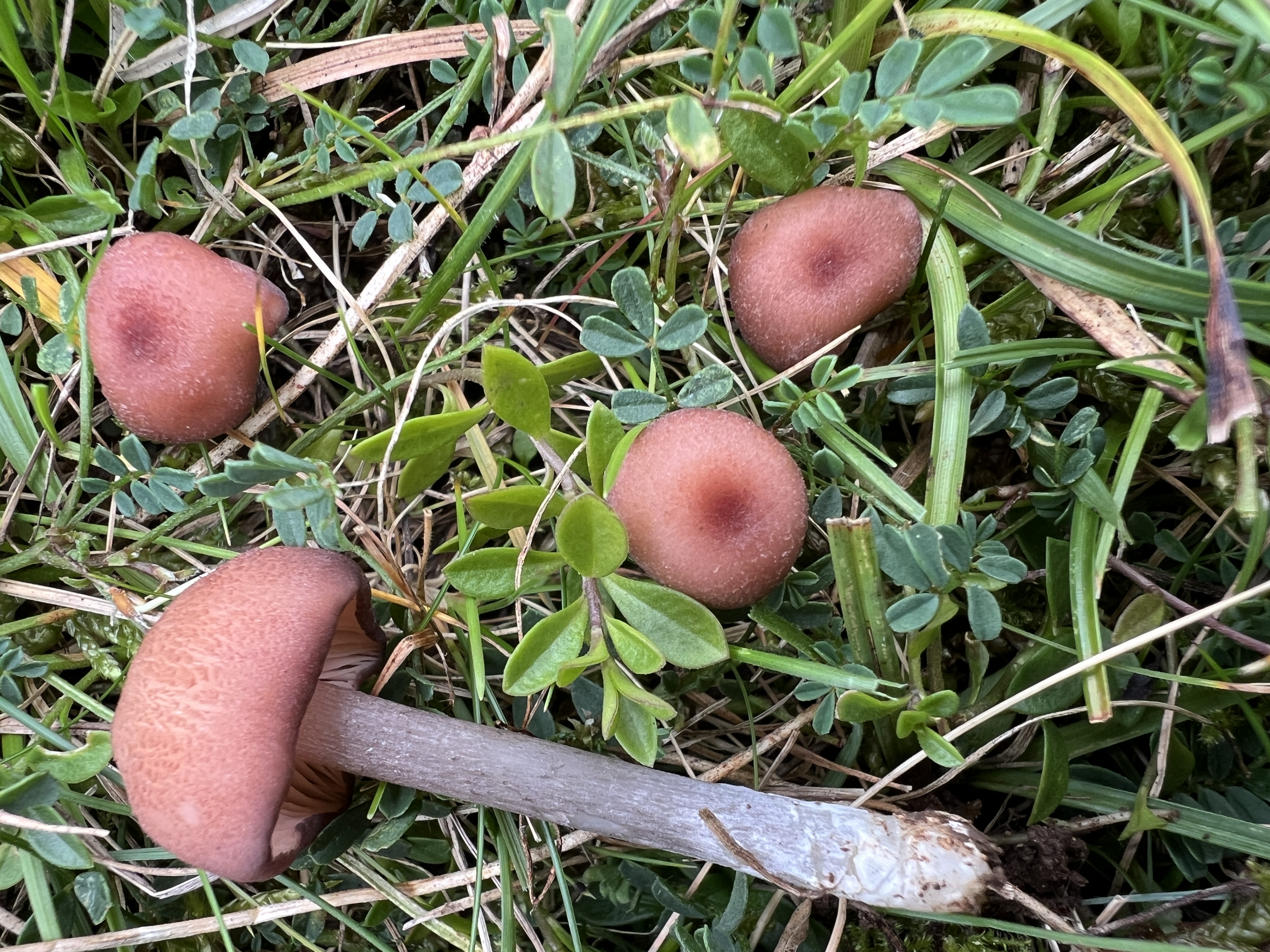
Entoloma catalaunicum (Cotswolds, England), sequenced specimen. Image © Simon Harding
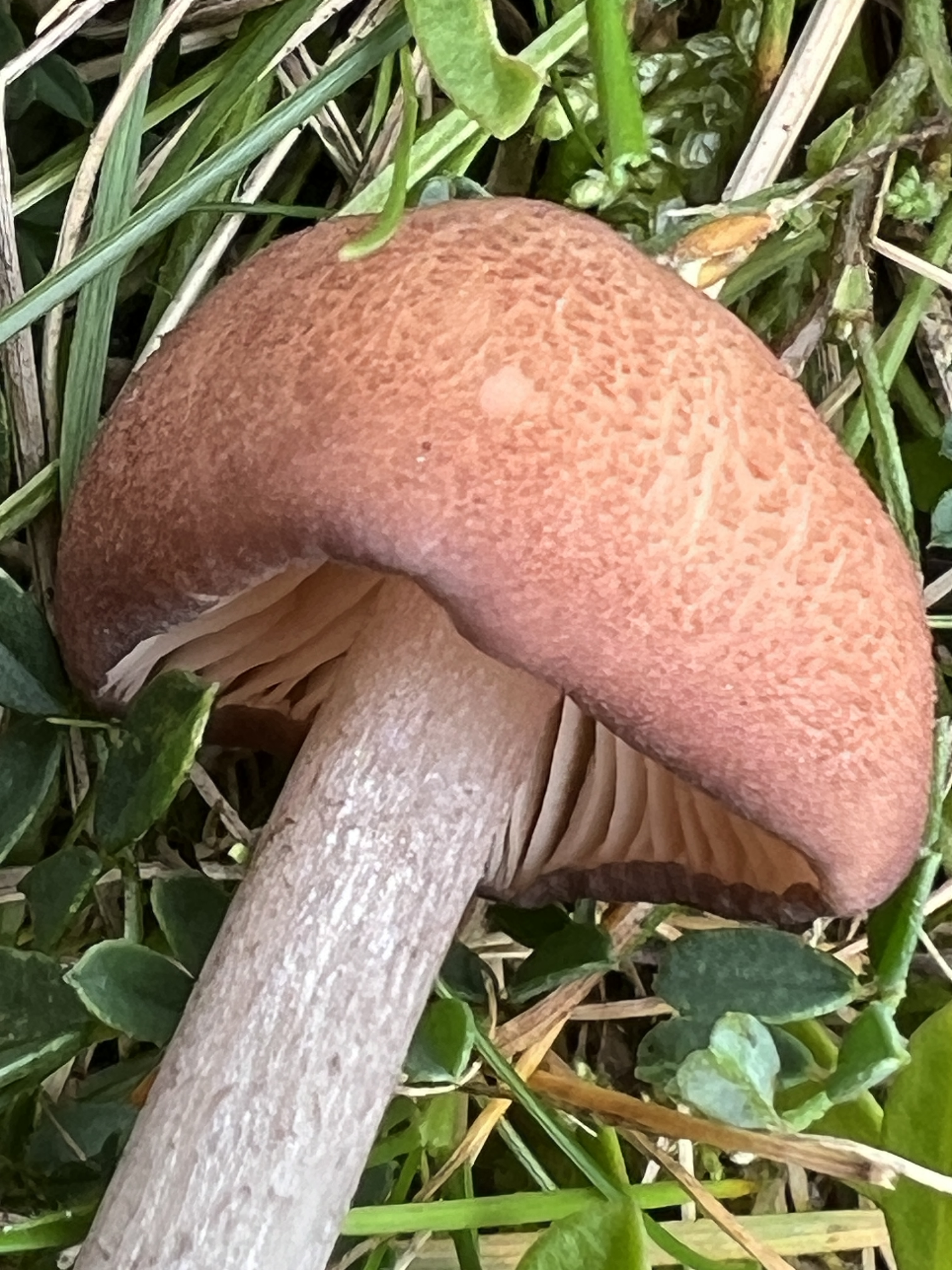
Entoloma catalaunicum (Cotswolds, England), sequenced specimen. Image © Simon Harding
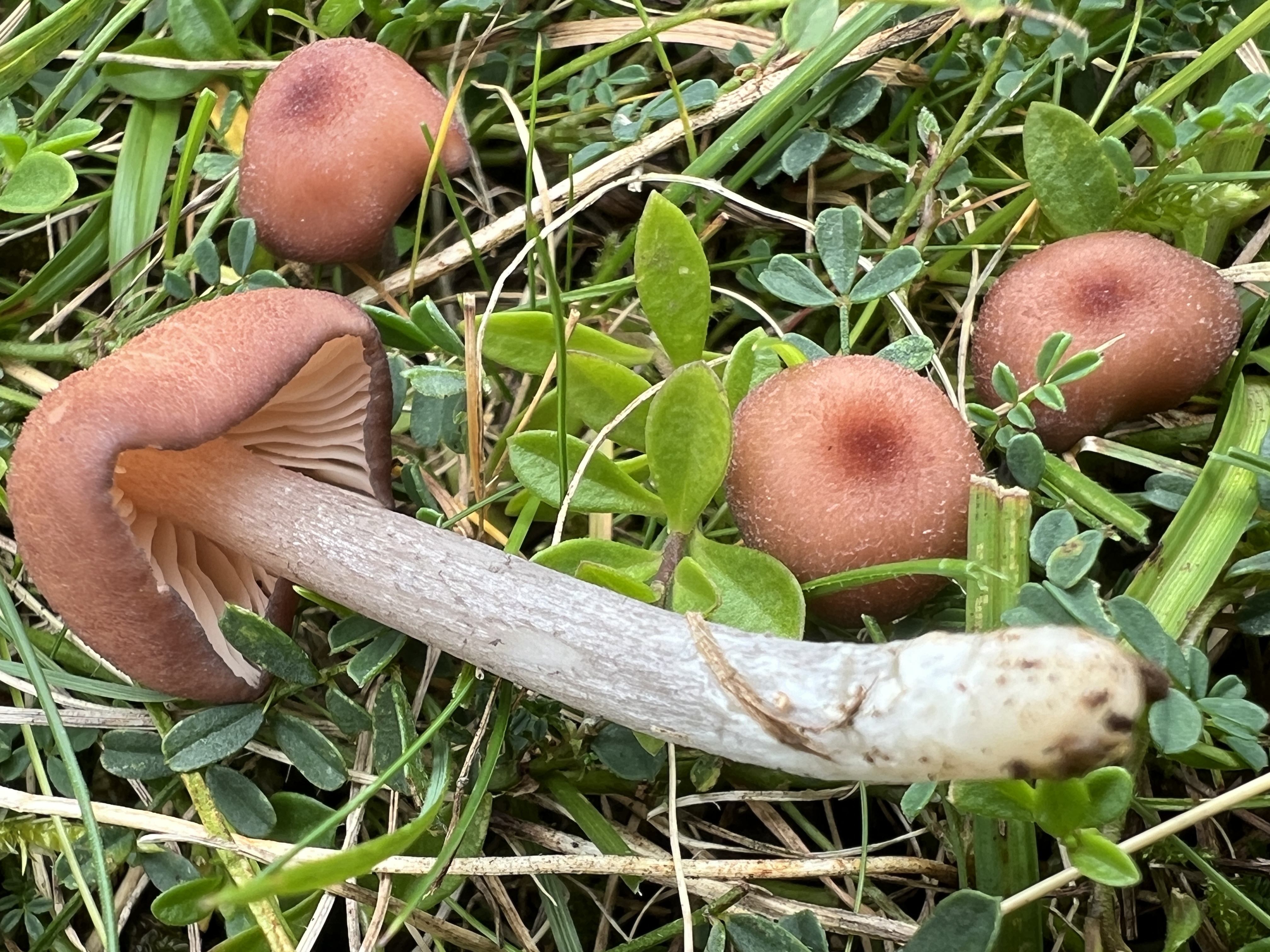
Entoloma catalaunicum (Cotswolds, England), sequenced specimen. Image © Simon Harding
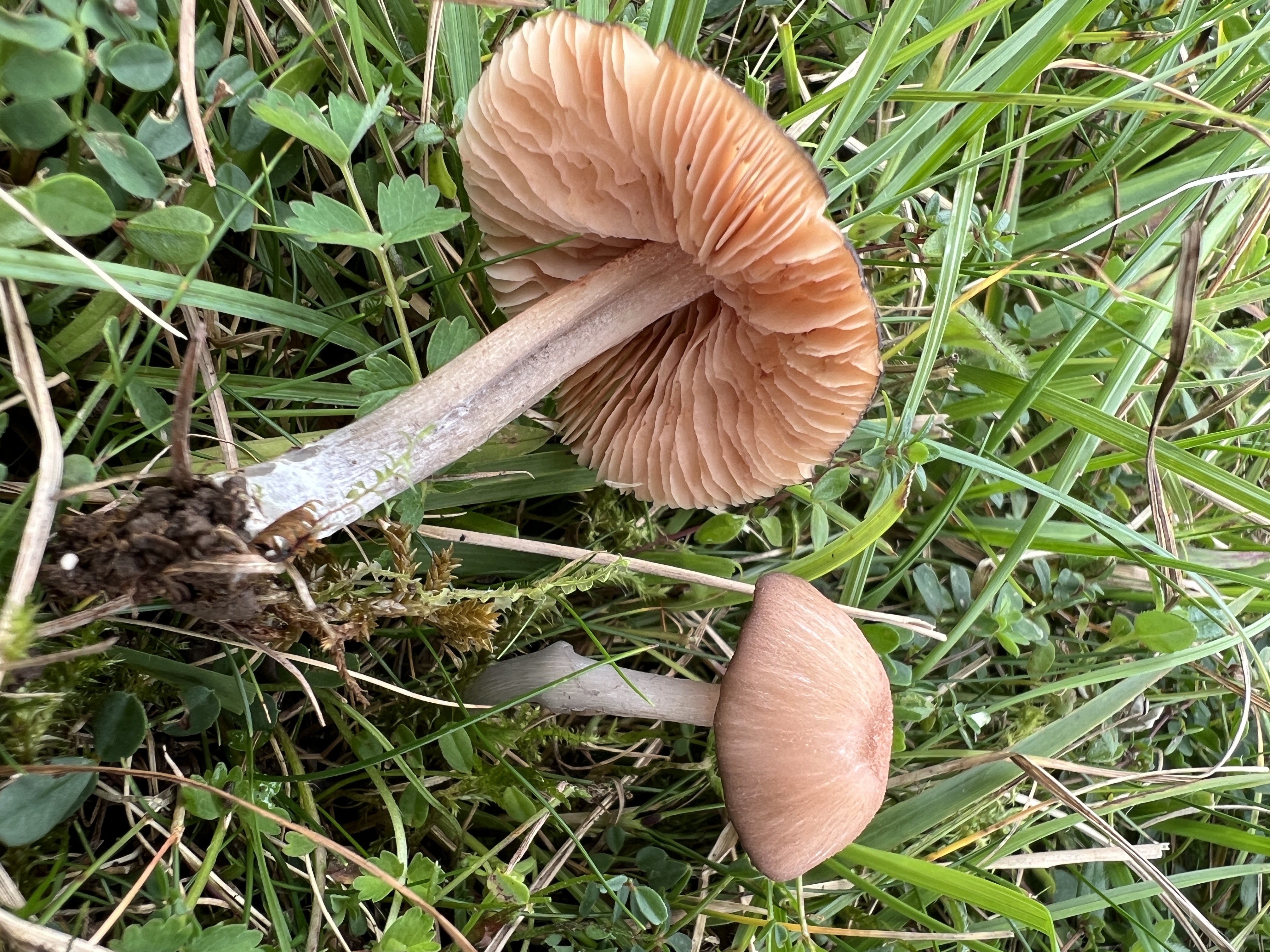
Entoloma catalaunicum (Cotswolds, England), sequenced specimen. Image © Simon Harding
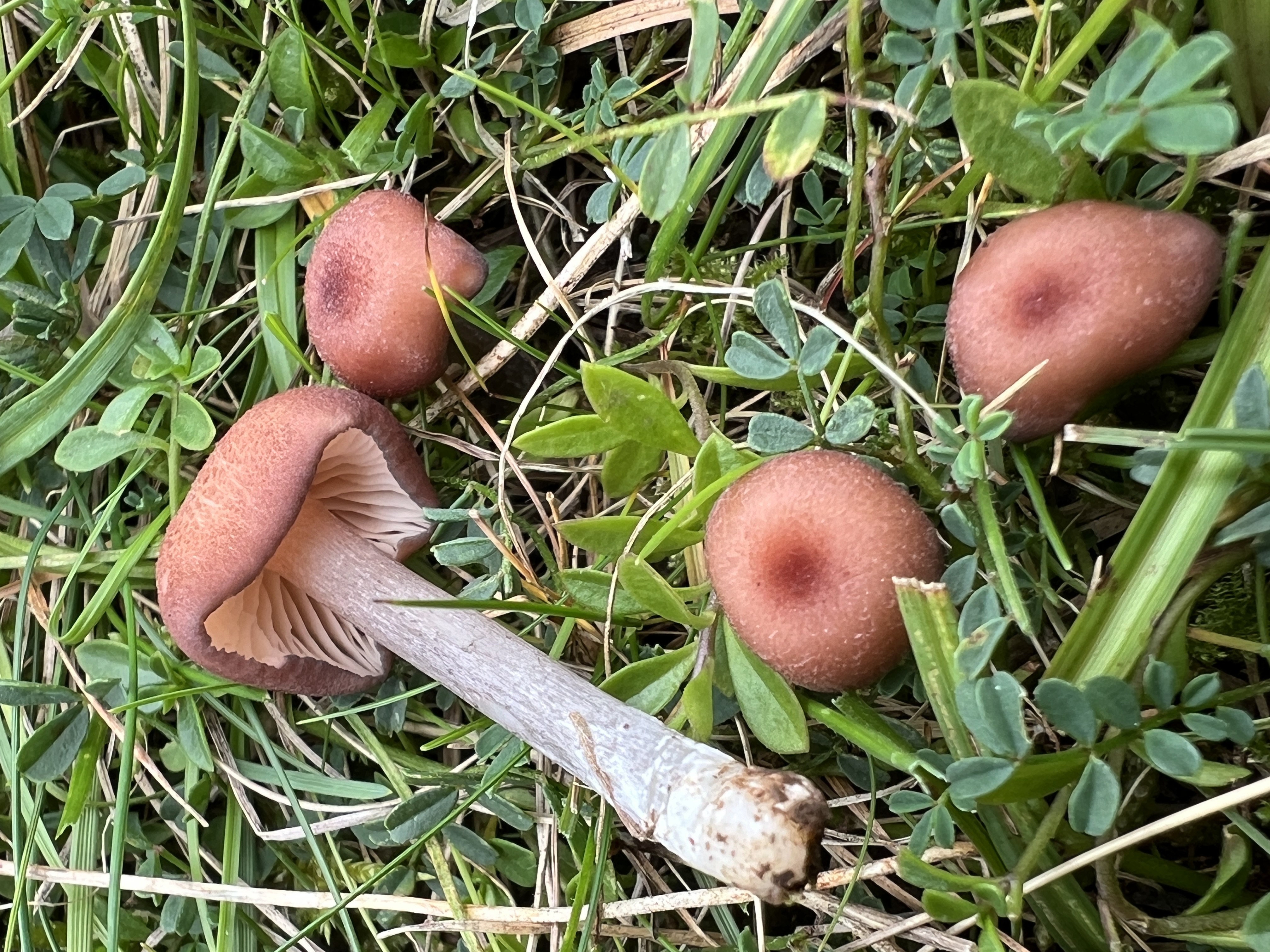
Entoloma catalaunicum (Cotswolds, England), sequenced specimen. Image © Simon Harding
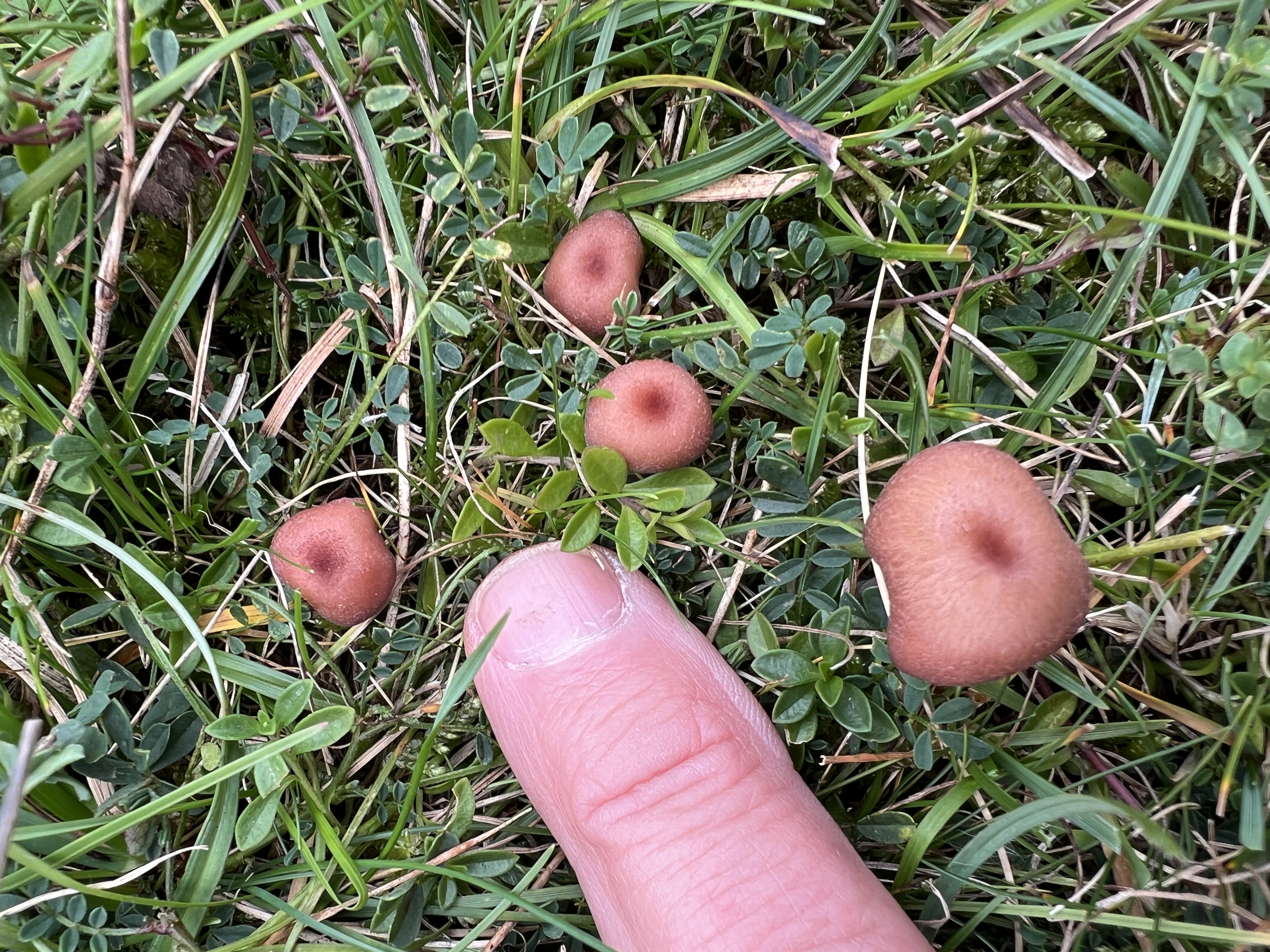
Entoloma catalaunicum (Cotswolds, England), sequenced specimen. Image © Simon Harding
Country occurrence
Regional Population and Trends
| Country | Trend | Redlisted |
|---|