- Proposed
- 2Under Assessment
- 3Preliminary Assessed
- 4Assessed
- 5Published
Entoloma inopiliforme Bon
- Scientific name
- Entoloma inopiliforme
- Author
- Bon
- Common names
- IUCN Specialist Group
 Mushroom, Bracket and Puffball
- Kingdom
- Fungi
- Phylum
- Basidiomycota
- Class
- Agaricomycetes
- Order
- Agaricales
- Family
- Entolomataceae
- Assessment status
- Proposed
- Proposed by
- Simon Harding
- Comments etc.
- Simon Harding
Assessment Notes
Taxonomic notes
Entoloma inopiliforme was originally described by Bon, the name referring to its somewhat Inocybe-like appearance (“inopiliforme” meaning Inocybe‑shaped). The species was long misunderstood and often placed in synonymy with E. prunuloides, and an earlier name, E. inocybiforme Bon, was ruled illegitimate due to homonymy. For many years it was confused within the broad bloxamii complex, with historical records frequently misapplied to E. bloxamii sensu lato and related blue‑grey taxa. This confusion persisted until recent molecular work in the /Prunuloides clade (sect. Madida) clarified species limits (Persoonia 2026): sequenced material shows that E. inopiliforme forms a well‑supported sister clade to E. luteobasis, clearly distinct from E. bloxamii s. str. and other taxa in the group. The holotype could not be sequenced, but an epitype has been designated to stabilise the modern concept. Only sequenced or morphologically well‑documented material can be reliably assigned. The taxonomy is now stable, and the species is recognised by its molecular profile together with its grey‑brown, slightly fibrillose cap and typical spore morphology; stipe and gill colours show some natural variation within the expected range for the group.
Why suggested for a Global Red List Assessment?
Entoloma inopiliforme is a genuinely rare grassland specialist known from very few confirmed sites across Europe. The taxonomy is now stable, and recent sequencing has clarified its identity, revealing a severely fragmented distribution and extremely low frequency even in well‑surveyed, long‑established calcareous grasslands. The species depends on semi‑natural, nutrient‑poor grasslands that have undergone long‑term and ongoing decline across Europe. These factors together indicate that the species faces a real risk of extinction and clearly warrants at least a Vulnerable listing, with the combination of severe fragmentation, very few localities and continuing habitat decline suggesting that a higher threat category may also be appropriate.
Geographic range
Entoloma inopiliforme has a narrow and scattered European distribution. The species is confirmed from Austria, France, Germany, Hungary, Italy and the Netherlands, based on the reinstated and amended circumscription published in 2026. These records indicate a preference for long‑established, nutrient‑poor calcareous grasslands within temperate Europe.
In the United Kingdom, the species has been confirmed by two sequenced collections, both sequenced by B. Douglas: one from south‑west England (2018) and one from Lundy Island. These represent the first verified national records and extend the known range to the western edge of Europe. No historical or additional unsequenced records are currently included.
The overall distribution remains highly fragmented, with few confirmed records across all countries where it occurs. The species appears to be genuinely scarce throughout its range, although the true number of occupied sites is uncertain due to limited survey effort and the recent clarification of its taxonomy.
Population and Trends
Entoloma inopiliforme is known from a small number of confirmed records across Europe, and the true population size remains unknown. The species appears to be genuinely rare throughout its range: it is a conspicuous, medium‑sized Entoloma that is unlikely to be overlooked when present, and its scarcity is therefore interpreted as real rather than an artefact of detectability. Some historical collections may have been assigned to other members of the bloxamii group before the taxonomy was clarified, but this is unlikely to mask a substantial hidden population.
Given its strong association with long‑established, nutrient‑poor calcareous grasslands, it is likely that the species has experienced declines in line with the widespread historical and ongoing loss of these habitats across Europe. However, the magnitude of any population change remains uncertain due to the low number of verified records and the absence of long‑term monitoring data.
Population Trend: Decreasing
Habitat and Ecology
Entoloma inopiliforme is associated with long‑established, nutrient‑poor calcareous grasslands, typically on well‑drained, base‑rich soils. These habitats are often managed through low‑intensity grazing or traditional mowing regimes and support a characteristic assemblage of grassland fungi. The species appears to favour open, unimproved swards with a long continuity of low nutrient input.
Most confirmed records are from semi‑natural calcareous grasslands in temperate Europe. The designated epitype originates from a mixed forest with Castanea sativa, Populus tremula and Quercus pubescens, but this is considered atypical and does not alter the primary ecological association with grassland habitats. Fruiting is typically observed in autumn.
As with many grassland Entoloma species, the precise ecological role is not fully understood, but it is presumed to be saprotrophic within stable, low‑productivity grassland systems. The species is sensitive to nutrient enrichment, soil disturbance, and the loss or degradation of long‑established grassland structure.
Threats
Entoloma inopiliforme is dependent on long‑established, nutrient‑poor calcareous grasslands, a habitat type that has undergone major historical and ongoing declines across Europe. Key pressures include agricultural intensification, fertiliser enrichment, reseeding, ploughing, and conversion to improved pasture, all of which reduce the extent and quality of semi‑natural grassland. In many regions, abandonment of traditional low‑intensity management has led to progressive scrub encroachment and the loss of open grassland structure required by nutrient‑sensitive grassland fungi. Additional pressures include tree planting on former grasslands and atmospheric nitrogen deposition, which contributes to gradual nutrient enrichment and shifts in soil chemistry unfavourable to this species. Fragmentation of remaining high‑quality sites further limits dispersal and increases vulnerability to localised change. Because the species appears genuinely rare and is known from few confirmed localities, any further loss or degradation of semi‑natural calcareous grasslands is likely to have a disproportionate impact on its already small and fragmented population.
Conservation Actions
No conservation actions are currently targeted specifically at Entoloma inopiliforme. However, the species benefits from the protection and appropriate management of semi‑natural calcareous grasslands, including maintenance of low nutrient status, prevention of scrub encroachment, and avoidance of fertiliser application, reseeding, or other forms of agricultural improvement. Many known sites fall within areas managed for biodiversity, but long‑term security depends on continued support for traditional low‑intensity grazing or mowing regimes that maintain open, structurally diverse swards.
Further actions that would support the species include improved survey coverage of high‑quality calcareous grasslands, particularly in regions where historical records require confirmation. Molecular verification of ambiguous or older collections is important following recent taxonomic clarification, and continued refinement of its distribution, habitat associations, and ecological requirements will help guide future conservation planning.
Research needed
Further research would refine knowledge of the species but is not required to establish its conservation status. The situation for Entoloma inopiliforme is already clear: the taxonomy is now stable, the species is genuinely rare, its habitat is in long‑term decline, the distribution is fragmented, and the number of confirmed sites is very low. Targeted surveys of high‑quality calcareous grasslands may identify additional localities, particularly in regions where the bloxamii group has been under‑recorded. Molecular confirmation of historical or ambiguous collections would help refine its full distribution. Additional ecological study—particularly regarding trophic mode and sensitivity to nutrient enrichment—would support long‑term monitoring and management.
Use and Trade
There is no known use or trade of this species.
Bibliography
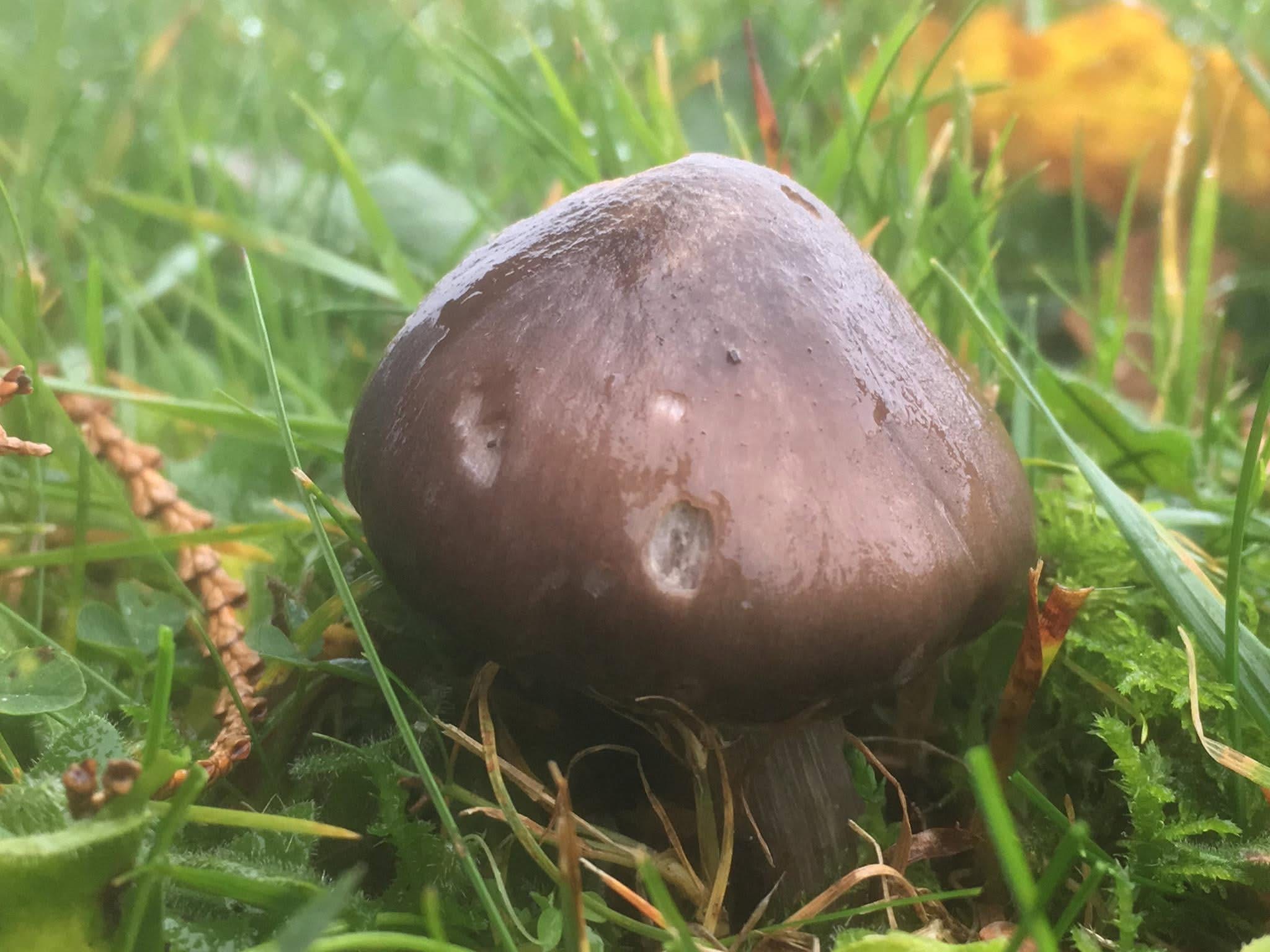
Entoloma inopiliforme, South West England (sequenced). Image © Simon Harding.
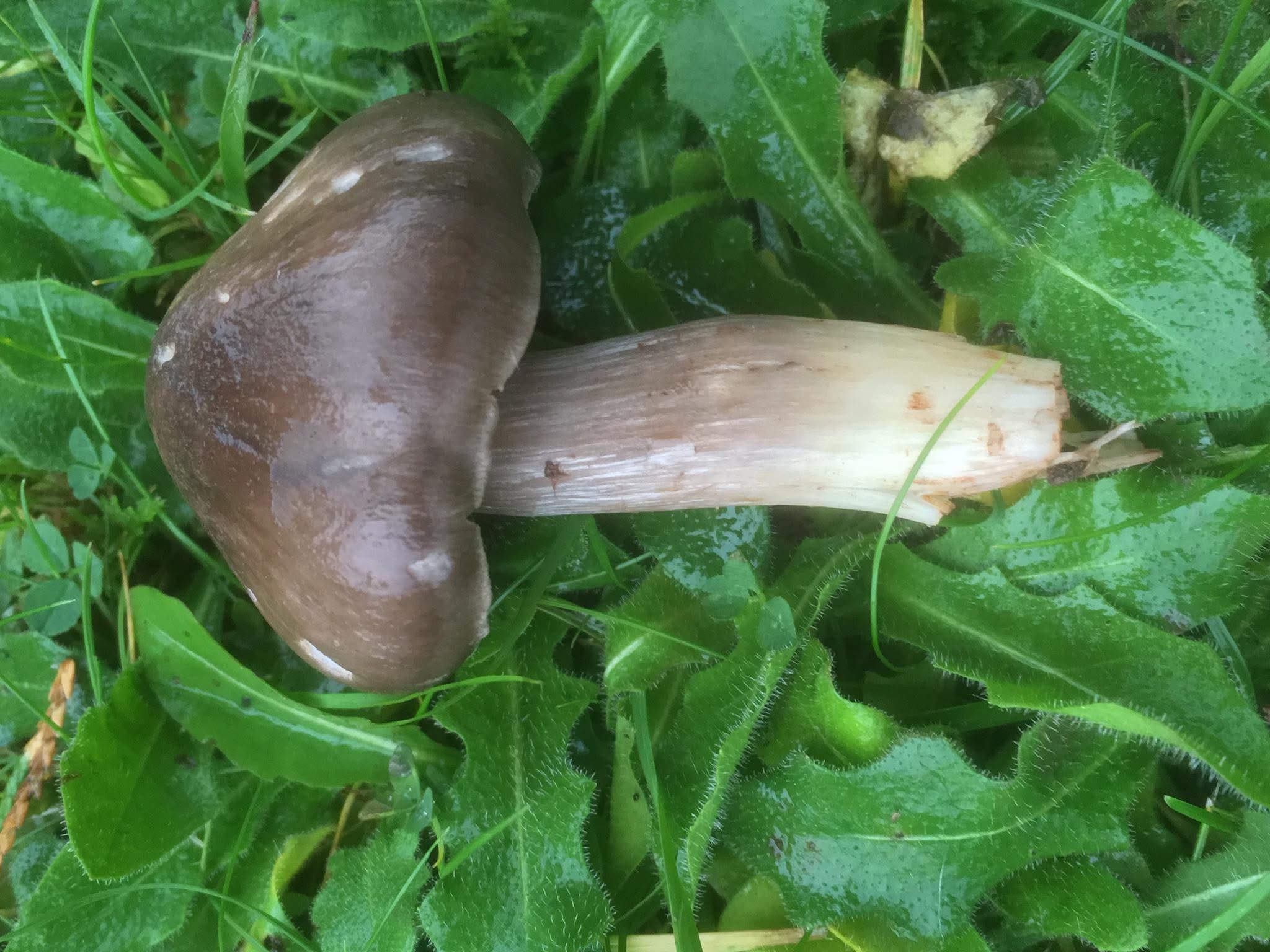
Entoloma inopiliforme, South West England (sequenced). Image © Simon Harding.
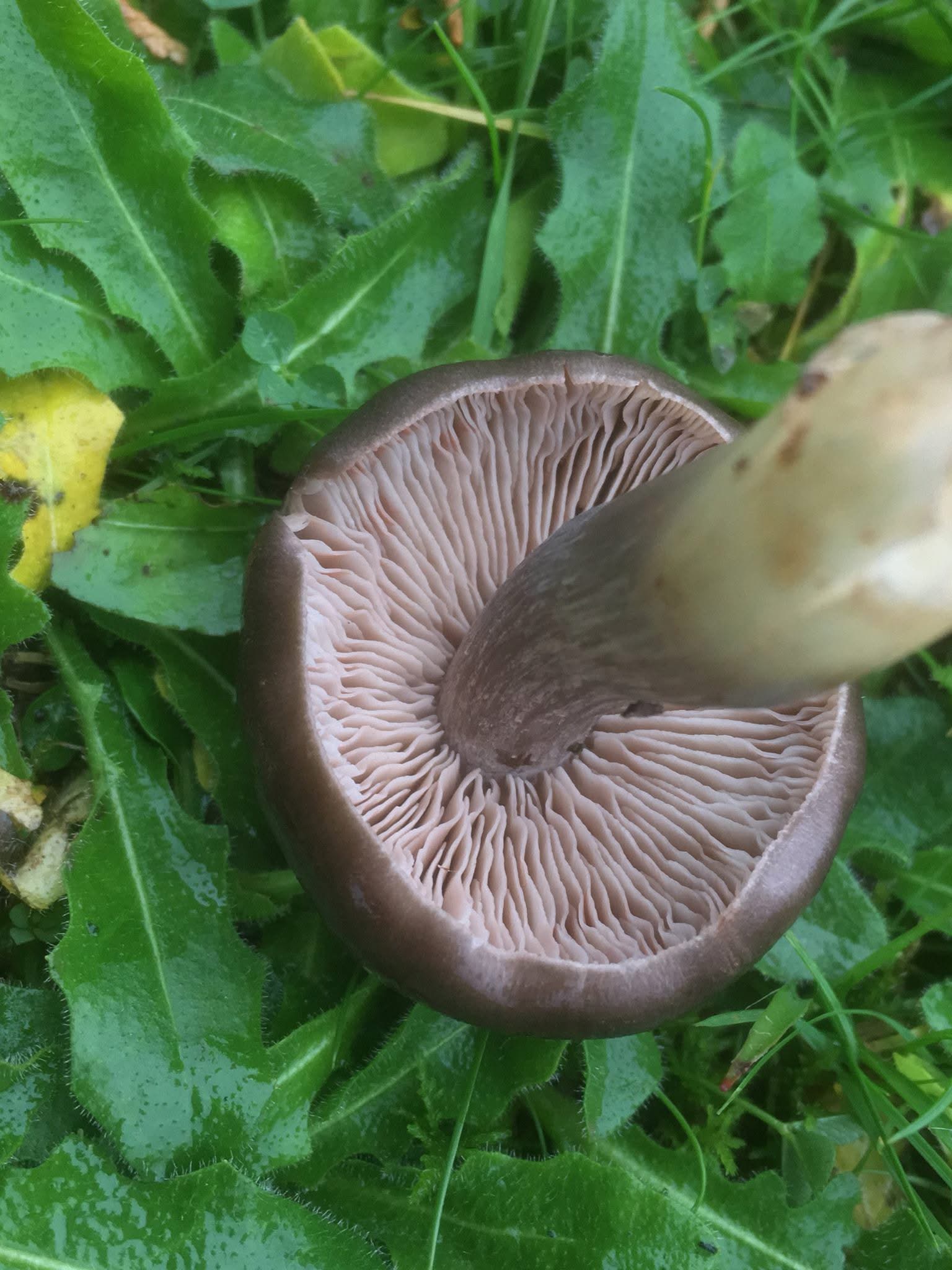
Entoloma inopiliforme, South West England (sequenced). Image © Simon Harding.
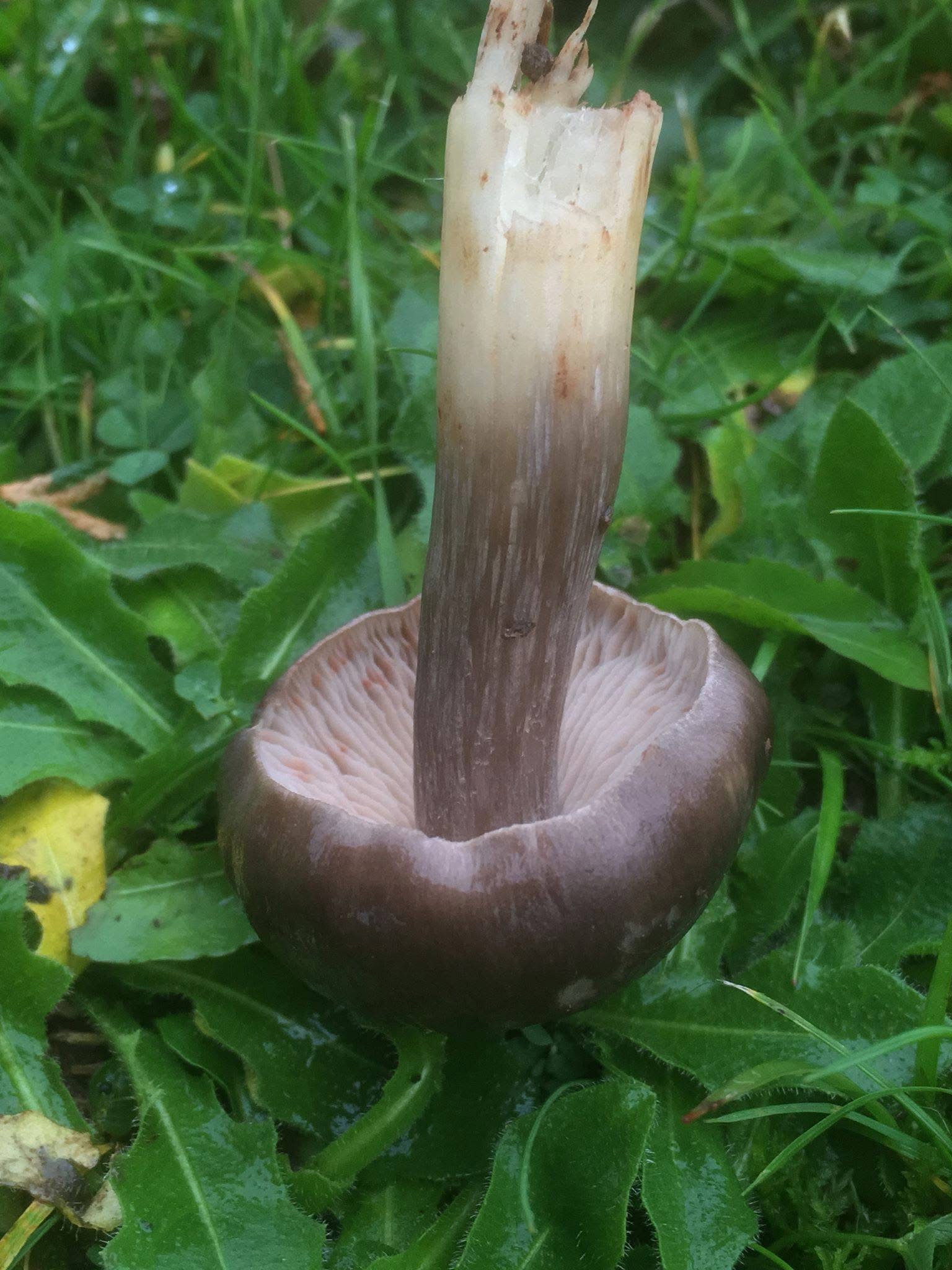
Entoloma inopiliforme, South West England (sequenced). Image © Simon Harding.
Country occurrence
Regional Population and Trends
| Country | Trend | Redlisted |
|---|