- Proposed
- Under Assessment
- Preliminary Assessed
- Assessed
- DDPublished
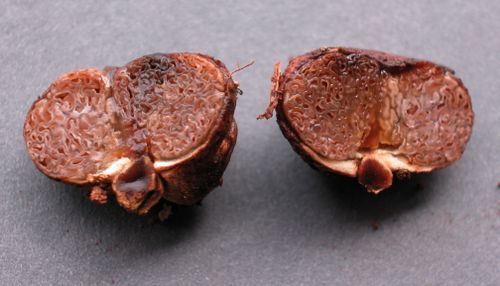
Castellanea pakaraimophila T.W. Henkel & M.E. Sm.
Search for another species...
- Scientific name
- Castellanea pakaraimophila
- Author
- T.W. Henkel & M.E. Sm.
- Common names
- IUCN Specialist Group
 Mushroom, Bracket and Puffball
- Kingdom
- Fungi
- Phylum
- Basidiomycota
- Class
- Agaricomycetes
- Order
- Boletales
- Family
- Boletaceae
- Assessment status
- Published
- Assessment date
- 2023-05-15
- IUCN Red List Category
- DD
- Assessors
- Susana C. Gonçalves; Susana Cunha (RBG Kew and University of Coimbrta, Portugal)
- Reviewers
- Gregory Mueller (Chicago Botanic Garden / IUCN SSC Mushroom, Bracket and Puffball Specialist Group)
Assessment Notes
The content on this page is fetched from The IUCN Red List of Threatened Species: https://www.iucnredlist.org/species/266001187/266020360
Justification
Castellanea pakaraimophila is an ectomychorrizal species known from only one site in South America. Without targeted search efforts and research into its host and habitat preference it is not possible to determine the conservation status of this species, so it is assessed as Data Deficient (DD).Taxonomic notes
Castellanea pakaraimophila is the type and, so far, only species in the Castellanea genus, established in 2015 based on the morphological and molecular data (Smith et al. 2015).Geographic range
This species has been recorded from a single location in the Upper Mazaruni River Basin of Guyana, in South America. Pakaraimaea dipterocarpacea, its only known host, is only found in Guyana and Venezuela (POWO 2023) which may limit the distribution of Castellanea pakaraimophila.Population and Trends
Castellanea pakaraimophila is so far only known from one site in Guyana. The number of records for this species is likely limited by its inconspicuous and hypogeous fruitbodies, and further research is needed to estimate its population size.
Population Trend: Unknown