- Proposed
- Under Assessment
- Preliminary Assessed
- Assessed
- DDPublished
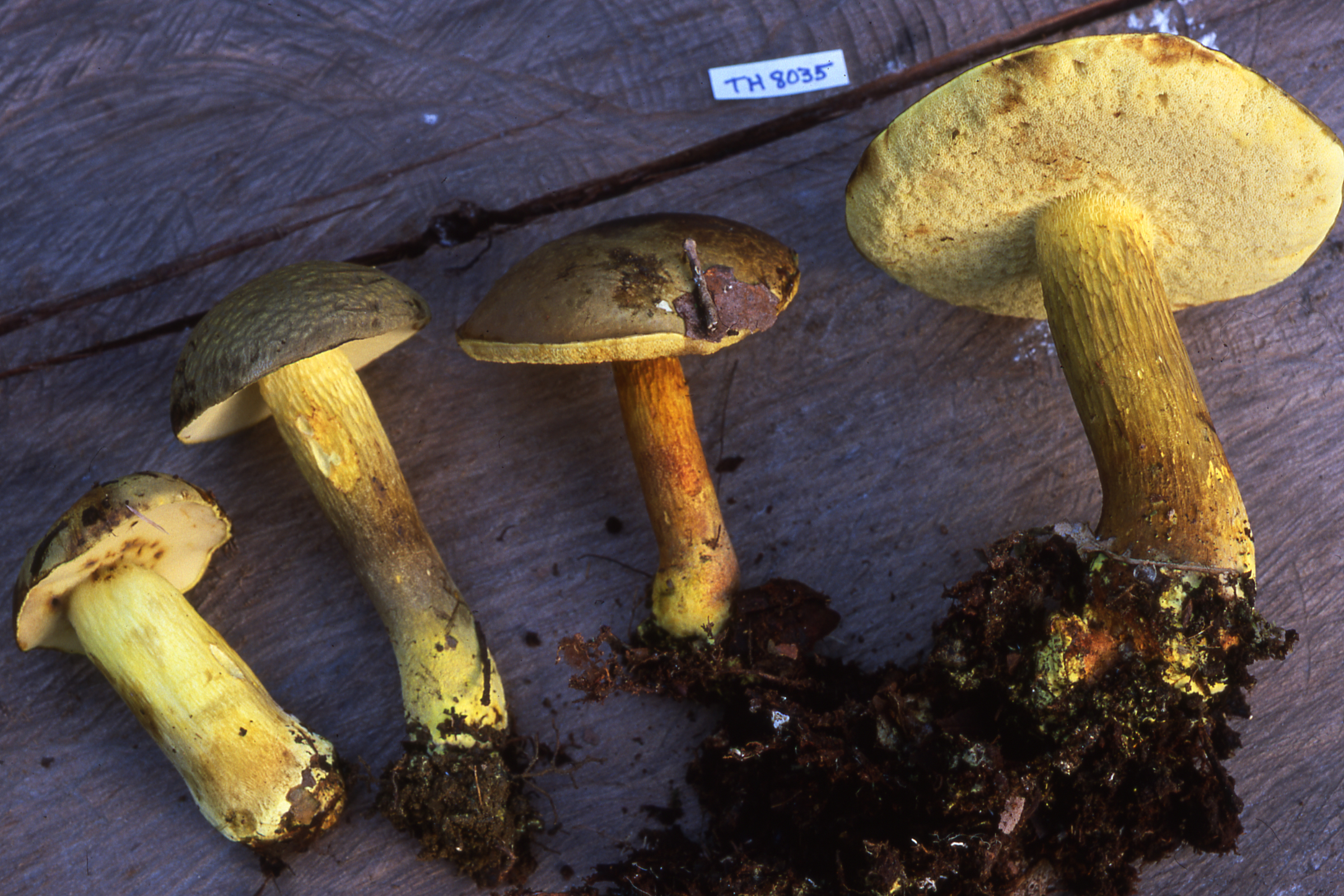
Binderoboletus segoi T.W. Henkel & Husbands
Search for another species...
- Scientific name
- Binderoboletus segoi
- Author
- T.W. Henkel & Husbands
- Common names
- IUCN Specialist Group
 Mushroom, Bracket and Puffball
- Kingdom
- Fungi
- Phylum
- Basidiomycota
- Class
- Agaricomycetes
- Order
- Boletales
- Family
- Boletaceae
- Assessment status
- Published
- Assessment date
- 2020-04-01
- IUCN Red List Category
- DD
- Assessors
- Bryn Dentinger (Natural Historla Museum Utah & University of Utah); Terry Henkel; Matthew Smith
- Reviewers
- Giuliana Furci (Fundación Fungi, Chile); Gregory Mueller (Chicago Botanic Garden / IUCN SSC Mushroom, Bracket and Puffball Specialist Group)
Assessment Notes
The content on this page is fetched from The IUCN Red List of Threatened Species: https://www.iucnredlist.org/species/172741586/172861242
Justification
This species is known from two sites in Guyana, where a tiny fraction of its possible suitable habitat has been surveyed. Potential host plants occur in a large region encompassing parts of Venezuela, northern Brazil and south-east Colombia. This entire region is very under-sampled, being very remote and completely unsurveyed. In total approximately 0.002% of its potential suitable habitat has been surveyed for fungi. Increasing threats from timber and mineral extraction, and land use changes are anticipated, with the potential for these to be rapid if further road construction occurs. However, it is not possible to estimate population size or trends, extent of occurrence, or area of occupancy. It is, therefore, assessed as Data Deficient, and further survey work in this region is urgently needed.Taxonomic notes
At present it is classified within its own genus, but this may change when the phylogeny of the family stabilizes (Henkel et al. 2016).Geographic range
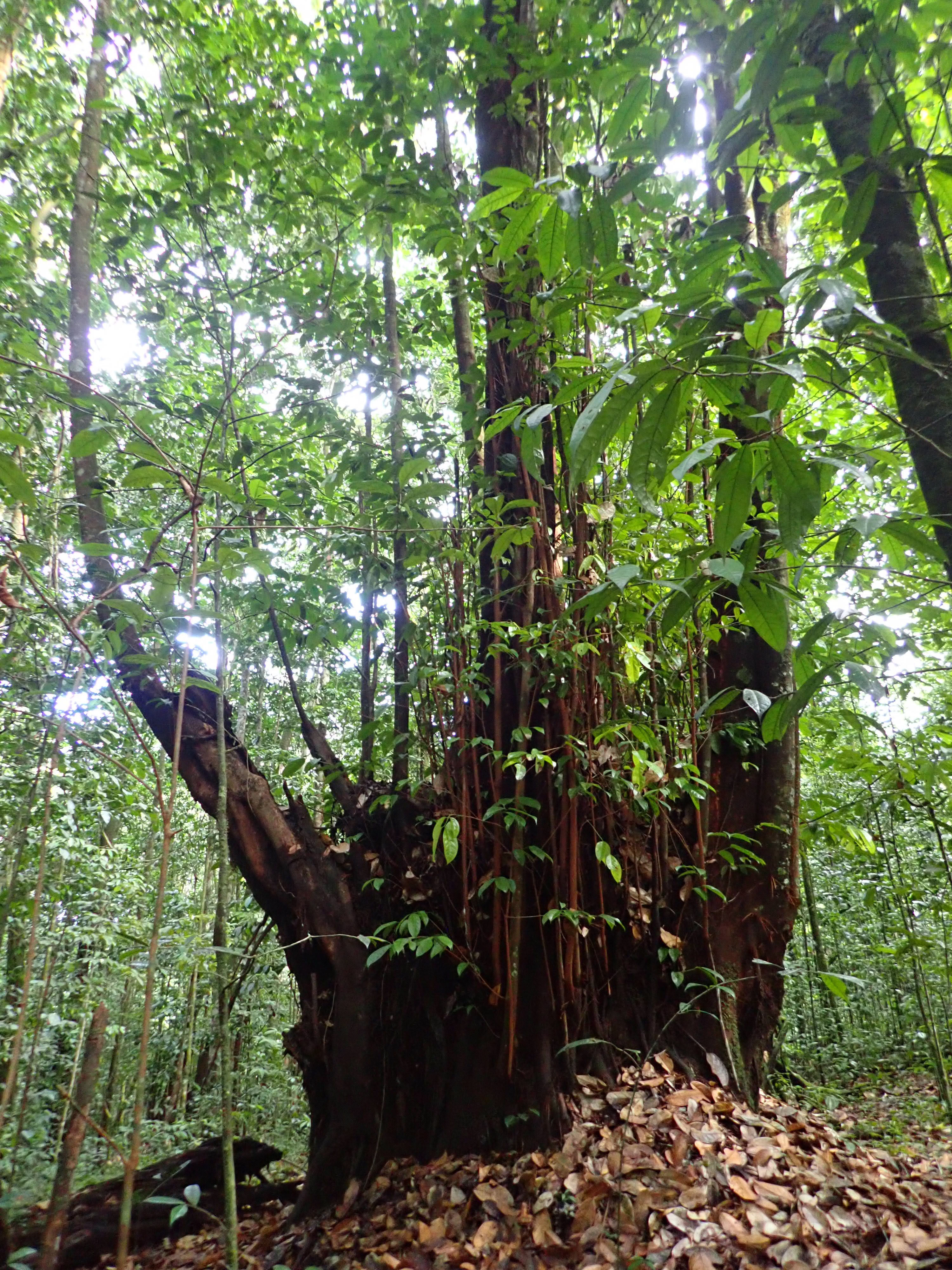
Its currently known distribution is restricted to Dicymbe-dominated forests in the Guiana Shield region where it is known from eight collections at two sites: Site 1: Pakaraima Mountains, Upper Potaro River Basin, within 5 km radius of Potaro base camp at 5.30133333, -59.91111111, 710-750 m; 3.5 km south-west of Potaro base camp near Dicymbe plot 3; vicinity of base camp; 4 km upstream from Ayanganna airstrip; 4 km southwest of base camp near Dicymbe plot 3; 1 km west of base camp under D. corymbosa; 0.5 km south of base camp at Blackwater Point; 15 km east of Potaro base camp near Tadang base camp in mixed D. corymbosa-D. altsonii-Aldina insignis forest; and the vicinity of Tadang base camp. Site 2: Mabura Ecological Reserve, field station at 5.1527778, -58.69972222, ~100 m; and ~4 km northwest of Mabura field station in D. altsonii monodominant plot 3.This entire region is very under-sampled, and there are areas in neighbouring Venezuela, northern Brazil and south-east Colombia with similar habitats but which are very remote and completely unsurveyed.
Population and Trends
It is presently known only from eight collections, representing 8 genets (at least 16 ramets). Henkel et al. (2012) reported a 1% incidence of the species over a 7 year plot survey. It appears sporadically and was recorded every 3-4 yrs during surveys from 2001-2011. This three hectare study site is the only site surveyed for fungi out of a very large area (approximately 500,000 km2) where Dicymbe occurs in north tropical South America. It is therefore impossible to estimate its population size or trends with any degree of confidence.
Population Trend: Unknown