- Proposed
- Under Assessment
- Preliminary Assessed
- Assessed
- NTPublished
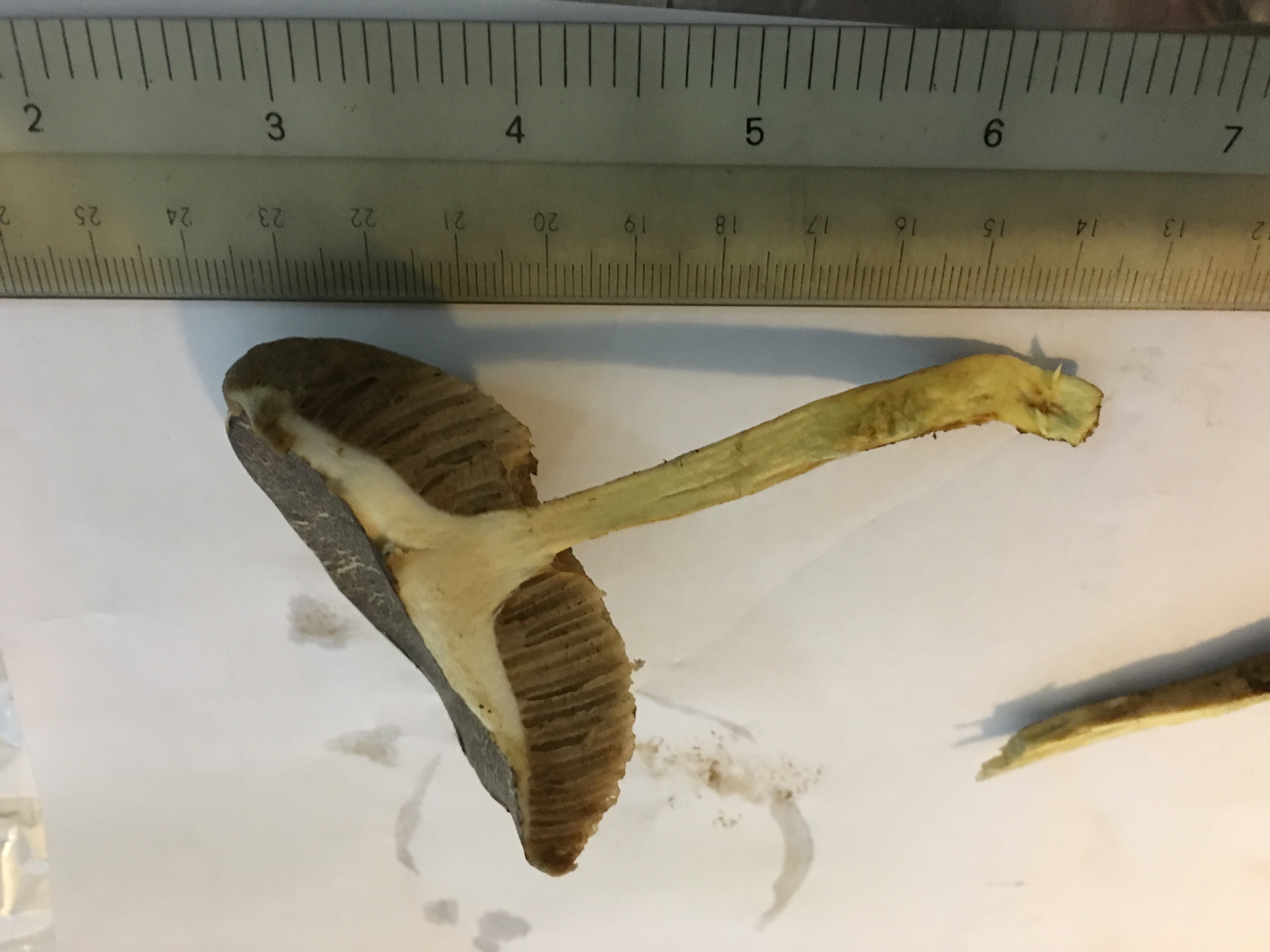
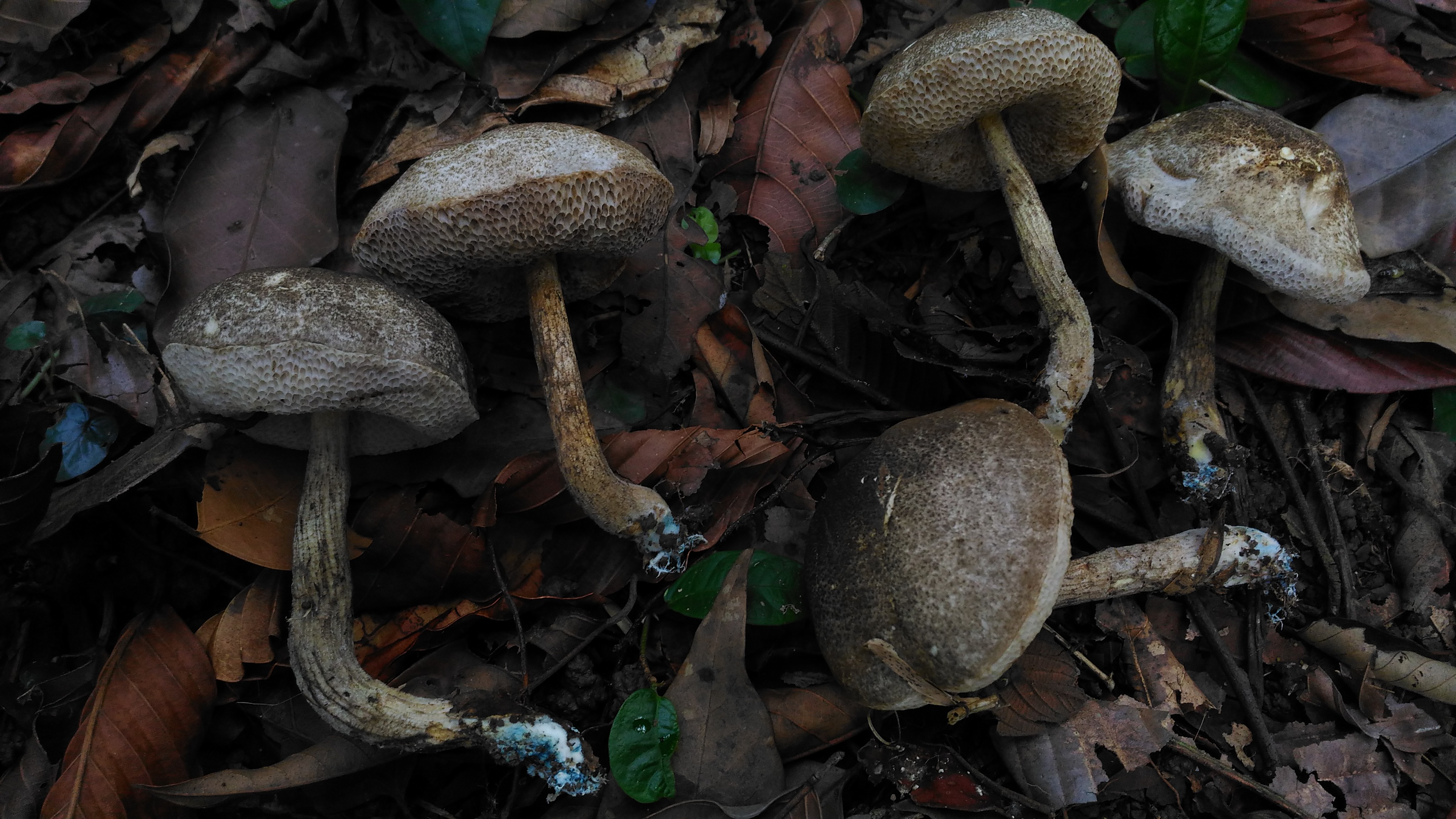
Spongispora temasekensis G. Wu, S.M.L. Lee, E. Horak & Zhu L. Yang
- Scientific name
- Spongispora temasekensis
- Author
- G. Wu, S.M.L. Lee, E. Horak & Zhu L. Yang
- Common names
- IUCN Specialist Group
 Mushroom, Bracket and Puffball
- Kingdom
- Fungi
- Phylum
- Basidiomycota
- Class
- Agaricomycetes
- Order
- Boletales
- Family
- Boletaceae
- Assessment status
- Published
- Assessment date
- 2025-11-04
- IUCN Red List Category
- NT
- IUCN Red List Criteria
- A2c
- Assessors
- Amy Choong; Susana Cunha (RBG Kew and University of Coimbrta, Portugal)
- Reviewers
- Gregory Mueller (Chicago Botanic Garden / IUCN SSC Mushroom, Bracket and Puffball Specialist Group)
Assessment Notes
Justification
Spongispora temasekensis is a recently described ectomycorrhizal species from Singapore and Peninsular Malaysia. The paucity of records suggests this is not a common species, but further research is needed to better establish the distribution, population size and trends. Although the deforestation rate in the region has decreased in recent years, it is ongoing and the population reduction is estimated at 20% for the past 50 years (three generations), near the thresholds for the Vulnerable category, under criterion A2c. Therefore, this species is precautionarily assessed as Near Threatened.Taxonomic notes
Described for the first time in 2018 under the monotypic genus Spongispora, based on morphological and phylogenetic evidence (Wu et al. 2018).Geographic range
This species is so far only known from Singapore and peninsular Malaysia. In Singapore, it has been recorded in the Singapore Botanic Gardens and Bukit Batok Nature Park (Qiang et al. 2023), but unconfirmed records from iNaturalist (2025) suggest it may occur in other urban parks in the country. In peninsular Malaysia it has been found at the Forest Research Institute Malaysia (FRIM) Research Station, Bidor, Perak and at the Forest Research Institute Malaysia at Kepong, Selangor (Sanusi et al. 2020).Population and Trends
This species is known from four sites in total, two in Singapore and two in peninsular Malaysia. The distance between known sites suggests it may have a wider distribution in the region, and be under-recorded because of its recent description in 2020. However, it does not appear to grow under young trees or to be very frequent, as it was only detected in two out of five parks surveyed in Singapore (Qiang et al. 2023). Its potential area of habitat is also constrained by large areas of palm oil plantations. Therefore, based on the currently available information, population size is estimated at 6,000 individuals, by applying a multiplier of 50 to account for unknown localities and assuming three functional individuals exist per locality, each corresponding to 10 mature individuals, following guidelines by Dahlberg and Mueller (2011). However, further research is needed to better estimate the population size. Based on estimates of forest loss for Peninsular Malaysia of approximately 27% between 1970 and 2010, and assuming an annual loss rate of 0.1% has remained constant since (Miyamoto 2014), we calculate a loss of 20% of the habitat area and a similar reduction in population for the 50 year period between 1975 and 2025 (3 generations for ectomycorrhizal fungi).
Population Trend: Decreasing