- Proposed
- Under Assessment
- Preliminary Assessed
- Assessed
- NTPublished
Clavulina ossea Meiras-Ottoni & Gibertoni
- Scientific name
- Clavulina ossea
- Author
- Meiras-Ottoni & Gibertoni
- Common names
- IUCN Specialist Group
 Mushroom, Bracket and Puffball
- Kingdom
- Fungi
- Phylum
- Basidiomycota
- Class
- Agaricomycetes
- Order
- Cantharellales
- Family
- Hydnaceae
- Assessment status
- Published
- Assessment date
- 2024-02-21
- IUCN Red List Category
- NT
- IUCN Red List Criteria
- A2c+3c+4c
- Assessors
- Maria Alice Neves; Nelson Menolli Jr; Maria Eduarda de Andrade Borges; Denis Zabin; Angelina de Meiras-Ottoni; Lara Ferst; Thiago Kossmann
- Reviewers
- Gregory Mueller (Chicago Botanic Garden / IUCN SSC Mushroom, Bracket and Puffball Specialist Group); E. Ricardo Drechsler-Santos; Kelmer Martins da Cunha
Assessment Notes
Justification
Clavulina ossea is a, presumed ectomycorrhizal, species growing solitarily to scattered in small clusters on the forest floor, but is not commonly collected due at least in part to the dull colours of the basidiomes and the scarcity of specialists in coralloid fungi in Brazil. This species is known only from four sites in Brazil distributed in the Atlantic Forest, the transition between the Atlantic Forest and Caatinga, and ‘brejos de altitude’ (submontane forest in the Caatinga). It is expected that C. ossea is distributed along the Atlantic Forest from south to northeast Brazil, and it also is likely to occur in less abundance throughout 'brejos de altitude' patches within the Caatinga. The Atlantic Forest is home to the largest urban centres in Brazil which has a documented habitat decline of more than 72% by the year 2020. The fragmentation and high loss of habitat in the Atlantic Forest are due to urbanization, industrialization, and agricultural expansion. Taking into consideration the distribution of C. ossea it is estimated that there are approximately 52,000 mature individuals. Based on the severe habitat loss of area and habitat quality it is a population decline of around 26% within the last three generations (50 years) is suspected, and this is expected to be continuing. The species is assessed as Near Threatened under criteria A2c+3c+4c.Geographic range
This species is known only from four sites in Brazil: one in Paraíba state (Areia, Mata do Pau-Ferro State Park), one in Alagoas state (Quebrangulo, Pedra Talhada Biological Reserve), and two in Santa Catarina state (Florianópolis, Mirante do Morro da Lagoa trail and Morro do Rapa trail), but it is likely to be found throughout the coastal Atlantic Forest of Brazil. The species is also expected to occur, in less abundance, throughout 'brejos de altitude' patches within the Caatinga, which are naturally fragmented formations resembling the Atlantic Forest physiognomy and plant species assemblage, restricted to higher altitude. Clavulina ossea can also be found in transition areas between the Caatinga and the Atlantic Forest.The distribution along the ‘brejos de altitude’ is poorly understood due to a lack of collections from these areas, and the difficulty of understanding and mapping the distribution of this environment. The ‘brejos de altitude’ are naturally fragmented and isolated patches of humid forest in the middle of a semi-arid region, surrounded by caatinga vegetation. It is estimated that it covers an area of about 2,626.68 km2 (data from 1993) (Tabarelli and Santos 2004), with 65 ‘brejos de altitude’ patches along the northeastern region of Brazil (Ramos et al. 2020). Due to conflicting data on the ‘brejos de altitude’ and since they are fragmented regions with similar climates and vegetation to the Atlantic Forest, it is believed that the majority of the C. ossea population is distributed throughout the Atlantic Forest.
Population and Trends
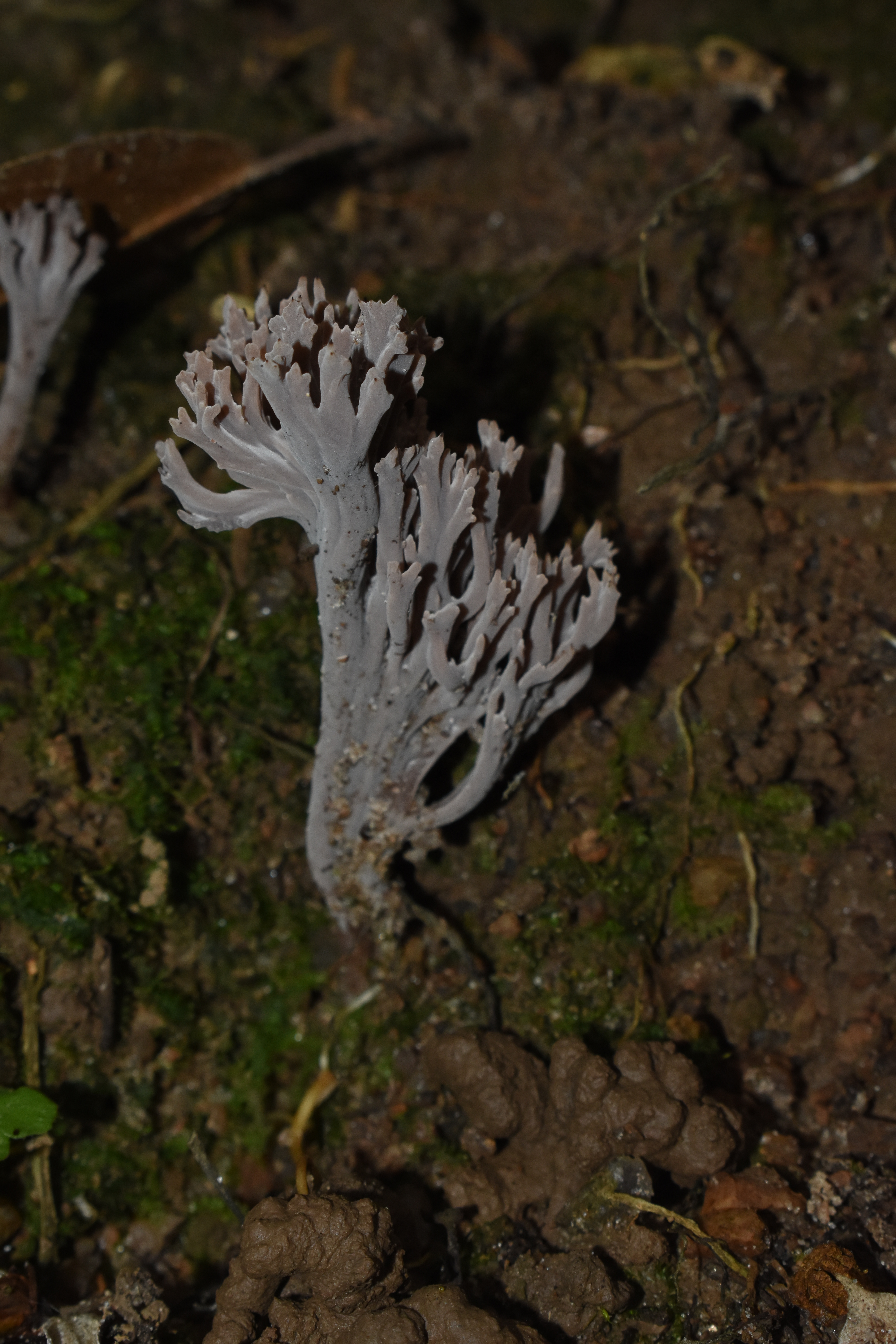
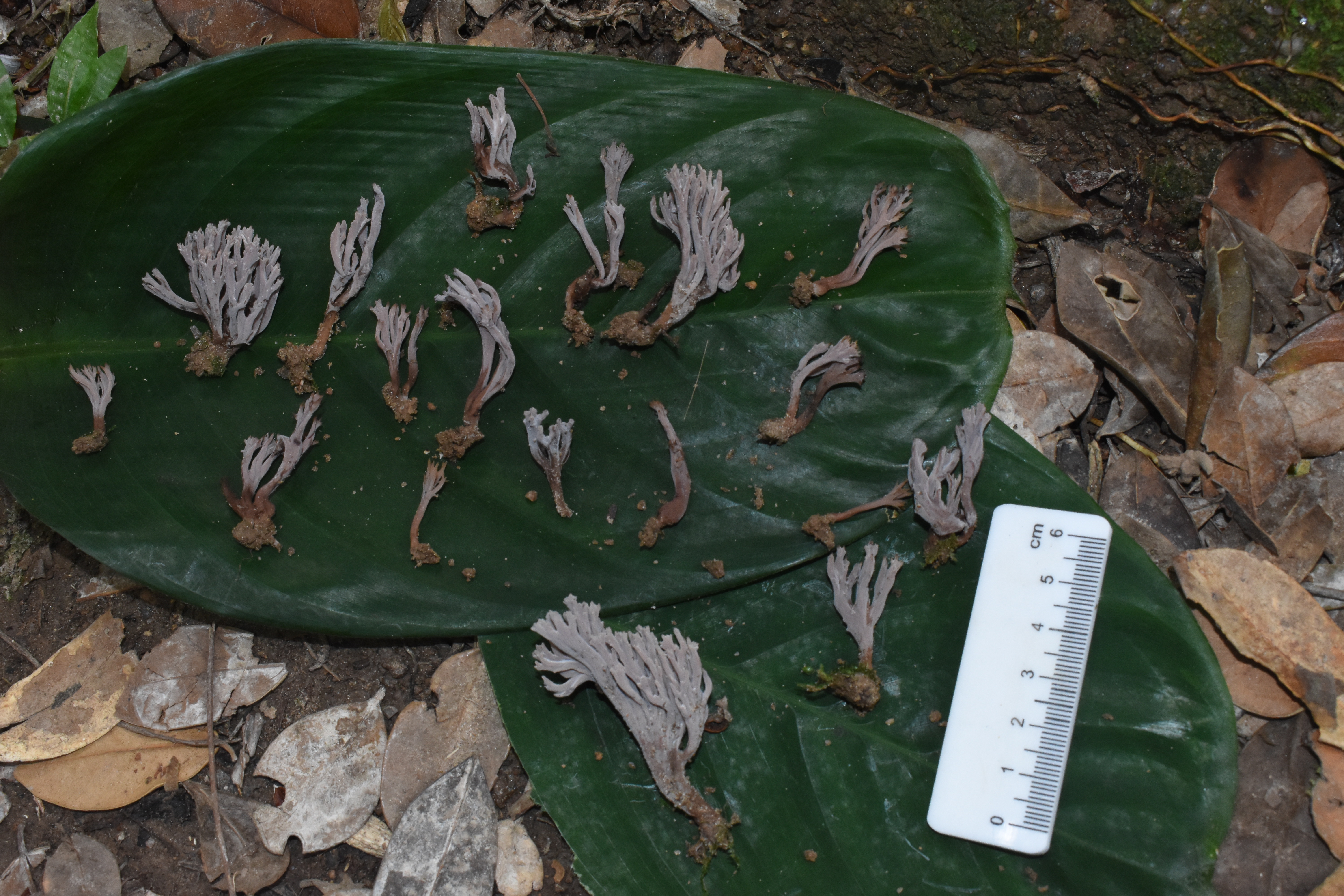
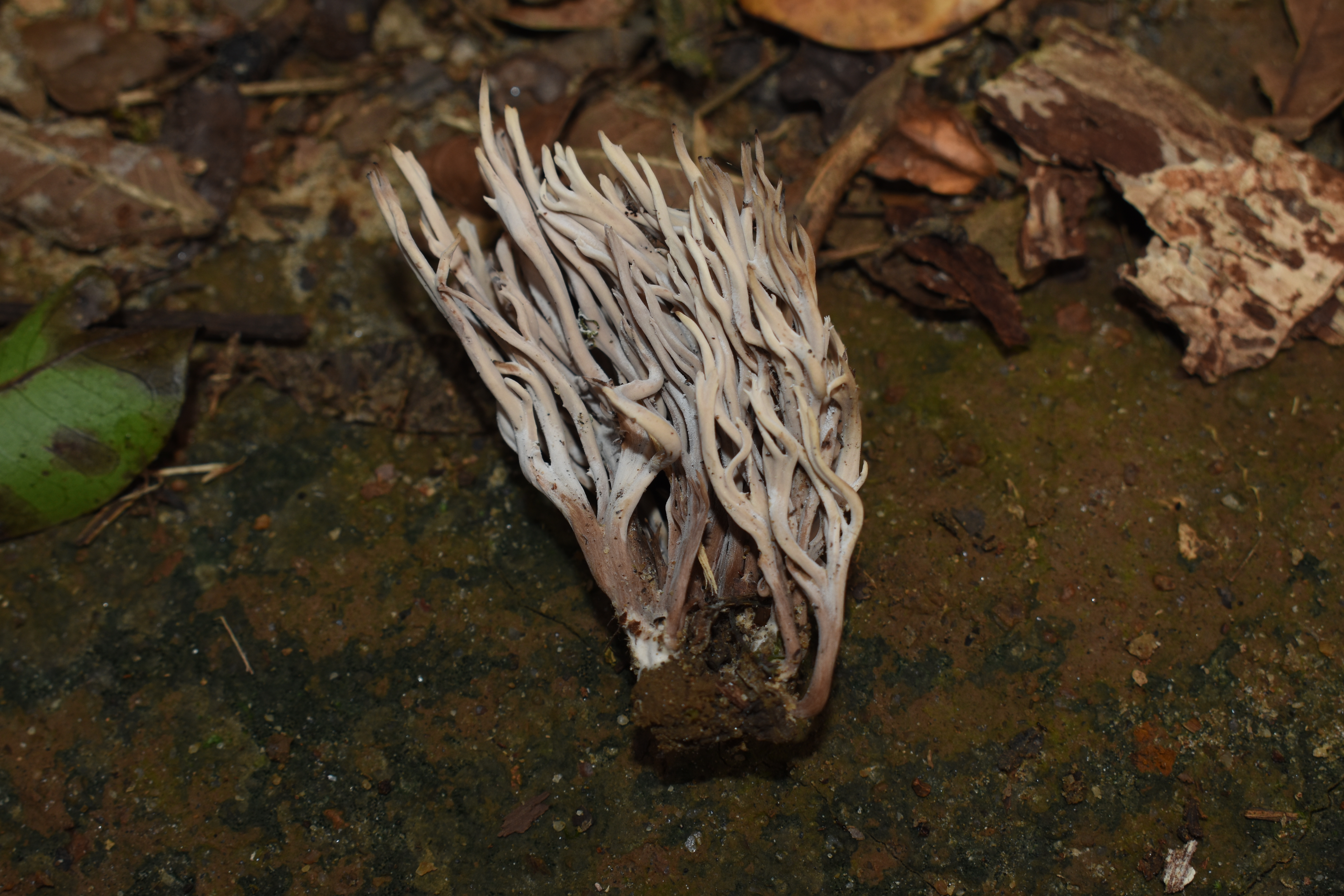
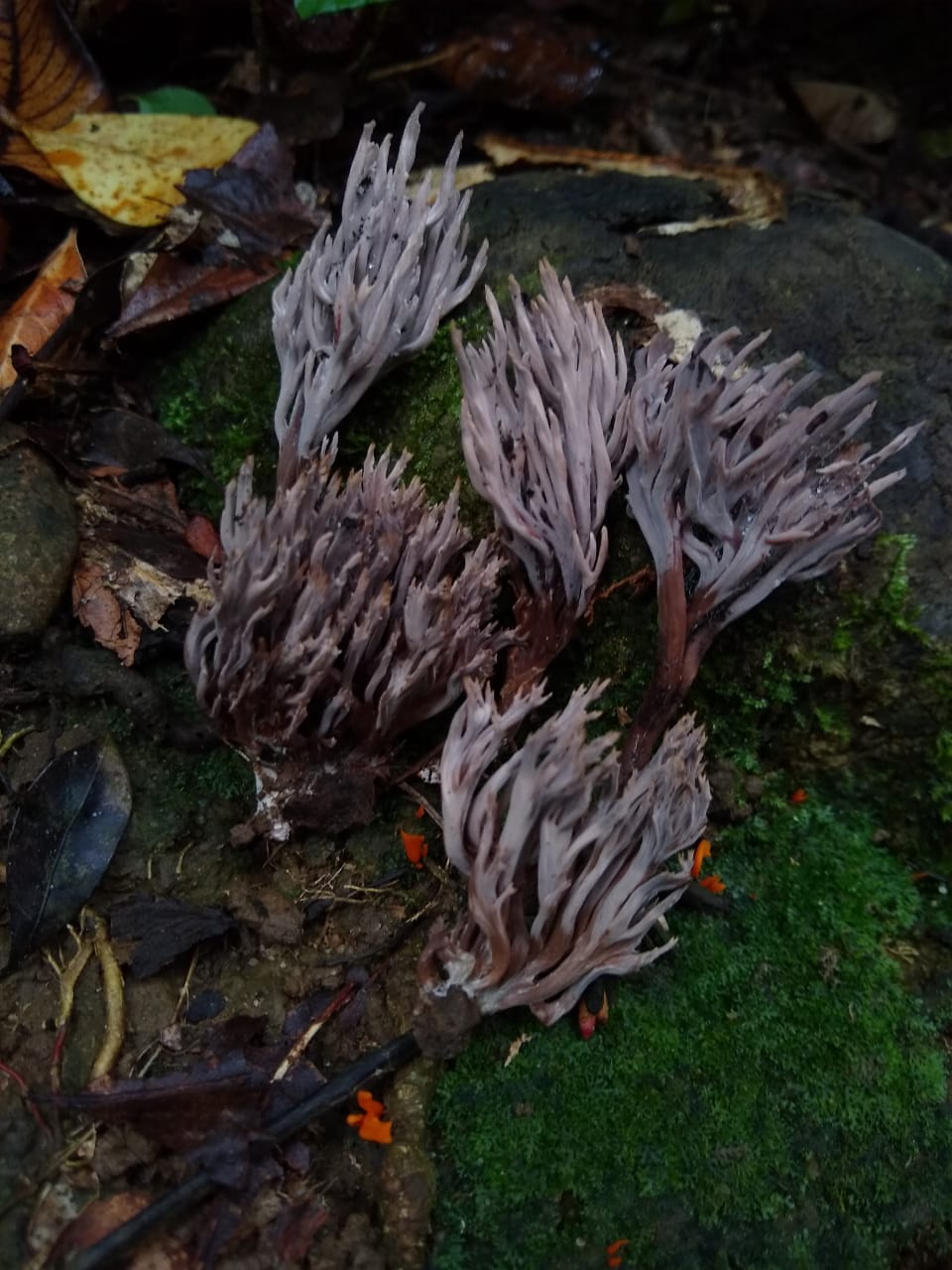
This species is found growing solitarily to scattered in small clusters of greyish-brown to brown basidiomes, with a medium detectability. There are seven known collections of the species, three from Santa Catarina state (Ferst 2021), one from Paraíba state (Tibpromma et al. 2017), and three from Alagoas state (Meiras-Ottoni and Gibertoni 2023). There are few records of the species even in frequently surveyed sites throughout the southern Brazilian Atlantic Forest. However, Clavulina ossea is likely not commonly collected due to the dull colours of the basidiomes and the scarcity of specialists in coralloid fungi in Brazil. Considering the species' distribution, there are up to 1,000 potential sites, each holding around 52 mature individuals resulting in an estimated total of 52,000 mature individuals.
The Atlantic Forest, where C. ossea occurs more abundantly, holds the largest urban centres in Brazil, housing more than 70% of the Brazilian population. Thus, urbanization, industrialization, and agricultural expansion have led to high loss and fragmentation of this biome. There was a habitat decline of the Atlantic Forest of over 72% by the year 2020 (Rezende et al. 2018). Thus, we precautionarily suspected a population decline of at least 26% within the last three generations of this species (50 years) (Rezende et al. 2018, da Silva et al. 2020), inferred in light of the extensive loss of suitable habitat (da Silva et al. 2020) and the putative influence that habitat degradation has on species occupation in a given environment (Berglund and Jonsson 2003, Haddad et al. 2015). This rate of decline is expected to continue.
Population Trend: Decreasing
Habitat and Ecology
This is a possibly ectomycorrhizal species growing solitarily to scattered on the floor of the Atlantic Forest, the transition between the Atlantic Forest and Caatinga, and ‘brejos de altitude’ (submontane forest in the Caatinga) in Brazil. The delimitation of 'brejos de altitude' varies between authors, which makes it difficult to estimate how many ‘brejos’ there are and their conservation status as there is no recent data on this specific environment found in the Caatinga. Ramos et al. (2020) estimated 65 ‘brejos de altitude’ in the Brazilian northeastern region, even though it is based only on altitude data, and cited these environments cover an area of about 2,626.68 km2 (data from 1993).Threats
There is concern over the past and continuing decline of the species habitat, the Brazilian Atlantic Forest, as the biome is currently reduced to small highly fragmented patches open to recreational activities and tourism and there are no strict laws that restrict the use (Fundação SOS Mata Atlântica, 2021). Also, the Atlantic Forest holds the largest urban centres in Brazil, housing more than 70% of the Brazilian population. Thus, the high loss and fragmentation of this biome are due to urbanization, industrialization, and agricultural expansion.The areas in southern Brazil have been historically impacted by urban growth. Habitat in the Atlantic Forest region had reportedly declined by over over 72% by 2020 (Rezende et al. 2018). In Paraíba state, in northeastern Brazil, the species was first described from 'brejos de altitude', which are regions of moist forest (with high rainfall) surrounded by semi-arid vegetation (Porto et al. 2004). These environments suffer from heavy deforestation and fragmentation due to wood and firewood extraction (Porto et al. 2004), cattle breeding, and agriculture (Tabarelli and Santos 2004). The likely impact of climate change in these environments, such as aggravated droughts in the semiarid region of Brazil, cannot be disregarded. The site located in Alagoas state is a biological reserve that is in a transition between between the Atlantic Forest and the Caatinga. Even though it is a biological reserve, some residents and squatters use the reserve area to plant subsistence crops. This site is also under great pressure from invaders for the illegal removal of tree species with economic value (Almeida et al. 2006). The two sites in Santa Catarina state are open areas for recreational activities and tourism, in addition to being constantly threatened by residential construction. The portion of Morro do Rapa trail where the species was sampled corresponds to restinga remnants. Threats to the last remnants of restinga in the coastal Atlantic Forest include urbanization and the invasion of the areas by exotic pine trees (Pinus elliottii).
Conservation Actions
Required conservation actions include increased site protection, management (to contain clearing and wood extraction), and maintenance of the protected areas where the species is found, along with developing conservation plans. Also, forest restoration should be considered where the remnants are smaller than 1,000 ha.More surveys and below-ground studies are necessary to identify its plant symbionts and to better understand Clavulina ossea distribution patterns and habitat requirements. Considering that some of the sites where the species was found [such as 'brejos de altitude' (Paraíba) and the transition between Atlantic Forest and Caatinga (Alagoas)] are fragile and poorly understood environments, more collections in these areas are necessary.